Web design for tile installers

Websites that show the cuts, not just the tile.

Anyone can post a photo of a finished floor. The customers worth having zoom in on the corners, the niche, and the grout line at the doorway, and they hire the installer whose work holds up close.

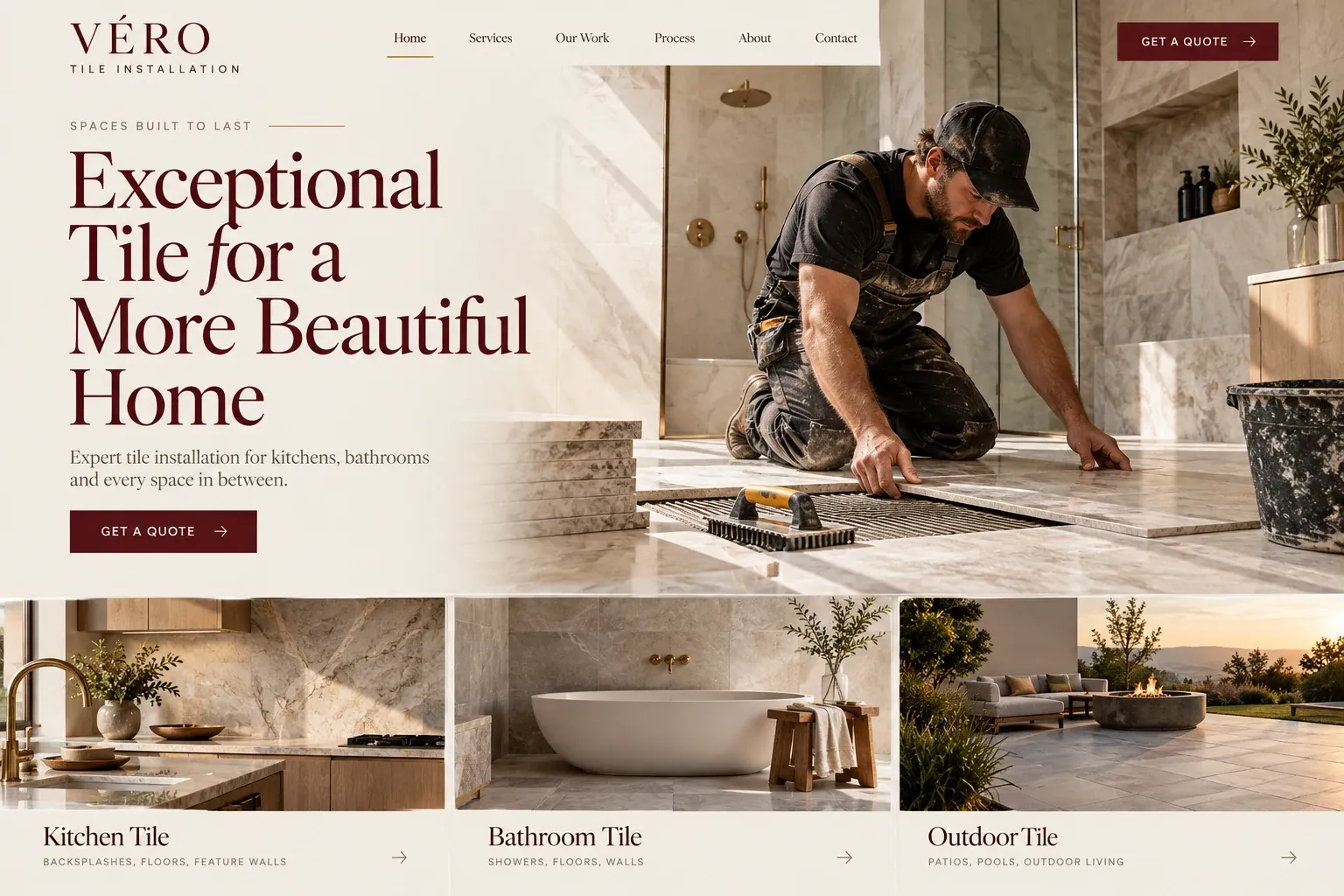
Fictional tile installers website homepage design concept
A design concept for a fictional brand. Your site is designed from scratch around yours.

Your customer's story

A saved shower photo and a crooked wall

Priya has kept the same picture on her phone for months: a walk-in shower lined with small hexagon tile, a recessed niche, and a strip of green zellige running up one wall. The tile is already ordered and stacked in boxes in her garage. What she has not found is someone she trusts to put it on walls that, in her 1970s bathroom, are anything but straight.

She searches "tile installer near me" while waiting for her coffee. One site shows the same wide shot of a beige floor on every page. Another lists twenty services and no photos at all. A third has a gallery of close-ups: a mitered corner on a shower curb, a niche where the pattern lines up on all three sides, grout joints that stay even where the floor meets the tub.

That site also has a form that asks what tile she bought, the size of the room, and whether the old tile is still on the walls, with space to attach photos. She sends her picture, the product name, and a shot of the bathroom as it is. A tile installer's website should do exactly this: show careful work up close and make the first conversation about her room, not about a price per square foot.

Why it matters

Why tile installers need a website.

Tile is a job customers judge with their noses almost on the wall. They have usually chosen the material already, often from a showroom or a big-box store, and now they are choosing hands. They look for flat floors with no lipped edges, clean cuts around outlets and drains, and showers built to stay dry behind the tile. A social media feed buries that proof under the newest post, and a directory listing shows none of it.

We build tile websites that let the detail do the talking. Galleries are organized by room and by surface, with close-ups beside each wide shot. Pages for showers, floors, backsplashes, and outdoor tile explain what you handle, including the work no one sees, such as waterproofing and leveling. The inquiry form asks for the tile chosen and photos of the space, so you can quote with real information.

What your customers search for

  • tile installer near me
  • shower tile installation
  • tile installer Miami
  • backsplash installation near me
  • porcelain floor tile installation
  • large format tile installer

Your customers

What homeowners check before trusting a tile installer

  • Will the pattern survive my room?

    Close-up photos of layouts around niches, windows, and out-of-square walls, with a line on how you plan the starting point before the first tile goes down.

  • What happens behind the tile?

    A short page on waterproofing, backer board, and floor leveling, so customers see the preparation they are paying for and why it matters in wet rooms.

  • Can you work with the tile I bought?

    A plain note on the materials you install, from porcelain and natural stone to glass mosaic and large-format slabs, and the ones you prefer to avoid.

  • How messy will this get?

    What demolition, dust control, and cleanup look like on a typical job, and how long a bathroom or kitchen is usually out of use.

What we build

What a website for tile installers should include.

  • Close-up detail galleries

    Wide shots paired with tight photos of corners, edges, transitions, and grout lines, so the quality of each cut is easy to see.

  • Shower and floor pages

    Separate pages for shower builds, floors, backsplashes, and patios, each written around the questions those customers search for.

  • Pattern and layout notes

    Herringbone, stacked, offset, and mosaic work shown with a sentence on how each layout was planned around the room.

  • Tile-and-room inquiry form

    Visitors name the tile they chose, give rough room sizes, and attach photos of the space and the product.

  • Materials you install

    Porcelain, ceramic, marble, travertine, glass, and large-format panels listed honestly, with notes on what each one asks of the installer.

  • Prep work explained

    Waterproofing membranes, leveling, and backer board described in plain words, so the line items on your quote make sense.

Planning guide

What should a tile installer show on a website?

A tile installer's website has to earn trust for work that customers will look at every day for years. It should show your finished surfaces up close, explain the preparation underneath, and make it simple to send the tile and the room for a quote. Below is a practical plan for the pages and what each one should do.

Split the site by room and surface

Customers think in rooms: the shower, the kitchen backsplash, the living room floor, the pool deck. Give each of those its own page with photos from your jobs, a short explanation of how you approach that kind of work, and a way to ask for a quote. Add a page about you and your crew, a gallery, and a contact page. That structure matches how people search and how they picture the project.

Photograph the details, not only the room

A wide photo proves a room was tiled. A close-up proves it was tiled well. For every job, take a few shots from arm's length: the outside corner of a niche, the transition from tile to wood, the cut around a floor drain, the line where the backsplash meets the counter. Natural light from the side shows flatness better than a flash. Caption each photo with the material and the layout.

It also helps to show work in progress. A photo of a waterproofed shower before any tile goes up, or a floor being leveled, shows the care customers cannot see once the job is finished and grouted. Only use photos of your own jobs, and keep captions to what you actually did.

Let customers send the tile and the room

Most tile customers arrive with the material already picked, so the quote request should ask for it: the product name or a photo of the box, the tile size, the rooms, rough measurements, and whether old tile needs to come out. Let them attach pictures of the space. A phone number that dials with one tap belongs on every page too, because some people would rather describe a crooked wall out loud.

Get found for the job, not just the trade

People often search for the job rather than the trade: "shower tile installer", "backsplash installation", or "porcelain floor installer". Pages for each job type give search engines something exact to match. Keep your name, address, and phone the same on the site and on your Google Business Profile, add the cities you work in, and ask happy customers for reviews that mention the room you tiled. No site can promise a ranking, but this gives good work a fair chance to be found.
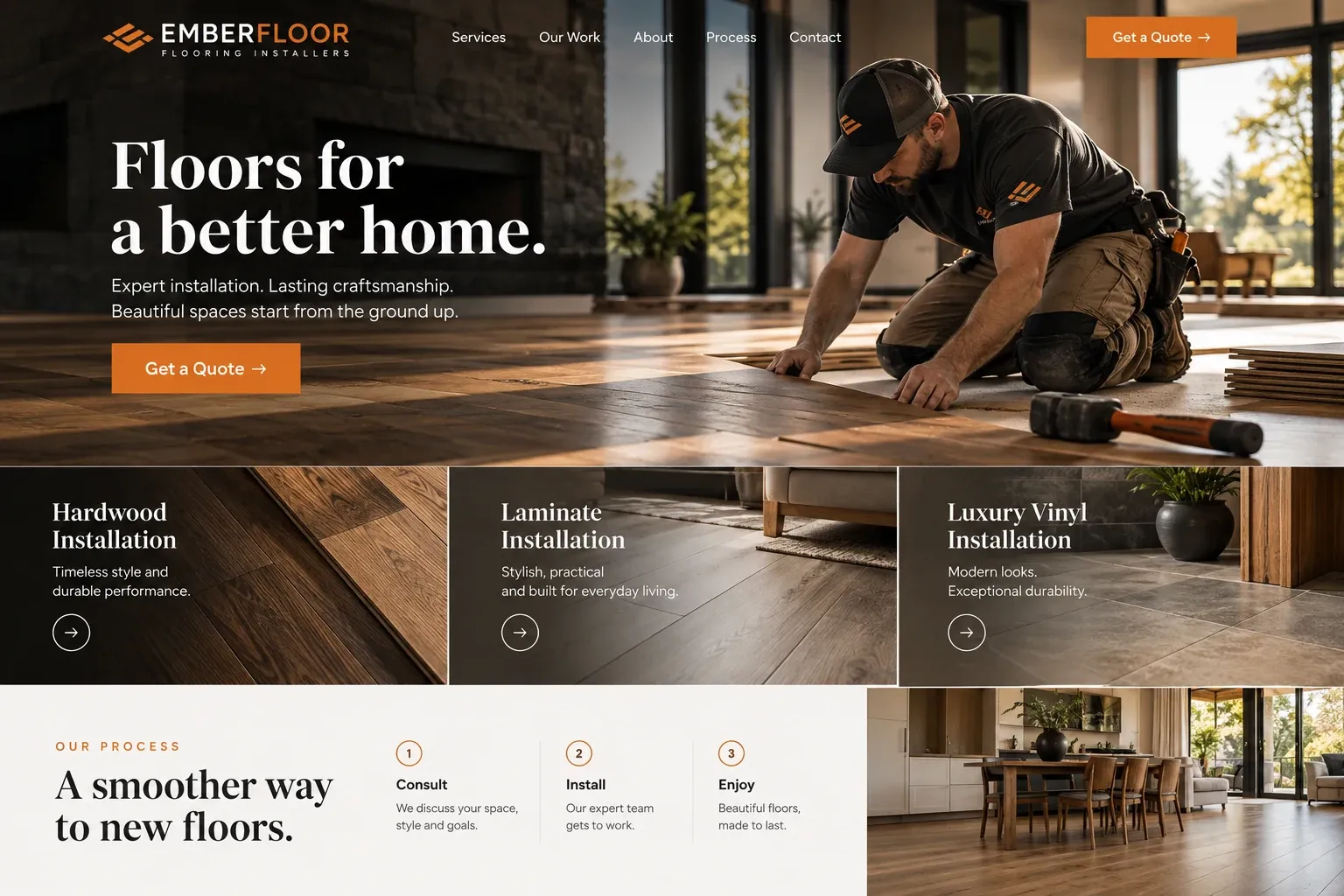
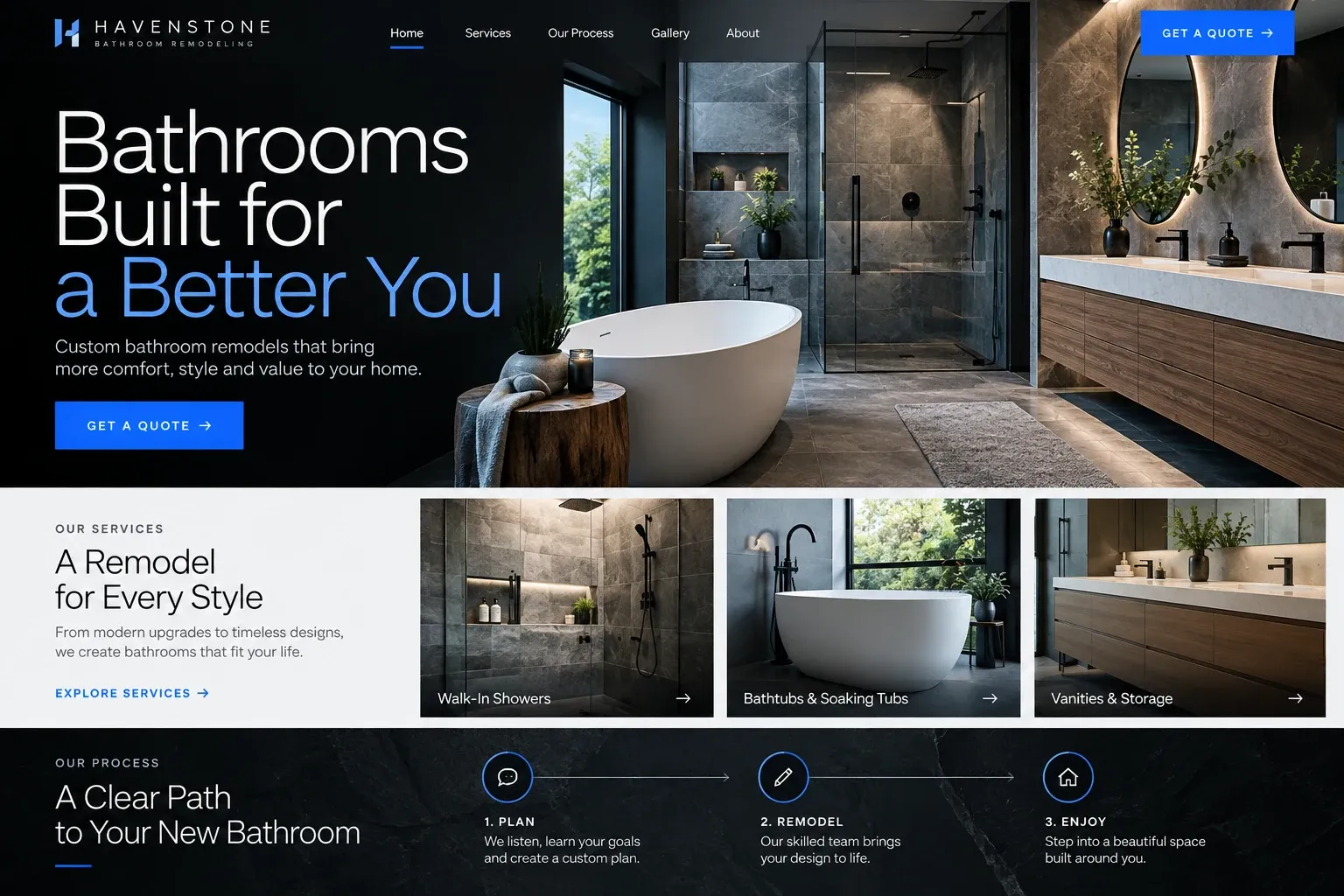
In your market

Built for tile work in South Florida

Tile is the default floor in much of South Florida, from new condos to older homes where terrazzo still hides under carpet or vinyl. Outdoor tile has to cope with sun, rain, and pool chemicals, and many condo buildings set rules on underlayment, noise, and work hours. Many customers prefer to talk a project through in Spanish. We write pages around these local jobs and can add a Spanish version of the whole site.

Questions

Questions tile installers ask us.

How should a tile installer show off small details online?

Pair every wide photo with two or three close-ups taken in side light: corners, cuts around fixtures, and transitions between floors. We build the gallery so the close-ups sit next to the room they came from, with a caption naming the tile and layout. Phone photos are fine when they are sharp and well lit.

Can customers upload a photo of the tile they bought?

Yes. The quote form takes attachments, so a customer can send the box label, a showroom photo, and pictures of the room in one message. It arrives in your email with their name, phone, and rough measurements, which saves a site visit for jobs that are not a good fit.

Should our tile website explain waterproofing and prep work?

We think so. Customers compare quotes without knowing why one includes a membrane, a leveling compound, or new backer board and another does not. A short page that explains those steps in plain words helps them read your quote fairly. You tell us your methods, and we write it for you to approve.

Do we need separate pages for showers, floors, and backsplashes?

It helps. Each one is searched differently and attracts a different customer, from a homeowner planning a full bathroom to a contractor looking for a reliable sub. Separate pages let each audience find the photos and answers that fit, and give Google a clearer idea of everything you install.

Let's talk

Ready for a website built for tile installers?

Tell us about your business and we will come back with a clear recommendation and a fixed quote. No pressure, no jargon.

Trades we design for

See all 226 trades

226 trades

  • Plumbers website design concept
CallFree quote