Planning guide
What should a court reporting firm's website do for legal teams?
A court reporting website is a scheduling tool first and a brochure second. The people who use it already know what a court reporter does; they need to confirm you can cover a specific proceeding and book it with little effort. The four areas below cover services, scheduling, proof of professionalism, and how firms find you.
Describe services in the buyer's vocabulary
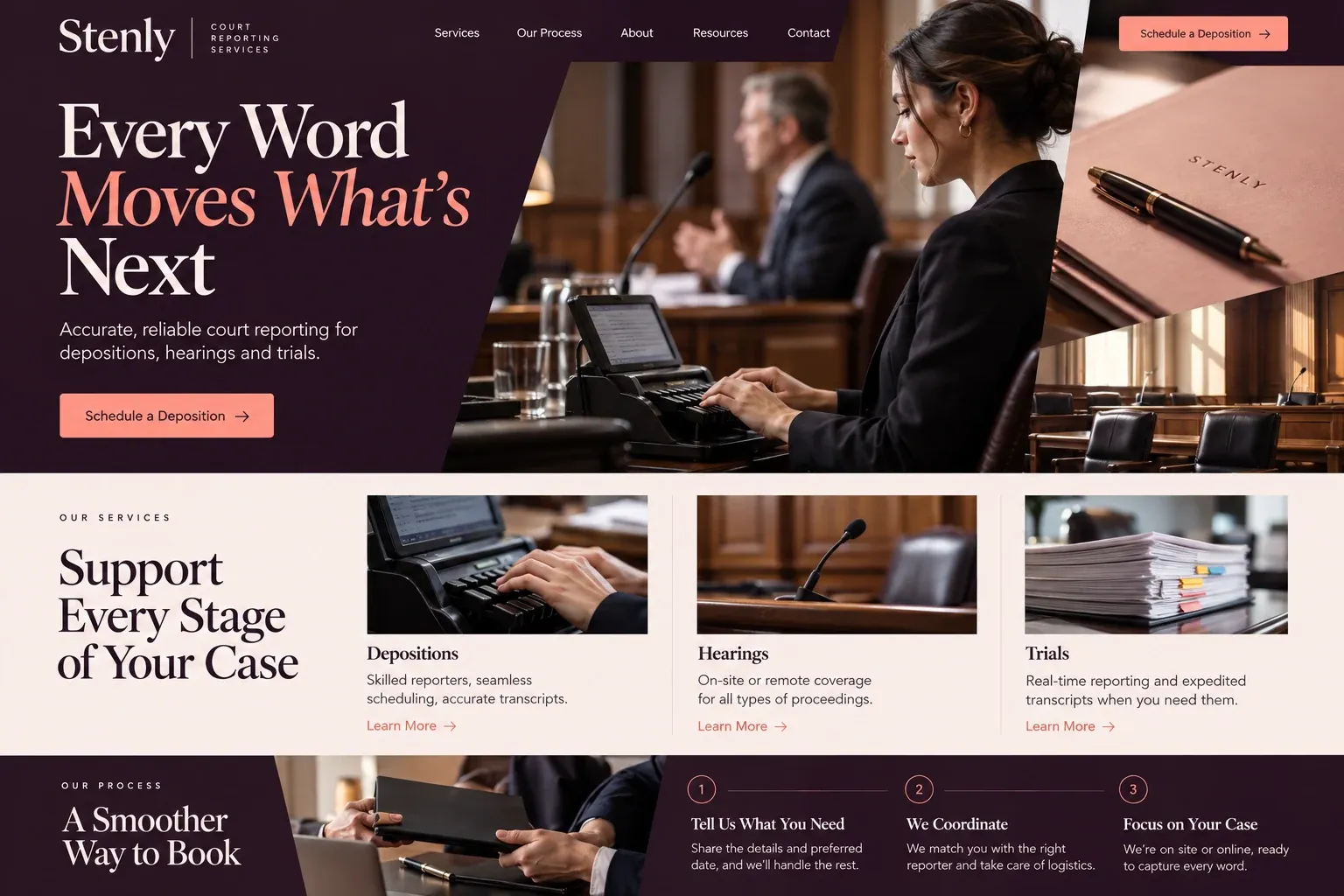
Legal staff search for specific things: realtime, rough draft, expedited copy, legal videographer, interpreter, remote deposition, examination under oath. Give each a short page or a clear section that says what it is in your firm, how to request it, and anything the attorney should know in advance. Precision matters more than polish here, because a vague description sends a busy paralegal to the next firm. If you offer CART captioning or transcription of recordings, give those their own pages too.
Build the scheduling request with care
The scheduling form is the most important page you have. Ask for the case style, proceeding type, date and start time, expected length, location or remote platform, number of attorneys and witnesses, and services needed. Include a field for the scheduling contact and the billing contact. Confirm receipt automatically by email, and say when a person will follow up.
Keep confidential material out of the form. Exhibits, medical records, and case documents should travel through your secure repository or whatever channel the firm prefers, never through a website form that arrives as plain email. A short note on the form saying so reassures careful legal staff and prevents mistakes.
Show the people and places behind the work
Introduce your reporters and coordinators with real photos and the certifications they actually hold. Show your conference rooms with addresses, parking details, and the equipment in each, and list partner locations if you book rooms elsewhere. If you cover statewide or national proceedings through affiliates, say how that works. Firms want to know who will show up and where they are sending their witness.
Be visible where firms look for coverage
Searches combine service and place: "court reporter Fort Lauderdale", "deposition conference room Miami", "legal videographer near me". Location pages for the cities where you have rooms or reporters, plus service pages, give Google clear matches. Keep your Google Business Profile accurate for each office. Reviews from attorneys and paralegals carry weight with their peers, so ask long-standing clients when the moment is right.