Planning guide
What should a private investigator's website show and avoid?
An investigator's website has to win trust from people who are wary by nature: attorneys checking credentials and private clients worried about exposure. Drama works against you. What works is clarity about the cases you take, visible licensing, careful first contact, and a site that local clients can find. Here is a practical plan for each part.
Describe case types and their limits
Give each kind of work its own page: background checks, pre-marital or business due diligence, locating people, insurance claim investigations, litigation support, and any surveillance you perform. Describe typical situations in general terms and state plainly what you do not do. Avoid any promise about what an investigation will find. Clients respect limits, and limits protect you when expectations run high.
Make professionalism easy to verify
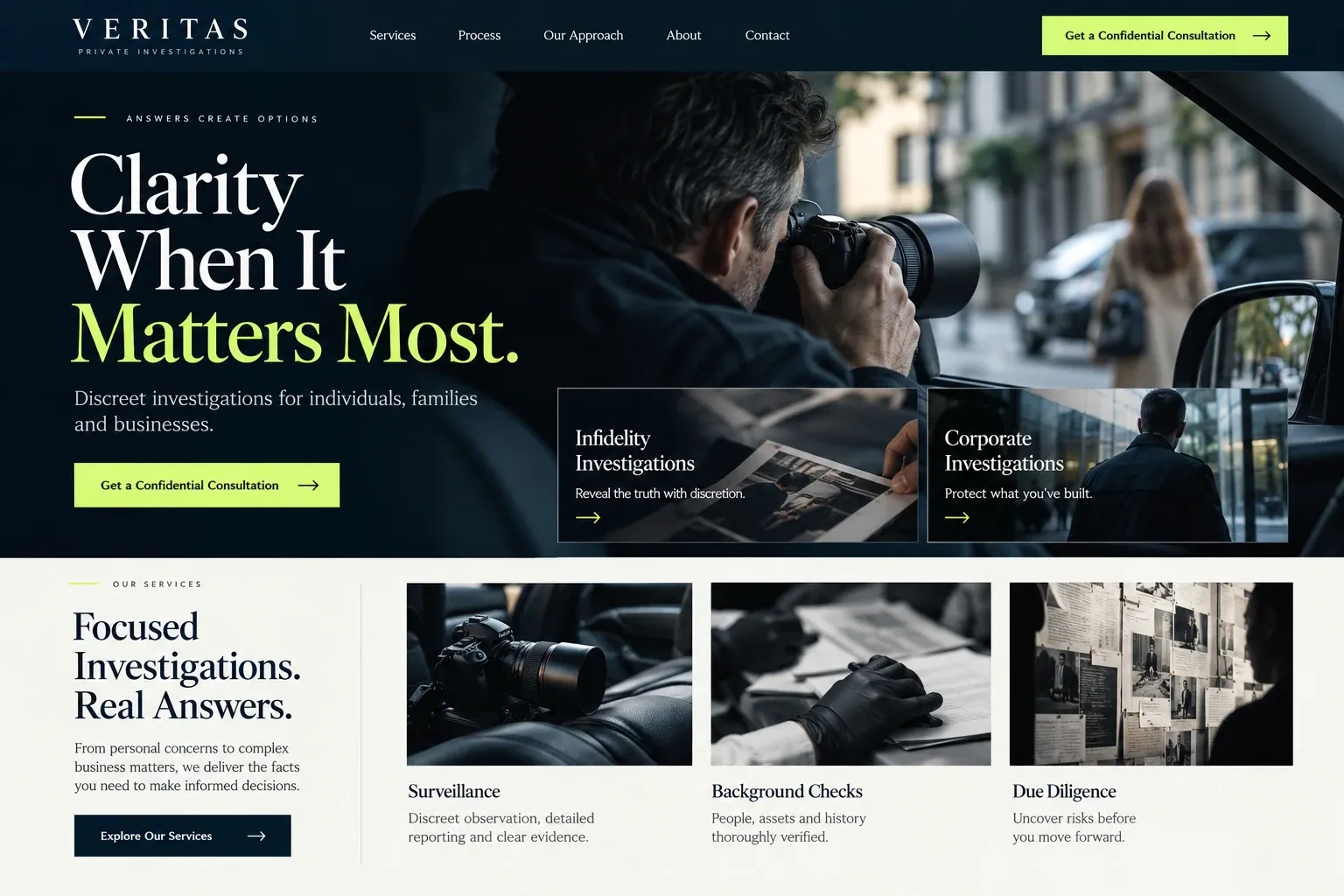
Put your agency license number in the footer and on the about page, with the investigator's name, background, and years in the field stated accurately. If you came from law enforcement, the military, or insurance, say so plainly. Professional memberships help if they are current. Real photos of the principal investigator build more trust than shadowy stock images, even in a discreet trade.
For attorneys and insurers, add a page that describes your reports: what they contain, how evidence such as photos and video is documented, and whether you testify. Do not publish real case details or anything that could identify a subject. If you want to show experience, describe it by category and keep every claim accurate.
Keep the first contact light
Many private clients are afraid of leaving a trail. A first-contact form should ask for very little: a first name, a safe phone number or email, and a convenient time to call. Add a note asking them not to include case details, since website forms arrive by ordinary email. Offer a phone number for people who would rather talk, and say when you answer. A quick exit button also helps visitors browsing on a shared device.
Help local clients and referrers find you
People search for the problem and the place: "private investigator Miami", "background check investigator", "workers comp surveillance". Service pages written around those needs, a list of the counties you work in, and a complete Google Business Profile give search engines clear signals. Reviews tend to be fewer in this trade because clients value privacy, so attorney referrals and a professional site carry more weight. Ask clients who are comfortable with it for a review, and never press anyone who is not.