Web design for dietitians and nutrition practices

Websites that show the training behind the advice.

Nobody books a dietitian on a whim. People arrive after a new diagnosis, a doctor's referral, or years of advice that did not fit their life, and they want to know who you are and how visits work.

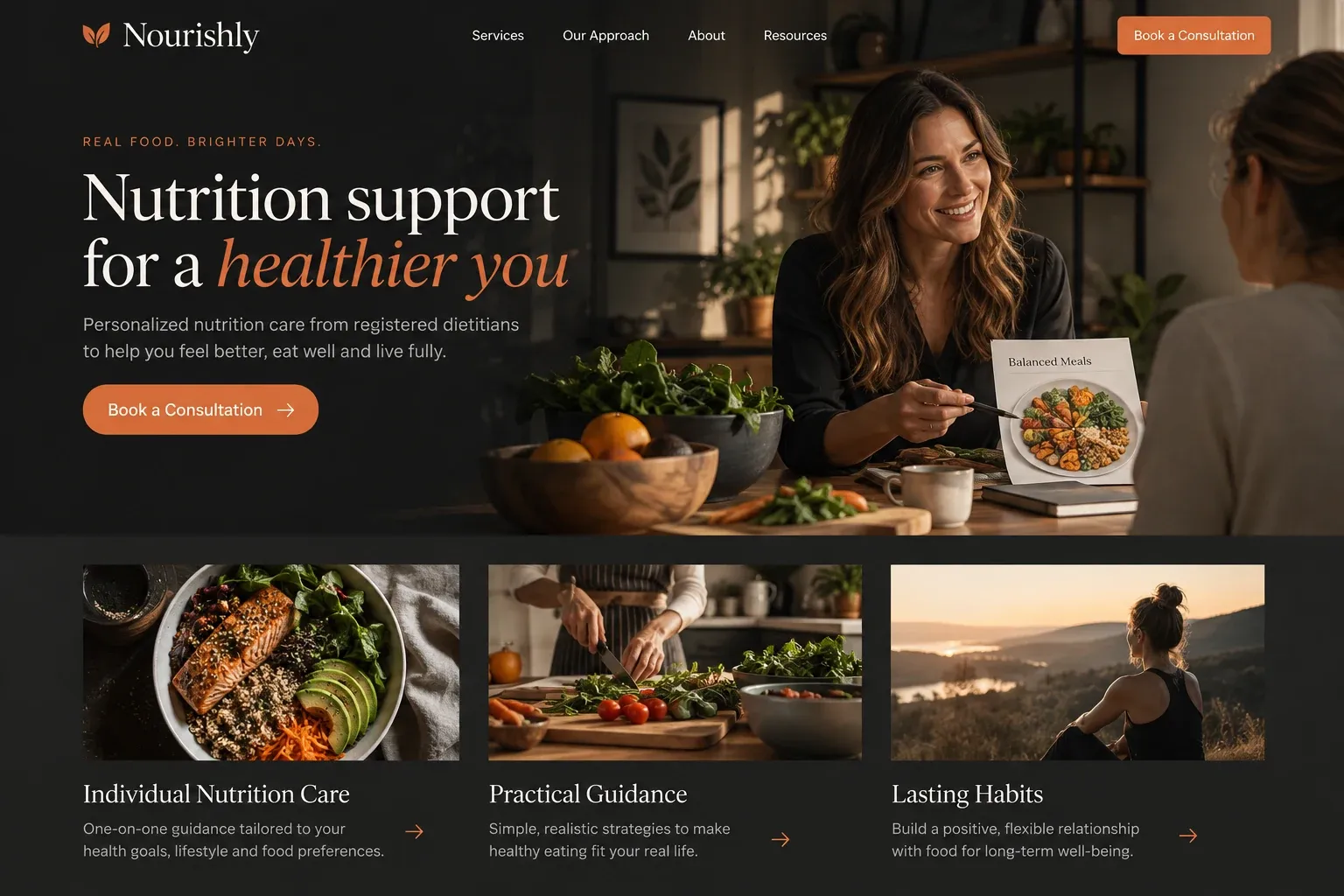
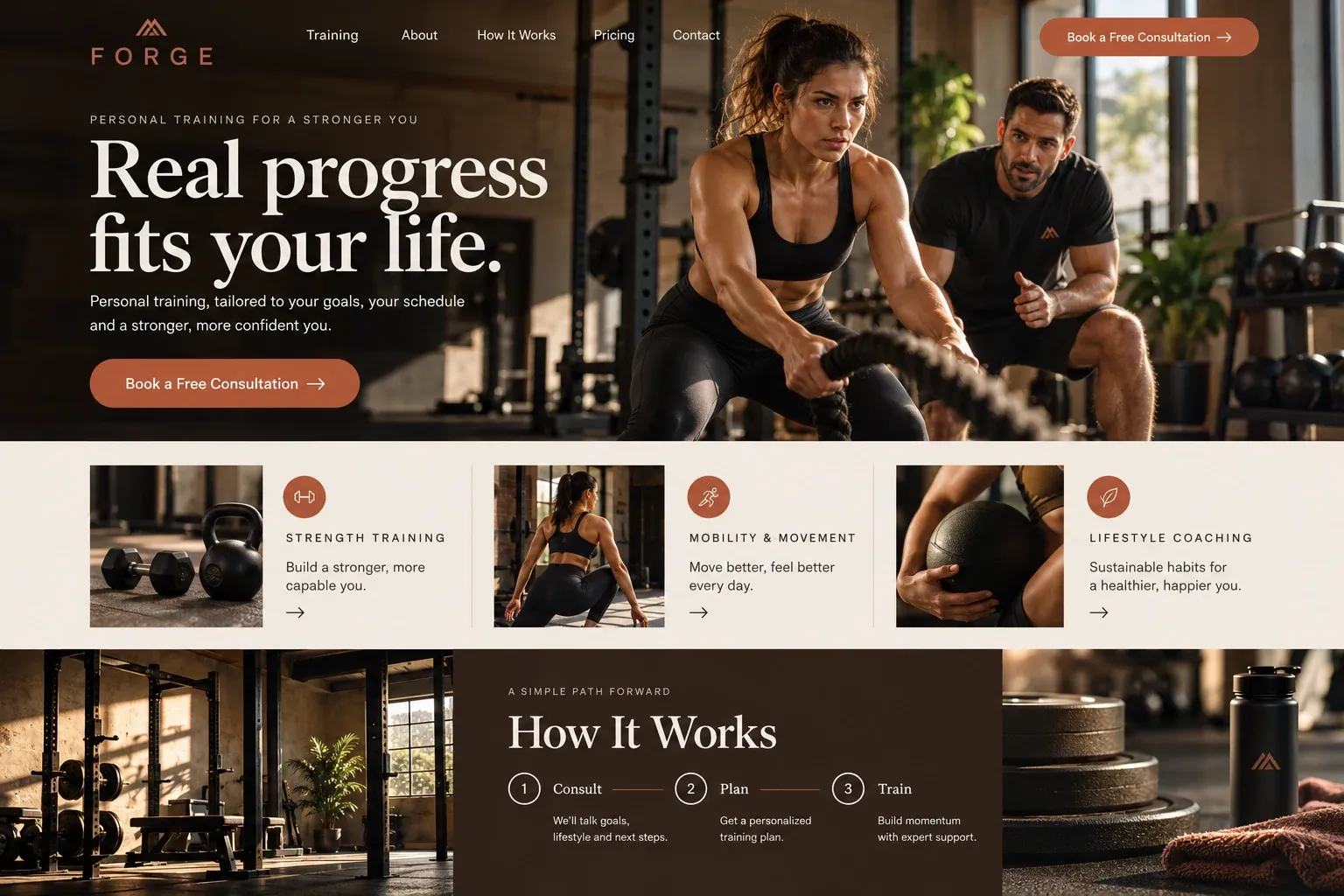
Fictional dietitians and nutrition practices website homepage design concept
A design concept for a fictional brand. Your site is designed from scratch around yours.

Your customer's story

A referral slip and a long list of questions

Teresa leaves her doctor's office with a printout, a new word to look up, and a referral to see a dietitian. Her lab results have changed, and she has been told food will matter. That evening, after the kids are in bed, she searches "registered dietitian near me" and then "dietitian that takes insurance", already worried it will mean a diet she cannot keep with a family of five.

The first practice she finds is all bright smoothie bowls and a promise to transform her life, with no name she can check. The second lists every specialty from sports nutrition to gut health but never says whether visits happen in person or online. The third introduces its dietitians by name, explains their credentials in a sentence each, names the insurance plans it bills, and describes a first appointment step by step.

She reads that the first visit is an hour over video, that she can bring her husband, and that nobody will hand her a printed meal plan and wish her luck. She books through the practice's scheduling link before midnight. A dietitian's website earns that booking by showing the person behind the advice, the shape of the work, and how to start, without promising what the work will do.

Why it matters

Why dietitians and nutrition practices need a website.

Nutrition is crowded with people who have opinions and no training, and your future clients know it. They search by condition, by insurance, and by format, then check credentials before they trust anyone with their eating. An Instagram account full of recipes shows taste, not qualifications, and a directory listing cannot explain how sessions run or which plans you bill. The website is where a careful client decides you are the qualified one.

We build nutrition practice sites around that decision. Each dietitian gets a profile with credentials spelled out and the clients they work with most. Each focus area, such as diabetes, digestive health, pregnancy, or sports, gets its own page written from your notes and approved by you, with no promised results. Visit formats, insurance, and booking sit together, and the contact form asks for a name and a way to reply, nothing about health.

What your customers search for

  • registered dietitian near me
  • dietitian Miami
  • dietitian that takes insurance
  • nutritionist for diabetes
  • online dietitian consultation
  • sports nutritionist

Your customers

What people ask before booking a dietitian

  • Are you actually qualified?

    Each dietitian's credentials written out in full, what the letters after the name mean, and any specialty certifications they hold, shown plainly without exaggeration.

  • Will insurance cover my visits?

    A page naming the plans you bill, how a doctor's referral fits in when a plan asks for one, and your self-pay option for everyone else.

  • Can I meet with you online?

    Clear notes on video sessions and office visits, which states or areas you see clients in, and what a session looks like either way.

  • Is this going to be a strict diet?

    A plain description of how you work with clients, in your own words, so people know the first visit is a conversation and not a lecture.

What we build

What a website for dietitians and nutrition practices should include.

  • Credential-first dietitian profiles

    Photo, credentials, training, languages, and the client groups each dietitian sees most, written so a careful reader can verify them.

  • Focus area pages

    Diabetes, kidney health, digestive issues, pregnancy, sports, and eating concerns, each on its own page in plain words you approve.

  • Telehealth and booking links

    Links or embeds for the platform you already use, such as Healthie or Practice Better, so booking and intake stay there.

  • Insurance and self-pay page

    Plans you bill, referral notes, superbill information for out-of-network clients, and your self-pay rates if you choose to publish them.

  • First visit walkthrough

    What happens in the first appointment, how long it runs, what to bring, and how follow-up sessions are usually spaced.

  • Health-free contact form

    Name, email or phone, and preferred visit format only. Anything clinical is shared later through your secure client platform.

Planning guide

What should a dietitian's website say before the first visit?

A nutrition practice sells trust before it sells sessions. Visitors want to see training they can check, a way of working they can live with, and an easy route to a first appointment. This guide covers the pages a dietitian's site needs, what belongs on them, how clients should book, and how the practice gets found by people searching nearby or online.

Lead with credentials and scope

Nutrition advice online comes from people with every kind of background, so a dietitian's site should make training easy to confirm. Put each practitioner's credentials near their name, explain the letters in one sentence, and note any license where your state issues one. Then say what the practice does and does not cover. A clear scope helps the right clients book and gently points others toward a doctor, a therapist, or another specialist.

Write one page per focus area

People search for their situation, not for the word nutrition: prediabetes, IBS, a picky toddler, training for a marathon, eating during pregnancy. A page for each focus area lets the right person land in the right place. Describe who usually comes to you for it and what working together involves. Leave out weight targets, cures, and before and after photos, and let the dietitian approve every line.

Keep booking and intake on secure tools

Many dietitians already run their practice on a platform for scheduling, video visits, and intake forms. The website should send people there rather than copy those jobs badly. A booking button links to your real calendar, and the intake questionnaire stays inside the platform, where health details belong. The website's own contact form handles general questions only: a name, a reply address, and a preferred visit type.

Spell out insurance before anyone asks. Name the plans you bill, explain when a referral is needed, and describe superbills for clients using out-of-network benefits. If you publish self-pay rates, keep them current. People who understand the cost before booking arrive less anxious, and the first session can stay on food instead of billing.

Get found nearby and online

A dietitian may see clients in one office and across the state by video, so the site should say both. Keep the practice name, address, and phone the same on the website and the Google Business Profile, and list the areas you serve in person. Each focus area page gives Google a precise topic to pair with a search. Ask satisfied clients for Google reviews, while never asking them to share health details publicly.
In your market

Built for nutrition care in South Florida

South Florida kitchens cook in many traditions, from Cuban and Haitian to Colombian, Jamaican, and Venezuelan, and clients want a dietitian who will work with the food they actually eat. Many prefer sessions in Spanish or Haitian Creole. Seasonal residents and busy commuters often choose video visits, and a practice may see clients across Florida that way. We put languages, visit formats, and cultural fit up front, and a Spanish version of the site is available.

Questions

Questions dietitians and nutrition practices ask us.

Can our dietitian website show client success stories?

Carefully. Testimonials about weight or lab results can read as promises, so we suggest stories about the experience instead: feeling listened to, getting practical meal ideas, or a schedule that worked. Every quote needs the client's written permission, and we label it as one person's experience. Many practices simply show Google reviews and leave it there.

Will the site connect to Healthie or our other practice platform?

Yes, by link or embed. Your booking calendar, intake forms, and video visits stay on the platform you already pay for, and the website points people to it at the right moments. That keeps health information inside a system designed for it, while the website handles introductions and general questions.

Should a nutrition practice publish recipes or articles?

If you enjoy writing them, yes. Short articles on topics your clients ask about give searchers a reason to find you and show how you think. We keep them general education, approved by the dietitian, and avoid anything that reads as personal advice. A recipe page works well when it reflects the foods your clients cook at home.

Can the site explain which dietitian handles which kind of client?

Yes. In a group practice, a short guide on the team page helps visitors choose: who sees children, who works with athletes, who focuses on digestive or kidney concerns, and who speaks Spanish. Each profile links to that dietitian's booking calendar, so people go straight from reading about someone to booking with them.

Let's talk

Ready for a website built for dietitians and nutrition practices?

Tell us about your business and we will come back with a clear recommendation and a fixed quote. No pressure, no jargon.

Trades we design for

See all 226 trades

226 trades

  • Plumbers website design concept
CallFree quote