Planning guide
How should a dog trainer build a website owners trust?
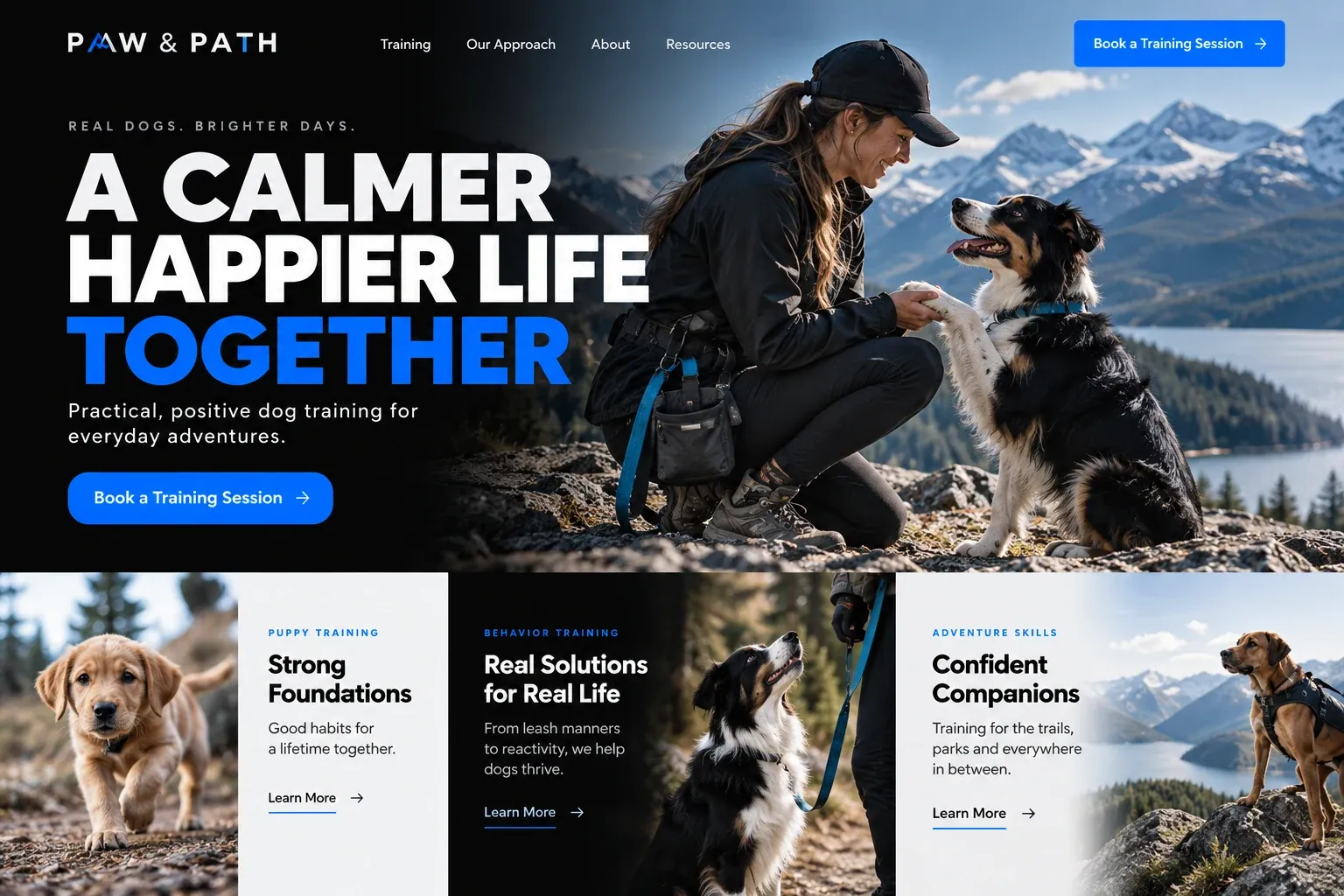
Owners come to a dog trainer's website with a problem and a worry about methods. The site should answer both: what you can help with, and how you do it. It should also be honest that training is a partnership with the owner. Here is a practical outline for the pages, proof, inquiries, and local search.
Write pages around the problems owners search
Few owners type "dog trainer" and stop there. They type what is happening: puppy biting, dog pulls on leash, dog barks at other dogs, recall training. Give the problems you handle most their own pages, each explaining how training typically starts and which session format suits it. A home page, an approach page, a few problem pages, a formats page, and contact cover most trainers well.
Explain your method without a lecture
Owners have read conflicting advice and want to know where you stand. Describe your approach with a real example: how you would teach a puppy to sit politely for greetings, or how you would work with a dog that reacts on walks. Say which tools you use and avoid, and why, in a calm tone. Leave arguments with other trainers off the site.
Proof should be real and modest. Short videos of real training sessions, shared with the owners' permission, show your handling better than any claim. Reviews that describe the process, not just the result, carry weight. Avoid promising a fixed number of sessions or a cured behavior, and name certifications only as the issuing organization does.
Ask about the dog before the first call
A goals-based inquiry form saves both sides time. Ask for the dog's age, breed or mix, how long the owner has had them, what the behavior is, when it happens, and what has been tried. Add a question about other pets and children at home. If you take bookings for group classes through a scheduling app, link it next to the class calendar. For serious cases such as bites, say clearly whether you take them or refer to a veterinary behaviorist.
Get found where owners walk their dogs
Owners want a trainer who knows their parks, sidewalks, and condo hallways, even when the first consult happens by video. List the neighborhoods you visit and where group classes meet, keep your details consistent with your Google Business Profile, and ask clients for reviews once they see progress. Problem pages give search engines exact topics, which gives a careful trainer a fair chance to be found.