Planning guide
What should a pet sitting or dog walking website include?
A pet sitter's website does a quiet but important job: it turns a stranger into someone an owner trusts with keys and a beloved animal. That happens through specifics. These four sections cover the pages to build, the trust details to show, how inquiries and bookings work, and how nearby owners find you.
Spell out each visit type
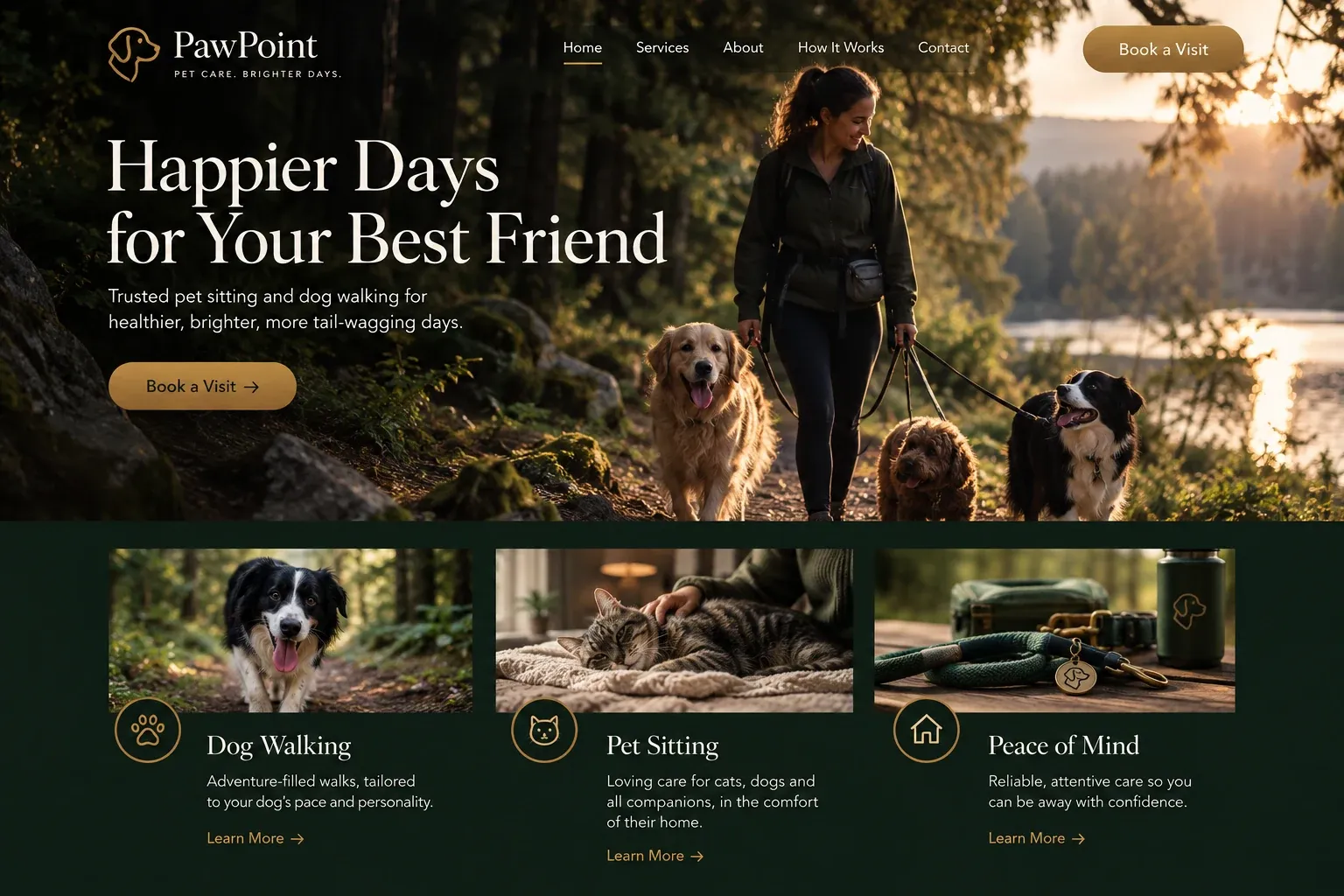
Owners need to know what they are buying. Describe each service plainly: a midday walk and its length, whether walks are solo or in small groups, what a drop-in visit includes for cats, and what an overnight stay covers. Add who each one suits, such as puppies, senior dogs, or two-cat households. Clear service pages also give search engines specific phrases to match. If you also offer pet taxi rides to the vet or groomer, give that its own short section.
Show how you earn the keys
Trust is built from small, practical details. Explain your meet-and-greet, how you record each pet's routine, how keys are coded and stored without addresses, and how you handle alarm codes. If you carry pet sitting insurance or bonding, say so exactly as your policy describes it. A real photo of you with a client's dog, used with permission, beats any stock image.
Be clear about backup. Owners worry about what happens if you get sick or a storm closes the roads. If a teammate covers, introduce them on the site. If you work alone, say how you handle absences and how much notice clients get. Honest limits build more confidence than a promise to be available every single day.
Ask about the pet and the schedule
A good inquiry asks for the pet's type, age, and temperament, the days and times needed, the neighborhood, and any building access steps, such as a front desk list or a gate code process. Tell owners you will confirm availability before anything is booked. Once they are clients, link the pet sitting app you use for scheduling, visit reports, and invoices. Never ask for alarm codes or lockbox numbers in a web form; collect those in person.
Win the searches on your own streets
Walkers and sitters work in a tight radius, so local search matters a great deal. Name the neighborhoods and condo areas you cover, keep your details matched on your Google Business Profile, and ask regular clients for reviews that mention their pet. Holiday sitting fills early, so post your booking deadline each season. Over time, these steps help nearby owners find a steady sitter instead of an app.