Web design for drywall contractors

Websites for drywall work nobody should notice.

When drywall work is done well, nobody sees it, which makes it hard to sell. Customers need proof that you can match a texture, hide a patch, and leave the room cleaner than you found it.

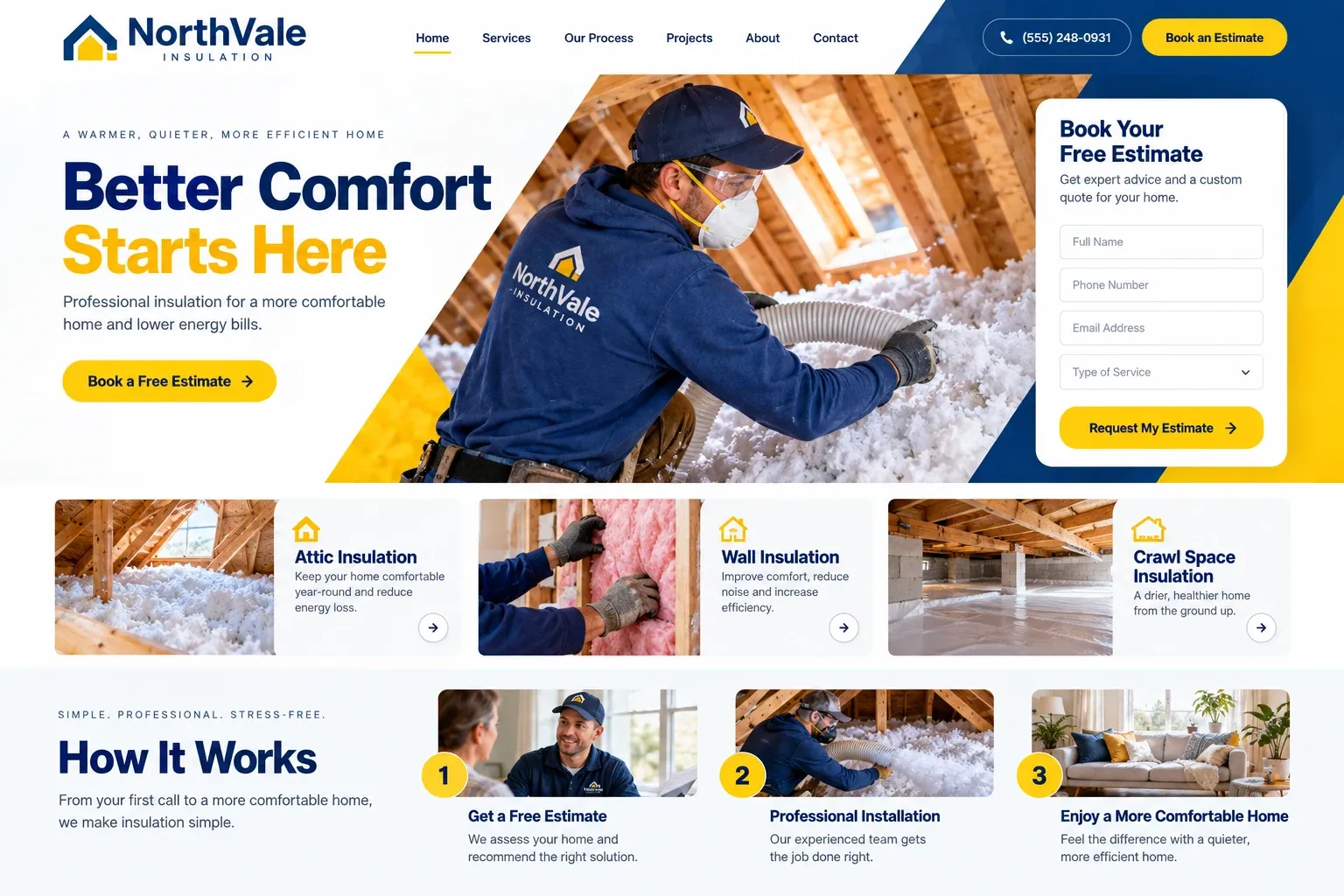
Fictional drywall contractors website homepage design concept
A design concept for a fictional brand. Your site is designed from scratch around yours.

Your customer's story

A square hole where the leak was

The air handler's drain line clogged in August, and water came through the hallway ceiling of Arturo's condo. The leak is fixed now, and the wet section has been cut out and dried. What is left is a square hole above the hallway, a bucket nobody has moved, and a ceiling covered in a light knockdown texture that Arturo cannot imagine anyone matching.

He searches "drywall repair ceiling texture match" and opens a few sites. Several belong to general handymen who list drywall somewhere among forty other services. One drywall contractor has separate pages for patching, new installation, and finishing, and a section of close-up photos showing ceilings before and after texture matching, taken with light coming from the side so the surface is easy to judge.

That contractor's site is honest, too: it says a perfect match is not always possible on old textures and explains how the crew gets close. The inquiry form asks the size of the area, whether it is a wall or ceiling, the existing texture, and access, with room for a photo. Arturo sends it. A drywall website wins by making the invisible finish visible and believable.

Why it matters

Why drywall contractors need a website.

Drywall work arrives from very different places. Homeowners need patches after a plumber, an electrician, or a leak. Remodelers and general contractors need hanging and finishing on new walls. Property managers need units repaired between tenants. Each group searches differently, and each wants proof of clean, flat, matched finishes. A directory listing cannot show texture or finish quality, and a social feed buries the close-ups that prove your skill under everything else.

We build drywall websites with a page for each kind of work and photography that shows the surface honestly. Repairs, installation, finishing, texture matching, and ceiling work are separated so each search finds a match. A finish levels page explains what the client is paying for in plain words. The inquiry form asks about area size, access, and the existing texture, with photos, so you can estimate before you visit.

What your customers search for

  • drywall repair near me
  • drywall contractor Miami
  • ceiling water damage repair
  • drywall texture matching
  • popcorn ceiling removal
  • hole in drywall repair

Your customers

What customers ask before hiring a drywall contractor

  • Can you match the texture on my ceiling?

    Close-up before and after photos of knockdown, orange peel, and smooth finishes, with an honest note on how close a match old textures allow.

  • How much dust will there be?

    A page on protection and cleanup, covering plastic barriers, floor coverings, sanding methods, and how you leave the room at the end of each day.

  • Do you handle water damage repairs?

    A water damage page explaining how you work after the leak is fixed and dried, including cutting out damaged board and refinishing.

  • Do you work for contractors as well as homeowners?

    A separate section for builders, remodelers, and property managers, covering new construction, commercial framing and board, and unit turnovers.

What we build

What a website for drywall contractors should include.

  • Repair and installation pages

    Patches, water damage repairs, new walls, and ceilings each get their own page with matching photos and a short description.

  • Finish levels explained

    Plain descriptions of finish levels, from taped board in hidden areas to smooth, fully skimmed walls meant for strong light.

  • Texture match examples

    Before and after close-ups of knockdown, orange peel, and other textures, lit from the side so the surface is easy to judge.

  • Area and access inquiry

    Asks the size and location of the work, wall or ceiling, existing texture, and access details, with photos attached.

  • Popcorn ceiling removal

    A page on removing or covering older textured ceilings, including whether you arrange testing before an old ceiling is disturbed.

  • Trade partner section

    For contractors and property managers: crew size, commercial work, metal stud framing, and how to send plans or schedules.

Planning guide

What should a drywall contractor's website explain to customers?

A drywall website sells work that should disappear. That means the site has to show the surface up close, explain what different finishes mean, and make it easy to describe a job before anyone visits. Here is our plan for a drywall contractor's pages, photos, inquiry form, and local search groundwork, written for both homeowners and trade clients.

One page per kind of drywall job

Customers search for their problem, not your trade: ceiling water damage repair, hole in drywall, texture match, popcorn ceiling removal, new wall installation. Give each its own page with photos and a short explanation of how you handle it. Keep residential and trade work separate, because a homeowner with one patch and a contractor with a new office floor need very different information, different photos, and different ways to get in touch.

Photograph surfaces the way experts judge them

Flat, front-on photos hide everything about drywall, good or bad. Shoot finished walls and ceilings with light raking across them, from a window or a work light held to one side. That angle shows flatness and texture honestly. Pair a before and after for patches and texture matches, and caption each with the texture type, the size of the area, and whether it was a wall or a ceiling.

Explain finish levels in plain terms, since few homeowners know they exist. Describe what each level means, where it is used, and why a smooth wall under strong light needs more work than a closet. Be honest about texture matching: say when a near match is realistic and when repainting a whole ceiling gives a better result.

Ask about area, access, and texture

Drywall estimates depend on details customers can easily share. Ask for the location of the damage, wall or ceiling, the approximate size, the existing texture, the ceiling height, and whether furniture or appliances block access. Let them attach a few photos, including one from a distance and one close up. Add a phone number, and a short note on how you handle protection and cleanup, which answers the next question before it is asked.

Make it easy for local searches to land

Drywall searches are local and often follow another trade's visit or a leak. A page for each service, a list of the areas you cover, and a Google Business Profile with matching details give search engines clear signals. Reviews that mention a clean job or a matched texture help the next customer decide. A website cannot promise rankings, but it helps the right jobs find you.


In your market

Drywall work in South Florida

Humidity, roof leaks, and condensation from air conditioning cause a steady stream of ceiling and wall damage here, and storm season adds flooding that leaves walls cut open and waiting for new board. Moisture-resistant and mold-resistant products are common choices for bathrooms and lower walls. Condo buildings set work hours and expect care in shared hallways. Many homes have block exterior walls with drywall inside. We write pages around these local jobs and can add a Spanish version.

Questions

Questions drywall contractors ask us.

How should a drywall contractor photograph finished work?

With light coming from the side, either from a window or a work light, so the surface shows its real flatness and texture. Take a before and after from the same position. Phone photos work well. We place them on the matching service page with captions about the texture and the area.

Should our drywall site promise invisible patches?

We would advise against it. A better approach explains how you match textures and when a perfect match is not realistic on older surfaces, for example when repainting the whole wall or ceiling gives the best result. Customers trust honest expectations, and fewer jobs end in disappointment.

Can a drywall website serve both homeowners and contractors?

Yes, with separate paths. Homeowners get repair pages, protection and cleanup notes, and a simple inquiry form. Builders, remodelers, and property managers get a trade section describing new construction, commercial work, and how to send plans or schedules. Each path has its own form, so requests arrive clearly labeled.

What should a drywall inquiry form ask for water damage jobs?

Whether the leak has been fixed and the area dried, the size and location of the damage, wall or ceiling, the existing texture, and access. Ask for photos from near and far. If you work with plumbers or restoration companies, a line saying so helps customers who need several trades.

Let's talk

Ready for a website built for drywall contractors?

Tell us about your business and we will come back with a clear recommendation and a fixed quote. No pressure, no jargon.

Trades we design for

See all 226 trades

226 trades

  • Plumbers website design concept
CallFree quote