Web design for EV charger installers

Website design for EV charger installers.

A new electric car arrives with a cord that charges painfully slowly from a wall outlet. Owners search for an installer within days, and they want clear answers on chargers, panel capacity, and what the job involves.

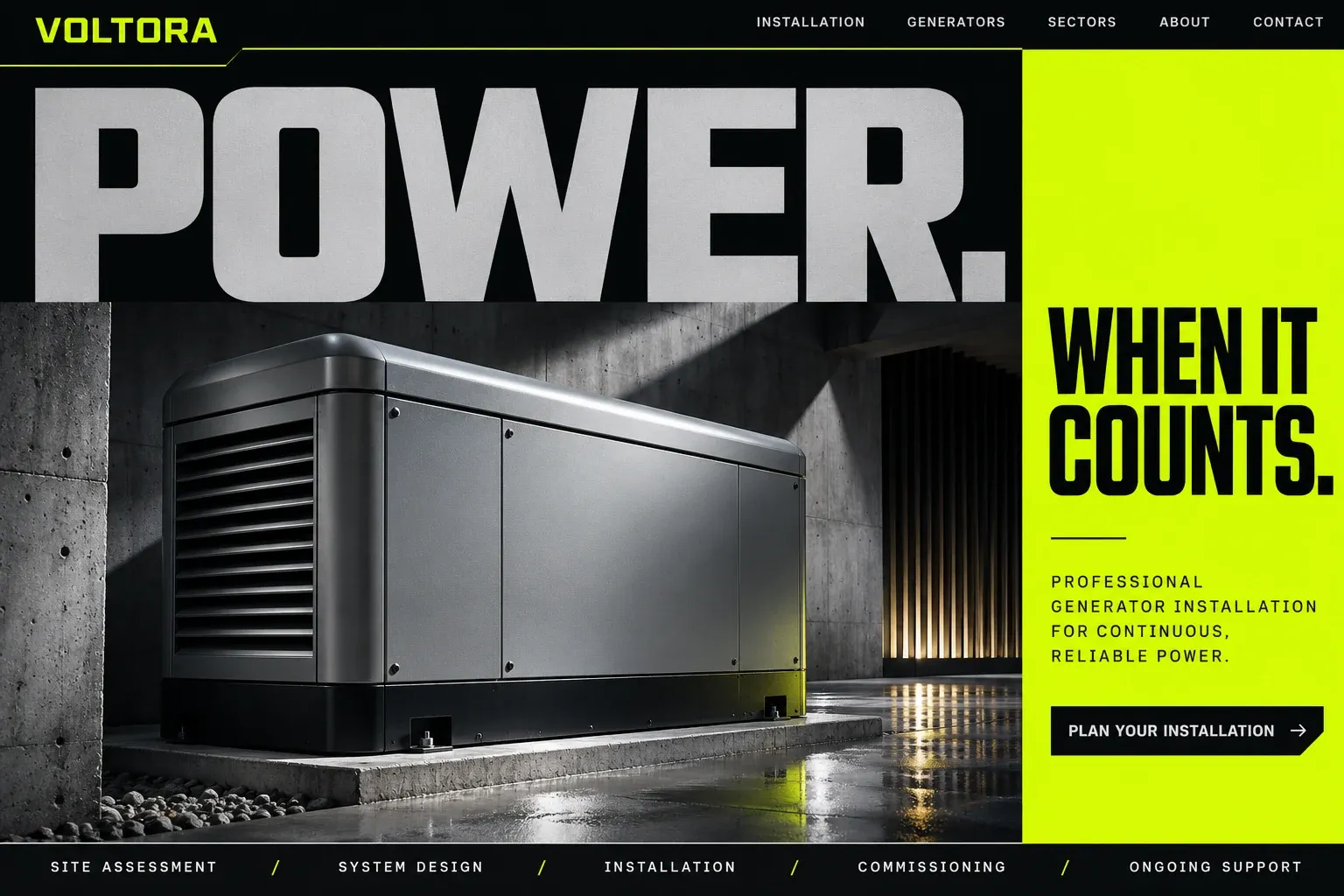
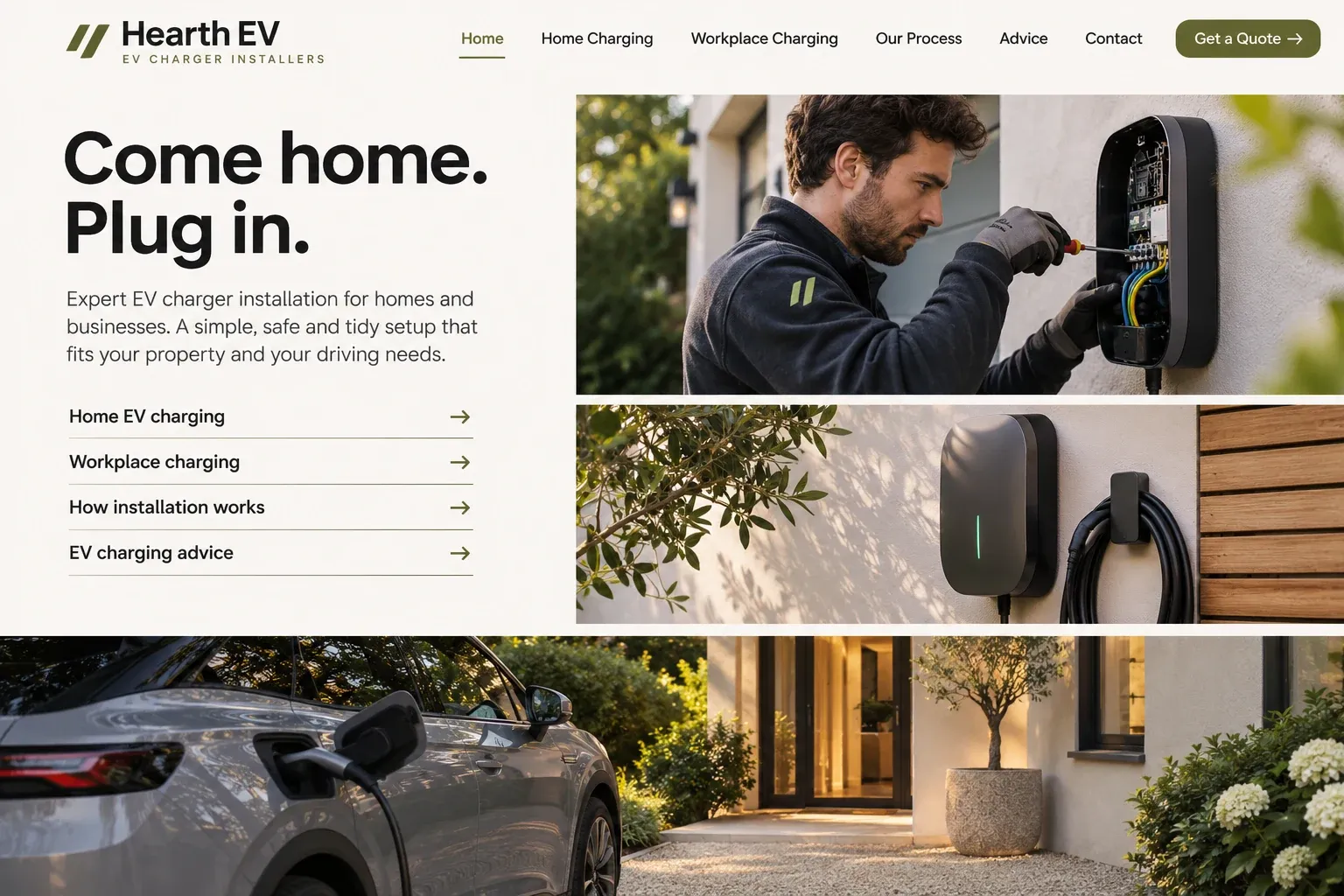
Website design concept for ev charger installers, an illustration
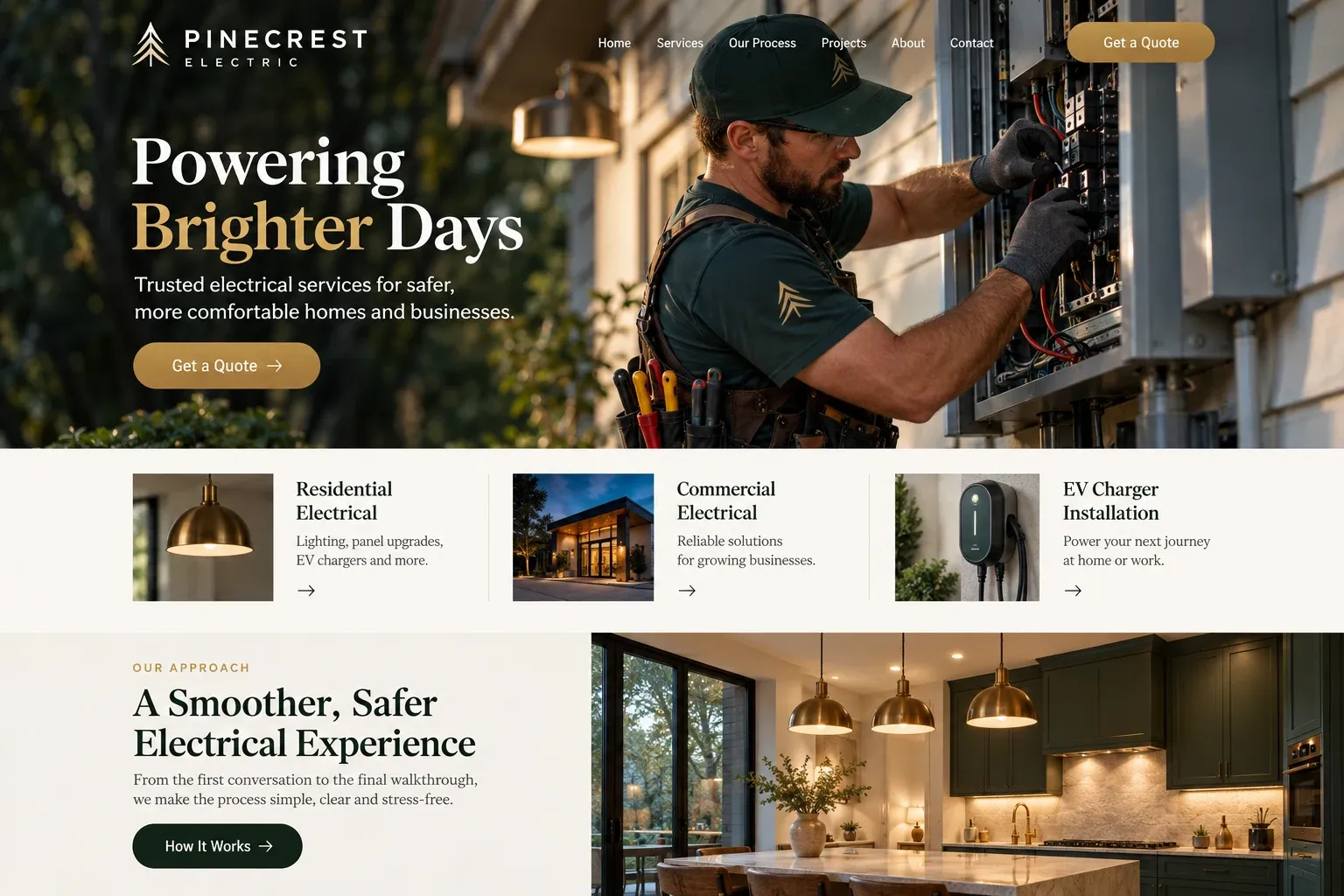
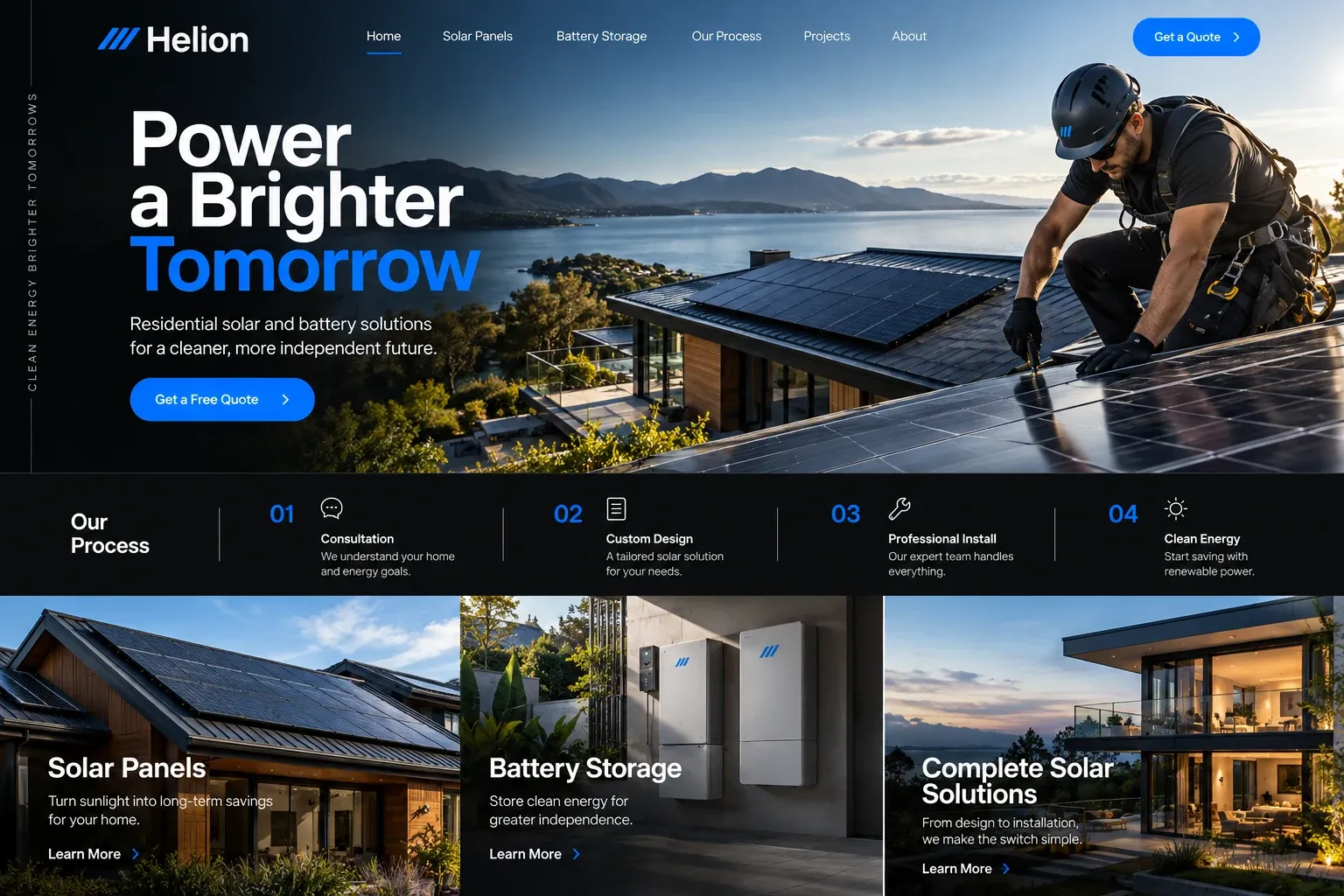
Illustration only: the design, business name and logo are made up to show the kind of website we can build. Not a real business or client website. Yours is designed from scratch around your brand.

Your customer's story

The new car barely charges overnight

Priya picks up her first electric car on a Friday and feels great about it until she plugs it into the garage outlet. By Sunday she has learned that a night on a regular plug barely covers her commute. Her dealer mentioned a home charger, but nothing more. She opens her laptop and searches for EV charger installation near her, not sure what to ask.

She finds charger brands, electrician directories, and forum threads arguing about amps. Nobody explains whether her panel can handle it, whether she needs a permit, or if the charger should go inside the garage or on the driveway wall. One installer's site does: it covers compatible chargers, panel checks, placement, permits, and what the installation day looks like, in plain words.

Its assessment form asks for her car, the charger she has or wants, photos of her electrical panel, and where she parks. She uploads the photos from her phone. An EV charger installer's website wins that job by answering the questions a new owner did not know to ask, before an electrician ever walks into the garage.

Why it matters

Why EV charger installers need a website.

Electric car owners are often new to home electrical work, and they search fast after buying the car. They compare installers by how clearly they explain chargers, panel capacity, permits, and placement, and they want to share photos instead of booking a visit just to find out what is possible. A directory listing for a general electrician answers none of that, and a charger brand's site never names a local installer.

We build EV charger installer websites that answer those questions in order. A compatibility page covers chargers and connectors for the cars you see most. A home charging guide explains panels, circuits, permits, and placement plainly. The assessment form collects the car, charger, panel photos, and parking spot, and separate pages serve condo buildings, workplaces, and businesses.

What your customers search for

  • ev charger installation near me
  • home ev charger installer Miami
  • level 2 charger installation
  • tesla wall connector installation
  • condo ev charger Miami
  • electric car charger electrician

Your customers

What drivers ask before booking an EV charger install

  • Will this charger work with my car?

    A compatibility page covering connectors, the chargers you install and recommend, and whether customers can supply their own unit.

  • Can my panel handle it?

    A plain explanation of panel capacity and dedicated circuits, plus a photo upload so you can check the panel before visiting.

  • Where should the charger go?

    Placement options for garages, carports, and driveways, with notes on cable reach, outdoor ratings, and keeping the cord out of the way.

  • Do I need a permit?

    A short page on permits and inspections for charger installs, explaining who pulls the permit and what the homeowner needs to do.

What we build

What a website for EV charger installers should include.

  • Charger compatibility guide

    Connectors, charger types, and the brands you install, explained so new owners know what to buy or ask about.

  • Panel photo upload

    Customers attach photos of their panel and parking spot, so you can judge the job before scheduling a visit.

  • Home charging explained

    Charging speeds, circuits, and placement described in plain words for drivers who have never thought about amps.

  • Installation assessment request

    A form covering the car, charger, home type, and parking, sent straight to your email for a written quote.

  • Condo and workplace pages

    Separate pages for condo boards, property managers, and businesses planning shared chargers in parking areas.

  • Service and repair requests

    A form for chargers that stopped working, need moving to a new spot, or were installed by someone else.

Planning guide

What should an EV charger installer's website include?

An EV charger installer's website serves owners who just bought a car and need answers quickly. It should explain chargers, panels, placement, and permits in plain words, and make it easy to send photos for an assessment. Here is how we plan the pages, what to show, how requests should work, and how the site helps an installer get found.

Answer the new owner's questions first

Most visitors arrive with a new car and little electrical knowledge. Give them pages on charger types and compatibility, how home charging works, what a dedicated circuit is, and when a panel upgrade might be needed. Keep the language plain and honest: an assessment settles the details. Add a page for each charger brand you install, with photos from your own jobs.

A short glossary helps too. Terms like amps, circuits, hardwired, and plug-in mean little to most drivers, and a page that defines them in a sentence each lets people follow your quote without feeling lost. Link each term from the pages where it first appears, so nobody has to hunt for it.

Show clean installs and the steps behind them

Photos of finished chargers on garage walls, with tidy conduit and labeled breakers, tell an owner you work carefully. Add a short description of the home and what was needed, such as a long run from the panel, an outdoor install, or a charger placed to reach two parking spots.

A process page should cover the photo review or visit, the written quote, permit, installation day, inspection, and a quick walkthrough of the charger app. Put your license number and insurance on every page, because owners want a licensed electrician working on their panel. Mention any charger brand certifications you actually hold, and link to the product warranties.

Let customers send photos instead of waiting

Many charger jobs can be scoped from a few photos. The assessment form should ask for the car, the charger they own or want, the home type, where they park, and photos of the panel and the spot. The request arrives in your email, ready for a quote. Keep a phone number visible for people who would rather talk.

Get found by new owners nearby

New owners search for EV charger installation and home charger installers near them, often naming their car brand. Pages for home installs, condos, and businesses give each search a match. List your service areas, keep your Google Business Profile consistent, and ask customers to mention their car and charger in reviews. That gives a licensed installer a fair chance to be found.
In your market

Built for EV charging in South Florida

Electric cars are a common sight here, and many owners live in condos and apartments where installing a charger involves the association, the building's electrical capacity, and assigned parking. House owners ask about garages that get very hot, outdoor installs exposed to heavy rain, and coordinating chargers with solar panels or backup generators. Hurricane season raises questions about outages and flooding. Many customers prefer Spanish, and a bilingual site can serve both groups.

Questions

Questions EV charger installers ask us.

Should our EV charger site list specific car brands?

Mentioning the cars you charge most often helps owners searching by their brand, and a compatibility page can explain connectors in general terms. We avoid implying any official partnership unless you have one, and we link to manufacturers for technical details.

Can customers send panel photos through the charger website?

Yes. The assessment form accepts photos of the electrical panel, the meter, and the parking spot, along with the car and charger details. Everything arrives in your email together, so you can often prepare a written quote without an extra visit.

Should we have a separate page for condo charger installs?

Yes. Condo owners face association approval, shared electrical rooms, and assigned parking, and boards and property managers have their own questions. A dedicated page explains how you work with associations and lets boards request an assessment for the whole building.

Does our charger website need to show our electrical license?

It should, on every page. Owners want a licensed electrician working on their panel, and Florida contractor advertising rules expect the license number to appear. We place it in the footer and on the contact page, next to your insurance details.

Let's talk

Ready for a website built for EV charger installers?

Tell us about your business and we will come back with a clear recommendation and a fixed quote. No pressure, no jargon.

Trades we design for

See all 436 trades

436 trades

  • Plumbers website design concept
CallFree quote