Web design for electricians

Website design for electricians.

Most electrical work starts with a question the homeowner cannot answer alone: can my panel handle this? The electrician whose site explains the job in plain words, and shows a license number, gets the first call.

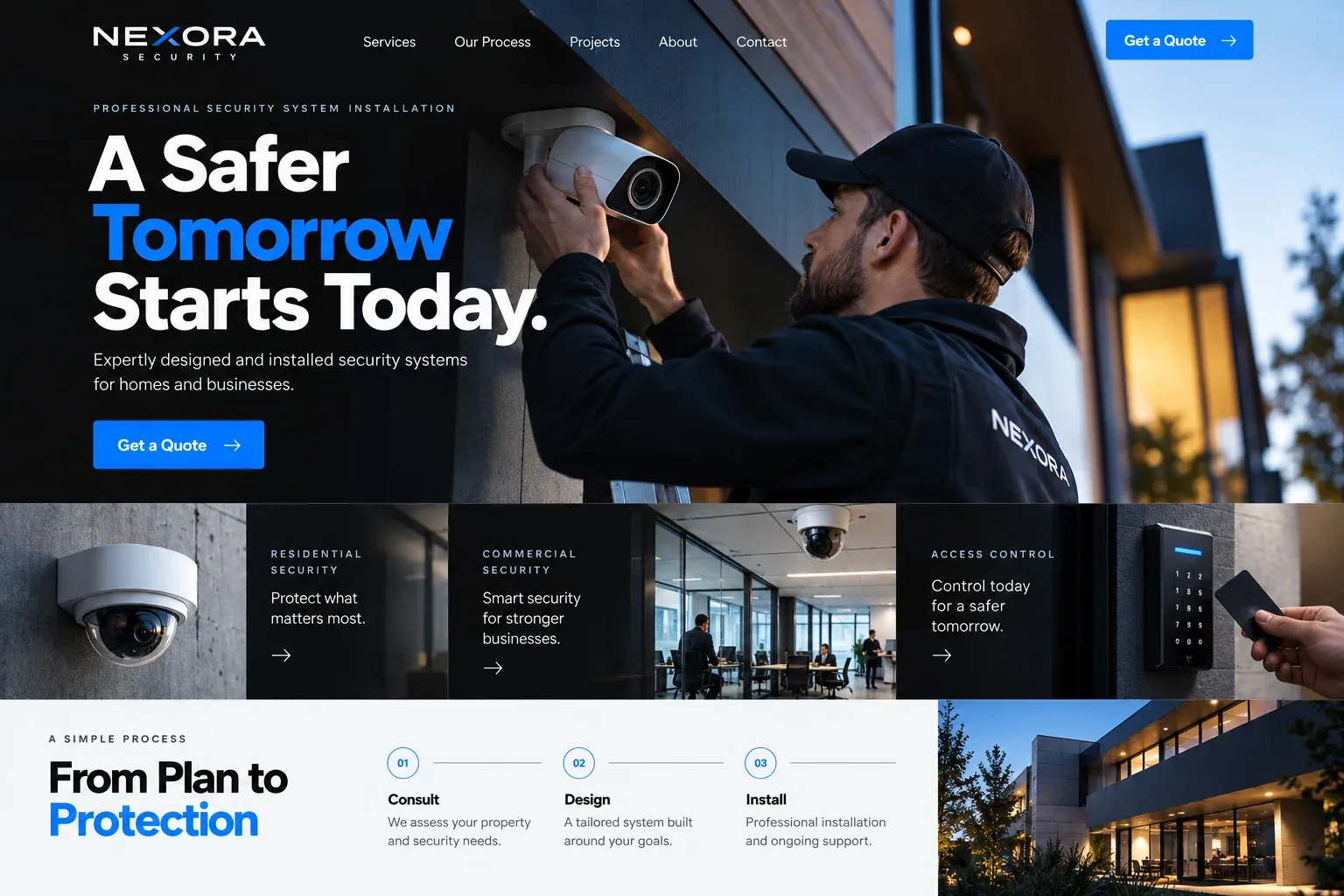
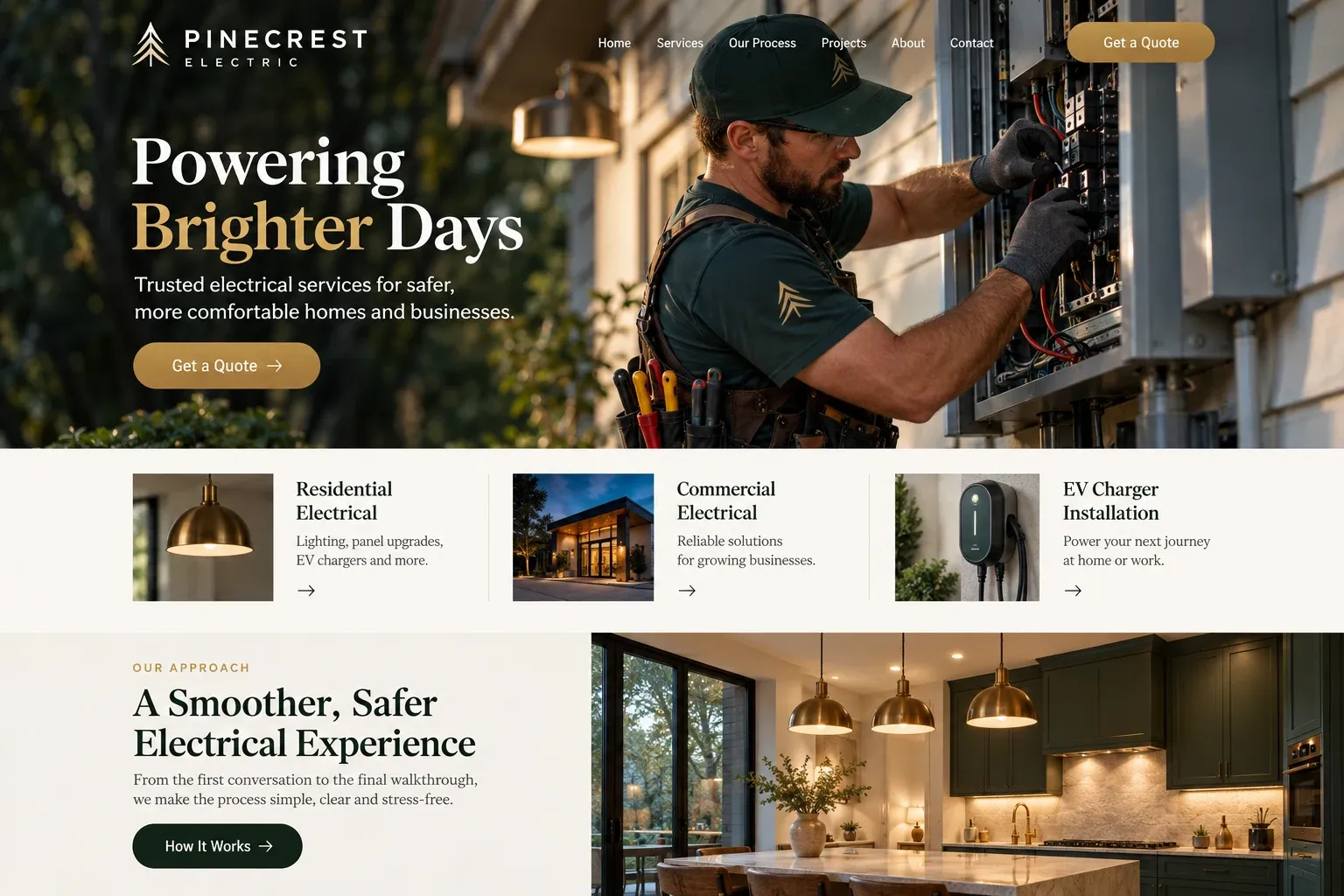
Fictional electricians website homepage design concept
A design concept for a fictional brand. Your site is designed from scratch around yours.

Your customer's story

The new car comes home before the charger

The electric SUV arrives on a Thursday, and by Friday night Kevin knows the cord that came with it is not going to cut it. Plugged into the garage outlet, it adds a trickle of range overnight. The dealer mentioned a faster charger and said to talk to an electrician. Kevin stands in the garage looking at the gray panel on the wall, wondering if it even has room.

He searches "EV charger installation" on his phone and opens a handful of electricians' sites. Two of them squeeze every electrical service into one long list with no detail. Another shows a stock photo of a lightning bolt and little else. Then he finds a company with a page just for car chargers: photos of finished garage installs, a note that every job starts with a look at the panel, and a license number printed under the logo.

The form on that page asks for the car model, where he parks, and a photo of the panel. He sends it from the garage floor. He is not choosing the cheapest electrician in town, because he has no idea who that is. He is choosing the one whose website made an unfamiliar job feel like a normal visit, with a clear first step and a real license behind it.

Why it matters

Why electricians need a website.

Electrical work splits into the jobs people dread and the jobs they plan. A breaker that will not reset, a buzzing panel, or half the house going dark sends someone searching right away. Panel upgrades, EV chargers, generators, and new lighting get researched for a week or more. In both cases the customer wants proof of a license before anyone opens a wall, and a directory listing shows a phone number without showing what you actually do.

We build electrician websites with a separate path for each. Urgent visitors see your number, your hours, and whether you take after-hours calls. Planned work gets its own pages, one for panels, one for chargers, one for generators, each explaining what the visit involves and showing your own installs. Your license number sits in the footer of every page, and the quote form lets customers attach a photo of the panel or the spot in question.

What your customers search for

  • electrician near me
  • electrician in Miami
  • ev charger installation at home
  • electrical panel upgrade
  • generator installation Miami
  • outlet stopped working

Your customers

What homeowners want settled before an electrician comes over

  • Is my panel big enough for this?

    A panel upgrade page that explains, without jargon, when older or smaller panels need replacing and what an on-site assessment looks at.

  • Are you licensed for this kind of work?

    Your license number, insurance, and the type of work you are licensed for, placed in the footer and again on the contact page.

  • Can you get my power back today?

    Your hours, your after-hours policy, and a tap-to-call button at the top of every page, so a dark kitchen does not wait for a form reply.

  • Have you installed this charger before?

    An EV charging page with photos of garage and driveway installs you have finished, plus the details customers should have ready when they ask.

What we build

What a website for electricians should include.

  • EV charger page

    Photos of finished home charging installs, what the assessment covers, and a form that asks for the car model and parking spot.

  • Panel and service upgrades

    A plain explanation of when an older panel gets replaced, with photos of your own clean, labeled panel work.

  • Generator and surge pages

    Standby generators, transfer switches, and whole-home surge protection, each explained for homeowners who just sat through an outage.

  • Lighting project gallery

    Recessed lighting, landscape and pool lighting, and fixture swaps, shown in finished rooms and yards rather than product shots.

  • License in every footer

    Your license number, insurance, and service area on every page, so nobody has to hunt for proof before calling.

  • Photo-ready quote form

    Customers describe the job and attach a picture of the panel, outlet, or ceiling, which helps you plan the visit.

Planning guide

What pages does an electrician's website need?

An electrical contracting website has two audiences: the person with a problem tonight and the person planning a project next month. It should calm the first and inform the second, and it should prove to both that you hold a license. Here is how we would plan the pages, the photos, the contact options, and the local search groundwork for an electrician.

Split services the way customers search

Nobody types "electrical services" into Google when the dryer outlet is scorched. They search for the thing: panel upgrade, EV charger installation, ceiling fan wiring, generator hookup, outlet repair. Give the work you want more of its own page, with a short description, what a visit involves, and photos from your jobs. Residential and commercial work deserve separate pages too, because a property manager and a homeowner read for very different things.

Photograph the work that hides behind walls

Most of what an electrician does disappears once the cover plate goes back on, so photos need a little planning. Take a picture of a panel with neat, labeled circuits before closing it, the charger mounted on the garage wall, the trench for a landscape lighting run. Add a one-line caption saying what was done. Real photos of your work and your van beat stock images of sparks and hard hats every time.

Proof also means paperwork. Show your license number, the name it is issued to, and your insurance on every page. If you are a certified installer for a charger or generator brand, say so and link to the maker's installer listing where one exists. Leave out claims you cannot back up, such as response times you will not always meet.

Let customers reach you two ways

A tap-to-call button that stays on screen handles the urgent calls. For planned work, a short form does better: name, phone, address or neighborhood, what they want done, and an optional photo. For an EV charger, add the car model and where it parks. These few answers let you price the visit or spot a panel upgrade before you drive over, and they reach your email the moment someone presses send.

Give Google a clear local picture

Electricians are hired close to home, so local search matters. Keep your business name, address, and phone identical on the website and on your Google Business Profile, choose the right categories there, and list the cities and neighborhoods you actually work in. Service pages give search engines specific jobs to match, and fresh Google reviews show that real customers had real work done. No one can promise a position in the results, but this groundwork gives a licensed electrician a fair chance.
In your market

Built for electrical work in South Florida

Electricians here work in heat, humidity, and salt air that are hard on outdoor panels, fixtures, and connections. Hurricane season brings outages, which is why generators, transfer switches, and surge protection draw so many questions. Insurers often ask about the panel in older homes, which leads many owners to an upgrade, and condo buildings usually have their own rules for contractors. Plenty of customers would rather call in Spanish. We write pages around these local jobs, show your license number throughout, and can publish a Spanish version.

Questions

Questions electricians ask us.

Where should our electrical license number go on the site?

In the footer of every page and again on the contact page, next to the name it is issued to and your insurance details. Homeowners and property managers look for it before letting anyone open a panel, and a number they can check on the state's license search settles the question quickly.

Can the site take EV charger requests with the car details?

Yes. The charger form can ask for the vehicle, where it parks, the distance to the panel if they know it, and a photo of the panel itself. Those answers arrive in your email, so you have a good idea before the visit whether the job is a simple circuit or a likely panel upgrade.

Should an electrician's site separate residential and commercial work?

If you do both, yes. A homeowner wants to see kitchens, garages, and panels in houses like theirs. A property manager or business owner wants tenant build-outs, lighting retrofits, and maintenance work. Separate pages let each group find relevant photos and give search engines a clearer picture of the jobs you take.

What if most of our electrical jobs are small service calls?

Small calls are often how a customer first meets you, so give them room. A page covering outlets, breakers, fans, and fixtures, with a clear way to book, is worth having. A customer who liked the small visit may come back to the site when they need a panel or a generator, and they will recognize the name.

Let's talk

Ready for a website built for electricians?

Tell us about your business and we will come back with a clear recommendation and a fixed quote. No pressure, no jargon.

Trades we design for

See all 226 trades

226 trades

  • Plumbers website design concept
CallFree quote