Planning guide
What should a solar installer's website explain before the first call?
Solar buyers do much of their research before they ever speak to an installer, and they are wary of big promises. The website that earns their call is the one that explains the process, shows real work, and is honest about what shapes an estimate. Here is how we would plan a solar installer's site, section by section.
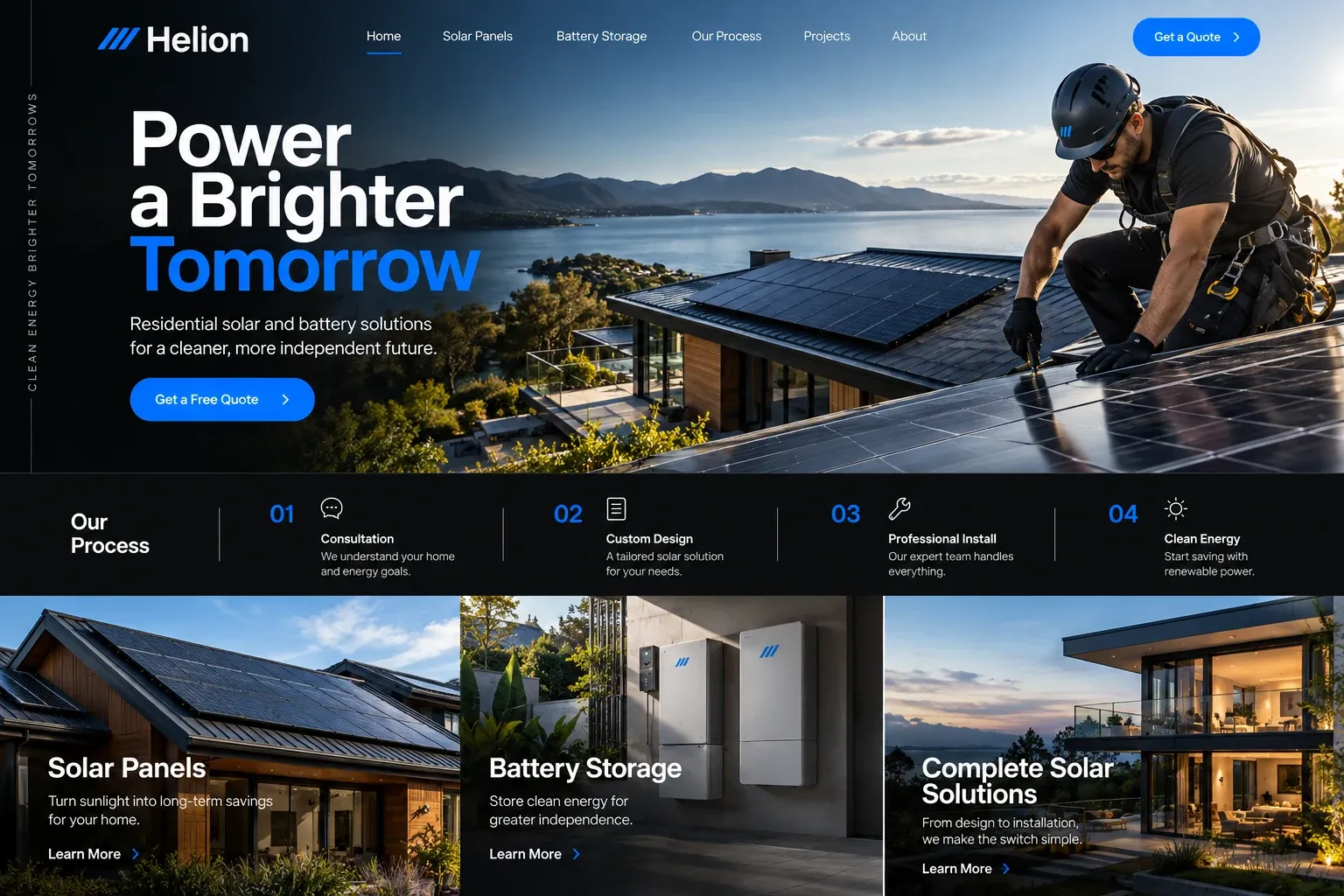
Lay out the process from roof to switch-on
Give the process its own page and link to it from the home page. Walk through each stage: the first conversation, the roof and usage review, the design and proposal, permits and utility paperwork, installation, inspections, and turning the system on. Be honest that permits and utility approvals take time you do not fully control. Buyers who know what comes next are less likely to stall halfway.
Explain estimates without promising savings
Savings claims are where many solar sites lose credibility. Instead of a headline number, publish a page that explains what goes into a proposal: past electricity use, roof orientation and shade, available roof space, equipment choices, batteries, and the utility's current rules for customers with solar. Say that every estimate depends on these factors and that rates and incentives change.
If you mention incentives or tax credits, keep the wording general, date it, and link to the official source, because these programs change and an outdated claim does real damage. A buyer who catches one stale figure tends to doubt the rest of the site. We write this page with you and update it when your proposals change.
Show real systems, with their scope
Project pages should show installed systems on real roofs, with the details buyers compare: number of panels, inverter type, battery if any, roof material, and any roof or electrical work done alongside. Photos of clean conduit runs and tidy equipment walls show care. Leave out production or savings figures unless the homeowner agrees and the numbers are real, and never invent a project.
Let the consultation start with the property
The consultation form should collect the address, roof age and material, rough monthly usage or a photo of a recent bill, shade concerns, and the main goal, such as lower bills or backup during outages. Offer a phone number too, since many buyers want to talk first. For local search, add pages for the communities you serve, keep your Google Business Profile current, and ask finished customers for reviews.