Web design for fire damage restoration companies

Steady websites for fire damage restoration.

After a fire, owners face a damaged building, an insurance claim, and a long list of calls. They look for a restoration company that explains its role calmly and tells them, step by step, what happens next.

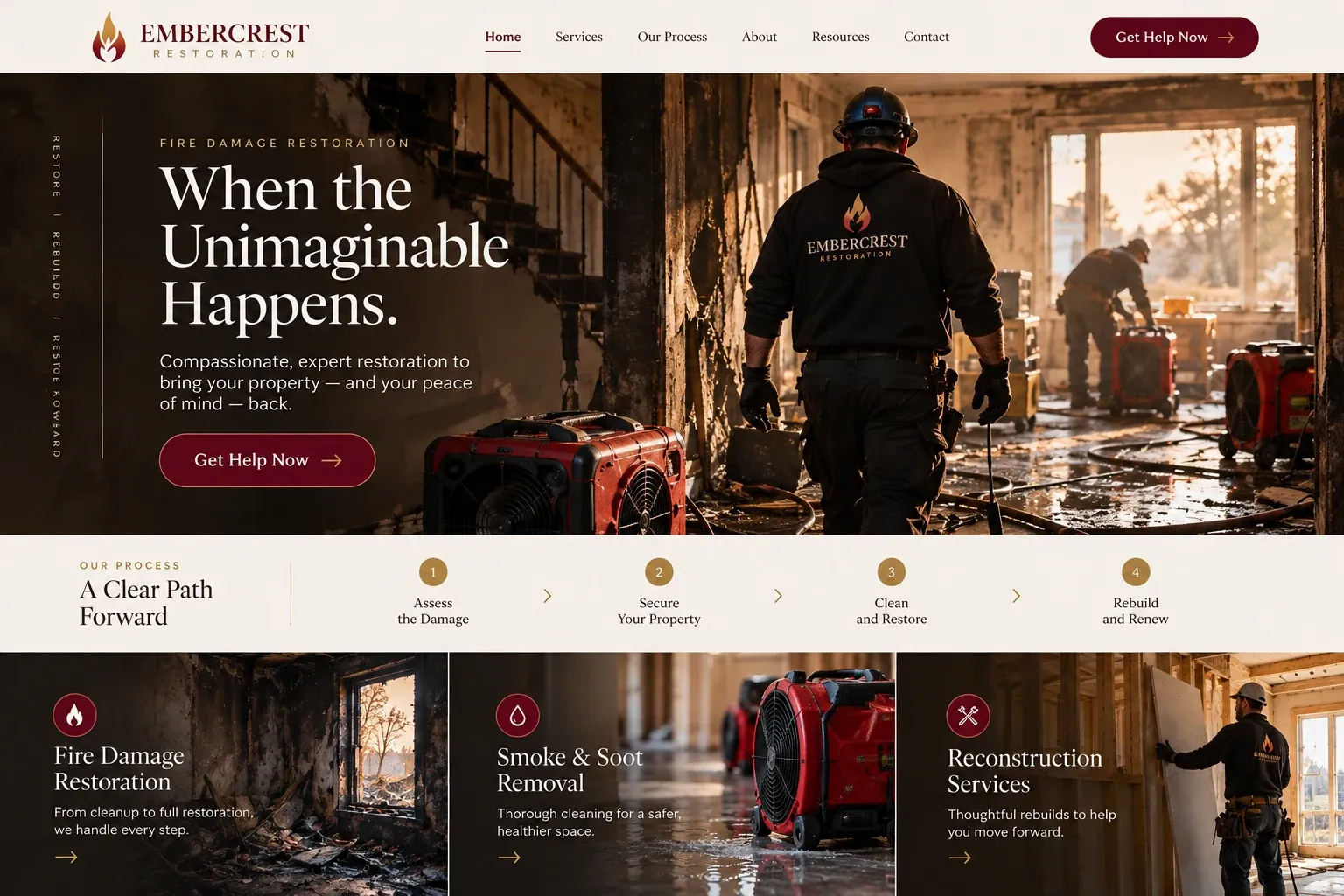
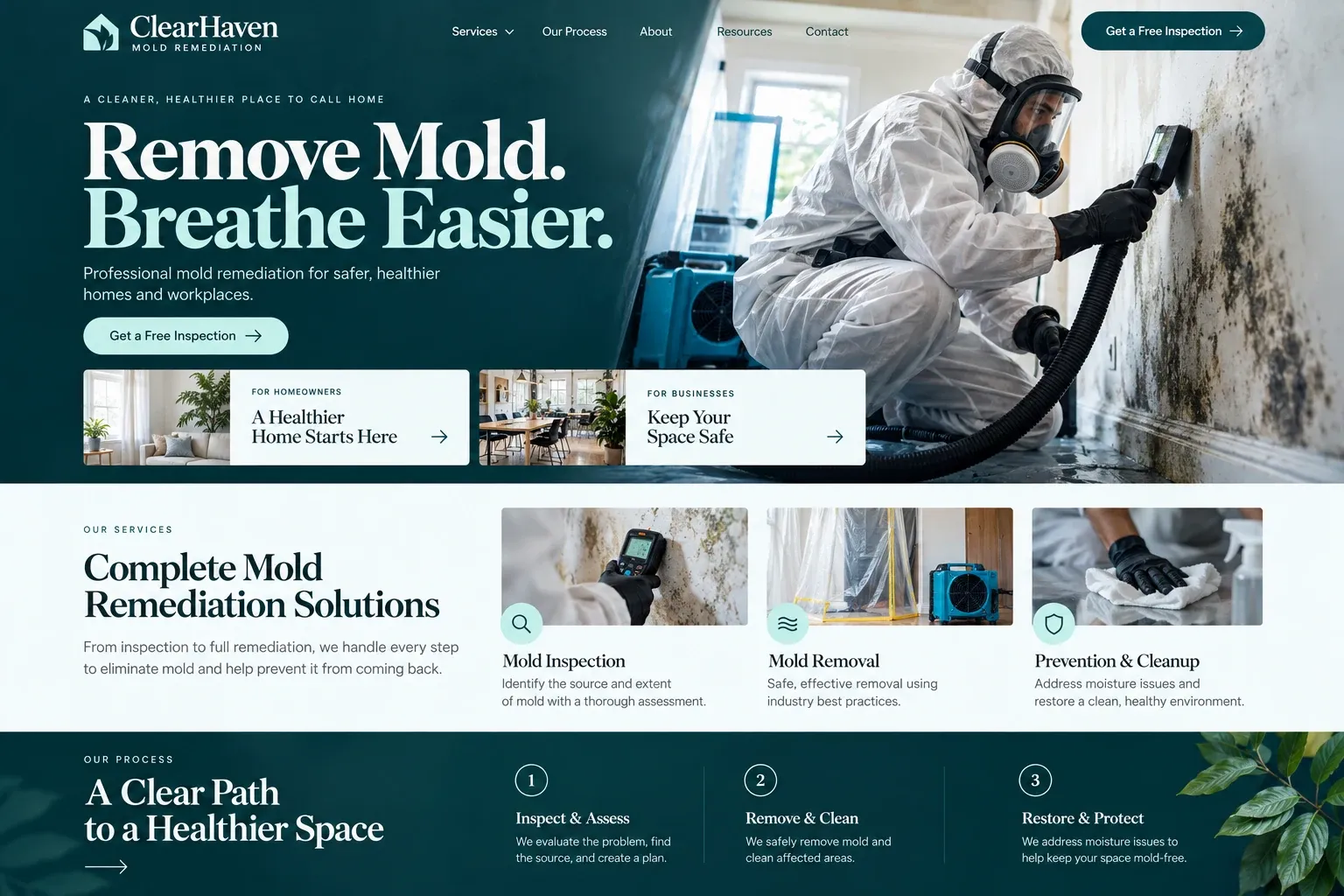
Fictional fire damage restoration companies website homepage design concept
A design concept for a fictional brand. Your site is designed from scratch around yours.

Your customer's story

The morning after the kitchen fire

Hector owns a small Cuban restaurant on a busy corner. A grease fire in the kitchen was put out quickly by the hood system and the fire department, but the dining room is gray with soot and the whole building smells of smoke. He stands on the sidewalk at 7 a.m. with his insurance card, his manager, and no idea who to call first.

His manager searches for fire damage restoration on her phone while he calls the insurer. Some sites are full of flames and words like disaster. One is different: it lists board-up, soot and smoke cleanup, odor removal, contents cleaning, and commercial kitchens as separate services, introduces its project managers by name with photos, and explains how a job is assessed and coordinated with the insurer and other contractors.

Hector calls that one. What he needed was not drama, but a sense that somebody would organize the next few weeks. A fire restoration website should give that impression honestly: a steady tone, a clear list of what you do and what you hand to others, the people who will run the job, and a direct way to reach them.

Why it matters

Why fire damage restoration companies need a website.

Fire restoration is chosen under stress but judged over weeks. The first call may come from the owner, a property manager, or an insurance adjuster, and each needs to know whether you handle the work in front of them: board-up, soot cleanup, odor treatment, contents, or rebuild. A directory listing gives a phone number, but it cannot describe your scope, introduce your team, or explain how a project is coordinated.

We build fire restoration websites in a calm, respectful tone. Services are organized by the work you actually provide, with clear notes on what you subcontract. A process page explains assessment, securing the property, cleanup, and coordination with insurers and contractors. Your project managers are introduced with real photos. The contact path stays direct, with a phone number on every page and a short form for non-urgent inquiries.

What your customers search for

  • fire damage restoration near me
  • smoke damage cleanup Miami
  • soot removal service
  • fire damage repair Miami
  • smoke odor removal
  • board up service after fire

Your customers

What owners ask in the days after a fire

  • What exactly do you handle?

    A services page that separates board-up, soot and smoke cleanup, odor removal, contents cleaning, and reconstruction, and says plainly what you subcontract.

  • Who will be in charge of my job?

    A team page with names, roles, and photos of your project managers, so owners know who they will speak with each week.

  • Can my belongings be saved?

    A contents page explaining pack-out, cleaning, storage, and inventory, with honest notes that results depend on the item and the damage.

  • How do you work with my insurer?

    A plain explanation of how you document the loss and communicate with adjusters, without promising what a policy will pay for.

What we build

What a website for fire damage restoration companies should include.

  • Services by scope

    Board-up, smoke and soot cleanup, odor treatment, contents, and rebuild work, each on a page that says what is included.

  • Project coordination page

    How you assess the property, set priorities, and keep the owner, insurer, and contractors informed as the job moves forward.

  • Team introductions

    Photos and short bios of the people who run jobs, because owners want to know who will walk them through it.

  • Direct contact path

    A phone number on every page, an after-hours line if you have one, and a short inquiry form for anything less urgent.

  • Commercial losses page

    Restaurants, offices, warehouses, and multi-unit buildings, with notes on reopening plans and working around tenants or staff.

  • Claim paperwork explained

    What you record on site, such as photos, inventories, and scope notes, and how owners get copies for their claim.

Planning guide

How should a fire restoration company present its services online?

A fire restoration website is read by people having one of the worst weeks of their lives, and by the adjusters and managers working alongside them. It should be steady, specific, and easy to act on. This guide covers the pages to build, the tone and proof that earn trust, how contact should work, and how the business gets found locally.

Organize services by the actual work

Owners rarely know the industry's terms, so describe each service by what it fixes: securing the building with board-up and tarps, removing soot from walls and ceilings, treating smoke odor, cleaning and storing contents, and rebuilding. Give each its own page. Be clear about what your crews do and what you coordinate through partners, such as electricians or roofers, so nobody is surprised later.

Choose a steady tone over drama

Flames and dramatic headlines do not help someone who just lived through a fire. Use photos of your crews working, cleaned rooms, and your trucks on site, with the owner's permission. Write in short, calm sentences. Introduce your project managers with names and faces, and describe certifications your team actually holds. Respectful words and real faces do more than any claim about being the best in town.

Make contact direct for every reader

Some visitors need someone on site today; others are adjusters or managers reviewing options for a client. Keep the phone number on every page, state your real hours and after-hours policy, and add a short form for inquiries that can wait. Ask for the property address, the type of property, and a callback number, and leave room for a note.

A separate page for commercial clients and property managers helps too. Explain how you handle restaurants, offices, and buildings with tenants, how you plan around reopening, and who the point of contact will be. Clear expectations at this stage save a great deal of back-and-forth once the work is under way, especially when several parties are involved.

Help owners and adjusters find you

People search for fire damage restoration, smoke damage cleanup, and soot removal with their city or near me. Service pages for each type of work and an area page listing the cities you cover give search engines specific topics to match. Keep your Google Business Profile consistent with the site and ask for reviews when jobs close. Nothing here promises a ranking, but it makes you easier to find.
In your market

Built for fire restoration in South Florida

Fires here often start in kitchens, electrical panels, and dryers, and in high-rise buildings even a small one can mean smoke in hallways and sprinkler water in the units below. Lightning is common during summer storms, and generators running after hurricanes bring their own risks. Restaurants, condo associations, and seasonal owners who live elsewhere for part of the year all need clear, organized communication. We write pages for these situations and can publish your site in English and Spanish.

Questions

Questions fire damage restoration companies ask us.

How do we show fire restoration work without upsetting people?

Focus on recovery rather than destruction. Photos of crews cleaning, rooms after restoration, and equipment in use work well, always with the owner's permission. A few before and after pairs can help, but we avoid dramatic flame imagery and keep captions factual, so the site feels steady to someone in a hard week.

Should our fire damage site list what we subcontract?

Yes, briefly. Owners and adjusters want to know who is responsible for each part of the job. Saying that you coordinate electrical work or roofing through trusted partners, while your crews handle cleanup and contents, makes your role clear and prevents confusion when other trades arrive on site.

Can our fire restoration site introduce the project managers?

We recommend it. A team page with names, roles, photos, and a short note on each person's background gives owners a face to expect at the door. You choose who appears and approve every bio, and we update the page when people join or leave.

Can the website help after-hours fire damage calls reach us?

Yes. Your emergency number sits at the top of every page and taps to call on a phone. If calls after hours go to an on-call manager or an answering service, the site says so honestly, and non-urgent inquiries go through a form that emails your office.

Let's talk

Ready for a website built for fire damage restoration companies?

Tell us about your business and we will come back with a clear recommendation and a fixed quote. No pressure, no jargon.

Trades we design for

See all 226 trades

226 trades

  • Plumbers website design concept
CallFree quote