Web design for general contractors

Websites that show how you run a job.

Anyone can post photos of a finished addition. What owners want to know before they hire a general contractor is who runs the job: the permits, the subs, the schedule, and the phone calls when something changes.

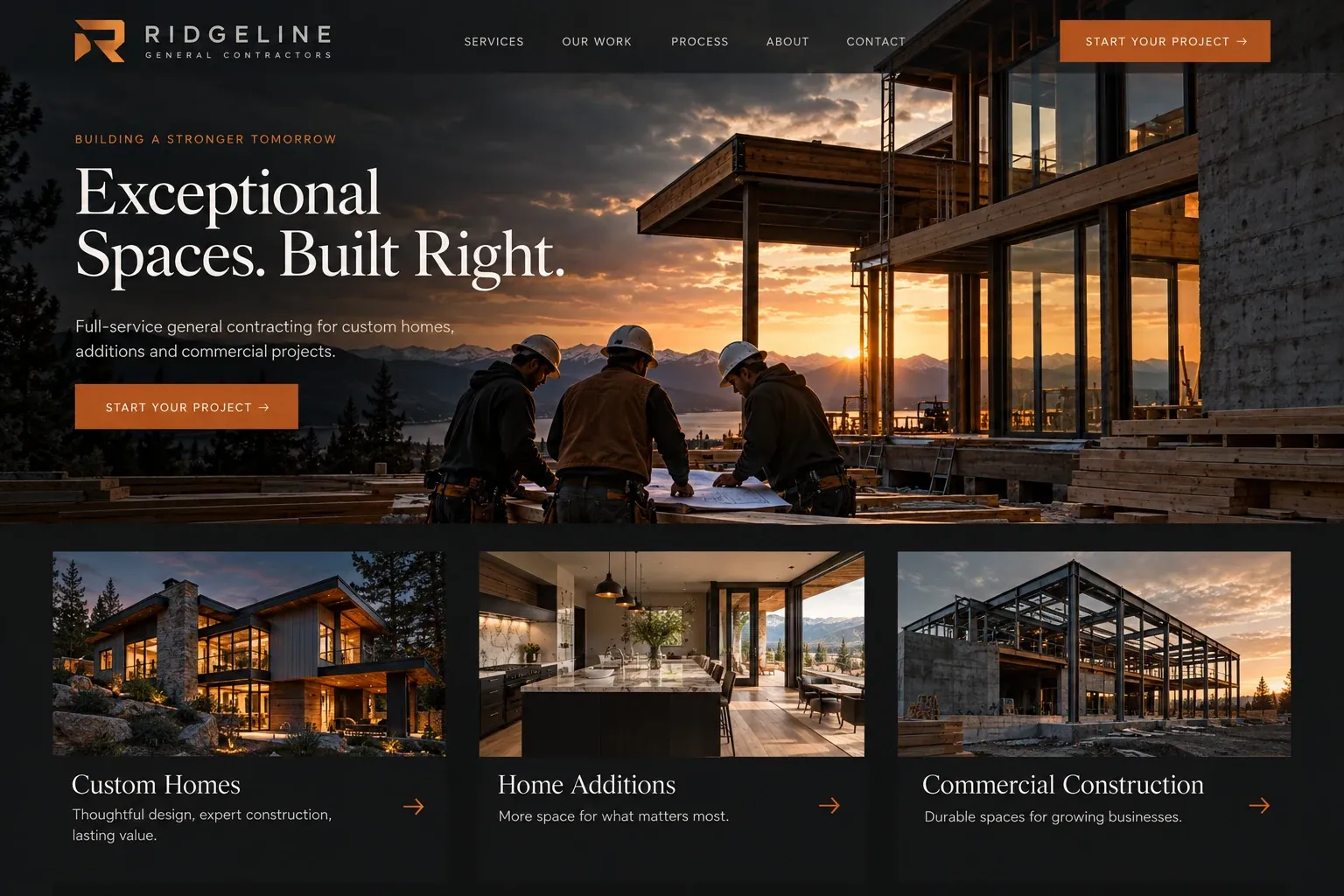
Fictional general contractors website homepage design concept
A design concept for a fictional brand. Your site is designed from scratch around yours.

Your customer's story

Grandma is moving in next spring

Tomás and Renée have a folder on the laptop called Addition. It holds a sketch on graph paper, forty saved photos of bedrooms with their own bathrooms, and a screenshot of a wheelchair ramp. Renée's mother is moving in next spring, and the house needs another room on the ground floor. They know what they want it to feel like. They have no idea where to begin.

Tomás searches "general contractor home addition" and opens a dozen sites over the next evening. Most show glossy kitchens and say they do everything. Very few say what they actually do on a project like this one. One contractor has a page that walks through an addition from the first visit to the final inspection: drawings, permits, foundation, framing, trades, finishes, and who the family talks to each week.

That site also includes two finished additions, each with a short note on what the family needed and what the job involved. The inquiry form asks about the goal, the rough budget range, and when they hope to be done. Renée fills it in that night. A contractor's website has to show the management, not only the marble, because the management is what a client is really hiring.

Why it matters

Why general contractors need a website.

People hire a general contractor for the projects they cannot manage alone: additions, whole-home renovations, structural changes, commercial build-outs. These are slow decisions with large sums at stake, and clients research for weeks. They want to see how you organize a project, how you handle permits and inspections, which trades you bring in, and how you keep them informed. A directory page or social feed shows pictures, but it cannot explain a process or a role.

We build general contractor websites that put your method next to your photos. Each featured project explains the scope, the obstacles, and what you coordinated. A process page lays out the stages from consultation to closeout. The inquiry form asks about goals, timing, and budget range, so the first meeting is a real conversation. Residential and commercial work can live on separate pages, each with its own projects and its own contact path.

What your customers search for

  • general contractor near me
  • general contractor Miami
  • home addition contractor
  • whole house renovation
  • condo renovation contractor
  • commercial build out contractor

Your customers

What owners ask before signing with a general contractor

  • Who handles the permits and inspections?

    A process page that names each stage you manage, from drawings and permit applications to inspections and the final sign-off, in plain language.

  • Who will I actually talk to?

    An introduction to your project managers or superintendents, with how often clients hear from them and how changes are communicated and approved.

  • Have you done a job this size?

    Project pages that describe scope, not just results: an addition, a gut renovation, an office build-out, each with photos from start to finish.

  • How do you handle changes mid-project?

    A short explanation of your change order process, written before anyone asks, so clients know how decisions and costs are recorded and signed.

What we build

What a website for general contractors should include.

  • Scope-led project pages

    Each project shows the brief, what was built, the trades involved, and photos from demolition through the final walkthrough.

  • Build sequence overview

    A clear, illustrated page of your stages, from consultation and design to permits, construction, inspections, and closeout.

  • Trade coordination section

    How you schedule and supervise electricians, plumbers, framers, and finish trades, so clients see the management behind the work.

  • Budget-range inquiry form

    Questions on project type, goals, timing, and budget range, so you can tell early whether a lead fits your work.

  • Residential and commercial paths

    Separate sections for homeowners and for business owners or property managers, each with relevant projects and its own contact form.

  • Credentials and insurance block

    Your license number, insurance, bonding if you carry it, and memberships you hold, displayed together where serious clients look.

Planning guide

How should a general contractor present its work online?

A general contractor's website sells something harder to photograph than a finished room: the ability to run a project. It should help owners understand your process, judge whether their project fits your work, and start a useful first conversation. Here are the pages, proof, inquiry details, and search groundwork we plan for a general contracting firm.

Lead with process, then projects

A clear process page is the backbone of a contractor's site. Walk through the stages in order: first meeting, design or drawings, permits, site work, framing and rough trades, inspections, finishes, and closeout. Note what the client decides at each stage. Then build project pages that refer back to it, so visitors see the same method applied to a kitchen addition, a second story, or a medical office build-out.

Tell the story behind each photo

Finished photos alone make every contractor look alike. Add a short case note to each project: what the owner needed, the main constraints, such as an occupied house, a tight lot, or condo association rules, and how you handled them. Include a few in-progress shots, because framing and rough-in photos show care that disappears behind drywall. Use real projects only, with the owner's permission, and no figures you cannot support.

Ask questions that shape the first meeting

An empty contact box invites vague messages. A short inquiry form does better: project type, address or area, what they hope to achieve, when they want to start, a budget range, and whether they already have drawings. Let them attach plans or photos. The answers reach your inbox and help you decide whether to schedule a site visit or suggest another route.

Keep a phone number and office address on every page as well. Large projects often begin with a call, and clients feel better seeing a real office. If your team speaks Spanish or Portuguese, say so near the form, because language is one of the first things many clients check before trusting a contractor with their property.

Help owners nearby find the firm

Searches for contractors combine a service and a place: home addition contractor, condo renovation, commercial build-out near me. Pages for each type of project you want, an area page listing the cities you build in, and a Google Business Profile that matches your site all help. Reviews from completed projects add weight. A strong site cannot promise rankings, but it gives search engines a clear picture of what you build and where.

In your market

Built for contracting in South Florida

General contractors here work with impact-rated windows and doors, busy building departments, flood zones, and the wind requirements of the Florida Building Code. Condo and HOA approvals add another layer, as do restricted work hours in occupied buildings. Many clients are bilingual, and some are seasonal residents or investors who follow the project from abroad. We write pages that explain permits and approvals plainly, show your license number, and can add a Spanish version for clients who prefer it.

Questions

Questions general contractors ask us.

Should a general contractor show projects that are still under construction?

Yes, with the owner's permission. In-progress photos show framing, structure, and rough trades that disappear later, which is where your quality is easiest to see. We set up project pages so new stages can be added as the job moves, then finish each page with photos of the completed work.

Can our contracting website explain how we handle permits?

It should. A permits page describes what you take care of, such as drawings, applications, inspections, and final approvals, and what the owner may need to provide. We write it in general terms from your notes, since requirements differ by city, and you approve every line before it goes live.

How do we keep small jobs from filling up our inquiry form?

The form can ask for project type and a budget range, and the site can state the kinds of projects you take on. That filters most mismatches politely. If you refer smaller jobs to a trusted handyman or specialist, a short note saying so keeps goodwill with people you cannot help.

Should a general contractor's site say anything about subcontractors?

You do not need to name them, but explaining how you choose and supervise trades builds confidence. A short section on the licensed electricians, plumbers, and other trades you bring in, and who on your team oversees them, answers a question many owners have but rarely ask out loud.

Let's talk

Ready for a website built for general contractors?

Tell us about your business and we will come back with a clear recommendation and a fixed quote. No pressure, no jargon.

Trades we design for

See all 226 trades

226 trades

  • Plumbers website design concept
CallFree quote