Web design for fireplace installers

Website design for fireplace installers.

Few people need a fireplace. They want one: a focal point for the living room, a glow on the patio, a reason to linger. Your website has to show the feeling and then explain what the space allows.

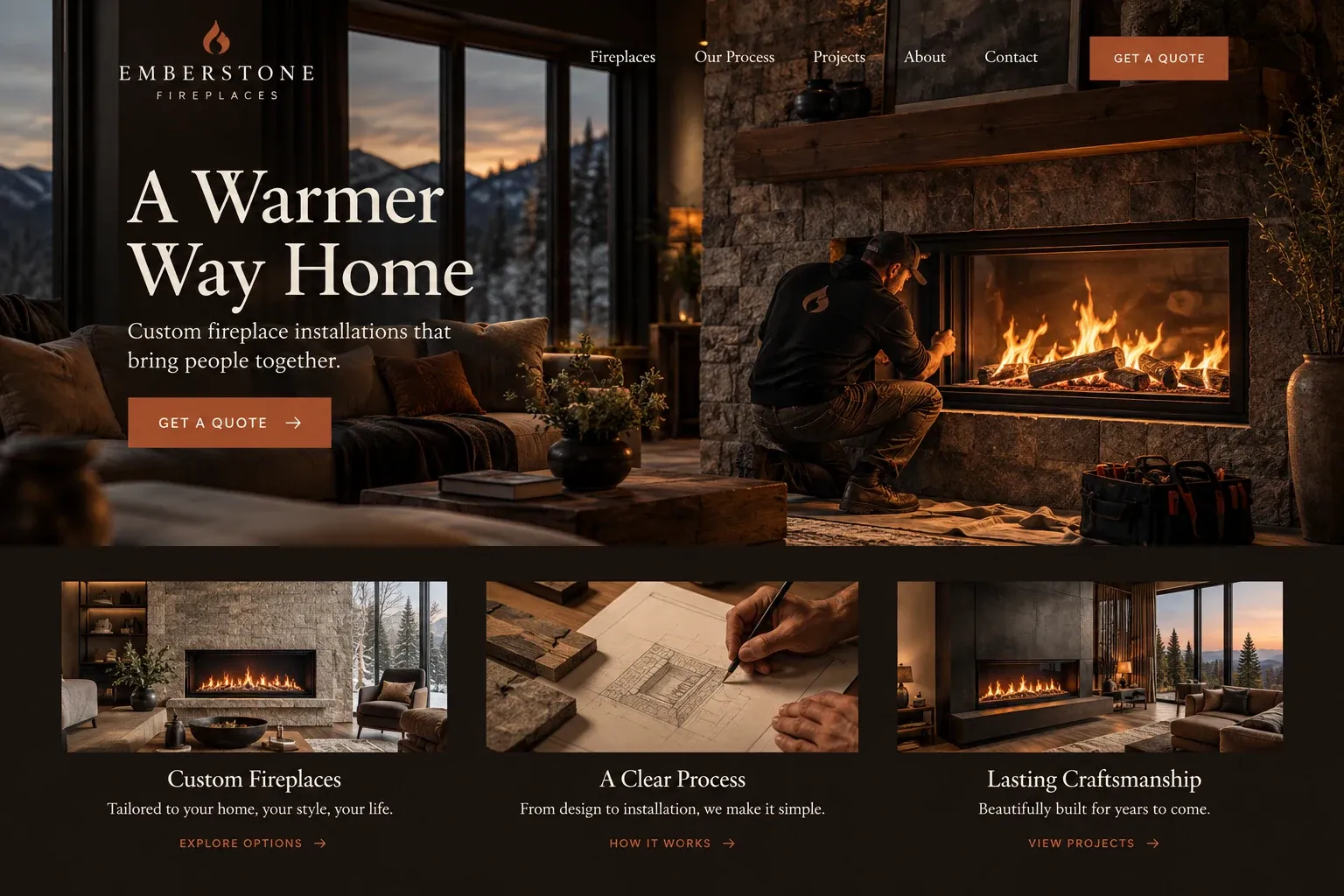
Fictional fireplace installers website homepage design concept
A design concept for a fictional brand. Your site is designed from scratch around yours.

Your customer's story

A media wall waiting for a focal point

Valeria has just finished redoing the living room of her twelfth-floor condo: new floors, new sofa, a long low console under the TV. Something is still missing. At a friend's apartment last month she saw a linear fireplace set into the wall below the screen, flames flickering behind glass, and the whole room seemed warmer. There is no chimney in her building, so she assumes it is impossible, and searches anyway.

Her searches turn up showrooms listing dozens of models with no word on which suit a condo, plus blog posts arguing about ventless gas. One installer's site is organized differently. It starts with the setting: condo media walls, family rooms, covered patios. It shows finished installations in each, and explains that electric units need no venting while gas depends on the building, the venting route, and local rules.

Its consultation form asks for a photo of the wall, the wall's width, whether she owns or rents, and whether the building needs approval for renovations. She realizes she will need to ask her condo association, and is glad someone told her before she bought anything. A fireplace installer's website should pair the room photos that inspire with an honest picture of what each space can take.

Why it matters

Why fireplace installers need a website.

A fireplace is a considered purchase driven by looks, and buyers browse for a long time before they call. They compare wood, gas, and electric, built-in and freestanding, indoor and outdoor, and they wonder what their home or building will allow. A showroom catalog or a social feed can inspire, but it cannot explain venting, power, clearances, or approvals, or show your installations in rooms like theirs.

We build fireplace installer websites that start with the room and end with a plan. Galleries are grouped by setting and fuel type, each project photographed as part of the space. A consultation page explains what you assess, such as walls, venting routes, gas and electrical supply, and building rules, and the inquiry form collects photos and measurements so the first conversation is about their home.

What your customers search for

  • fireplace installers near me
  • electric fireplace installation Miami
  • linear fireplace media wall
  • outdoor fire pit installer
  • gas fireplace insert
  • outdoor fireplace for a covered patio

Your customers

What homeowners wonder before adding a fireplace

  • Can I have one without a chimney?

    A page explaining electric and direct-vent options in plain words, with installations in homes and condos that have no chimney at all.

  • Gas, electric, or wood?

    A comparison page on look, heat, upkeep, and installation needs for each fuel, with photos of the ones you actually install.

  • Will it work on our patio?

    Outdoor fire feature pages covering fire pits, fire tables, and outdoor fireplaces, with notes on gas lines, wind, and covered spaces.

  • What do you need to see first?

    A consultation page listing what you assess on a visit and the photos and measurements that help you prepare, so the first visit is productive.

What we build

What a website for fireplace installers should include.

  • Galleries by room and setting

    Living rooms, bedrooms, condo media walls, and patios, each shown as a whole space with the fireplace as its focal point.

  • Fuel and product navigation

    Electric, gas, wood, inserts, and outdoor units in separate sections, so visitors browse only what suits their home.

  • Site consultation explained

    What you check on a visit, from wall structure and clearances to venting, gas lines, power, and building approvals.

  • Media wall pages

    Built-in electric fireplaces under or beside the TV, with finish options like stone, tile, or slatted wood surrounds.

  • Outdoor fire features

    Fire pits, fire tables, and outdoor fireplaces for pool decks and covered patios, each with photos from your installations.

  • Installation inquiry form

    Photos of the wall or patio, rough measurements, fuel preference, and whether a condo board must approve, sent straight to you.

Planning guide

What should a fireplace installer put on its website?

Fireplace buyers start with a picture in their heads and very little idea of what is possible in their space. A good installer's website shows them rooms they want to live in, then explains fuel types, venting, and the consultation in a way that turns a wish into a plan. These are the pages and details we would build.

Organize by setting, then by fuel

Most visitors think about where the fireplace will go before they think about how it burns. Lead with settings: a living room wall, a bedroom, a condo media wall, a covered patio, a pool deck. Within each, show what works there and link to the fuel and product pages. A visitor who lives in a high-rise should reach the options that suit a building like theirs without wading through wood stoves.

Photograph fireplaces as part of rooms

Product shots from manufacturers show the unit, not the room. Your own installation photos should show the fireplace in context, lit and unlit, with the surround, the mantel or shelf, and the furniture around it. For outdoor features, shoot at dusk with the flames on. Caption each project with the fuel type, the model family if you like, and the finish materials used.

Explain the consultation honestly

The consultation page is where inspiration meets reality. List what you assess on a visit: the wall and its framing, clearances, the venting route for gas or wood, the gas line and electrical supply, and any building or association approvals. Say plainly that some spaces suit some fuel types and not others, and that you will explain the options once you have seen the room.

The inquiry form should ask for photos of the space, rough measurements, the fuel they are considering, whether the space is in a house or a condo unit, and when they hope to finish. That last answer matters before the holidays and the cooler, more social months, when installers tend to get busy. Leave room for a note about the look they want.

Help nearby buyers find your work

Fireplace searches usually pair a product with a place: electric fireplace installation, outdoor fire pit installer, gas fireplace insert near me. Pages for each type you install, plus a page naming the areas you serve, give search engines precise matches. Link the site to a current Google Business Profile with project photos, and ask clients to review you once the first fire is lit.
In your market

Built for fireplaces in South Florida

Fireplaces here are mostly about atmosphere rather than heat. Many installations are electric units in condo media walls, where there is no chimney and buildings set their own renovation rules, or gas fire pits, fire tables, and outdoor fireplaces on patios and pool decks. Older houses sometimes have a masonry fireplace worth restoring. Clients are often bilingual or seasonal. We plan pages for each of these buyers, with a Spanish version if you want one.

Questions

Questions fireplace installers ask us.

Should our fireplace website focus on electric units for condo owners?

If condo work is a large part of your business here, yes, give it its own section. Explain why electric units suit buildings without chimneys, show media wall installations you have done, and note that many associations require approval before renovations. Gas and outdoor work still get their own pages.

Can the site show fireplace brands and models we install?

Yes. We can organize products by fuel and type, link to manufacturer pages for specifications and warranties, and use maker-approved images where dealers are allowed to. Your own installation photos come first, though, because they show what a fireplace looks like in a real room.

How do we explain gas fireplace venting without getting too technical?

We describe the options in everyday words, such as direct vent through a wall or a vent run through the roof, with a simple diagram or photo. We avoid code claims and say that the right choice depends on the home, the building, and local rules, which you assess on site.

Should outdoor fire pits and fire tables have their own pages?

Yes. People shopping for a fire feature on a pool deck or patio search differently from someone adding a fireplace indoors. A dedicated outdoor section with dusk photos, notes on gas lines and covered spaces, and its own inquiry form gives those visitors a clear path.

Let's talk

Ready for a website built for fireplace installers?

Tell us about your business and we will come back with a clear recommendation and a fixed quote. No pressure, no jargon.

Trades we design for

See all 226 trades

226 trades

  • Plumbers website design concept
CallFree quote