Web design for interior designers

Websites that show how a room becomes someone's home.

Clients rarely come to a designer with a blank slate. They bring a sofa they love, a rug they regret, and a folder of saved images that do not agree, and they hope someone can make it all feel like theirs.

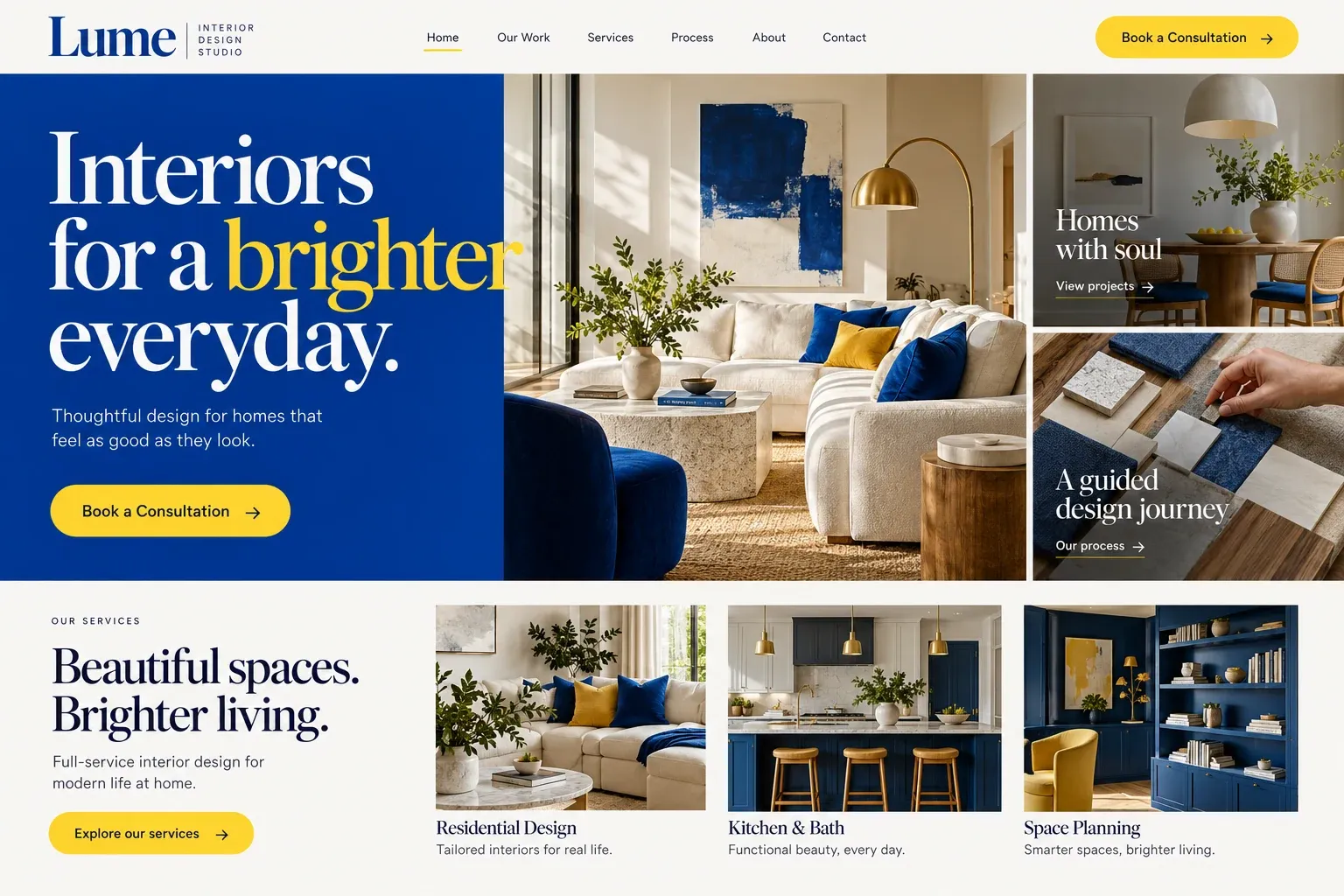
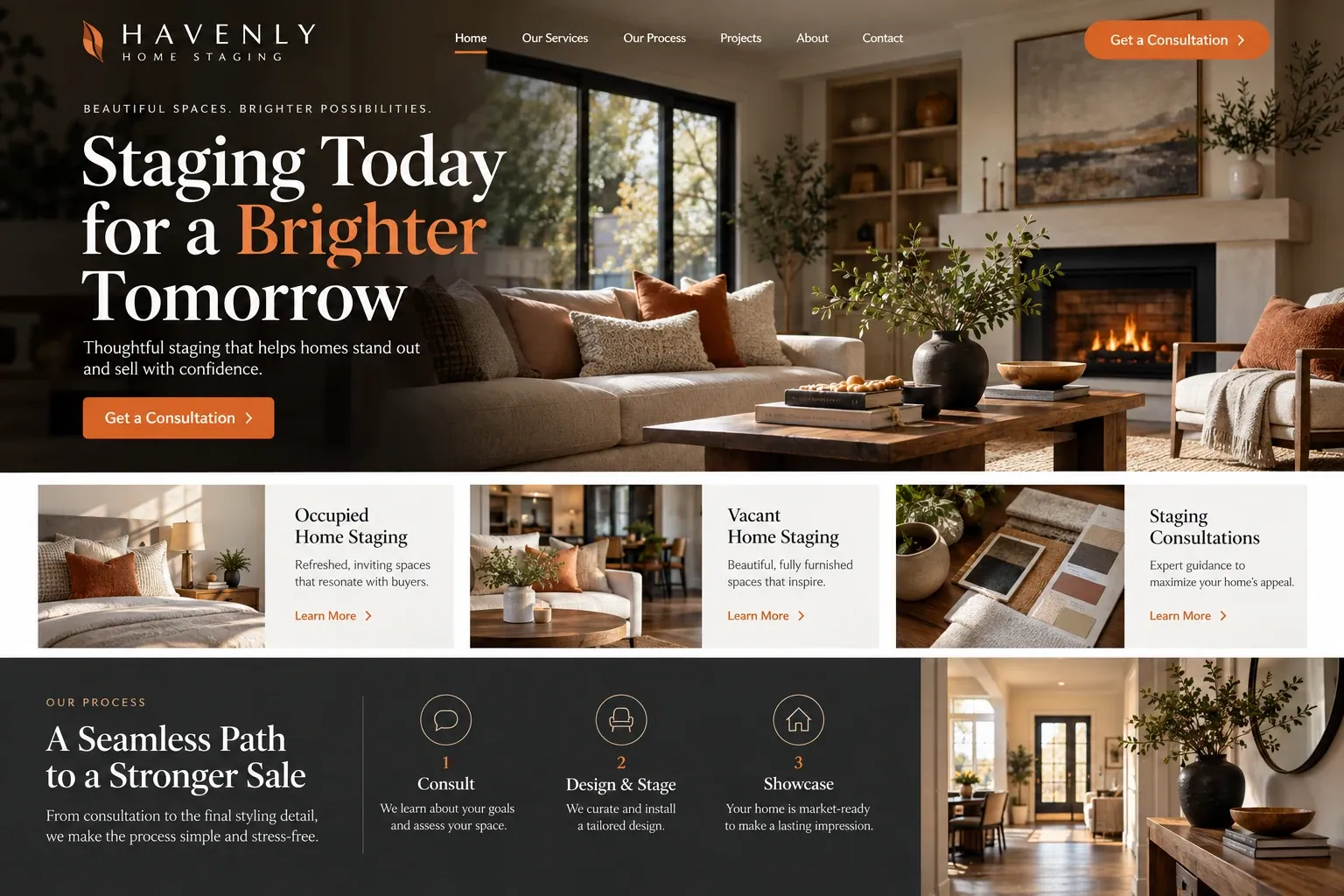
Fictional interior designers website homepage design concept
A design concept for a fictional brand. Your site is designed from scratch around yours.

Your customer's story

A new apartment full of old furniture

Mariela and her husband have just moved from Caracas into a two-bedroom apartment in Edgewater with floor-to-ceiling windows. Their furniture came in a container: heavy carved pieces from her grandmother, a modern sectional, and boxes of art. Nothing looks right against the white walls and the bay view. Every evening she rearranges something, takes a photo, and sends it to her sister, who replies with a shrug emoji.

When she searches for interior designers, she finds portfolios of perfect rooms that look as if nobody lives in them. She worries a designer would throw out her grandmother's dresser. Then she finds a studio whose projects each begin with what the client already owned and loved. One shows a family's heirloom table at the center of a bright, modern dining room, with notes on how it was done.

The studio's inquiry form asks which rooms she wants help with, how the family uses them, which pieces must stay, and whether she wants a full design or a consultation. Mariela uploads three photos, including the dresser. An interior designer's website should prove two things before the first meeting: that the work is beautiful, and that the designer listens to the person who has to live there.

Why it matters

Why interior designers need a website.

Interior design is a personal hire, and clients spend a long time looking before they reach out. They study portfolios, follow designers on social media, and ask friends. A feed is good for single images but poor at showing a whole home, explaining the brief, or describing how a project runs from the first visit to the final install. Clients also want to know how you charge and how involved they will be.

We build interior design websites that show complete rooms and whole homes, not just details. Each project carries a short note on the brief and your response: what stayed, what changed, and why. A page on ways to work together lays out consultations, full-service design, and single-room projects, and how purchasing and installation are handled. The inquiry form asks how people live in the space, not only how they want it to look.

What your customers search for

  • interior designer near me
  • interior designer Miami
  • condo interior design
  • interior design consultation
  • luxury interior designer Miami Beach
  • e-design services

Your customers

What clients wonder before hiring an interior designer

  • Will it still feel like us?

    Projects that begin with the client's own pieces and habits, showing how the final rooms reflect the people who live there.

  • Can you help with just one room?

    A clear page on ways to work together, from a single consultation to one room or a full home, so nobody wonders if they are too small.

  • How does the process work?

    Stages from discovery and concept to selections, ordering, and installation, with what the client approves at each step and roughly how involved they are.

  • How do you charge?

    A plain explanation of how you bill, whether flat, hourly, or a mix, and how furniture purchasing works, without publishing figures you prefer to discuss.

What we build

What a website for interior designers should include.

  • Full-room portfolios

    Each project shown as complete spaces, from wide shots to details, so clients see how pieces relate across a room.

  • Brief and response notes

    A few lines per project on what the client asked for, what they kept, and the direction you chose.

  • Ways to work together

    Consultations, single rooms, full homes, and e-design if you offer it, each explained with what is included.

  • Lifestyle inquiry form

    Questions about the rooms, who uses them, pets and children, pieces that must stay, timing, and a place to upload photos.

  • Process timeline

    A visual path from discovery to installation day, so clients know when they choose, approve, and wait for orders.

  • Showrooms and press

    Publications that featured your work and the showrooms or makers you work with, shown only where the relationship is real.

Planning guide

What should an interior designer include on a portfolio website?

Many interior design clients find you through someone else: a friend's living room, a saved image, an architect's referral. By the time they visit your website they are checking fit, not discovering you. These notes cover the pages that help them decide, what to show and how, the inquiry that starts the relationship, and how new clients find the studio.

Show whole spaces, not only vignettes

A styled shelf is lovely, but clients hire you for rooms that work. Show each project from the doorway as well as up close, so visitors can see how light, layout, color, and furniture relate. Organize projects by type, such as condos, family homes, or offices, and add a few lines on what the client wanted. If a project was a partial refresh, say so, since it reassures clients with smaller budgets.

Explain how a project actually runs

Design clients worry about two things: losing control of their home and losing control of the budget. A process page answers both. Walk through discovery, concept, selections, ordering, and installation, and say what the client decides at each step. Describe how you bill in general terms and how furniture and materials are purchased, so the first conversation can focus on the home.

Lead times are part of the story too. Custom upholstery and imported pieces can take months, and clients take delays better when they were told early. A sentence about that on the process page saves an awkward call later. If you work with particular workrooms, showrooms, or makers, mention them there as well, because clients like knowing who builds their pieces.

Ask how they live, not just what they like

The inquiry form sets the tone of the relationship. Ask which rooms need help, who uses them and how, whether there are pets or children, which pieces must stay, the timing, and the style of engagement they have in mind. Let them upload photos of the space and a few inspiration images. Add a phone number and an email for clients who would rather talk first.

Get found beyond your referrals

Referrals will always matter, but searches like interior designer Miami, condo interior design, or designer for a beach house come from people you have not met yet. Project pages labeled by area and type, plus a service page for each way of working, give search engines specific topics. Keep your details consistent on your Google Business Profile and ask clients whose homes you finished to review the studio. Rankings are never promised, but good structure gives a talented studio a fair chance to be found.
In your market

Built for interior design in South Florida

Designing interiors here means working with strong sun, humidity, and salt air that fade fabrics and warp the wrong woods. Many projects are condos with strict building rules for deliveries and renovations, and many clients are seasonal residents or buyers from abroad who furnish a home they visit only part of the year. Bilingual communication is common. Your pages can show you design for all of this, with a Spanish version if your clients want one.

Questions

Questions interior designers ask us.

Should an interior designer publish fees on the website?

Many designers prefer to explain how they charge rather than post numbers, for example a design fee plus purchasing, or hourly consultations. Explaining the structure filters out poor fits without boxing you in. If you offer a fixed-fee consultation, that can be a gentle first step to show. You decide what to publish.

Can we show interior projects photographed on a phone?

For smaller or older projects, yes, if the photos are sharp and well lit. For your strongest work, professional photography is worth considering, because those images will be used everywhere. We can launch with what you have and replace images as new shoots come in, keeping the layout strong either way.

How do we show interior design work when clients want privacy?

Leave out names, addresses, and anything that identifies the building or the family, such as a recognizable view from a specific tower. Ask clients' permission before publishing, and label projects by type and general area. Some designers also keep a private gallery that they share by link with serious prospects.

How often should an interior designer add new projects?

Whenever a project is finished and photographed. Clients who are considering you often come back to the site more than once, and fresh work shows the studio is busy and current. Send us photos and a few lines about the brief and we add the project, or we can set up the gallery for you to update.

Let's talk

Ready for a website built for interior designers?

Tell us about your business and we will come back with a clear recommendation and a fixed quote. No pressure, no jargon.

Trades we design for

See all 226 trades

226 trades

  • Plumbers website design concept
CallFree quote