Web design for holiday lighting installers

Website design for holiday lighting installers.

Holiday lighting is booked months before the first bulb goes up. Homeowners and businesses compare designs, check what is included, and want installation and takedown handled without anyone in the family climbing a ladder.

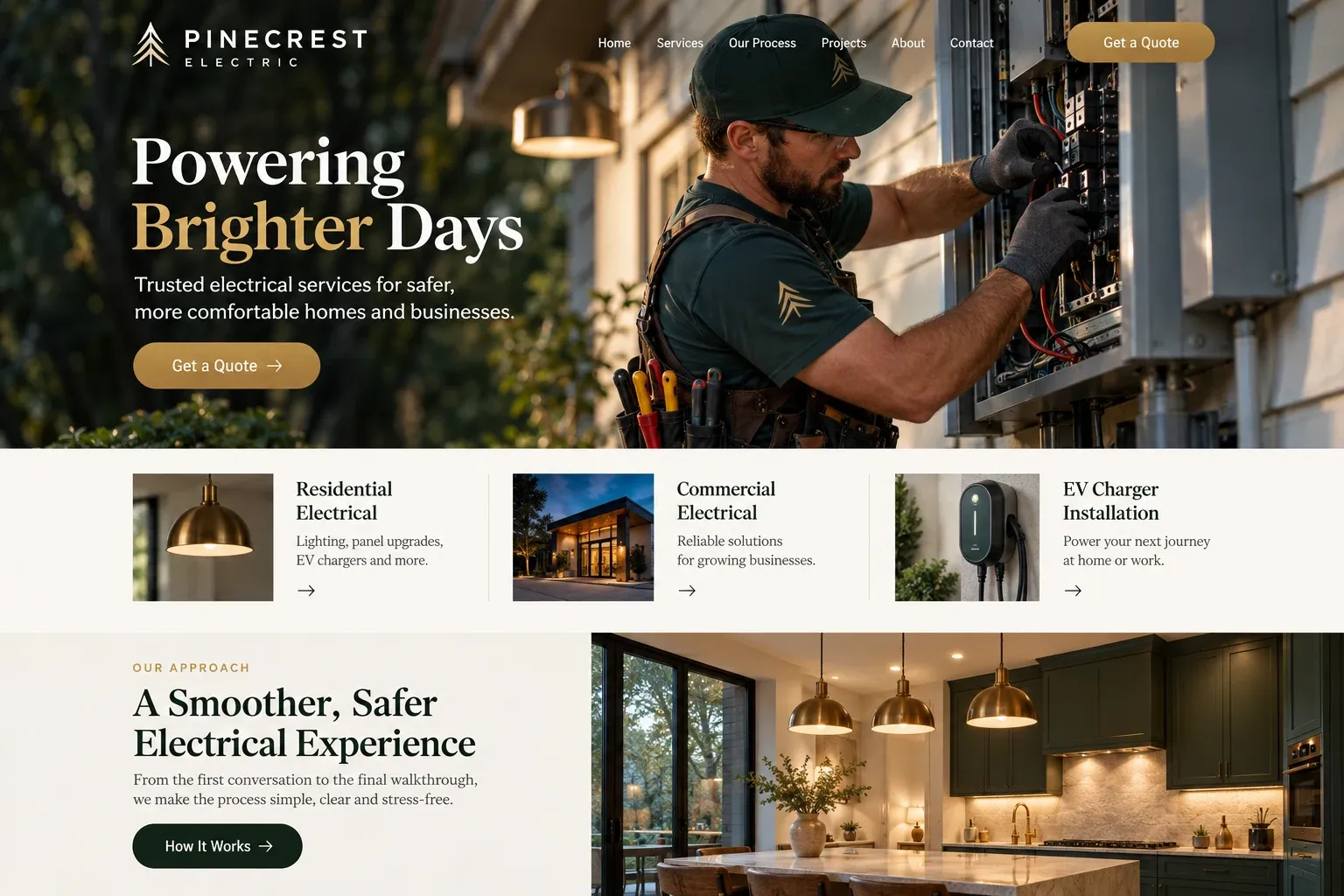
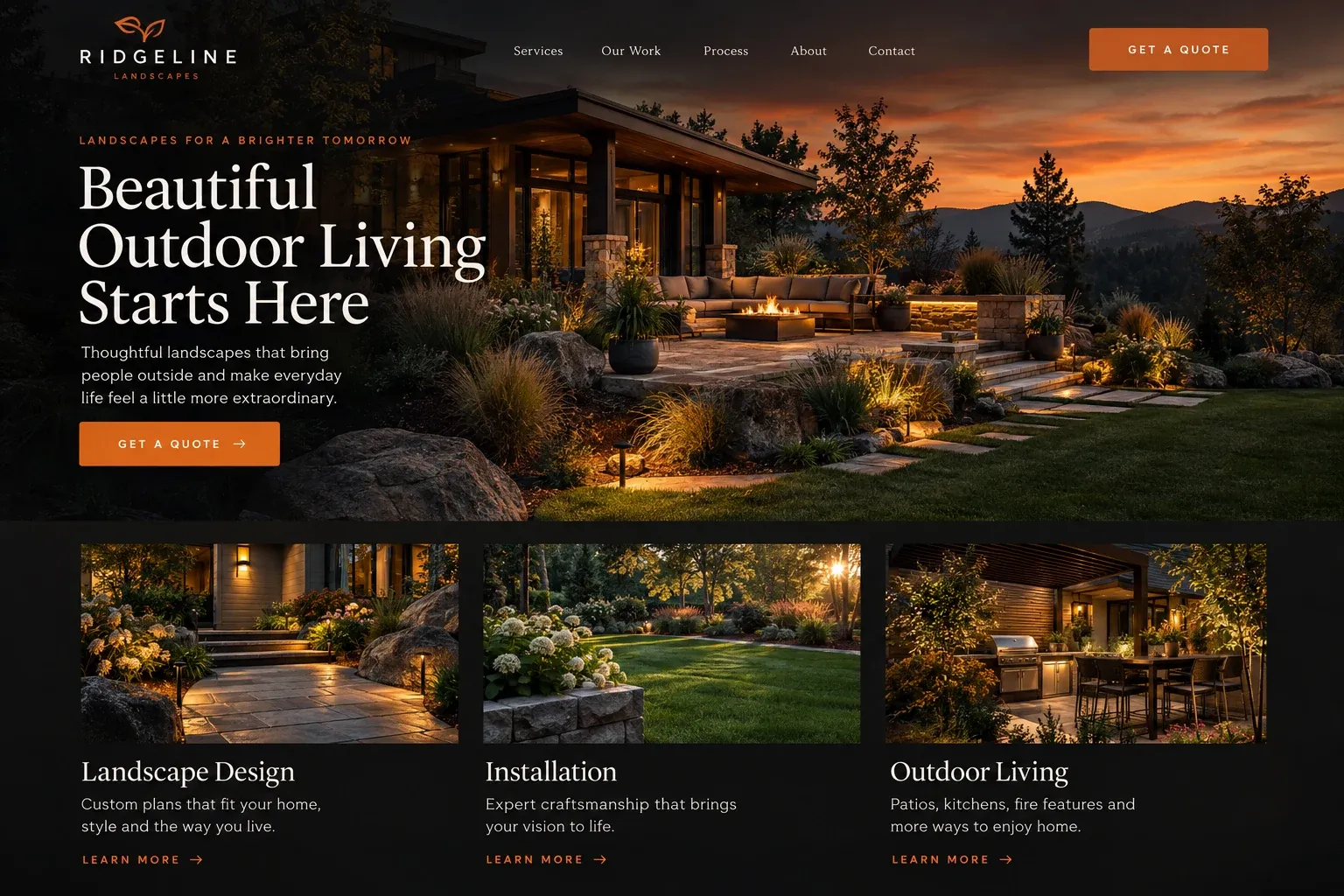
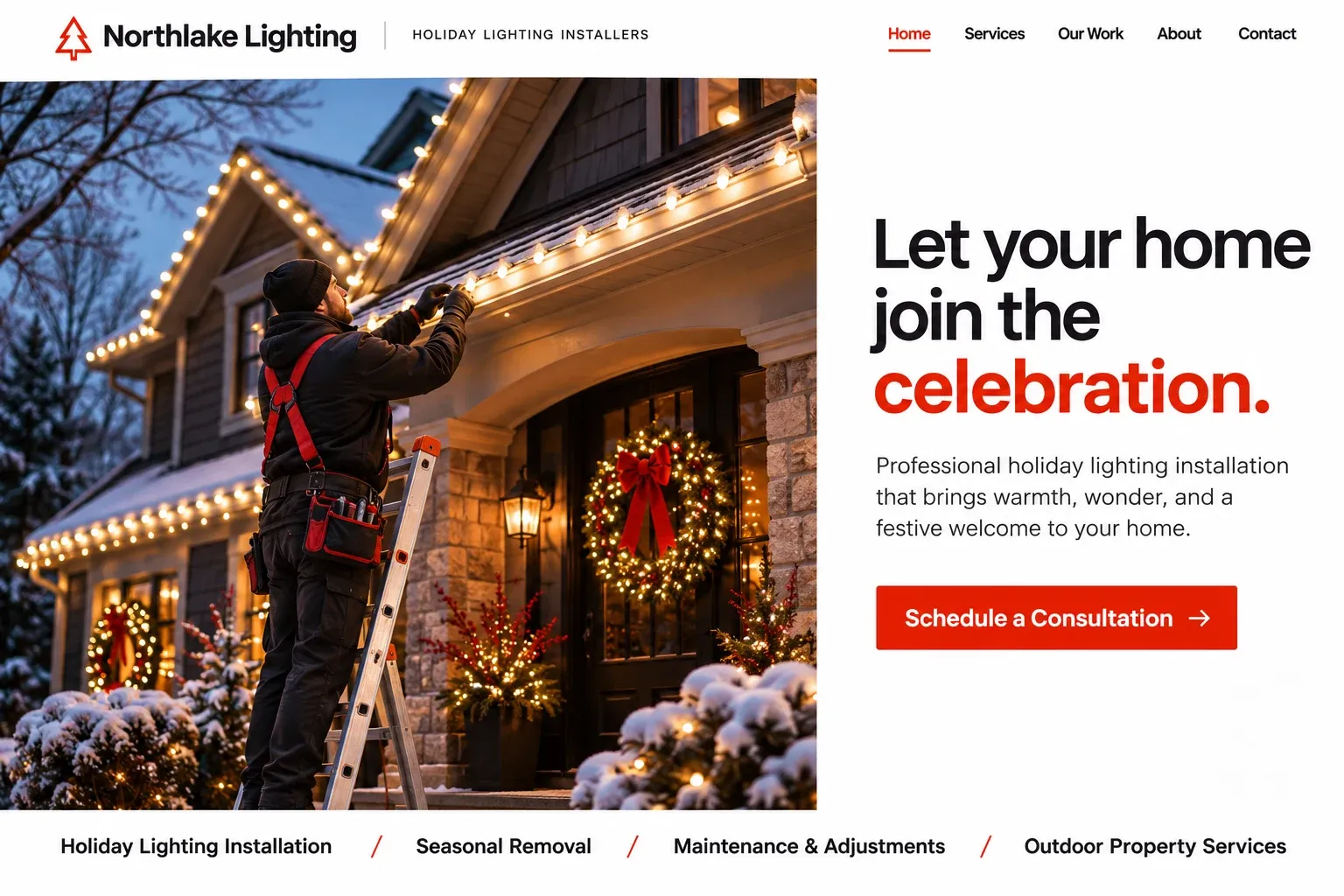
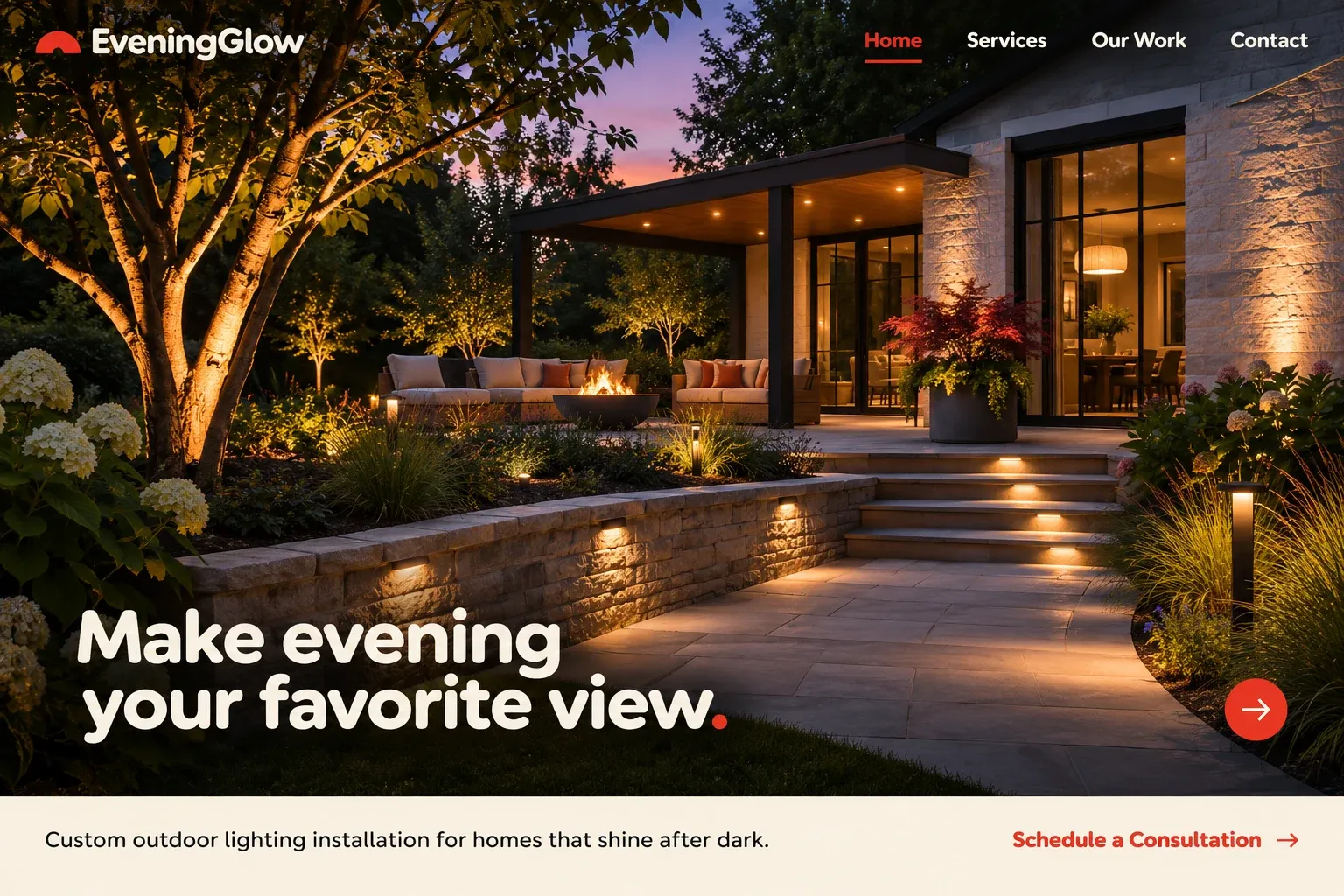
Website design concept for holiday lighting installers, an illustration
Illustration only: the design, business name and logo are made up to show the kind of website we can build. Not a real business or client website. Yours is designed from scratch around your brand.

Your customer's story

No more ladders this December

Every year Miguel climbs onto his roof in early December with a tangle of lights and a borrowed ladder, and every year his wife watches from the driveway with her phone ready. This year his knee is sore and the HOA has started a decorating contest. In October his wife sits down after dinner and searches for holiday light installation in their neighborhood.

Some sites show one blurry photo of a house at night. Others sell strands by the box but say nothing about the roof, the timer, or taking the lights down. The installer she bookmarks has a gallery of homes, palm trees, and storefronts at night, an installation calendar showing how booking works, and a removal page explaining takedown and storage after the season.

Its project enquiry form asks for the address, the rooflines and trees they want lit, photos of the front of the house, and whether the HOA has rules. She sends it with two photos. A holiday lighting website should show what a finished display looks like, explain the whole season from booking to takedown, and fill the calendar early.

Why it matters

Why holiday lighting installers need a website.

Holiday lighting is a seasonal business with a short selling window. Customers start looking in early fall, compare displays and what each installer includes, and book before the calendar fills. They want to know who supplies the lights, how roofs and trees are handled, when the display goes up, and when it comes down. A social media page shows last year's photos but cannot explain the season or take bookings in order.

We build holiday lighting websites around the season. A lighting gallery shows homes, trees, and businesses at night, sorted by style. An installation calendar explains when booking opens and how dates are assigned. A removal page covers takedown and storage. Separate pages speak to homeowners, HOAs, and commercial properties, and a project enquiry form with photo upload lets you design and quote before your first visit.

What your customers search for

  • christmas light installation near me
  • holiday lighting installer Miami
  • palm tree christmas lights installation
  • commercial holiday lighting
  • christmas light takedown service
  • permanent roofline lighting

Your customers

What homeowners and businesses ask before booking holiday lights

  • What will our house look like?

    A night gallery of homes, palms, and storefronts sorted by style, from simple rooflines to full displays, so customers can point to what they want.

  • When will the lights go up?

    An installation calendar explaining when booking opens, how dates are scheduled, and when customers should book for the start of the season.

  • Who takes them down?

    A removal page explaining the takedown window, how lights come off without damaging roofs or trees, and storage until next year.

  • What if a strand goes out?

    A service page explaining how customers report problems during the season and how your team usually handles a dark strand or a failed timer.

What we build

What a website for holiday lighting installers should include.

  • Night lighting gallery

    Homes, trees, and businesses photographed after dark, sorted by style so visitors can find a look they like.

  • Installation calendar page

    When booking opens, how install dates are assigned, and when the busiest weeks of the season usually fill up.

  • Removal and storage page

    Takedown timing, how lights are removed safely, and whether you label and store them for next season.

  • Commercial and HOA pages

    Displays for storefronts, plazas, offices, and community entrances, each with its own enquiry form for managers.

  • Project enquiry form

    Address, areas to light, photos of the property, and HOA rules, sent straight to your inbox.

  • In-season service requests

    A simple form for reporting a dark strand or timer problem while the display is still up.

Planning guide

What should a holiday lighting installer's website include?

A holiday lighting website has a few busy months to do its job. It should show displays worth copying, explain the season from booking to takedown, and collect enough detail to design and quote quickly. Here is how we plan the pages, what to show, how bookings come in, and how the site helps a lighting installer get found before the calendar fills.

Lead with photos taken at night

Customers buy what they can see. Photograph finished displays after dark with a steady phone, and include a daytime shot too, so people see that the clips and wiring are neat. Sort the gallery by style: rooflines only, rooflines and trees, full yard displays, and commercial work. A short caption with the features included helps visitors describe what they want.

Explain the whole season

Most questions are about timing. An installation calendar page should explain when booking opens, how dates are assigned, and when the busiest weeks fill. A removal page should explain when takedown happens, how lights are removed without damaging shingles, tiles, or trees, and whether you store them for next year.

Add a short page on what is included: whether you supply the lights or install the customer's own, timers, extension cords, and in-season service calls. Plain answers save your team from repeating the same explanations dozens of times each fall, and they help customers compare installers on what they actually receive.

Collect the right details up front

A good enquiry form lets you design before you visit. Ask for the address, the areas to light, the style they like from your gallery, any HOA or building rules, and photos of the front of the property. Keep a phone number visible for commercial clients and property managers, who often prefer a call and may need a written proposal for their board.

Get found before the season starts

Customers begin searching in early fall, so the site should be current well before then. Update the gallery each year, keep your Google Business Profile in step with the site, and ask happy customers for reviews when the lights come down. Pages for homes, HOAs, and businesses, plus the areas you serve, give search engines clear topics to match.

Many installers also light weddings, parties, and other events outside the holidays, or install permanent roofline lighting. If you do, give that work its own page, so the site keeps bringing in enquiries after the decorations come down, and so search engines see the full range of what you install.

In your market

Built for holiday lighting in South Florida

Holiday lighting in South Florida means palm trees, tile roofs, and warm evenings with no snow to plan around, but also late hurricane season, afternoon rain, and salt air near the coast that is hard on connections. Many communities have HOA or condo rules on displays and contractors, and businesses light up plazas and storefronts for the season. Customers celebrate a range of holidays and many are bilingual. We write lighting pages with these seasonal details in mind, and a Spanish version is available.

Questions

Questions holiday lighting installers ask us.

When should a holiday lighting website be updated each year?

Before customers start looking, which is usually early fall. We refresh the installation calendar, add last season's best night photos, and make sure the enquiry form and booking details are current. A site that still shows last year's dates makes customers wonder whether you are booking at all.

Should our holiday lighting site say whether we supply the lights?

Yes. Customers often ask whether they buy, rent, or own the lights, and whether you install their existing strands. A plain page on what is included, from lights and timers to takedown and storage, saves calls and lets customers compare installers fairly.

Can customers send photos of their house for a lighting design?

Yes. The project enquiry form can accept photos of the front of the home or business, along with the areas to light and any HOA rules. Everything arrives in your inbox, so you can sketch a design or prepare a written quote before visiting.

Is a separate page for commercial holiday lighting worth it?

If you light storefronts, plazas, offices, or community entrances, yes. Property managers search differently from homeowners, often need a proposal for a board or owner, and book earlier. A dedicated page with its own form keeps those requests organized and shows the commercial work they want to see.

Let's talk

Ready for a website built for holiday lighting installers?

Tell us about your business and we will come back with a clear recommendation and a fixed quote. No pressure, no jargon.

Trades we design for

See all 436 trades

436 trades

  • Plumbers website design concept
CallFree quote