Web design for landscapers

Landscaping websites that show the whole yard.

Homeowners hire a landscaper when the yard stops working for them: no shade, no place to sit, plants that never recovered from the last storm. They want to see that you can picture something better.

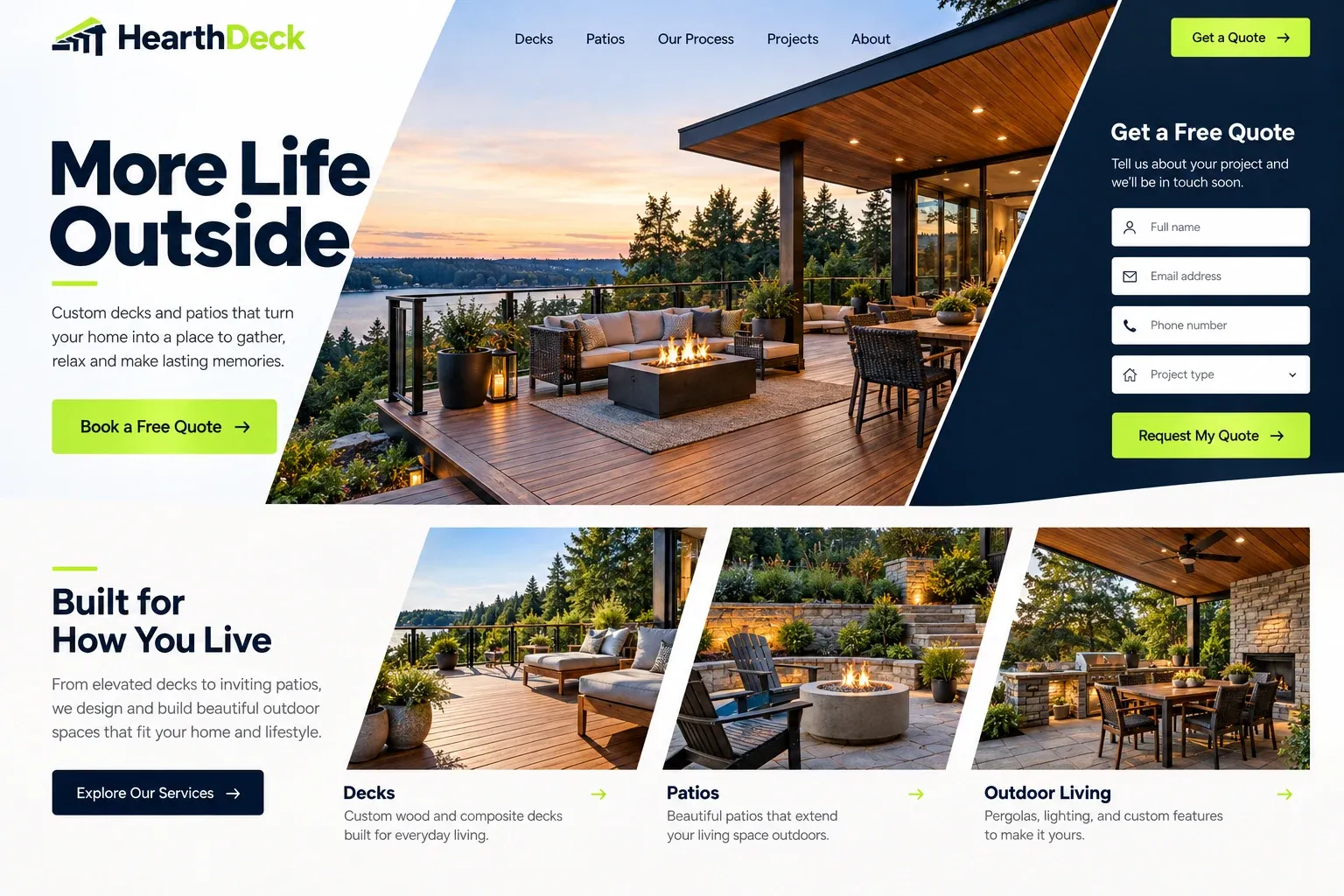
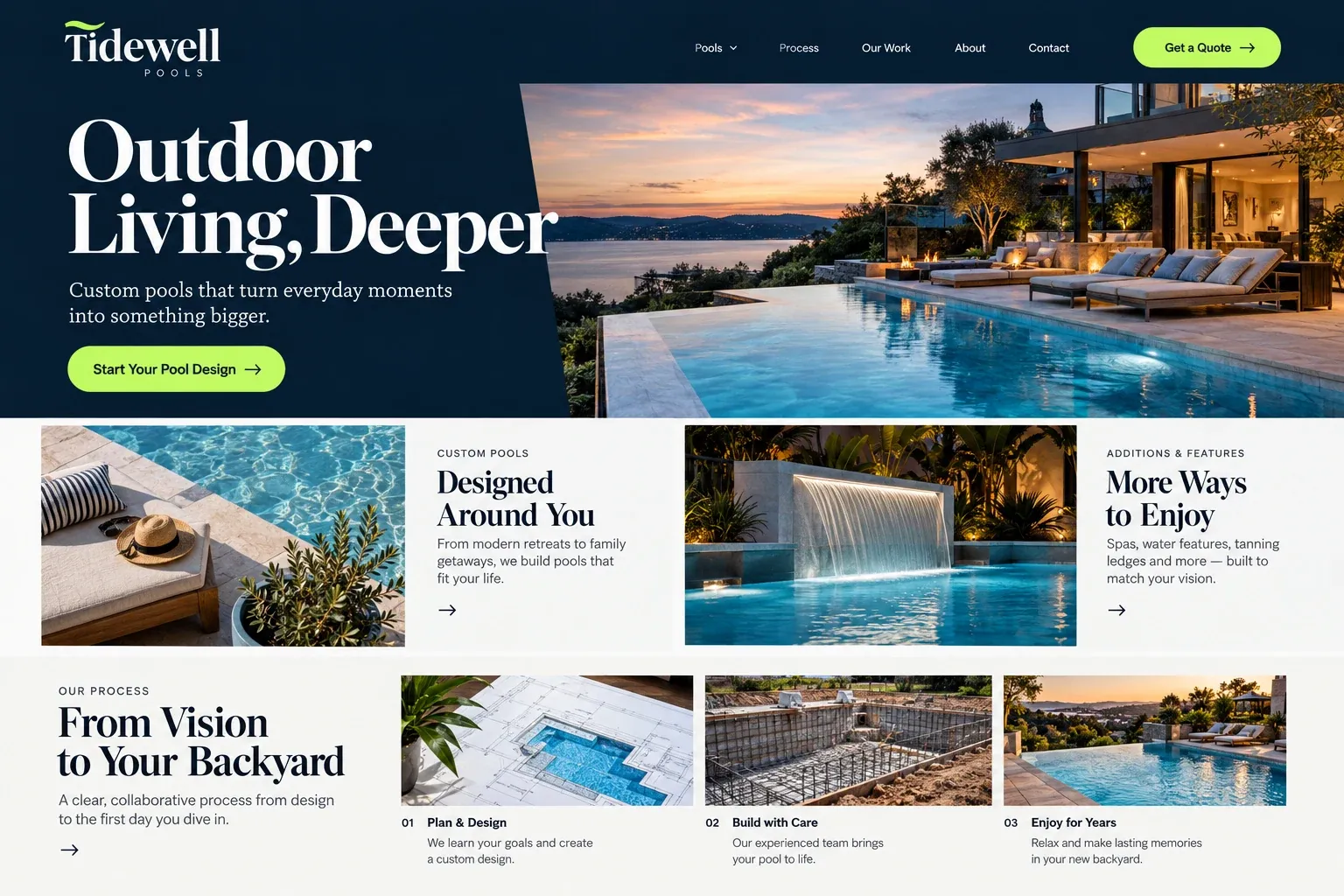
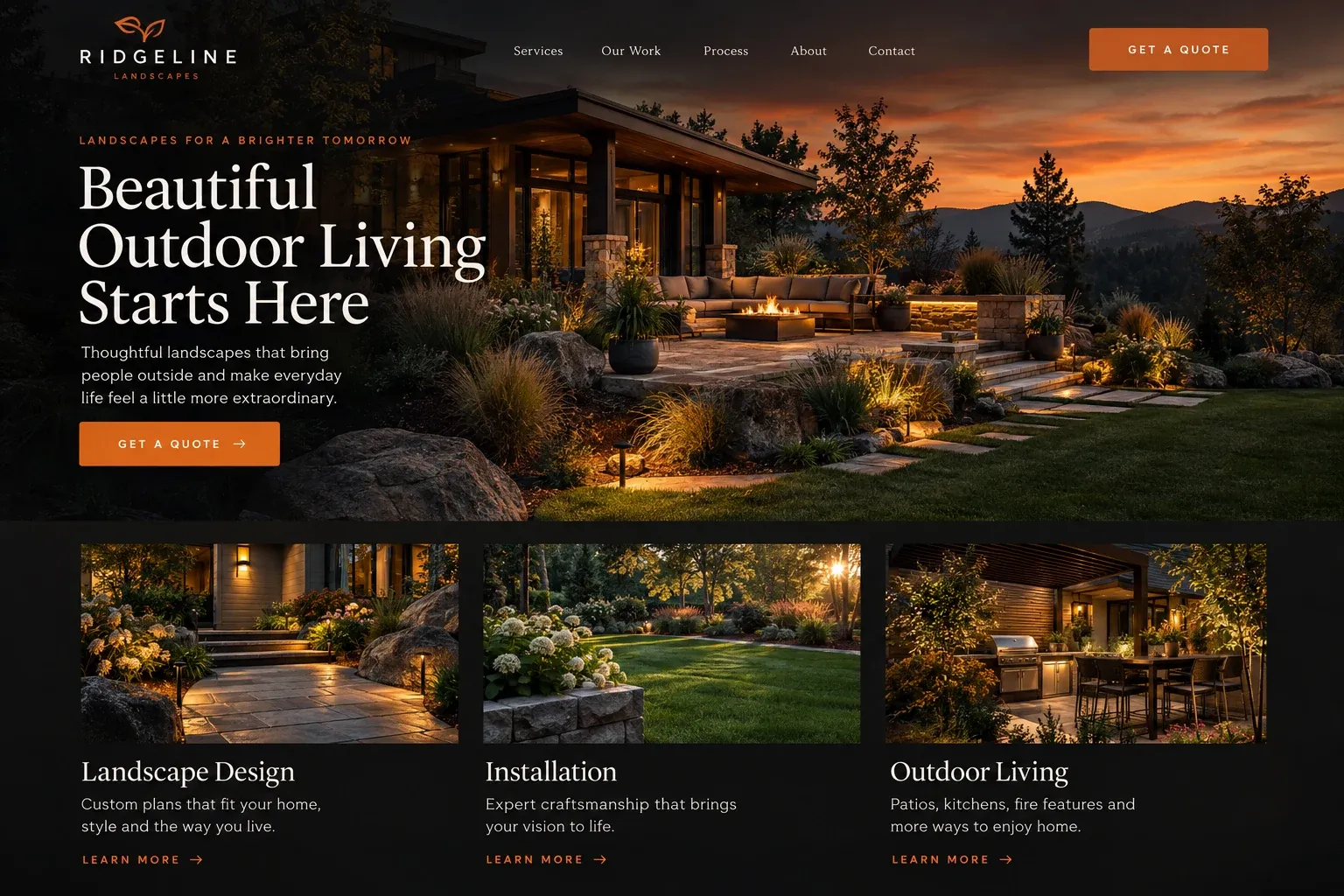
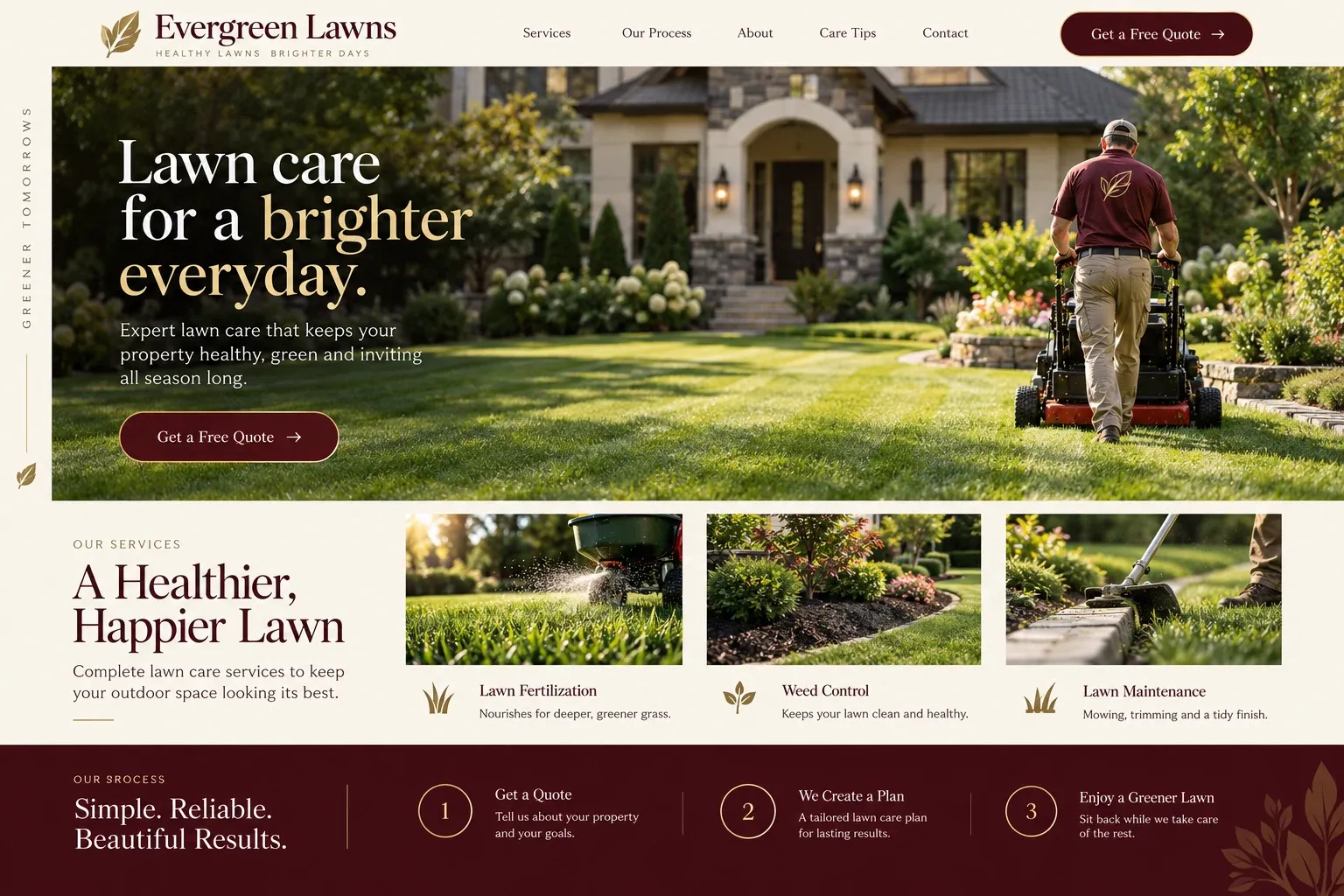
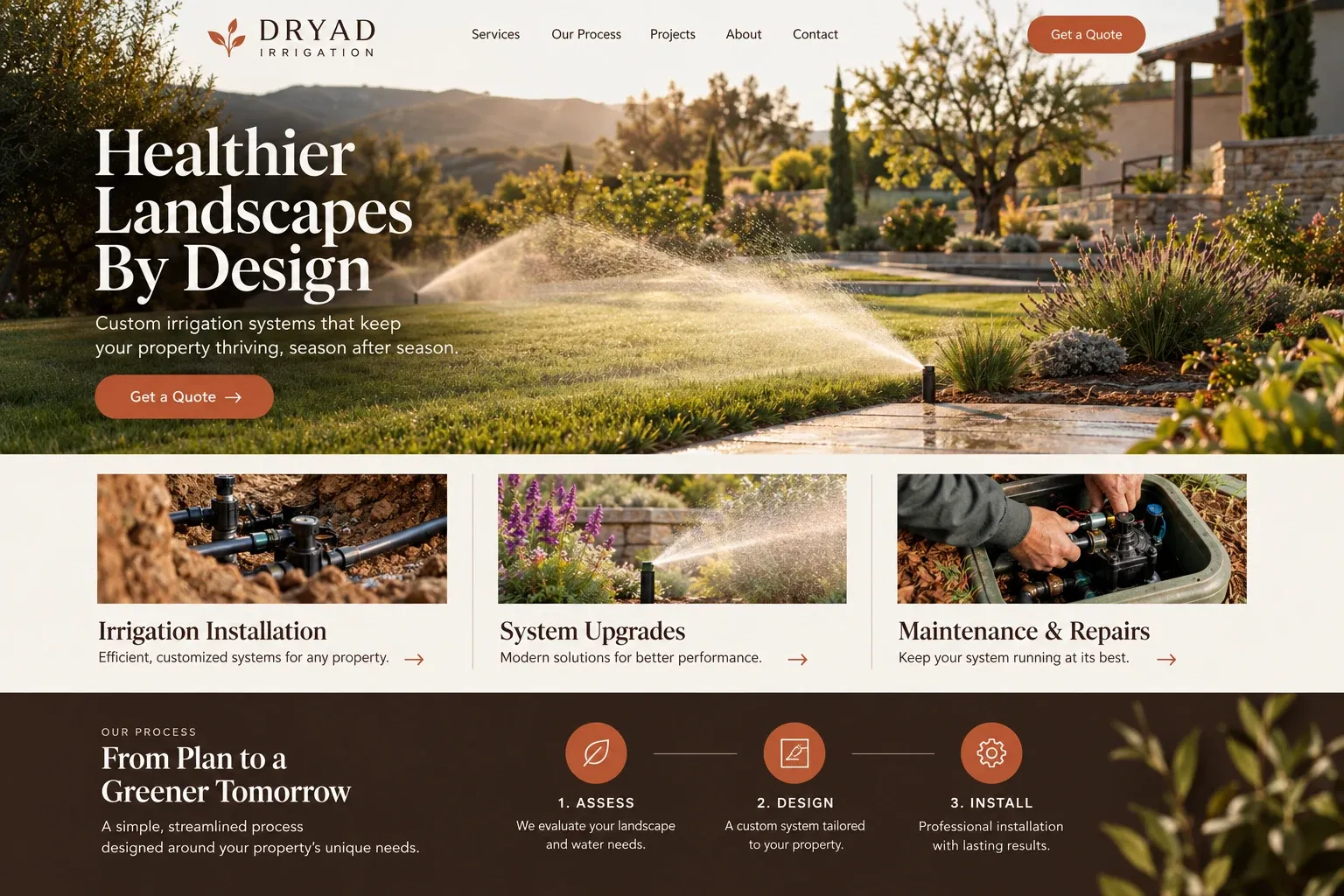
Fictional landscapers website homepage design concept
A design concept for a fictional brand. Your site is designed from scratch around yours.

Your customer's story

A big backyard nobody ever sits in

The Castillo house in Pinecrest has a long backyard that the family looks at every day and almost never uses. There is a patch of lawn, a hedge of overgrown ficus, a slab of cracked concrete by the door, and a mango tree that drops fruit on all of it. Their daughter's quinceañera is in the spring, and Mirta wants the party outside, not in a rented hall.

She spends a few evenings on her phone looking at landscaping companies. Most show close-ups of flowers or a truck with a logo. One shows whole yards from the back door outward, each with a short note: what the owners wanted, what was there before, what was planted and built. In one of them, a mango tree just like hers has become the center of a shaded patio.

The project form on that site asks how the family wants to use the space: parties, a play area, a quiet corner, somewhere for the dog. Mirta answers every question and adds a photo from the kitchen window. A landscaper's website should do exactly this: show the thinking behind finished yards and invite people to describe the life they want outside, not just the plants they like.

Why it matters

Why landscapers need a website.

Landscaping is bought with the eyes and decided over weeks. Homeowners save photos, drive past yards they admire, and compare two or three companies before inviting anyone to walk the property. An Instagram grid shows pretty corners, but it cannot explain what a yard looked like before, why certain plants were chosen, or whether you handle hardscape, lighting, and drainage as well as planting. Directory listings show even less.

We build landscaping websites around finished projects told as short stories: the starting point, the brief, the plants and built features, and photos from the angles people actually live with. Separate pages explain design, installation, hardscape, and maintenance, so a homeowner can see where your work begins and ends. The project form asks how the family wants to use the yard, which helps you spot the jobs that suit your crew.

What your customers search for

  • landscaper near me
  • landscape design Miami
  • paver patio installers
  • tropical landscaping ideas
  • front yard landscaping company
  • landscape lighting installation

Your customers

What homeowners want to see before calling a landscaper

  • Have you done a yard like mine?

    Project stories grouped by size and style, from narrow townhouse patios to large lots with pools, each showing the before, the brief, and the result.

  • Do you design, or just plant?

    A clear page on your design process: the site visit, the drawing or plan, revisions, and how installation is scheduled once the homeowner signs off.

  • Will the plants survive here?

    Notes on the native and Florida-friendly plants you favor, how you plan for full sun and salt air, and what care the new planting needs in its first months.

  • Can you handle the patio and lighting too?

    Service pages for pavers, walkways, retaining edges, outdoor lighting, and drainage, so homeowners know which parts you build and which you bring in a partner for.

What we build

What a website for landscapers should include.

  • Before and after stories

    Each project told from the starting point to the finished yard, with the owner's brief and what was planted and built.

  • Outdoor living brief

    A project form that asks how the family wants to use the yard, the budget range, and timing, with room for photos.

  • Design process page

    The steps from first walk-through to final planting, so homeowners know when they see a plan and when the crew arrives.

  • Hardscape and planting pages

    Separate pages for pavers, lighting, sod, palms, and garden beds, each matched to what homeowners type into search.

  • Plant palette notes

    Short write-ups of the trees, shrubs, and groundcovers you use most, with photos from your own installs as they mature.

  • Maintenance after install

    A page on keeping new landscapes healthy, for clients who want you back on a regular schedule once the work is done.

Planning guide

How should a landscaping company plan its website?

A landscaping website is a portfolio, a process guide, and a filter at the same time. It should help the right homeowners picture their own yard in your work, understand how a project unfolds, and send you an inquiry that already says what they want. Here is a practical way to plan one, section by section.

Let finished yards carry the site

Your projects are the reason people stay on the page. Photograph each one from the back door, the far corner, and the street, and again at dusk if you installed lighting. Add a few lines on the starting point and the brief: shade for a west-facing patio, privacy from a new neighbor, a play lawn that survives the dog. Real descriptions persuade better than adjectives, and they give search engines words to work with.

Ask clients early for permission to photograph, and return a few months later when the planting has filled in. A yard on installation day looks thin, while the same yard after a rainy season shows what you really deliver. Group projects by type, such as front entries, pool surrounds, and small courtyards, so visitors find something close to their own lot.

Explain where design ends and installation begins

Many homeowners do not know whether they are hiring a designer, an installer, or both. A process page clears that up: the first visit, how you measure and photograph the site, when a plan or drawing is presented, how changes are handled, and how installation is sequenced around irrigation, hardscape, and planting. If you charge for design separately or credit it toward the install, say so plainly, in your own words.

Turn the contact form into a project brief

A form that only asks for a name and phone number brings in every kind of inquiry, including the ones you will turn down. Ask instead about the property type, the areas involved, how the family wants to use the space, a rough budget range, and timing. Let people upload a few photos. Put a tap-to-call number nearby for those who would rather talk, and say how soon you usually reply.

Get found for the work you want more of

People search for specific jobs: paver patios, palm installation, landscape lighting, a front yard redesign. A page for each of those, written around your own projects, gives Google something exact to match. Name the cities and neighborhoods where you take on design work, keep your details consistent with your Google Business Profile, and ask happy clients for reviews that mention the project. That structure supports local visibility over time, without anyone promising a position.
In your market

Designed around South Florida yards

Landscapes here grow fast and take a beating. Summer storms, salt air near the coast, limestone and sandy soils, and hurricane season all shape what gets planted and where. Many homeowners ask for native and Florida-friendly plants, shade trees placed away from the roof, and palms that stand up to wind. Many clients are bilingual, and some live here only part of the year. We write pages that speak to these choices and can add a Spanish version.

Questions

Questions landscapers ask us.

How many landscaping projects do we need before the site can launch?

A handful is enough to start, as long as each one is told well: three to six yards with several photos each and a short note on the brief. We can launch with those and add new projects as they finish, which also gives returning visitors something fresh to look at.

Can the site separate landscape design from our maintenance crews?

Yes. Design and installation usually attract homeowners planning a project, while maintenance attracts people who want a dependable schedule. We give each its own pages and its own inquiry form, so requests land in the right inbox and nobody looking for a redesign has to read about mowing routes.

Our best landscape photos are on Instagram. Can we use them?

Yes, if they are your own. We pick the strongest images, ask you for any missing angles, and turn them into project pages with descriptions. We can also link your Instagram so visitors can follow new work, while the website keeps the full story of each yard in one place.

Do landscapers in South Florida need a Spanish version of their website?

It often helps. Many homeowners, property managers, and HOA boards here prefer to read and talk in Spanish. We can build a Spanish version of every page, written from the same approved copy, with the language switch kept easy to find on a phone.

Let's talk

Ready for a website built for landscapers?

Tell us about your business and we will come back with a clear recommendation and a fixed quote. No pressure, no jargon.

Trades we design for

See all 226 trades

226 trades

  • Plumbers website design concept
CallFree quote