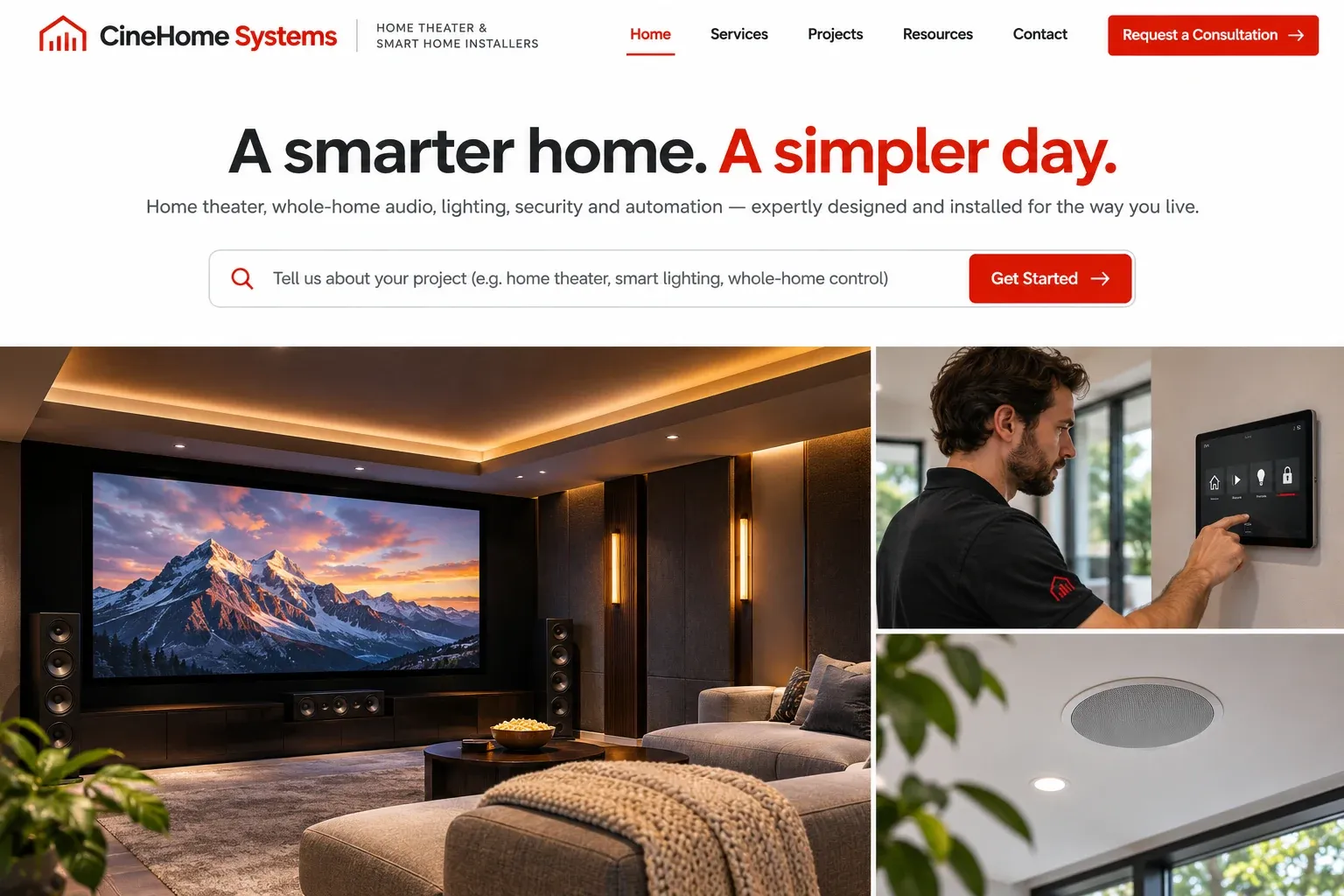
Planning guide
What should a home theater and smart home installer's website include?
A home technology website has to make complicated systems feel simple. Customers want to see finished rooms, understand how they would control everything, and trust that someone will help after installation. Here is how we plan the pages, what to show, how consultations should be requested, and how the site helps an installer get found by homeowners and builders.
Show rooms, not just equipment
Brand logos and spec sheets mean little to most homeowners. Show finished rooms instead: a theater with its lighting dimmed, a family room with speakers hidden in the ceiling, a patio with music. Describe each one in a few plain lines covering what the family wanted and what you installed. Group projects by room type so visitors find something close to their plans.
Include a few photos of the parts nobody sees: a tidy equipment rack, labeled cables, a clean wall where a tangle of wires used to hang. Those images tell a careful buyer more about your standards than any list of brands. Ask clients for permission before showing their rooms, and leave out anything personal.
Explain control and support clearly
Control is where families decide. Show the app on a phone, the wall keypads, and the remote, and explain which one does what. A short note on how you train the household at handover reassures people who worry about technology getting the better of them, especially grandparents, babysitters, and guests who visit often.
Support matters just as much. Describe how existing clients reach you, whether you offer service visits or remote help, and how updates are handled. A home system that nobody supports is a common fear, and a clear page answers it before the first call. Mention how long you keep supporting the equipment you install.
Make consultations easy for every kind of client
Homeowners, builders, and designers all contact you differently. Give homeowners a short consultation form asking about rooms, goals, and whether the house is built or under construction. Give builders and designers their own page with how you work alongside them and a separate contact path. Keep the phone visible and say when you call back.
Help local clients find you
People search for home theater installation, smart home installers, and specific needs like whole home audio or motorized shades near them. A page for each service gives search engines clear topics. List the areas you serve, keep your Google Business Profile consistent, and add new room photos to it. Reviews that mention a finished room help the next family decide.