Web design for low-voltage and network cabling contractors

Website design for network cabling contractors.

Cabling work is invisible once the ceiling tiles go back. Office managers, general contractors, and IT providers choose a contractor on proof they can see: clean racks, a clear process, a license number, and documentation at the end.

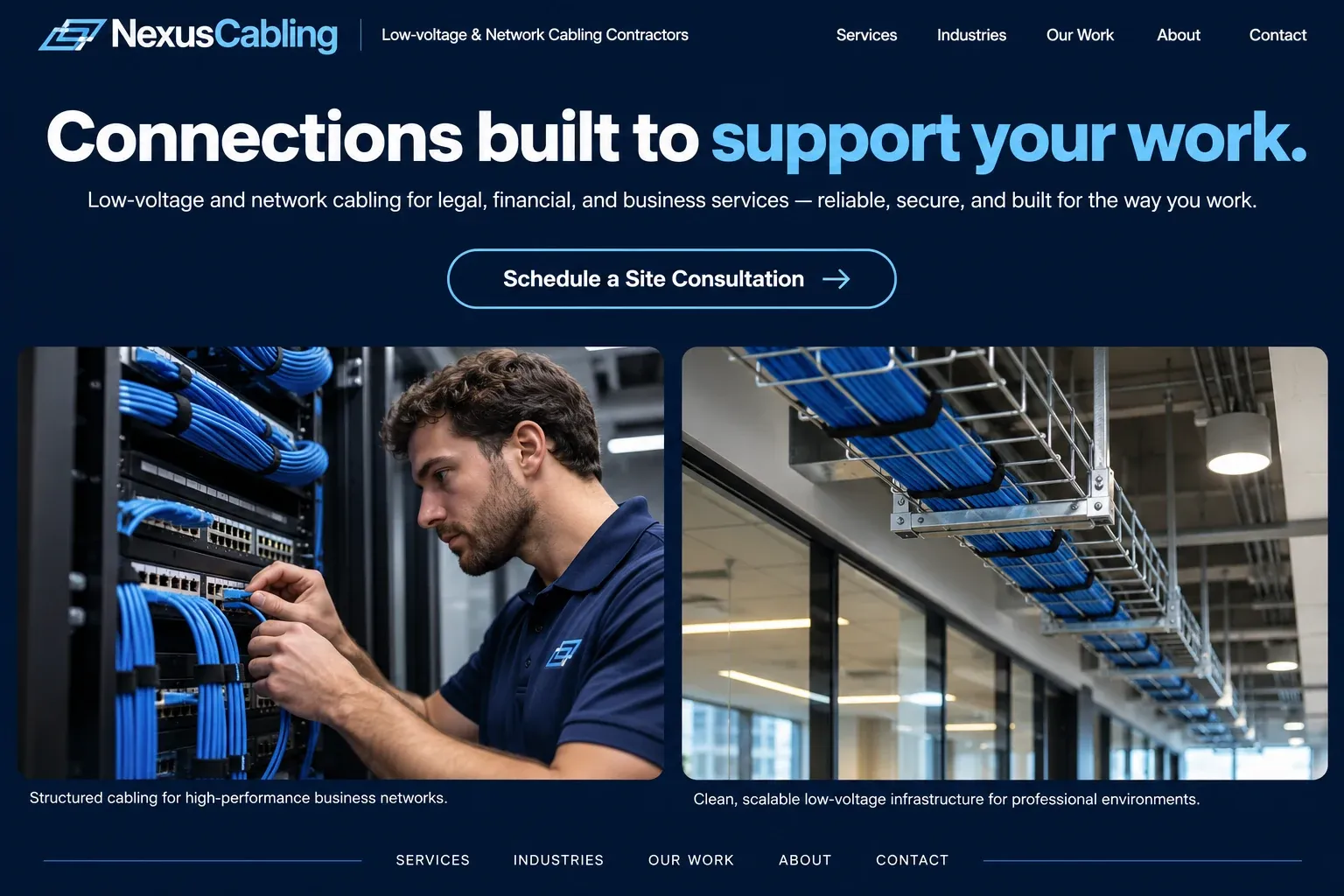
Website design concept for low-voltage and network cabling contractors, an illustration
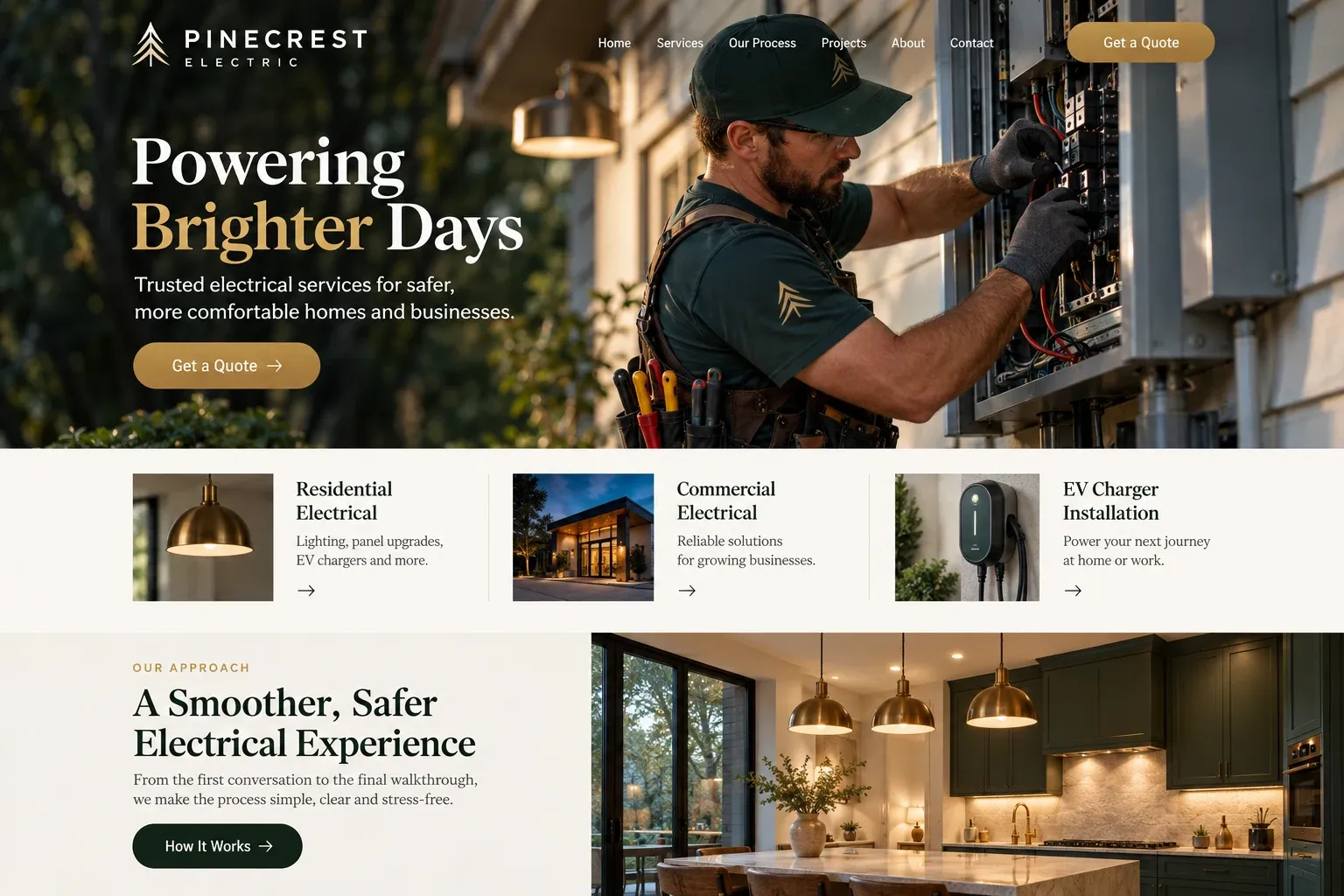
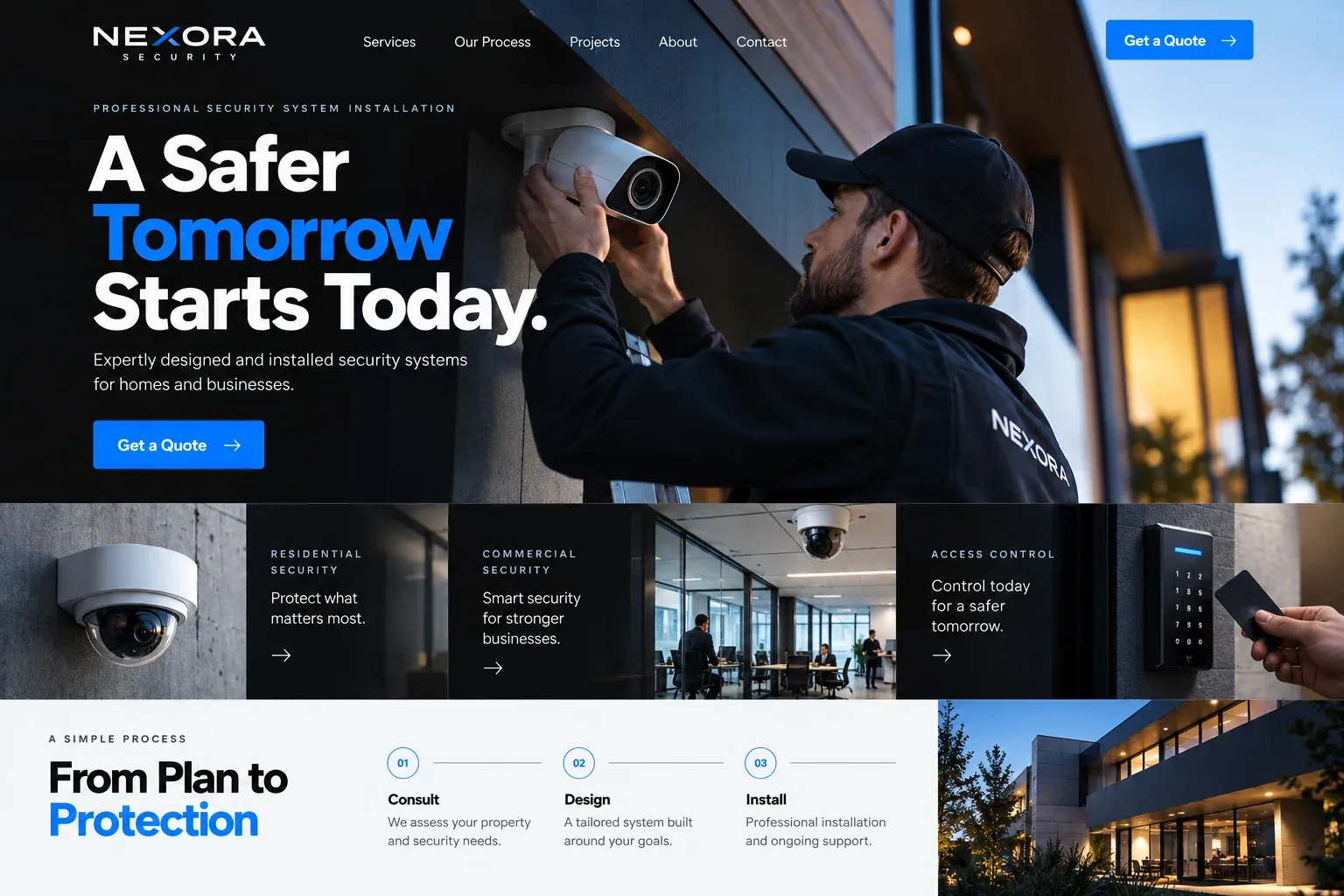
Illustration only: the design, business name and logo are made up to show the kind of website we can build. Not a real business or client website. Yours is designed from scratch around your brand.

Your customer's story

Moving offices with the network unplanned

Teresa manages operations for an accounting firm that signed a lease on a bigger floor across town. The landlord's buildout is half finished, the move date is set, and the IT consultant just told her that nobody has planned the data drops, the Wi-Fi access points, or the camera at the front desk. He says she needs a low-voltage contractor, and soon.

She searches during a lunch she does not eat. Several companies show a single photo of a tangled closet, which is the opposite of what she wants. One contractor's site shows finished racks with neat labels, explains its process from site survey to testing and documentation, and lists the work it does: data, fiber, wireless, cameras, and access control.

It also shows its state license number and has a site survey request that asks for the address, square footage, and move date. Teresa forwards the link to her IT consultant, who says it looks right, and she submits the form that afternoon. A cabling contractor's website has to show the tidy, tested work that clients will never see once the ceiling closes.

Why it matters

Why low-voltage and network cabling contractors need a website.

Low-voltage work is bought by people who often cannot judge it directly: office managers, property managers, and general contractors juggling a dozen trades. They rely on what the contractor shows them, such as finished racks, test reports, a license, and a clear process. They also search by service, from structured cabling to cameras to access control. A directory listing cannot show a clean closet or explain what happens between survey and sign-off.

We build cabling contractor websites that make invisible work visible. Each service gets its own page, written in terms both IT people and office managers follow. A project gallery shows racks, pathways, and finished installs. Your process page explains surveys, scheduling around tenants, testing, labeling, and as-built documentation, and the site survey request gathers the address, building type, and timeline in one short form.

What your customers search for

  • network cabling contractor near me
  • low voltage contractor Miami
  • office data cabling
  • access control installation
  • security camera installer for business
  • fiber optic installation company

Your customers

What clients ask before hiring a cabling contractor

  • Can you handle our whole move or buildout?

    Service pages for data and voice cabling, fiber, wireless access points, cameras, access control, and paging, so clients see the full scope at once.

  • Will the work be neat and documented?

    A gallery of finished racks and pathways, plus an explanation of labeling, certification testing, and the as-built drawings you hand over.

  • Are you licensed and insured?

    Your state license number, insurance, and any manufacturer certifications shown on every page where a general contractor or landlord will check.

  • Can you work around our business hours?

    A process page explaining after-hours and weekend work, coordination with other trades, and how you keep occupied offices running.

What we build

What a website for low-voltage and network cabling contractors should include.

  • Cabling service pages

    Structured cabling, fiber, wireless, cameras, access control, and audio, each described for office managers and IT staff alike.

  • Infrastructure gallery

    Before and after closets, labeled patch panels, and finished installs, grouped by building type and service.

  • Project process page

    Site survey, design, scheduling, installation, testing, labeling, and documentation, explained in the order the job happens.

  • Site survey request

    Address, building type, square footage, and target date in a short form that emails your estimating team.

  • License and certifications

    Your license number, insurance, and manufacturer certifications in the footer of every page and on the about page.

  • Builder and property manager pages

    How you bid, coordinate with other trades, and handle tenant improvement work for builders and building owners.

Planning guide

What should a low-voltage cabling contractor's website include?

A cabling contractor's website speaks to several readers at once: the office manager who has a move date, the IT provider who cares about standards, and the general contractor who needs a reliable sub. Each looks for different proof. Here is how we plan the pages, what to show, how clients request a survey, and how the business gets found.

A page for every system you install

Clients search by system, not by trade name. Give structured cabling, fiber, wireless access points, security cameras, access control, and audio or paging their own pages, each explaining what you install and the kinds of buildings you work in. Add a process page, a project gallery, an about page with your license and certifications, a page for general contractors and property managers, and a contact page with the survey request.

Show the work behind the ceiling

Photos are your strongest argument. Show racks before and after, labeled patch panels, cable trays, and neat runs above the ceiling, taken on real jobs with the client's permission. Mention the testing equipment you use and the documentation clients receive. Avoid naming client businesses or showing their security layouts, and never claim certifications or partnerships you do not hold. Real, careful work speaks for itself.

Make the survey request easy

Most cabling jobs start with a site survey, so make it the main call to action. A short form asks for the contact name, phone, email, building address, type of space, approximate size, and the date the network must be ready. A tap-to-call number serves people who prefer to talk.

Allow an optional upload for floor plans or drawings, because general contractors and architects often have them ready. Explain what happens after the request, such as a call to confirm scope and a visit to walk the space, so the client knows the next step and when to expect it.

Help local clients and builders find you

People search with the system and the place: network cabling contractor in Miami, access control installer near me, office data cabling. Service pages, the counties you cover, and local business markup give search engines something specific to match. Keep your Google Business Profile current with photos of finished work, and ask satisfied clients and general contractors to leave reviews. None of this promises a position, but it lets good work be found.
In your market

Built for low-voltage work in South Florida

South Florida keeps cabling contractors busy with office moves, condo and hotel renovations, new towers, and storm hardening. Humidity and salt air are hard on outdoor cameras and exposed runs, and hurricane season makes backup power, surge protection, and quick restoration part of the conversation. Many property managers and owners prefer Spanish. We can add a Spanish version, list the counties you serve, and keep your Florida license number on every page.

Questions

Questions low-voltage and network cabling contractors ask us.

Should our cabling website show photos from client buildings?

Yes, with care. Photos of racks, patch panels, and cable runs show your standards better than any description. We leave out client names, addresses, and anything that reveals a security layout, and we only use photos the client has agreed to share.

How do we show our low-voltage license on the website?

We place your license number and insurance details in the footer of every page and on the about page, alongside any manufacturer certifications you hold. General contractors and landlords often check these before approving a sub, so they should never be hard to find.

Can clients send floor plans through our cabling contractor site?

Yes. The site survey form can accept floor plans, drawings, or photos of the space, and it emails everything to your estimating team. Clients without drawings can describe the space instead, and you follow up with a walk-through.

Can one site cover cabling, cameras, and access control?

Yes. Each system gets its own page so it can be found by the people searching for it, while the home page shows that you can handle a whole office or building. That helps both a single camera job and a full buildout find you.

Let's talk

Ready for a website built for low-voltage and network cabling contractors?

Tell us about your business and we will come back with a clear recommendation and a fixed quote. No pressure, no jargon.

Trades we design for

See all 436 trades

436 trades

  • Plumbers website design concept
CallFree quote