Web design for lawn care companies

Lawn care websites that make the weekly visit clear.

Lawn customers rarely shop for a single mow. They want a crew that shows up on the same day, does the edges properly, and never needs chasing. Your website should explain that routine before anyone calls.

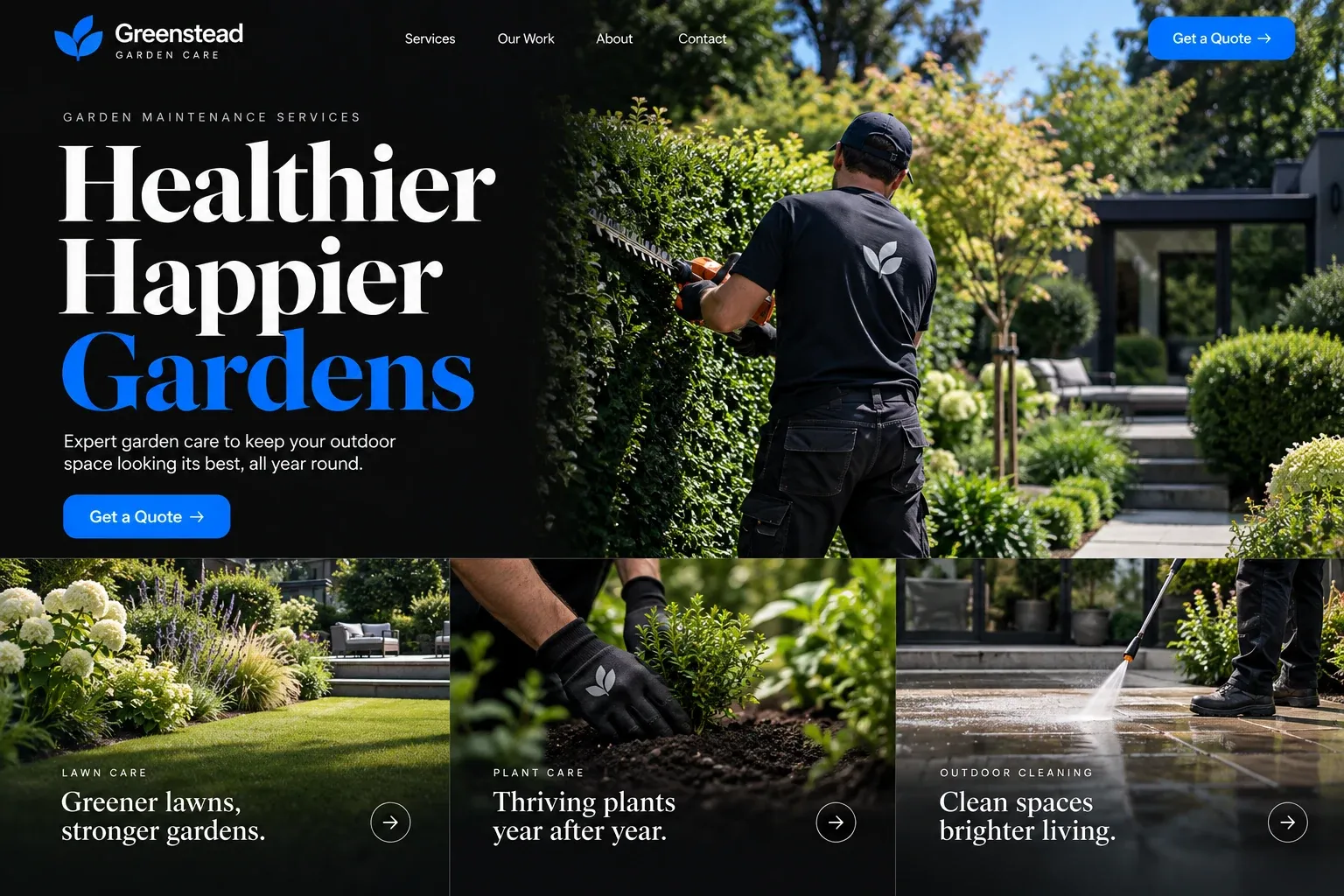
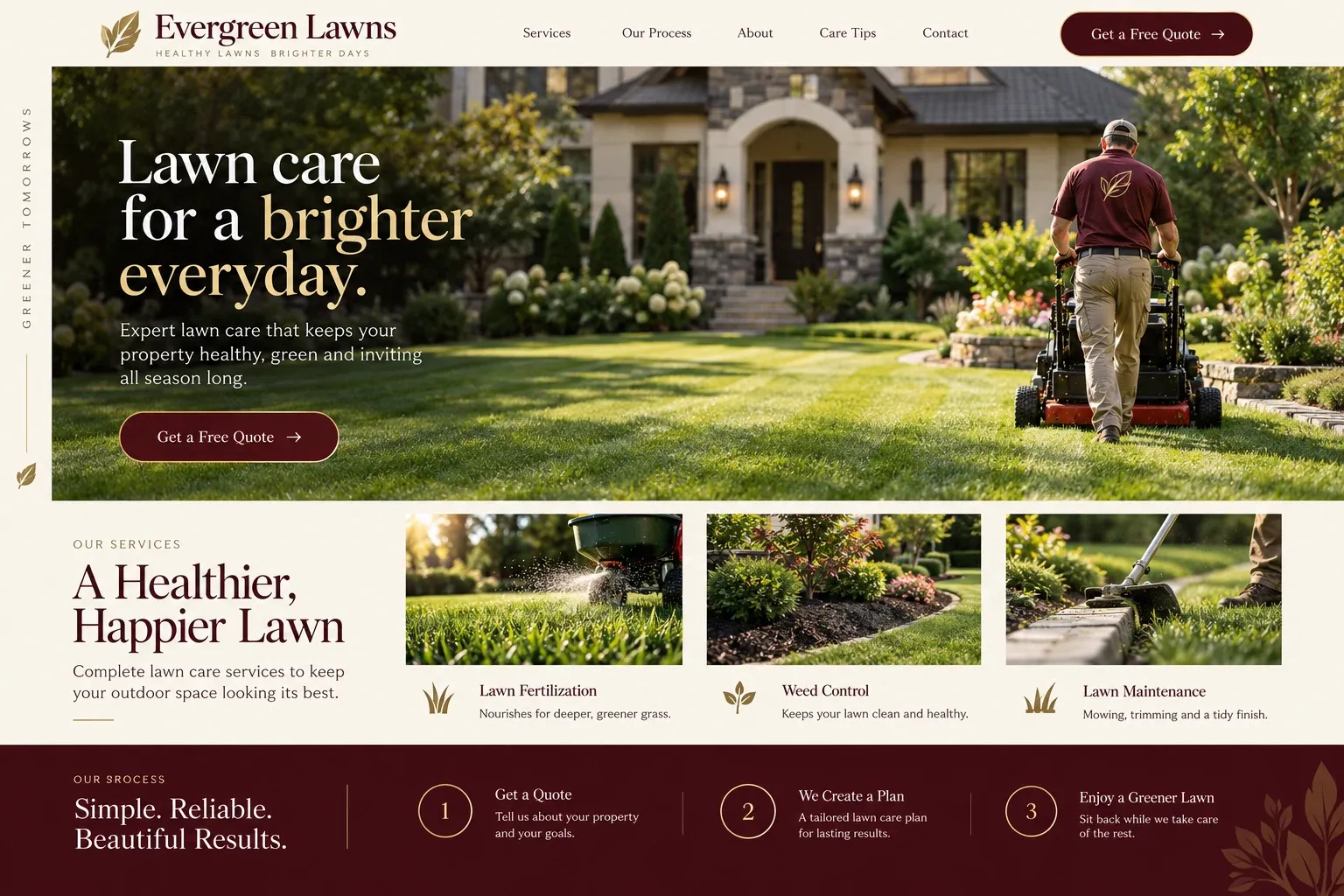
Fictional lawn care services website homepage design concept
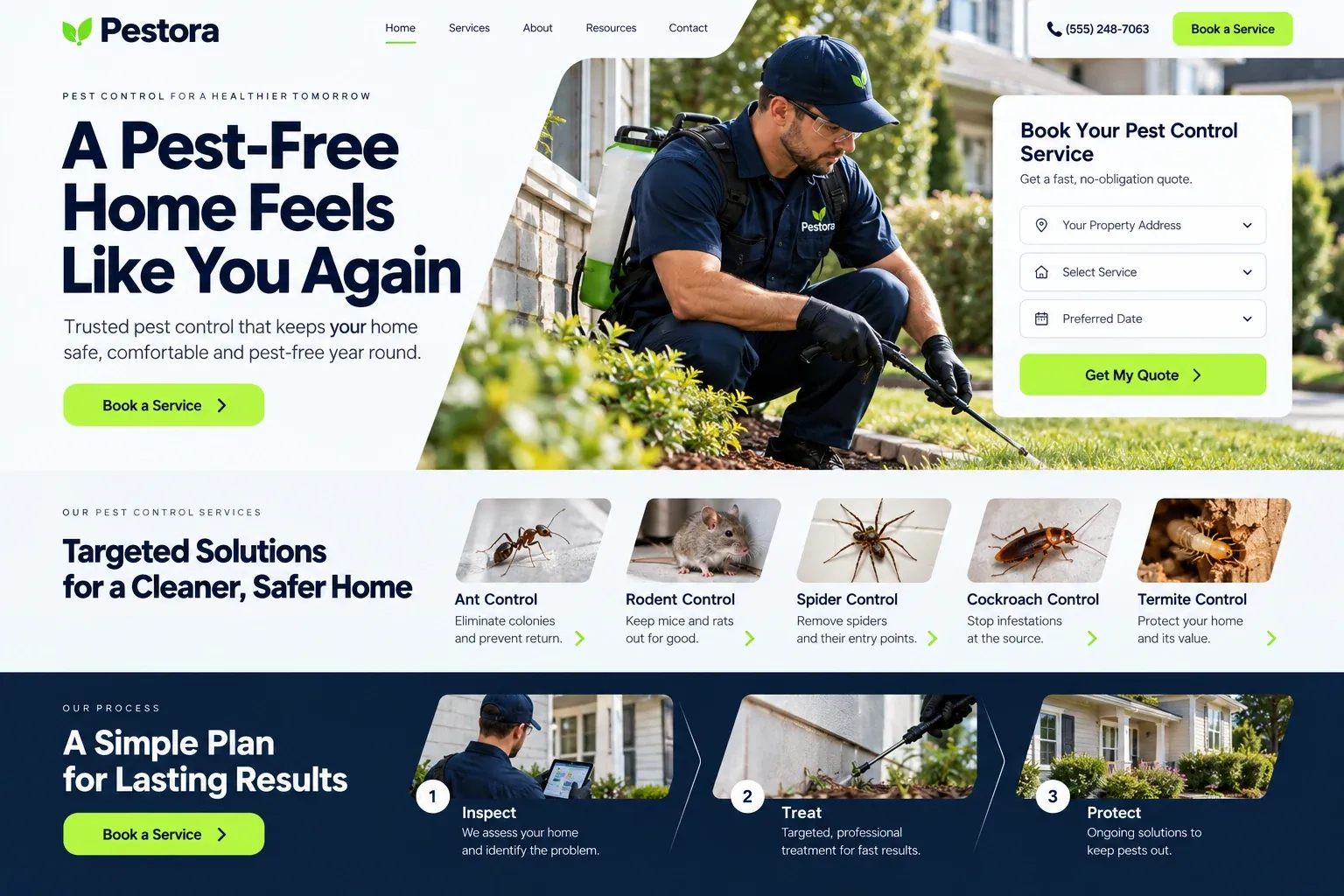
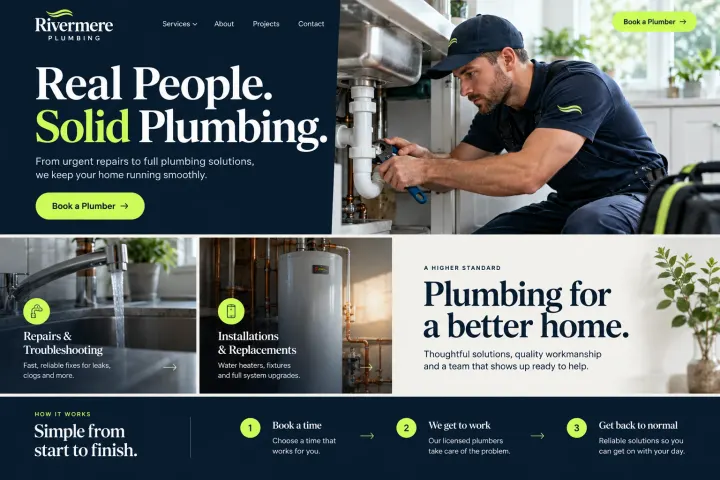
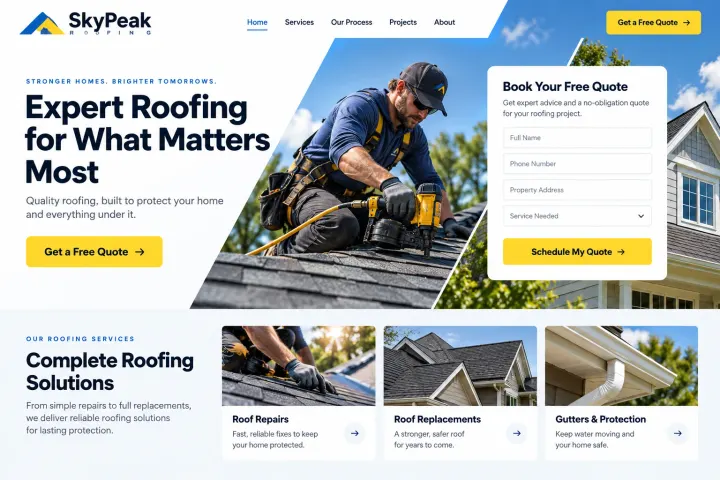
A design concept for a fictional brand. Your site is designed from scratch around yours.

Your customer's story

Another Saturday lost to the mower

Frank's St. Augustine lawn in Westchester has grown a full inch since Sunday, and it rained every afternoon this week. His old mower starts on the fourth pull. By the time the front is done, his kids have left for the beach without him, and the swale by the street is still shaggy. He sits on the porch step, sweaty and annoyed, and searches for lawn service near him.

He is not hunting for a bargain so much as an answer. Does weekly mean every week in summer, and what about the dry months? Is edging the driveway included, and the hedge along the fence? Who blows the clippings off the walk? Two companies list only a phone number. A third shows exactly what each visit covers, the neighborhoods its crews drive every week, and a short sign-up form.

He fills in the form: lot size, corner lot, a dog in the back, a gate code. The next morning he gets a call with a start date. The company that won him did not have the slickest logo. Its website simply spelled out the routine, so signing up felt like a small, safe decision instead of a commitment to something vague.

Why it matters

Why lawn care companies need a website.

Lawn care is a relationship measured in visits, and customers judge it before the first one by how clearly you describe the routine. They want to know what each visit includes, how often you come in the growing season and the dry months, and whether their street is on your route. A Facebook page or a profile on a lead site rarely answers those questions, and the customer moves on to whoever does.

We build lawn care websites that read like a clear service sheet. Mowing, edging, blowing, hedge trimming, fertilization, and weed control are described separately, with what is standard and what is extra. Service areas are listed by neighborhood so customers can see you are nearby. The sign-up form collects the property details your crew leader needs, and the site points existing customers to your billing or customer portal if you use one.

What your customers search for

  • lawn service near me
  • lawn mowing service Miami
  • weekly lawn care
  • st augustine grass care
  • chinch bug treatment
  • yard maintenance service

Your customers

What homeowners ask before signing up for lawn service

  • What exactly happens on each visit?

    A plain list of what a standard visit covers, such as mowing, string trimming, edging, and blowing off hard surfaces, and what is billed as extra.

  • Is my street on your route?

    Service areas listed by neighborhood and city, with a quick note on when you add new streets or keep a waiting list for full routes.

  • How often will you come?

    Your visit frequency in the rainy months and the dry season explained honestly, including what happens when afternoon storms push the schedule back.

  • Do you treat weeds and chinch bugs?

    Separate pages for fertilization, weed control, and insect treatment, showing the applicator credentials your crew holds and how treatments are scheduled through the year.

What we build

What a website for lawn care companies should include.

  • What each visit includes

    A checklist-style page for mowing, edging, trimming, and cleanup, so customers compare services fairly and know what to expect.

  • Neighborhood route map

    The areas your crews already work each week, shown on a map and listed by name for quick scanning on a phone.

  • Seasonal schedule notes

    How visits change between the summer growing season and the drier winter months, written plainly so nobody feels shortchanged.

  • Recurring service sign-up

    A short form for lot size, gate codes, pets, and preferred day, emailed to you as a ready-to-schedule request.

  • Add-on service pages

    Hedge trimming, sod replacement, mulch, and weed control each on their own page, which helps existing customers add more work.

  • Customer portal link

    A clear link to the billing or scheduling app you already use, so customers pay and reschedule without calling the office.

Planning guide

What belongs on a lawn care company's website?

A lawn care website does not need to be large. It needs to make a recurring service easy to understand and easy to start. The sections below cover what most lawn companies need, how to describe visits so customers compare fairly, and how the site helps a local crew show up in nearby searches.

Describe the routine before the extras

Start with a page that explains a standard visit in plain terms: mowing height and pattern, string trimming around beds and fences, edging along driveways and sidewalks, and blowing clippings off hard surfaces. Then list the extras separately: hedges, palms, mulch, sod, and treatments. When customers can see what is standard, they stop comparing your full service with a neighbor's teenager who only mows.

Show the map your crews actually drive

Route density is how lawn companies stay profitable, so the website should help fill the streets you already serve. List the neighborhoods and cities where you have crews every week, and consider a short page for each main area with the services people there ask for. If you turn down work outside your routes, say so, and you will spend less time on calls that go nowhere.

Be honest about frequency, too. In South Florida, grass grows hard through the wet summer and slows in the cooler, drier months. If your visits change with the season, explain how, and say how rain delays are handled. Clear expectations prevent the most common complaint in this trade: a customer who expected one thing and got another.

Make signing up feel small

The sign-up form should ask what your crew leader needs to quote and schedule: address, approximate lot size, corner lot or not, gate codes, pets, and the preferred day. Add a checkbox list of extra services. Keep a tap-to-call number visible for customers who prefer the phone, and link existing customers to your billing or customer app so they are not filling in a new-customer form.

Earn local searches with service pages and reviews

Homeowners search for lawn service near me, sod installation, or weed control in their city. Separate service pages and area pages give search engines specific matches. Keep your business name, phone, and address identical on the site and your Google Business Profile, and ask steady customers for reviews after a few good months, when they have something real to say about reliability.
In your market

Lawn care in the South Florida climate

Lawns here grow nearly all year. St. Augustine covers many yards, with zoysia and bahia in others, and chinch bugs, fungus, and weeds keep treatment crews busy. Summer brings afternoon storms that test any schedule, and some Florida counties and cities restrict fertilizer during the rainy months. HOAs expect tidy swales and crisp edges, and many customers would rather talk in Spanish. Our pages speak to these local facts, in English and Spanish if you like.

Questions

Questions lawn care companies ask us.

How detailed should our lawn service descriptions be?

Detailed enough that a customer could explain your visit to a neighbor. Name what a standard visit covers, what counts as an extra, and how often you come in each season. We write it from your notes and your crew's actual routine, and you approve every line before launch.

Can customers sign up for weekly lawn service online?

They can send a sign-up request with their address, lot details, gate codes, and preferred day, which arrives in your email ready to schedule. If you use field service software with its own online booking or customer portal, we link to it or embed it instead.

Can the website help us fill gaps on our existing mowing routes?

It can make those streets easier to reach. Area pages for the neighborhoods your crews already work, and a clear list of where you serve, help nearby homeowners see you are close. You decide which areas to feature, and we update them as your routes change.

Should a lawn company show its fertilizer and pesticide credentials?

If your crew applies fertilizer or treatments, customers and HOAs often ask about it, so it is worth showing whatever licenses or certifications your team holds. We list them in your own words on the treatment pages and in the footer, and we keep promises about results out.

Let's talk

Ready for a website built for lawn care companies?

Tell us about your business and we will come back with a clear recommendation and a fixed quote. No pressure, no jargon.

Trades we design for

See all 226 trades

226 trades

  • Plumbers website design concept
CallFree quote