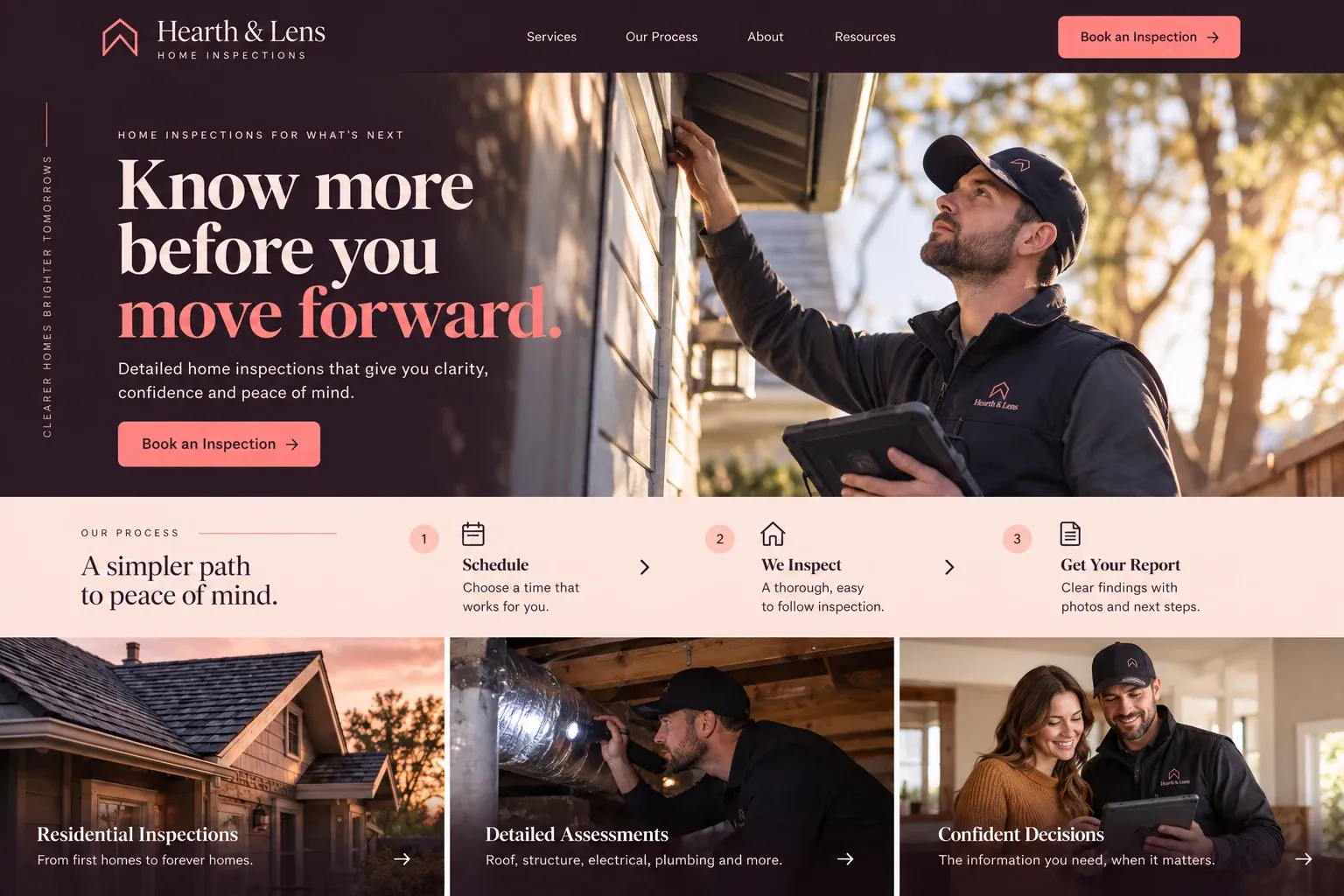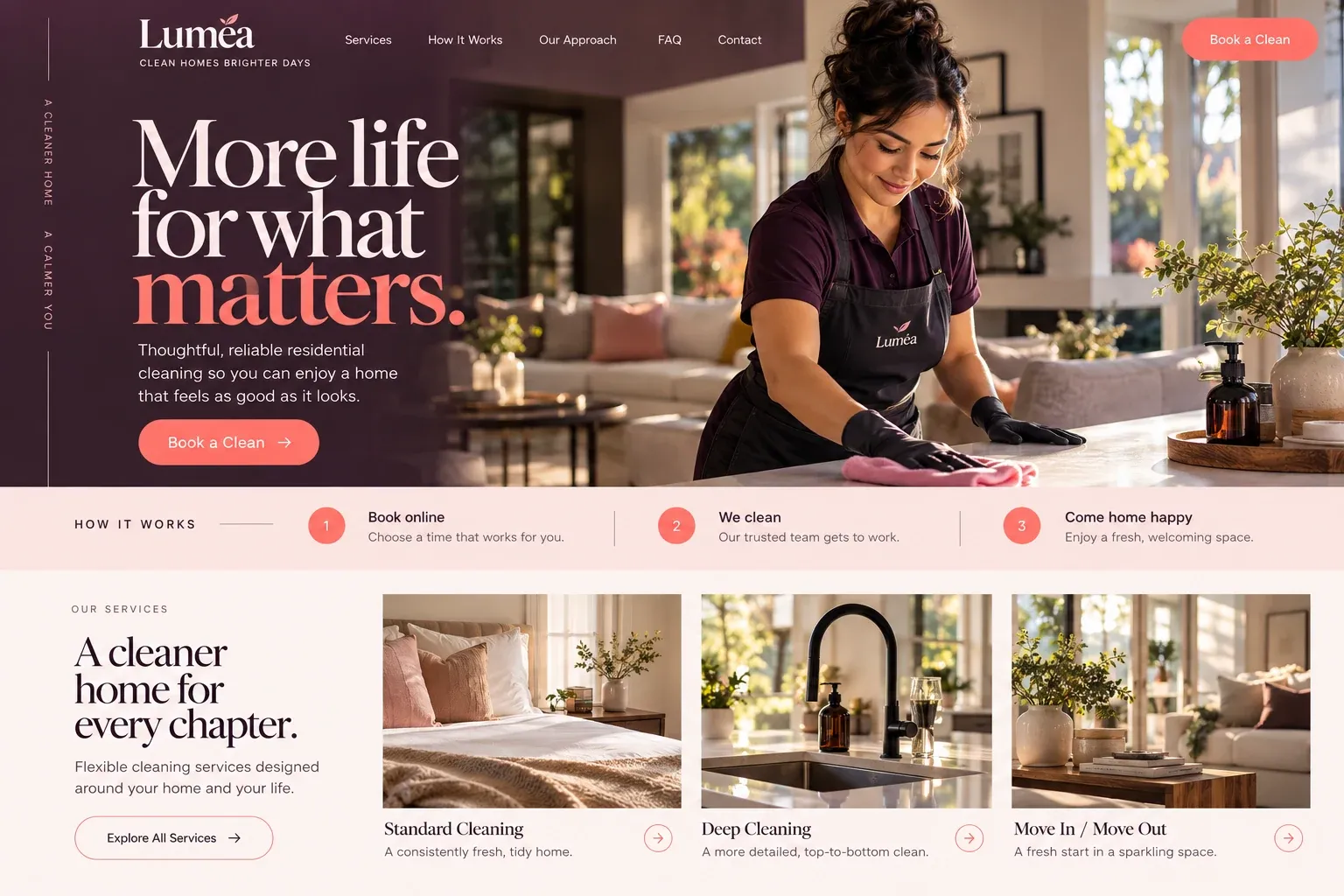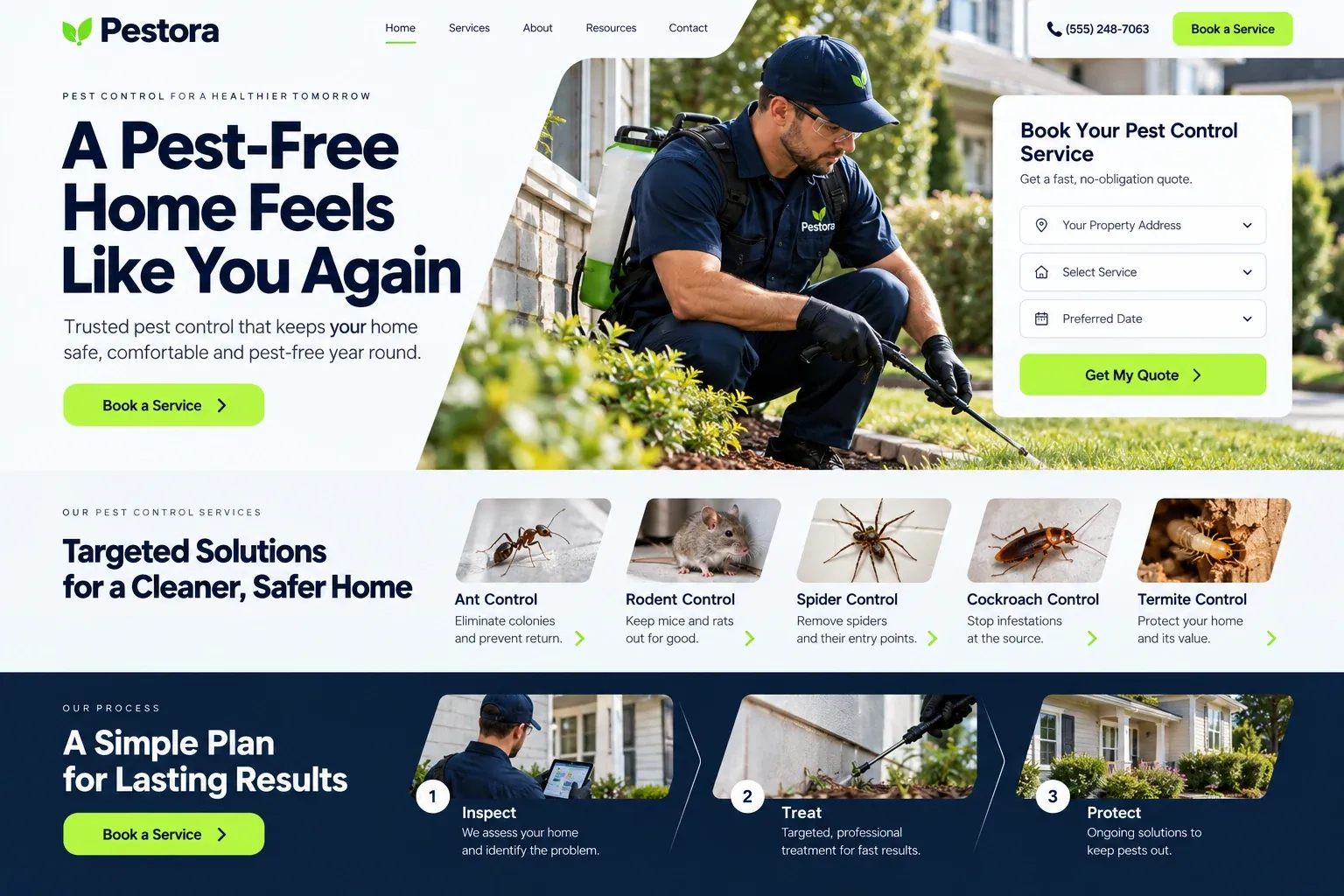
Web design for pest control companies

Pest control websites that send each caller the right way.

A homeowner with ants in the kitchen and a restaurant manager with an inspection next week need very different things. Your website should route both to the right service within seconds, and calm them down on the way.

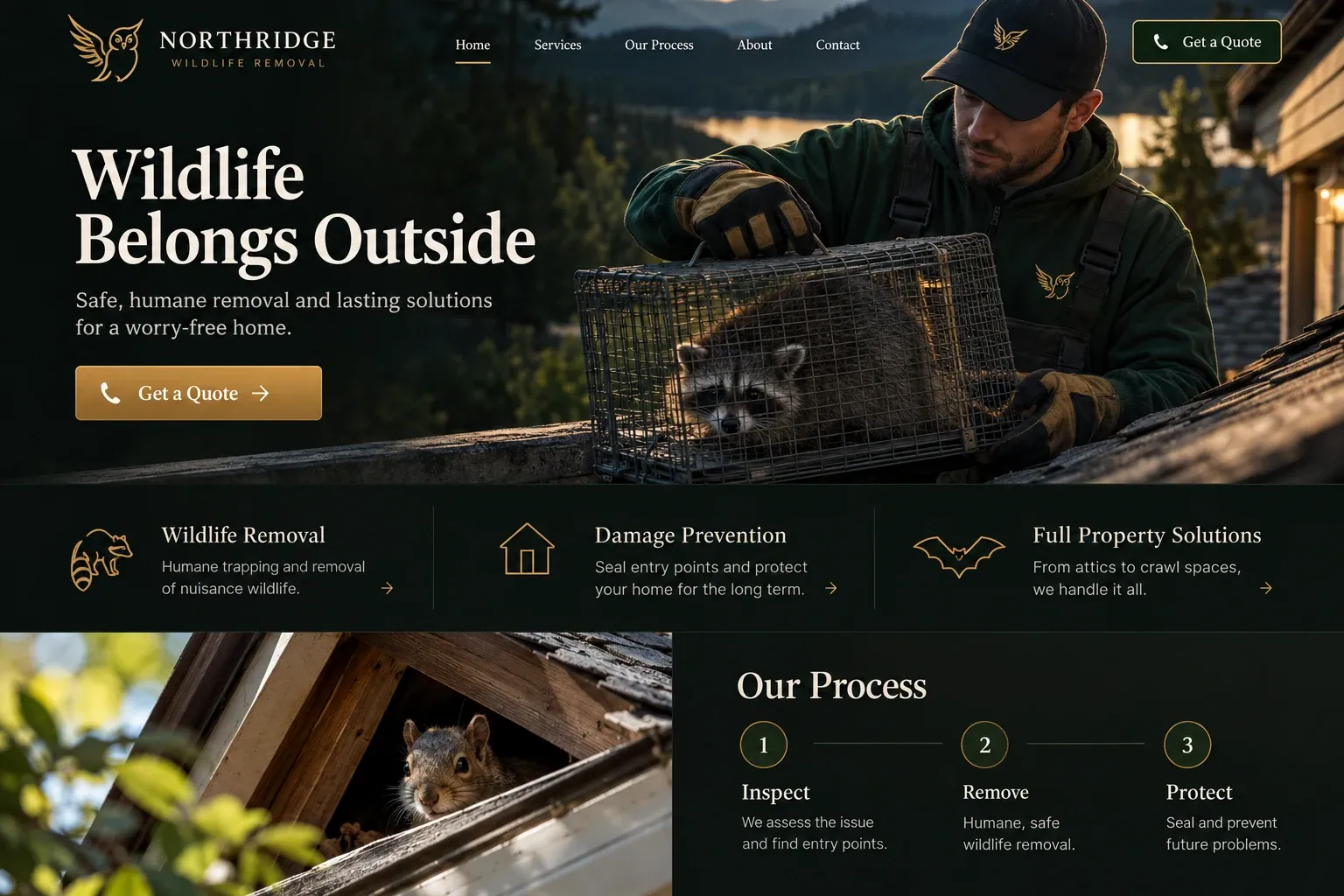
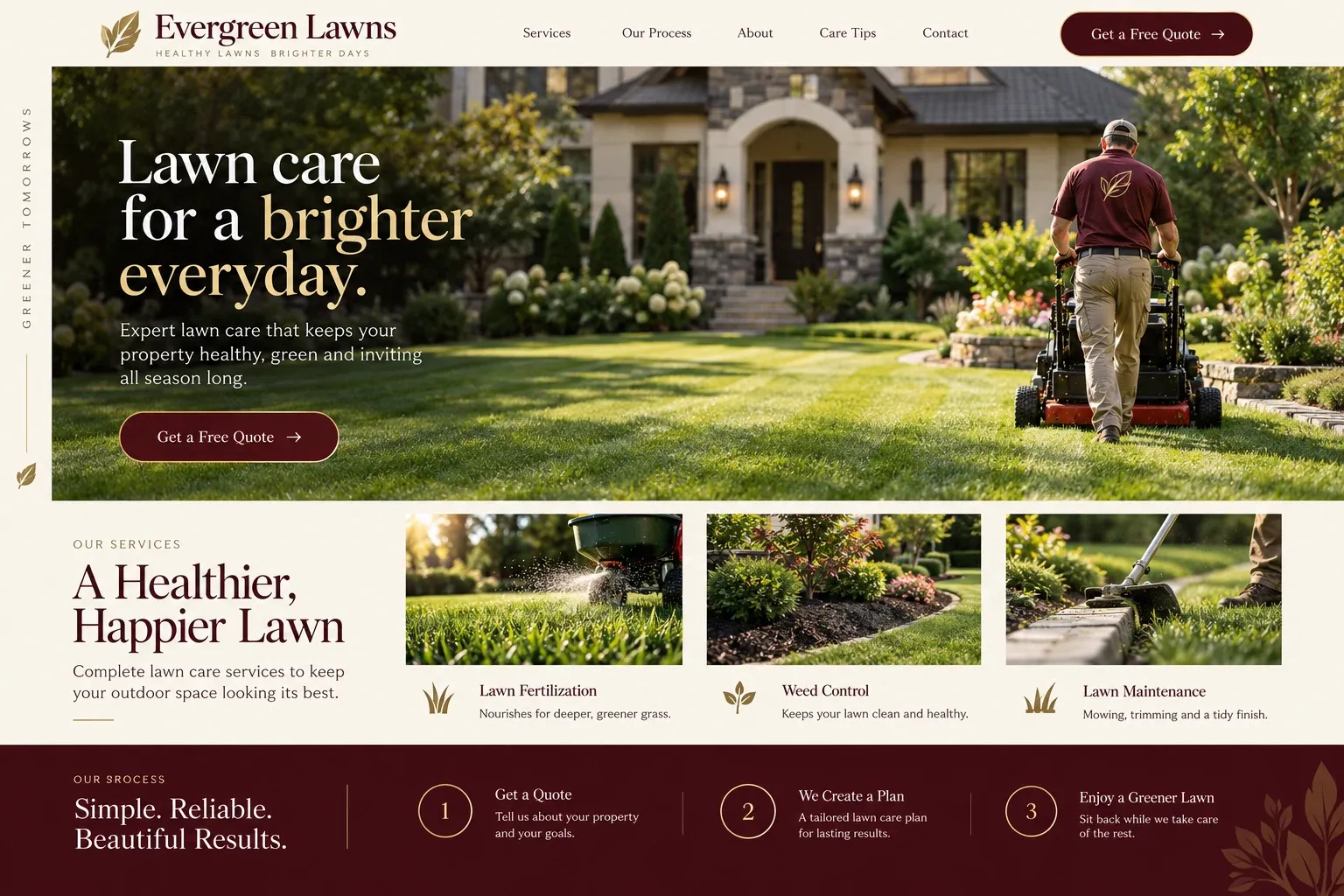
Fictional pest control companies website homepage design concept
A design concept for a fictional brand. Your site is designed from scratch around yours.

Your customer's story

Two problems on the same late evening

At ten at night, Odalys closes her café in Doral and sees droppings near the flour bins. The morning shift starts at six, and she cannot afford to guess. Across town, at about the same hour, a retired teacher named Hector watches winged insects pour out of a window frame in his bedroom and wonders if they are termites. Both of them reach for their phones.

Odalys needs a company that handles commercial kitchens, explains what happens on an inspection, and documents the visit. Hector needs someone to tell him what he is looking at and whether his house is in trouble. Most of the pest control sites they open have one form with a dropdown full of pest names. One site has two clear doors on its home page: homes and businesses.

Behind each door are the right questions. Odalys finds a page about restaurants, the follow-up schedule, and a number to call before opening. Hector finds a termite page explaining inspections and treatment options in plain words, without scary photos. A pest control website should do that sorting work, describe the inspection honestly, and never pretend to diagnose a problem from a contact form.

Why it matters

Why pest control companies need a website.

Pest control customers arrive anxious, and they are rarely the same kind of customer. Homeowners want reassurance and a clear plan. Property managers want reliable recurring service across several buildings. Restaurants, clinics, and warehouses want inspection records and follow-up visits that fit around their operations. A single listing with a phone number and a star rating cannot sort them, and a social media page cannot explain termite treatment options or your inspection process.

We build pest control websites with separate paths for homes and businesses from the first screen. Each pest you treat gets its own page, written calmly, with what an inspection looks for and how treatment and follow-up visits work. Your license details sit in the footer. Request forms ask the right questions for each setting, and the site can link to your customer portal for recurring service accounts.

What your customers search for

  • pest control near me
  • termite inspection Miami
  • exterminator for restaurant
  • roach control service
  • termite tenting preparation
  • mosquito control Miami

Your customers

What callers want answered before a technician arrives

  • Is this something serious?

    Calm pages for termites, rodents, roaches, ants, mosquitoes, and bed bugs explaining what an inspection checks, with no attempt to diagnose from a photo.

  • Do you handle businesses like mine?

    Commercial pages for restaurants, offices, medical buildings, and warehouses, describing scheduled service, inspection reports, and how visits fit around opening hours.

  • What about my kids and pets?

    A plain page on how technicians prepare a home, what you ask families to do before and after, and where product labels can be read.

  • What happens after the first treatment?

    Follow-up visits, recurring service options, and how to request a return visit, explained the way your company actually handles them.

What we build

What a website for pest control companies should include.

  • Home and business paths

    Two clear routes from the home page, each with its own services, questions, and request form for that kind of customer.

  • A page for each pest

    Termites, rodents, roaches, mosquitoes, ants, and bed bugs, each described calmly with what the inspection covers.

  • Inspection process page

    What a technician checks, where they look, and what the customer receives afterward, set out in plain steps.

  • Termite tenting guide

    A preparation checklist for fumigation, covering food, plants, pets, and keys, which spares your office many repeated phone calls.

  • Commercial service request

    Questions about the type of premises, opening hours, and access, so a manager can arrange an inspection without a long call.

  • Customer portal link

    A link to your scheduling or billing system for recurring accounts, so existing customers can manage service on their own.

Planning guide

How should a pest control company structure its website?

Pest control sites often try to say everything on one page and end up saying little. A better structure sorts visitors by setting, then by pest, then by next step. Here is how we would plan the pages, the inspection explanations, the request forms, and the local search basics for a pest control business.

Split homes and businesses from the start

Residential and commercial customers want different things, so give them different paths. The residential side covers common pests, termite inspections, recurring home service, and preparation guides. The commercial side covers restaurants, offices, property management, schools, or warehouses, depending on what you serve, with notes on scheduling around operating hours and the inspection records you provide. Each side gets its own request form.

Describe inspections and treatments honestly

Customers fear the unknown more than the bug. A page that explains what the technician looks for, where they check, what the customer should do beforehand, and what they receive afterward takes much of that fear away. For termites, explain inspection, treatment options such as fumigation or localized treatment, and follow-up in your own terms. Never promise a pest-free home forever.

Photos help when they are honest: your technicians in uniform, your marked vehicles, an inspection in progress under a sink or along a baseboard. Close-up insect photos should be clear and accurate, not designed to frighten. Link to product labels or safety information where it applies, and leave medical or health claims out entirely, even when a customer asks for them.

Ask the right questions in each form

A homeowner's form needs the address, the pest they think they see, where they see it, and whether there are pets or children at home, with an optional photo. A business form needs the type of premises, opening hours, access arrangements, and the contact person. Neither should promise a diagnosis; the inspection does that. Keep a tap-to-call number on every page for problems that cannot wait until morning, such as a rodent spotted in a kitchen before service.

Show up for the pests people search

People search for the pest and the place: termite inspection, rodent control for a restaurant, mosquito service near me. A page for each pest and setting, plus the cities you serve, gives search engines exact matches. Keep your Google Business Profile consistent with the website, show your license details, and ask satisfied customers for reviews. Visibility builds over time and cannot be promised by anyone.
In your market

Pest control in a subtropical climate

South Florida's warmth and humidity give pests a long season. Drywood and subterranean termites, roof rats, palmetto bugs, ants, and mosquitoes keep technicians busy most of the year, and tented houses are a familiar sight. Restaurants, hotels, and condo buildings need regular commercial service, and many customers prefer Spanish. We write pest pages around local conditions, keep the language calm and accurate, and can add a Spanish version of the whole site.

Questions

Questions pest control companies ask us.

Should a pest control website show photos of bugs?

A few clear, accurate photos help people recognize what they are seeing, but they should not dominate. We pair each pest page with calm, plain descriptions and lead with your technicians and process. Customers should feel that you are in control, not that their house is under attack.

Can our pest control site have separate forms for homes and businesses?

Yes, and we recommend it. The residential form asks about the pest, the rooms affected, and pets or children. The commercial form asks about the premises, opening hours, and access. Each arrives in your email clearly labeled, so the right person on your team can respond.

Where should our pest control license appear on the site?

In the footer of every page and on the about page, written exactly as it appears on your license, alongside your insurance details. Property managers and restaurant owners often check before calling. We list only credentials your company holds, and you approve the wording.

Can the website help prepare customers for termite fumigation?

Yes. A preparation page or downloadable checklist can cover what to remove, what to bag, where pets go, and when the family can return, in your own words. Sending a link to that page before each job saves your office from answering the same questions on every call.

Let's talk

Ready for a website built for pest control companies?

Tell us about your business and we will come back with a clear recommendation and a fixed quote. No pressure, no jargon.

Trades we design for

See all 226 trades

226 trades

  • Plumbers website design concept
CallFree quote