Web design for machine shops

Website design for CNC machine shops.

Engineers and buyers do not call a machine shop to chat. They scan for processes, materials, and the kind of parts you make, then decide whether your shop is worth a drawing and a request for quote.

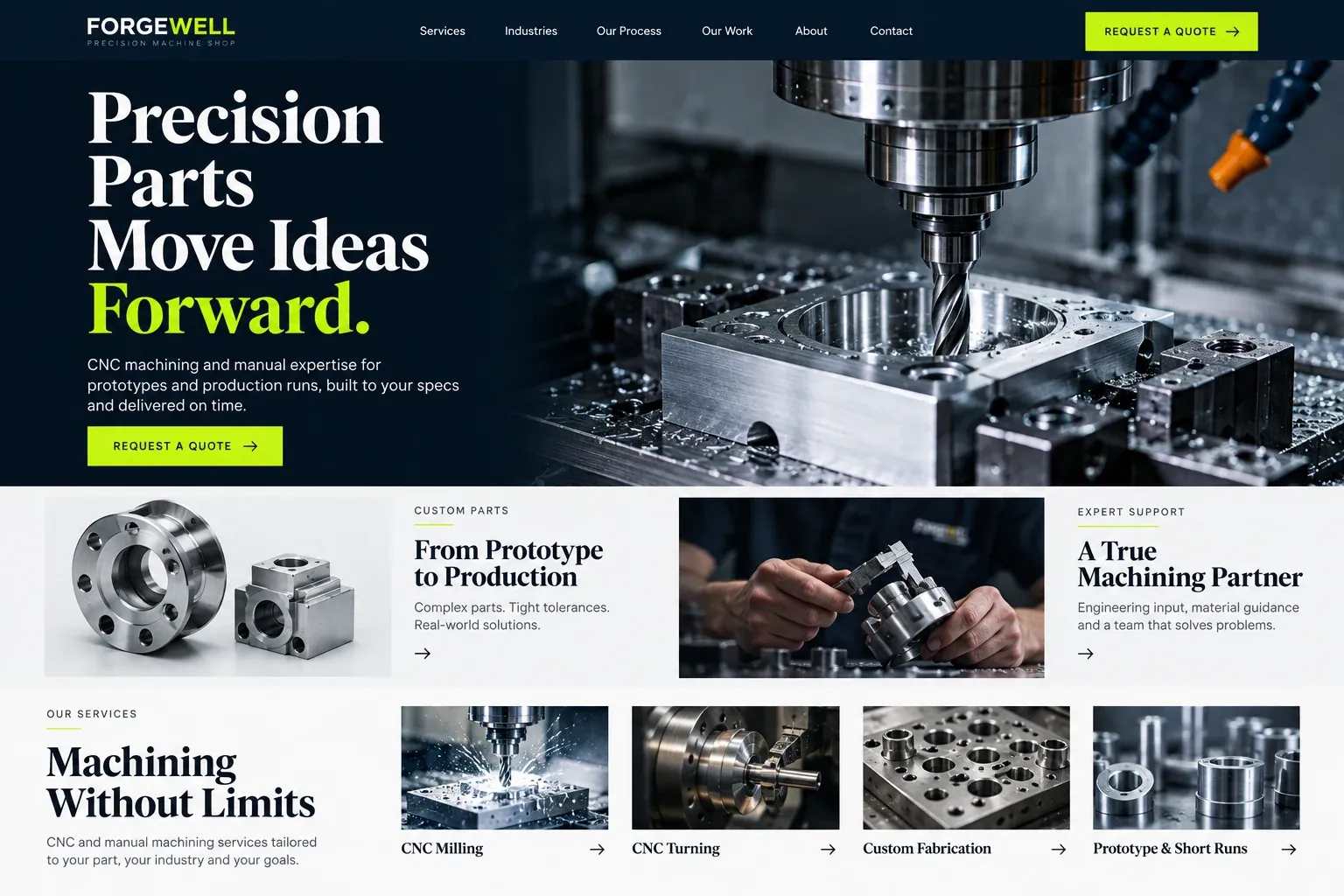
Fictional machine shops website homepage design concept
A design concept for a fictional brand. Your site is designed from scratch around yours.

Your customer's story

Prototype housings and a design review on Friday

Tomás is a mechanical engineer at a small company that builds marine navigation equipment. His team needs six aluminum housings and a handful of stainless brackets for a prototype that goes to sea trials next month. Their usual shop is booked solid. He has STEP files, a PDF drawing with tolerances called out, and a design review on Friday where someone will ask who is making the parts.

He searches for CNC machining near the office. One shop's site is a single photo of a lathe and a phone number. Another claims it can machine anything to any tolerance, which makes him trust it less. A third lists its milling and turning capacity, the materials it runs most, and the anodizing it arranges through a partner, shows a few parts with client details removed, and explains how to send files and ask for an NDA.

He sends the files through the third shop's quote form and gets a reply with two sensible questions about a thread callout. For an engineer, that reply matters more than any slogan. The website does its work before anyone speaks: honest capabilities, real parts, and a clear path for a drawing, which is exactly what a careful buyer is scanning for.

Why it matters

Why machine shops need a website.

Machine shop work is bought by people who read specifications for a living. Engineers, buyers, and product teams search by process, material, and part type, then check capacity, quality practices, and how to submit a drawing. Many never call before sending an RFQ, so the website is the first and sometimes the only test. A directory listing gives an address and a social page shows chips flying, but neither tells a buyer whether their part fits your machines.

We build machine shop websites around verified capability. Milling, turning, and any other processes you run get clear pages, with materials and size limits stated only as you confirm them. Project examples show the kind of work you take on, with sensitive details removed. A quote form accepts drawings and 3D files with quantities, materials, finishes, and due dates, and explains how you treat confidential files.

What your customers search for

  • cnc machine shop near me
  • cnc machining Miami
  • prototype machining service
  • custom aluminum parts
  • cnc turning service
  • stainless steel machining

Your customers

What engineers check before sending an RFQ to a machine shop

  • Can your machines make this part?

    Process pages for milling, turning, and anything else you run, with work envelope, axis count, and part size ranges stated as you verify them.

  • Do you work in our material?

    A materials list covering the aluminum alloys, steels, stainless grades, and plastics you machine regularly, with notes on anything you prefer to avoid.

  • How do you check the parts?

    An honest description of your inspection equipment and quality practices, with certifications such as ISO 9001 named only if your shop holds them.

  • Will our drawings stay private?

    A short note on how you handle files and whether you sign NDAs, with a quote form that keeps the upload simple.

What we build

What a website for machine shops should include.

  • Verified capability pages

    Milling, turning, and secondary processes described with the sizes and tolerances you confirm, not numbers borrowed from a brochure.

  • Materials coverage

    Metals and plastics you machine regularly, from common aluminum alloys to stainless and engineering plastics, listed plainly.

  • Anonymized part gallery

    Photos of real parts with client names and sensitive features removed, grouped by industry or by part type.

  • Drawing-based quote request

    Upload fields for STEP, IGES, and PDF drawings, with quantity, material, finish, and the date the parts are needed.

  • Quality and inspection page

    Your inspection tools and quality practices, plus any certifications, described accurately so buyers can judge fit.

  • Industries you serve

    Short pages for the sectors you already work with, such as marine, medical devices, or aviation, where that is true.

Planning guide

What do engineers expect from a machine shop's website?

A machine shop's website is read by people who will notice an exaggeration. It should show what you make, what you make it from, and how to send a drawing, all without claims you cannot back up. This guide covers the pages to plan, the proof to show, how RFQs should come in, and how buyers searching nearby or by process find you.

Lead with processes and materials

Buyers search by process and part: CNC milling, CNC turning, prototype machining, short-run production, aluminum machining. Give each main process its own page with the machines behind it, the size range you handle, and the materials you run most. Add a materials page, a quality page, an industries page if relevant, and a quote page. Keep every number accurate, and leave out tolerances you do not hold consistently.

Show real parts without exposing clients

Engineers want to see parts like theirs. Photograph finished work on a clean background, crop out logos and part numbers, and describe each piece by type, material, and process instead of by customer. Shots of the shop floor, the inspection area, and setups add context. If you hold certifications, name them precisely and keep the dates current. A short, honest gallery beats a long one padded with stock images.

Make the RFQ path obvious

The quote form should accept 3D files and drawings, with fields for quantity, material, finish, any secondary operations, and the date parts are needed. Explain what happens next: who reviews the request, whether you may follow up with questions, and how you treat confidential files, including whether you sign NDAs before quoting. Requests arrive by email, ready for your estimator.

Some buyers still want to talk first, especially before trusting a new supplier with a design. A direct line and an email address on every page help, along with your hours and time zone, since many RFQs come from companies in other states. Name a contact person if you can, because engineers like knowing who will read their drawing.

Get found by process and by place

Machine shop buyers search both ways: by process, such as five-axis machining or Swiss turning, and by place, such as a CNC shop near their plant. Process pages handle the first, and a clear address, service area, and accurate Google Business Profile handle the second. Reviews from customers who agree to leave them add trust. Search results build over time and cannot be promised, but structure helps.
In your market

Machining in South Florida

Machine shops here serve a mix you will not find everywhere: marine builders and repair yards, aviation suppliers near the airports, medical device makers, and local manufacturers who need parts quickly. Salt air means buyers often specify stainless and anodized aluminum. Many engineers and purchasing teams are bilingual, and Miami's trade links mean some inquiries come from Latin America and the Caribbean. We write pages for that mix and can add a Spanish version for buyers who prefer it.

Questions

Questions machine shops ask us.

How should a machine shop present tolerances on its website?

Only as you can hold them consistently on the machines and materials in question. Many shops describe typical tolerances by process and invite buyers to send the drawing for anything tighter. That reads as more credible to engineers than a single bold number, and it protects you from quoting work you would rather decline.

Can the RFQ form take STEP files and large drawing sets?

Yes. The form can accept STEP, IGES, and PDF files within sensible size limits, and offer a link to a file sharing service for larger sets. It collects quantity, material, finish, and due date, and the whole request arrives in your email in a consistent format your estimator can work from.

Can we show customer parts if they are under NDA?

Only with permission, and many shops simply avoid it. Instead, we can photograph sample parts you made for yourself, or show approved parts with logos and identifying features removed. Describing the process and material without the customer's name still tells an engineer what your shop can do.

Should our machine shop site list the industries we serve?

If you have real experience in them, yes. Engineers in marine, medical, or aerospace work look for suppliers who understand their documentation and materials. A short page per industry, describing the kinds of parts and requirements you handle, helps them recognize a fit. Leave out industries you have not worked in.

Let's talk

Ready for a website built for machine shops?

Tell us about your business and we will come back with a clear recommendation and a fixed quote. No pressure, no jargon.

Trades we design for

See all 226 trades

226 trades

  • Plumbers website design concept
CallFree quote