Planning guide
What should a welding business show on its website?
A welding website has to translate. Customers arrive with a broken part, a rusted hinge, or an idea on a napkin, and the site should help them describe it and decide whether you are the right shop. This is how we approach a welder's site: the pages, the photos, the inquiry form, and the local search basics that bring calls.
Organize pages by job, not by process
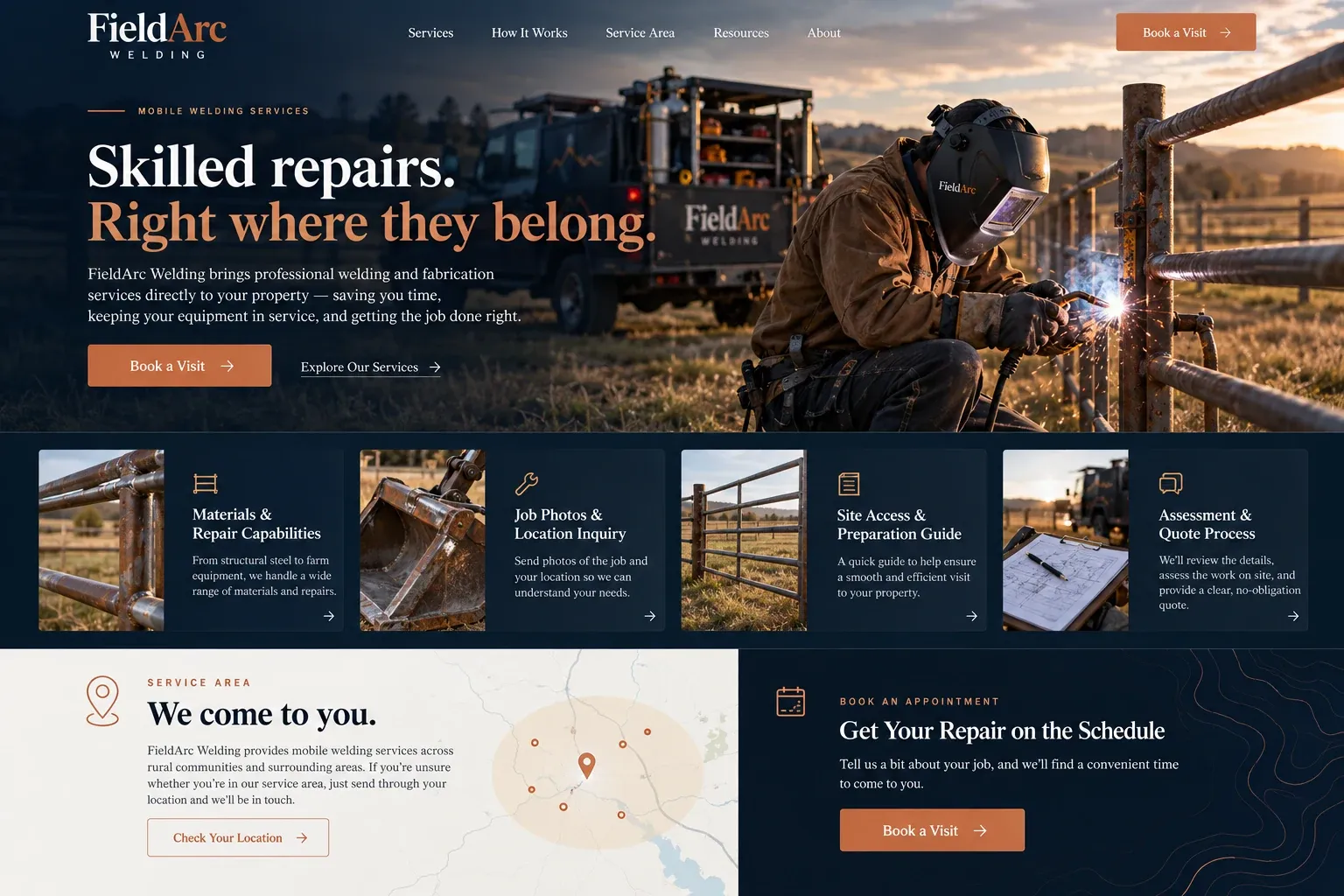
Most customers do not search for MIG or TIG. They search for gate repair, trailer welding, aluminum boat welding, or custom railings. Give each type of job a page, then mention the process and material inside it for those who care. A home page, the job pages, a mobile welding page, a custom work page, and a contact page cover what most welding businesses need. If you also build larger structural pieces, give that work its own section so contractors can find it without wading through gate repairs.
Let close-up photos do the selling
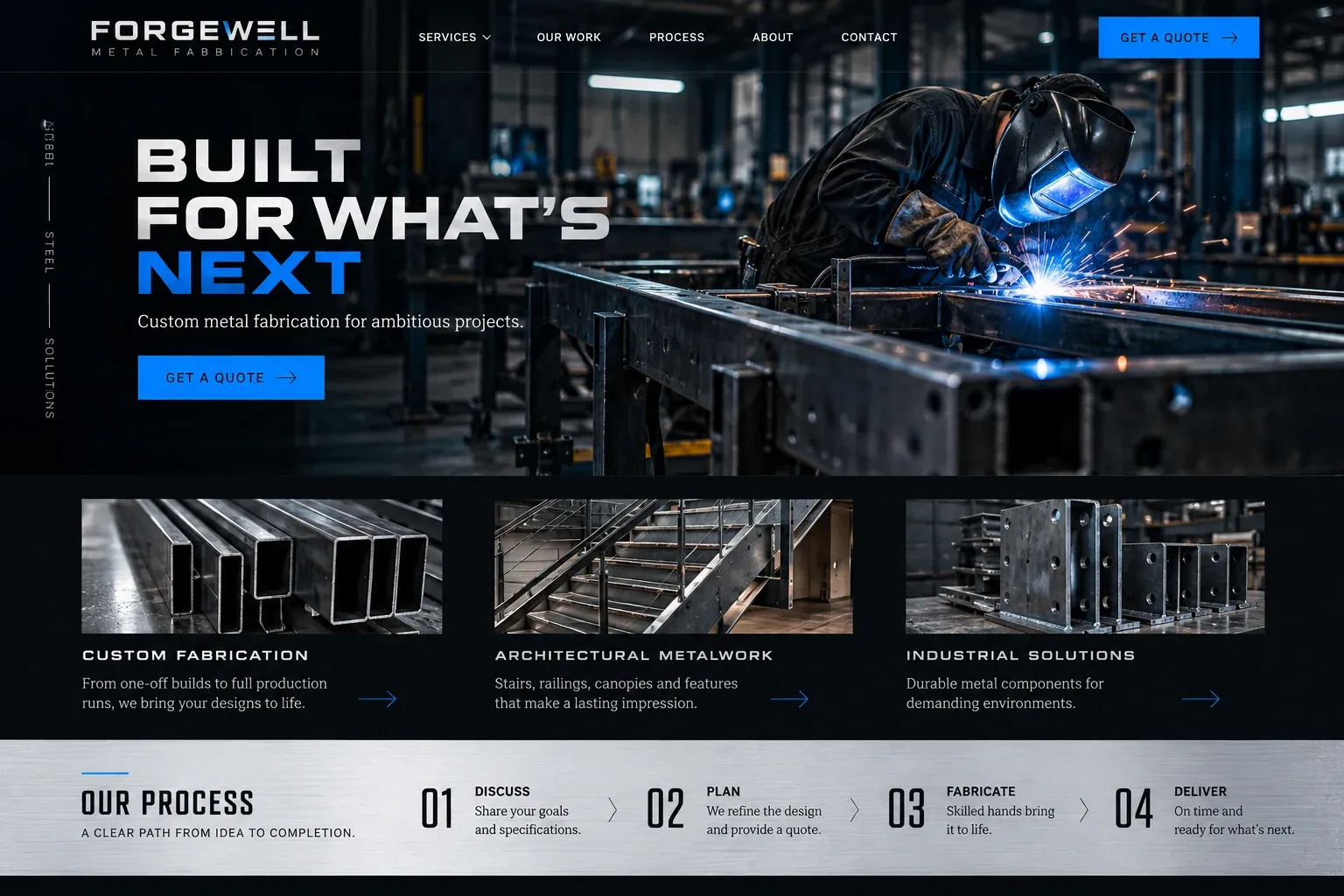
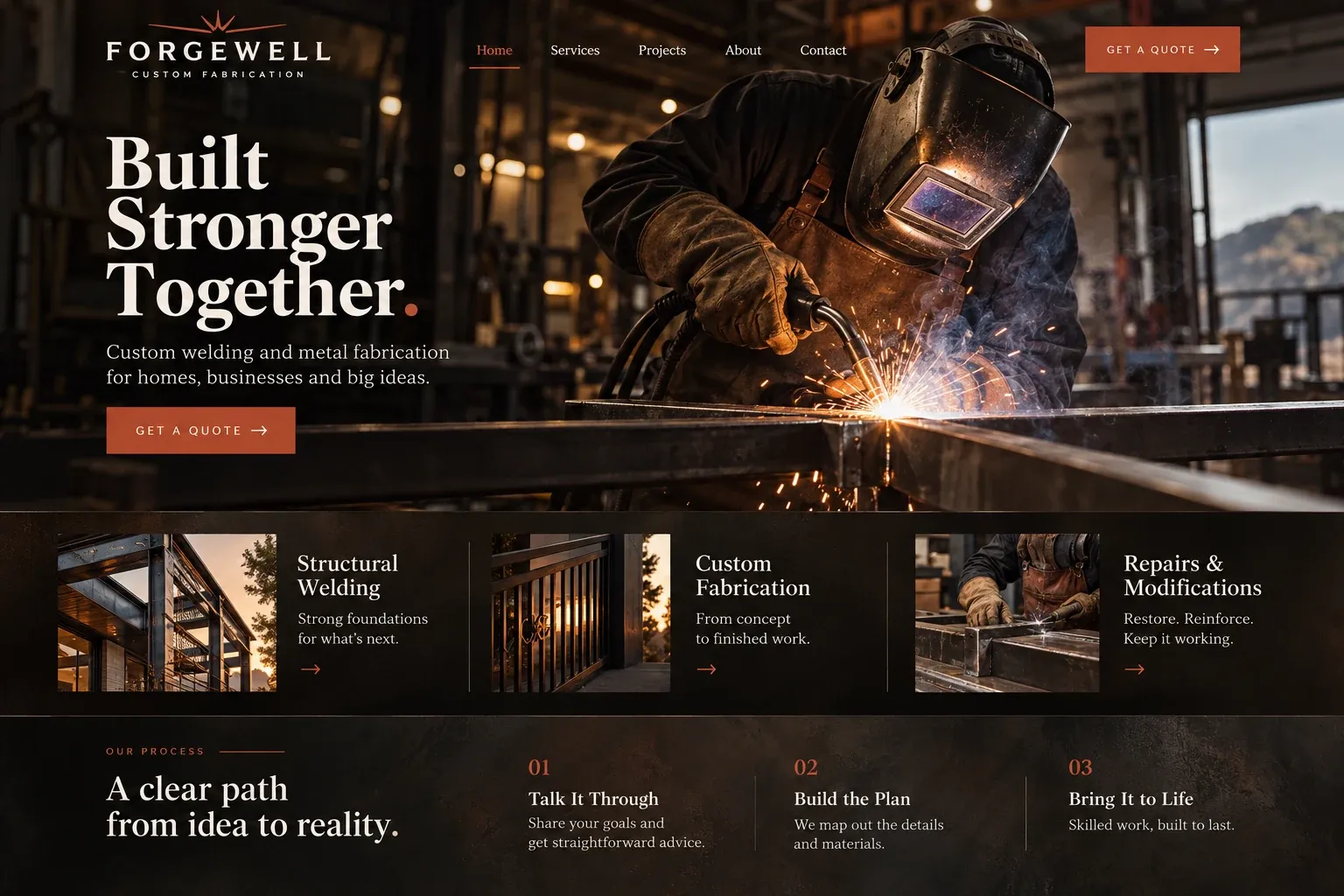
Customers judge a weld by its look, so show it. Pair a close-up of the bead with a photo of the whole piece in place: the gate swinging, the trailer loaded, the railing installed. Short captions on the material and the job help. If your welders hold certifications, name them exactly and keep them current, and never show work that was not yours.
Make the inquiry carry the details
A good welding inquiry form asks for a description of the piece, the material if known, what it holds or carries, approximate dimensions, and photos from several angles. Ask whether the job is a repair or something new, and whether it can come to the shop. These answers let you reply with real questions instead of a guess.
Some customers will still want to talk it through. A number that dials with one tap, your answering hours, and a line on whether you take urgent repairs, such as a commercial gate stuck open, belong near the top. Honest hours prevent calls you cannot take and build trust with the ones you can.
Reach customers searching nearby
Welding searches are local, especially for mobile work. A service-area page naming the cities and neighborhoods your rig covers gives search engines something to match, and job pages add specific topics. Keep your business details the same on the site and your Google Business Profile, post photos there too, and ask customers for reviews that mention the job. Results grow over time rather than overnight.