Web design for Pilates studios

Website design for Pilates studios.

Pilates means something different in every studio: reformer group classes, mat work, tower sessions, private lessons, classical or contemporary. Clients need that sorted out before they book, or they book the wrong thing.

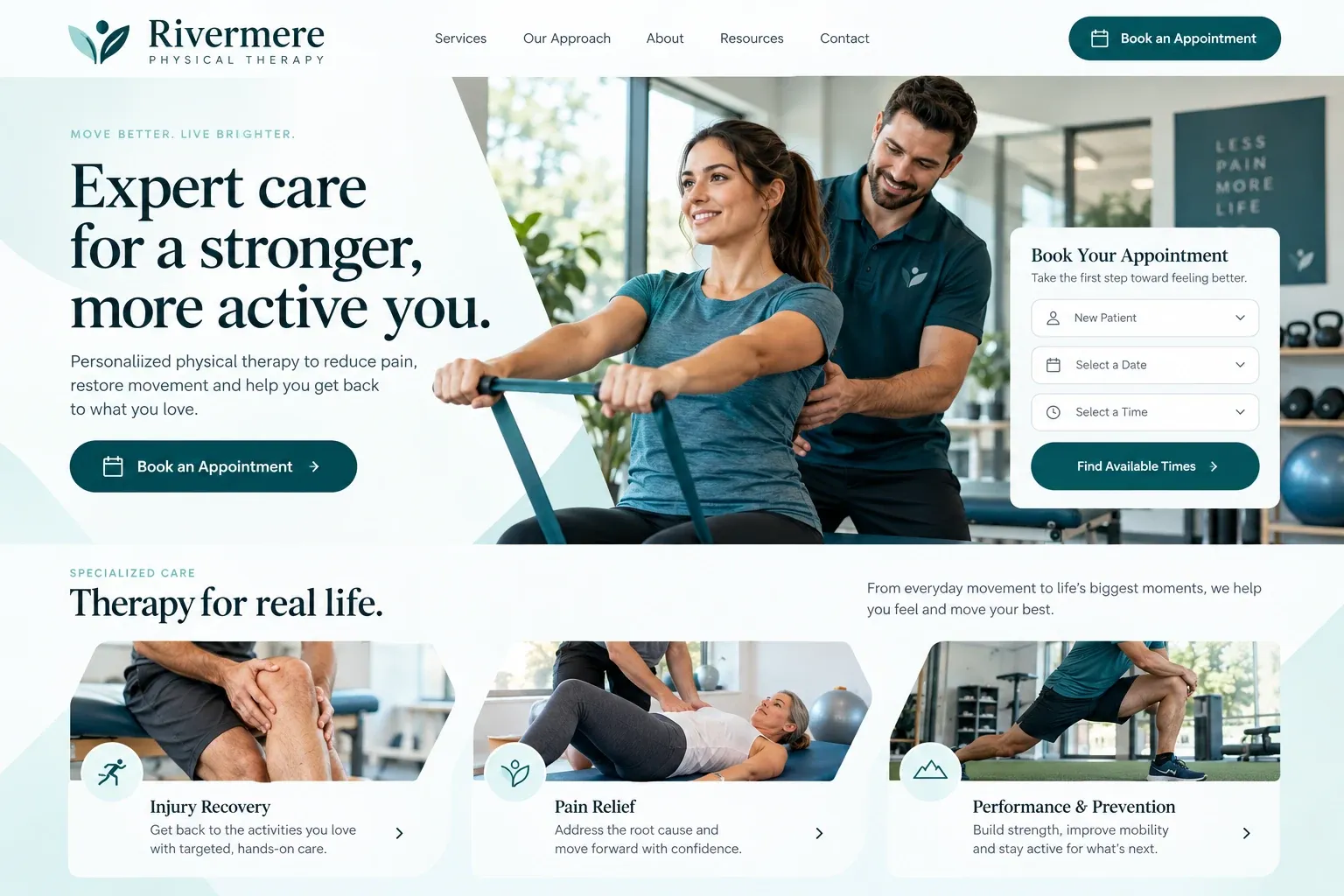
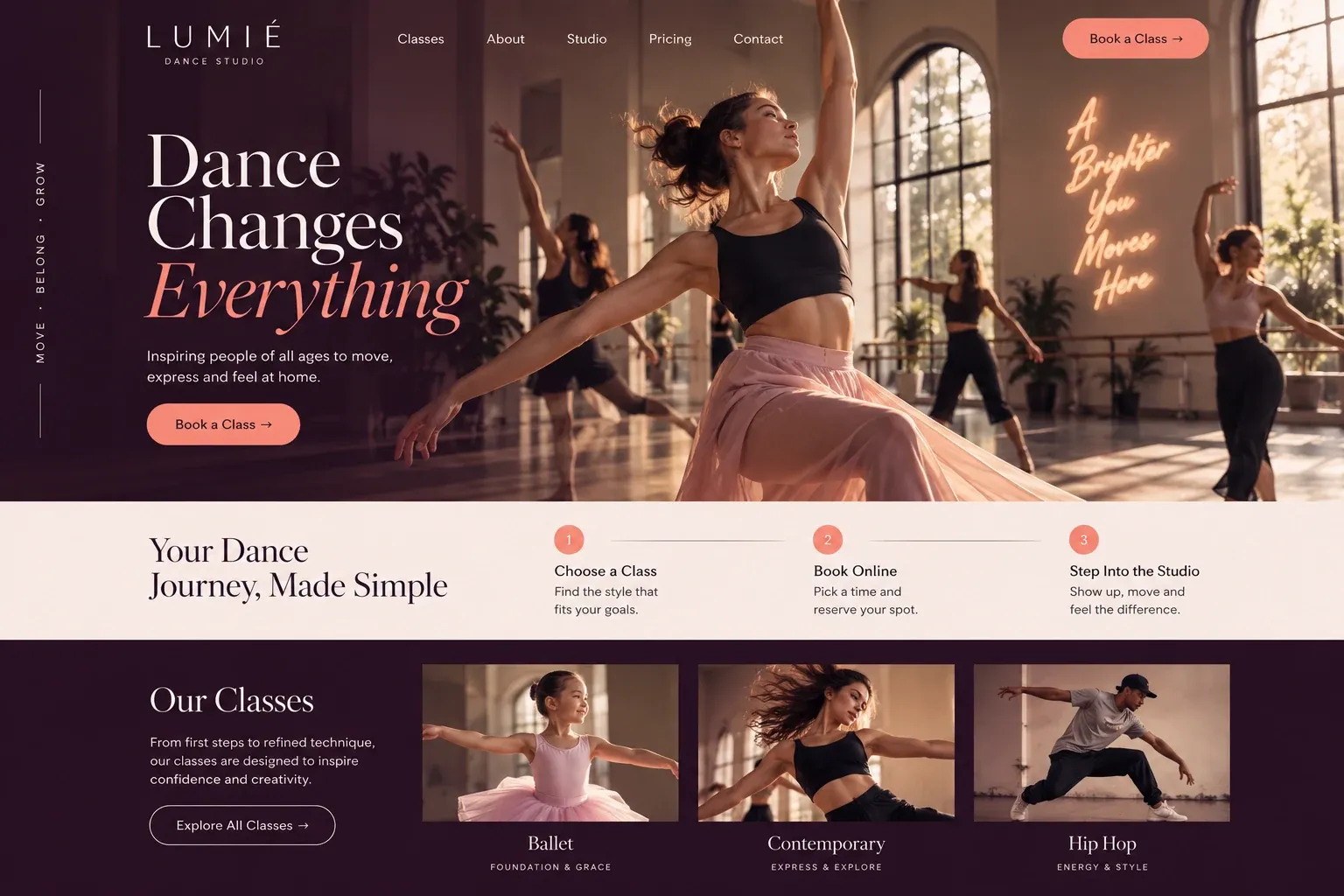
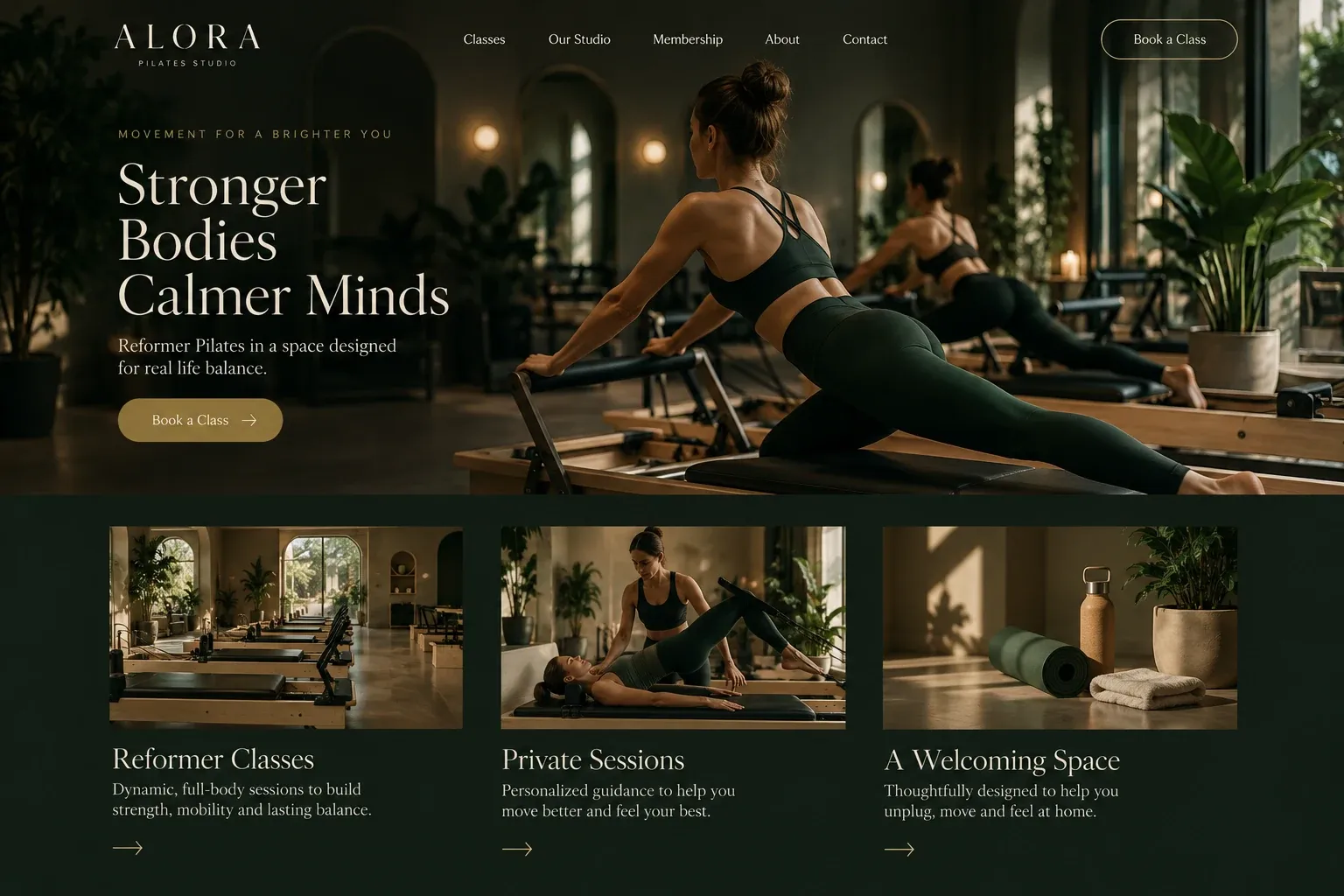
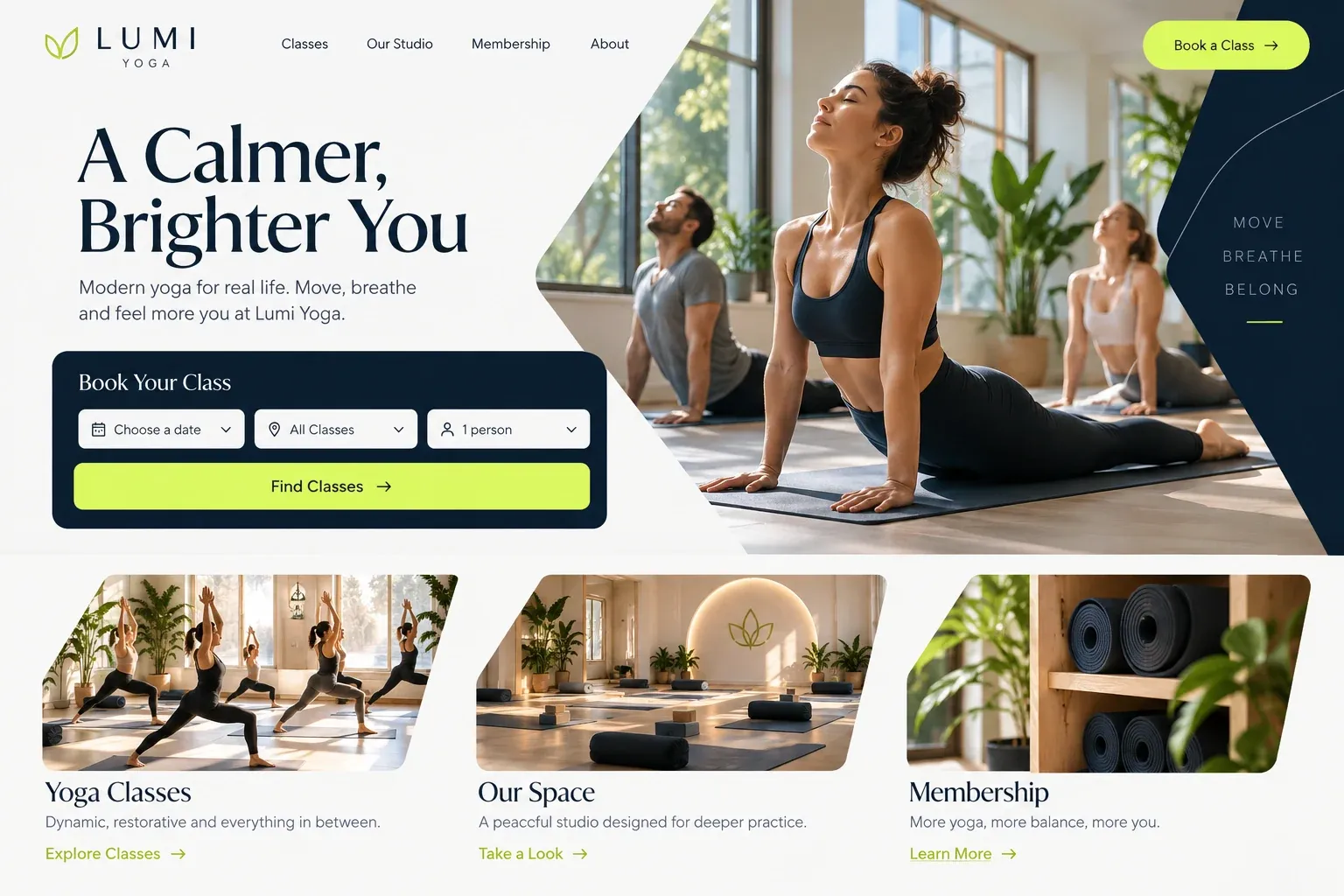
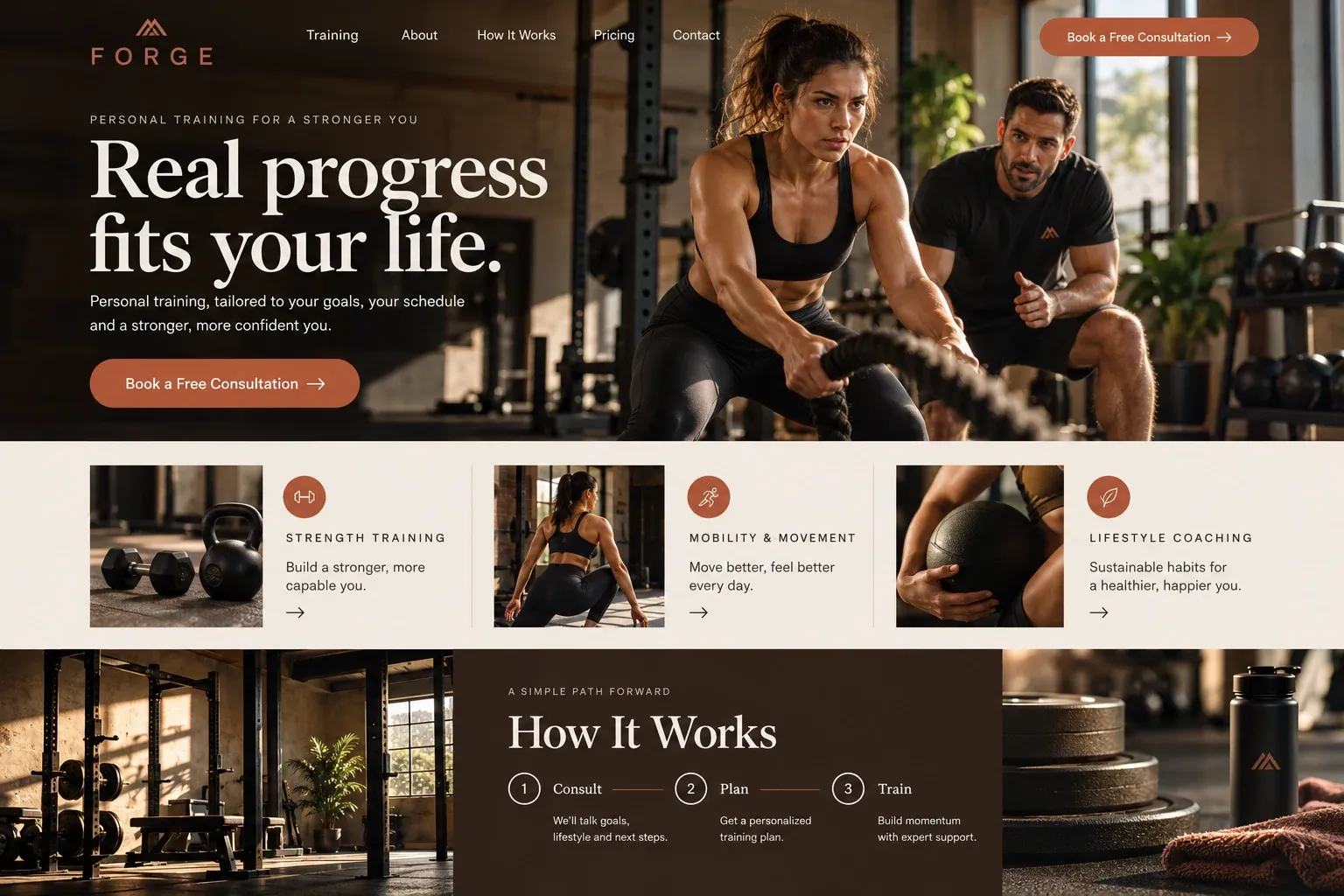
Fictional pilates studios website homepage design concept
A design concept for a fictional brand. Your site is designed from scratch around yours.

Your customer's story

Reformer, mat, or a private first

Elena has watched Pilates videos for months and finally wants to try a reformer class. She is forty, recovering from a sedentary year, and a little intimidated by the machines in the photos, all springs and straps. Two studios near her apartment in Edgewater offer reformer classes. She opens both sites on her laptop after dinner, side by side.

The first lists classes called Sculpt, Burn, and Core Fusion with no hint of level, and a booking button that charges for a class straight away. The second has a page comparing reformer, mat, and private sessions, photos of its actual room, and a clear note: new clients start with an intro private so the instructor can show them how the reformer works.

Elena reads the instructor's profile, sees where she trained, and books the intro private for Saturday. Nobody has to persuade her. The second studio simply explains the equipment and the first step better than the first one does. A Pilates website should make that difference obvious: what each session is, who teaches it, and how a newcomer begins.

Why it matters

Why Pilates studios need a website.

Pilates comes with a vocabulary newcomers do not know. Reformer, mat, tower, chair, classical, contemporary, group, duet, private: a newcomer cannot tell which fits them, and many studios ask for an intro session before group reformer classes. Aggregator apps and social media show the machines but not the path in. A studio website is where you explain the equipment, the formats, and how a new client starts.

We build Pilates websites that compare session formats side by side, show your real studio and equipment, and introduce instructors with their certifications stated accurately. The onboarding path is unmistakable: intro private, intro series, or beginner class, whatever your studio requires. Booking runs through your scheduling software, and terms for class credits, cancellations, and late arrivals are written plainly next to every button.

What your customers search for

  • reformer pilates near me
  • pilates studio Miami
  • private pilates sessions
  • pilates for beginners
  • mat pilates class
  • classical pilates instructor

Your customers

What newcomers ask before booking a Pilates session

  • What is the difference between reformer and mat?

    A comparison page showing each format, the equipment involved, class size, and who it tends to suit, with photos from your studio.

  • Can I join a group class right away?

    Your onboarding rule stated plainly, such as an intro private or beginner series first, with a button to book it.

  • Who will be teaching me?

    Instructor profiles with photos, the certifications they hold, the methods they trained in, and the sessions they lead.

  • What happens if I cancel late?

    Cancellation windows, late arrival rules, and how class credits work, written in plain words beside the booking buttons.

What we build

What a website for Pilates studios should include.

  • Session-format comparison

    Reformer, mat, tower, chair, private, and duet sessions compared in one place, with photos and a note on level.

  • Real studio photography

    The room, the equipment, and instructors at work, photographed in your space rather than borrowed from a stock library.

  • Instructor profiles

    Certifications, training background, and teaching style for each instructor, stated accurately and kept current.

  • Intro session booking

    A clear first step for new clients, linked to the intro private or series in your scheduling software.

  • Class schedule embed

    Your live timetable from the booking app you use, with beginner classes and levels shown clearly.

  • Policies beside buttons

    Credits, cancellation windows, and grip sock rules next to each booking link, not buried on a separate page.

Planning guide

How should a Pilates studio explain its sessions online?

A Pilates website has a teaching job before anyone enters the studio. It explains the equipment, sorts the formats, introduces the instructors, and shows newcomers the right first step. When those pieces are clear, fewer people book a class they are not ready for. Here is how we plan each one.

Compare the formats on one page

Most Pilates confusion comes from format names. One comparison page solves it: reformer group classes, mat classes, privates, duets, and any tower or chair sessions, each with a photo, the class size, the level, and who it usually suits. A clear photo of each machine helps more than any paragraph. If you teach classical Pilates, contemporary, or both, say what that means for a student in two plain sentences.

Make the onboarding path impossible to miss

If your studio asks newcomers to take an intro private or a beginner series before joining group reformer classes, put that rule on the home page, the class pages, and the timetable. Link it to the exact booking option in your software. Explain why in a sentence, such as learning the springs and straps with full attention, so it reads as care rather than a sales step.

Show the real studio and instructors

Clients want to see the room they will train in: the reformers, the light, the space between machines. Photograph your own studio during a real class, with permission from anyone shown. Instructor profiles should name each certification and the program that issued it, the methods they trained in, and the sessions they teach. Accurate details matter more than impressive wording.

Keep class descriptions honest about what a session involves. Talk about strength, control, and how a class feels, and leave out promises about body shape or treating injuries. If you work with clients referred by physical therapists, describe that relationship carefully and in words you approve. Leave the medical language to the medical professionals.

Get found for the session people search

People search by format and neighborhood: "reformer pilates near me", "private pilates Coral Gables", "mat pilates class". A page for each format gives those searches a clear match, and a location page with parking and entrance details serves people a few blocks away. Keep your Google Business Profile current and invite clients to review after their first few sessions, mentioning the format they took. Studios with several locations should give each one its own page.
In your market

Pilates in a South Florida rhythm

Pilates studios in South Florida serve a wide mix: young professionals in Brickell and Edgewater, retirees and seasonal residents, dancers, and people who prefer to train indoors during the hot, rainy months. Winter visitors look for short-term passes or a few privates during their stay, and many clients prefer to book in Spanish or Portuguese. We write format and onboarding pages for this mix and can add a Spanish version of the site.

Questions

Questions Pilates studios ask us.

How do we explain that new Pilates clients must start with an intro session?

Plainly and early. We put the rule on the home page, the class pages, and next to the timetable, with a one-line reason and a button straight to the intro booking. Framed as care for the client, it reads as a welcome rather than a hurdle.

Can the Pilates studio site show our reformer schedule live?

Yes. We embed or link the timetable from your scheduling software, such as Mindbody, Momence, or Arketa, so class changes and open spots stay current. Levels and beginner-friendly classes can be shown alongside, so newcomers do not accidentally book an advanced session.

How should instructor certifications appear on a Pilates website?

Named accurately, with the program that issued each one and whether it covers mat, reformer, or the full equipment. We do not round up or rename credentials. Add a few lines in each instructor's voice about how they teach, which helps clients choose a private instructor.

Should a Pilates studio mention working with injuries?

Only in careful, approved language. You can say an instructor has training in working with clients after injury, or that you work alongside physical therapists, if true. We avoid promises to treat or fix conditions, and the contact form never asks for medical details, which belong in your own intake.

Let's talk

Ready for a website built for Pilates studios?

Tell us about your business and we will come back with a clear recommendation and a fixed quote. No pressure, no jargon.

Trades we design for

See all 226 trades

226 trades

  • Plumbers website design concept
CallFree quote