Planning guide
What should a marketing agency put on its own website?
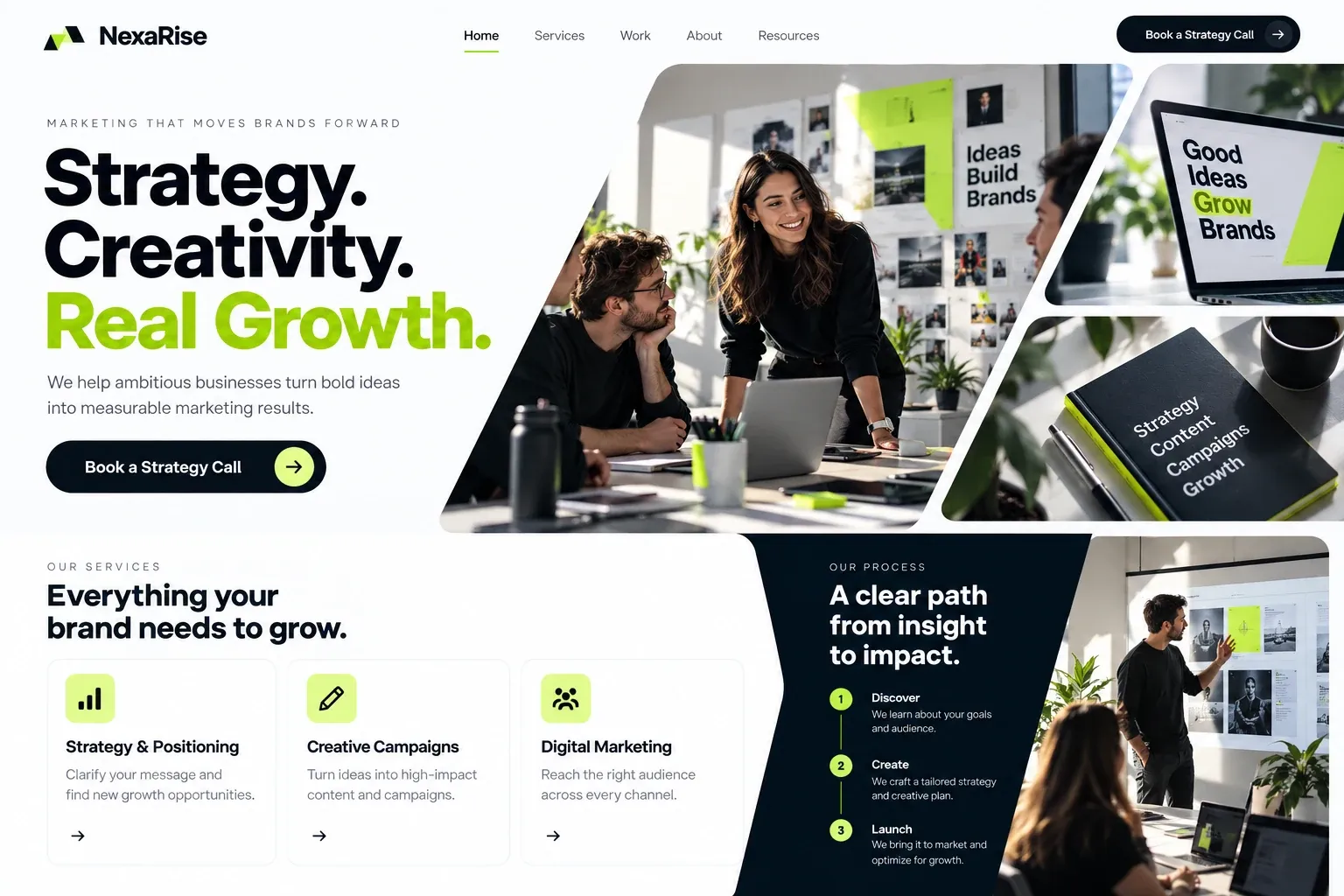
An agency's website is held to a higher standard than its clients' sites, because it doubles as a sample. Buyers want to see reasoning, real work, and a clear picture of what they would get. Here is a practical structure for the pages, the proof, the brief, and the search basics, with no tricks the agency would not recommend to a client.
Build case studies around objectives
Organize your best work by the problem it solved, not by client fame. Each case study should state the objective, the constraints, your approach, what you made, and the results you can support, with the measure and period named. If you were one of several agencies on an account, say which part was yours. Concept and spec work can appear too, as long as it is labeled clearly as concept.
Group case studies so visitors can filter by industry or objective, and keep each one short enough to read on a phone. Screenshots of real work in place, a sentence from the client if you have permission, and a note on what you would do differently all make the story more believable.
Describe services as things clients receive
"Full-service growth marketing" tells a buyer nothing. List what you deliver: a monthly report, a set number of ad variations, landing pages, an email calendar, a brand guide. Then describe the rhythm, such as weekly check-ins, monthly reviews, quarterly planning, and who attends. A process page that walks from discovery to launch to reporting answers the question every buyer has: what happens after we sign?
Let the brief do some qualifying
A generic "let's talk" form invites generic inquiries. A short brief asks about goals, audience, current channels, timing, and a budget range, and it shows prospects how you think. Keep it to what you genuinely use in a first meeting, and offer a phone number and calendar link for people who prefer to talk. Ask for nothing confidential; logins, data exports, and contracts come after an agreement.
Practice what you would preach
Search engines and buyers both respond well to the basics you recommend to clients: fast pages, clear structure, a page for each service and industry, and honest reviews. Publish articles only when they say something specific. And keep the site current; a case study from years ago or a team page with departed staff tells buyers more than you intend.
If you serve clients in a particular city, area pages and your Google Business Profile help local buyers find you. If you work nationally, say so clearly and let industry pages do the work in search. Either way, a few honest testimonials, used with permission, carry more weight than awards nobody has heard of.