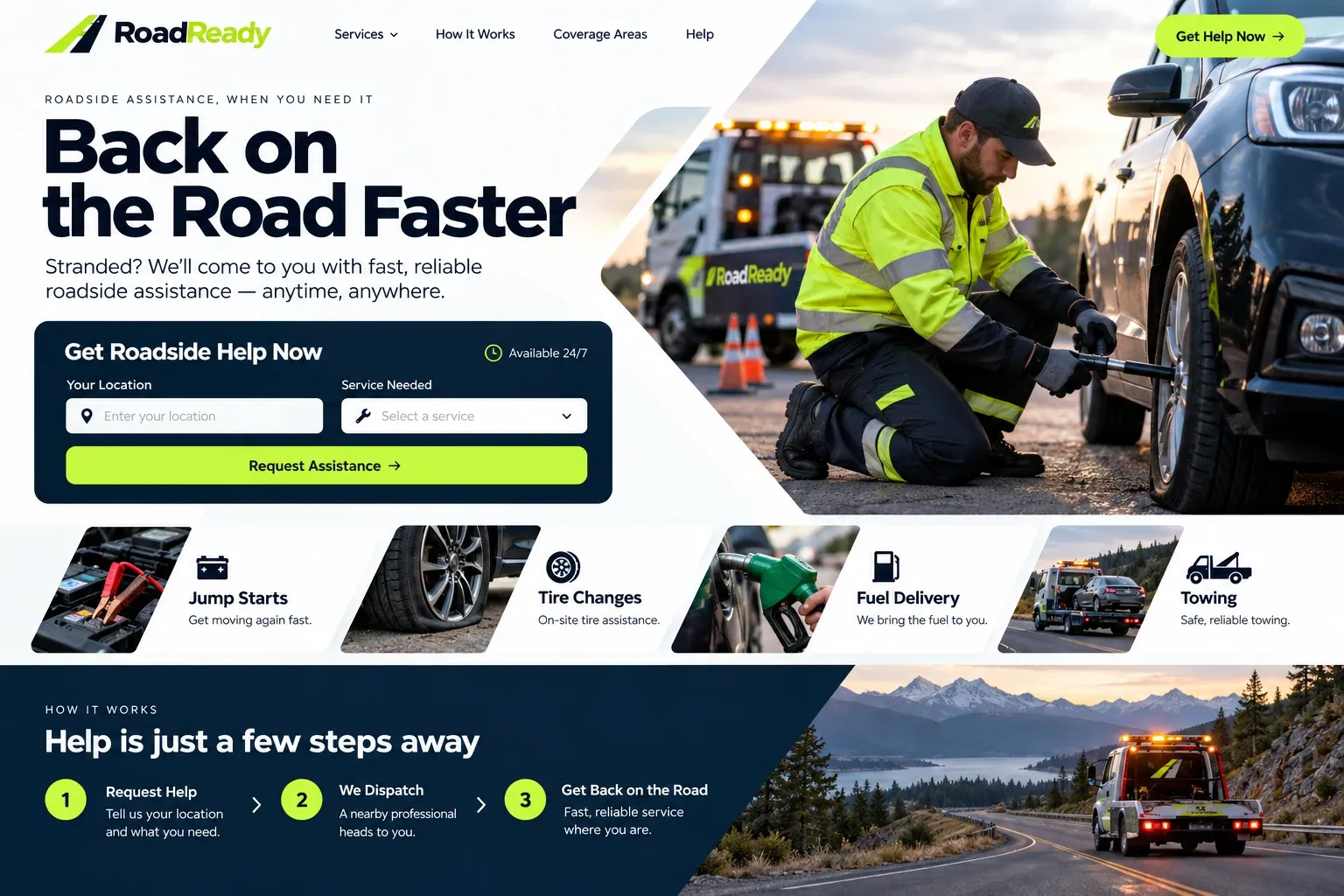
Planning guide
How should a roadside assistance provider build its website?
A roadside assistance website is a help desk for people having a bad night. It should make the problem easy to name, the coverage and hours easy to check, and the call easy to make. Here is how we structure a roadside site, what each service page should say, how to prepare the caller, and where local search fits in.
Let drivers pick the problem
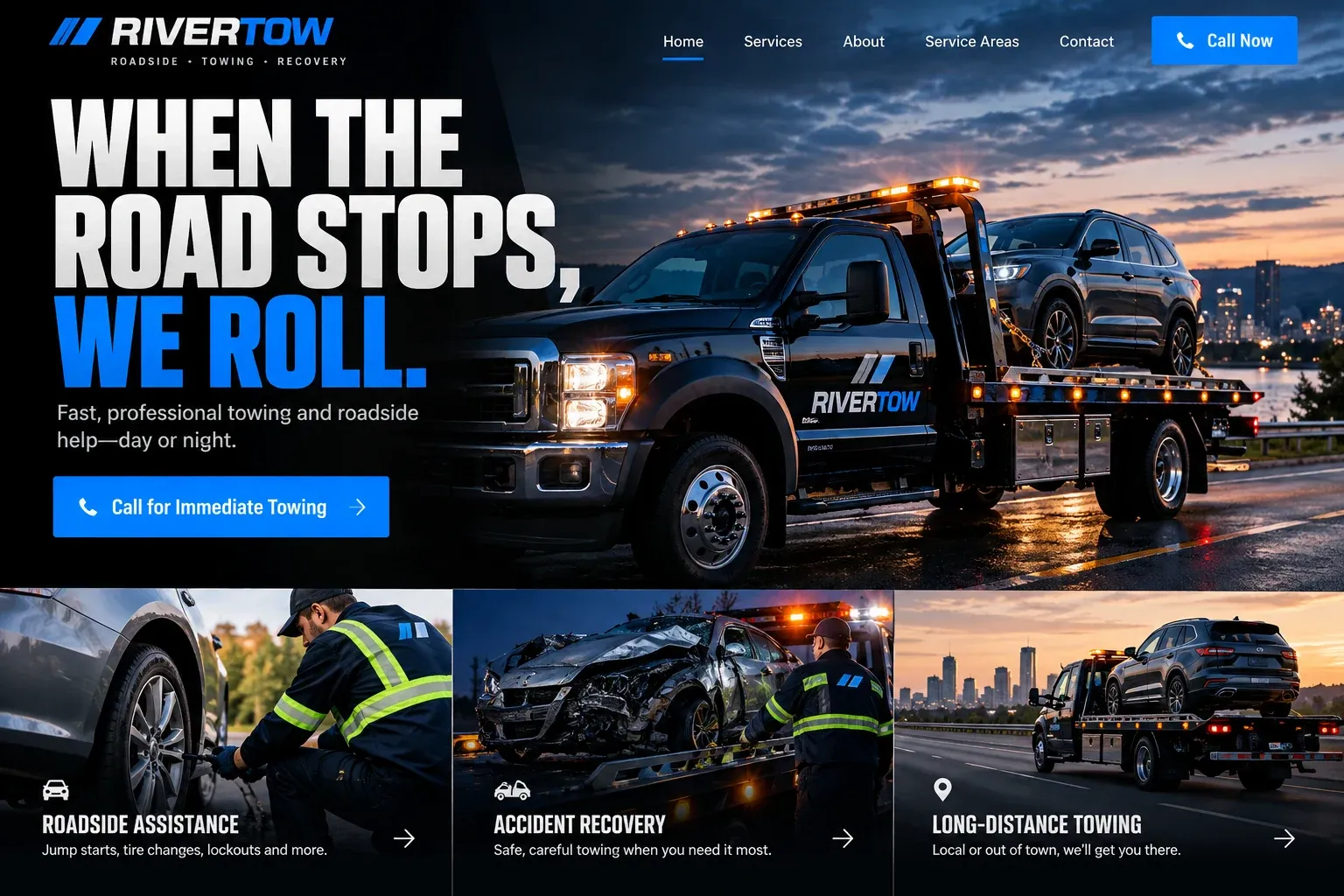
Many drivers do not know whether they need a jump, a battery, or a tow. A short chooser on the home page with plain labels, such as car will not start, flat tire, locked out, out of fuel, or stuck, gets them to the right page in one tap. Each page explains briefly what the technician does and when a tow might still be needed, with a call button at the top and bottom.
Keep the words simple and the pages short. A driver reading in the dark on a cracked phone screen wants the essentials, not a lesson in how alternators work. Put anything longer, like battery brands or tire policies, further down the page, where calmer visitors who are comparing providers for a fleet or a family member can find it later.
Be honest about coverage and timing
List the cities, neighborhoods, and highways you serve, and say plainly when you operate. Avoid fixed arrival promises: traffic, weather, and call volume change them. Instead, say that the dispatcher gives an estimate on the call and updates the driver if it changes. That honesty builds more trust than a bold number, and it matches what actually happens on the road.
Prepare the caller before they dial
A short list of what to have ready makes every call faster: the exact location or nearest cross street or exit, the year, make, and model, the problem, whether there is a usable spare and a wheel lock key, and the best number to call back. For fuel delivery, ask whether the vehicle takes gasoline or diesel. Your technician then arrives with the right tools.
Add a simple safety note, such as moving away from traffic when possible and turning on hazard lights, and say how you handle payment at the roadside and whether you accept motor club or insurer dispatches. If a lockout requires proof that the car belongs to the caller, say what you will ask to see, so nobody is surprised at the curb.
Show up when drivers search nearby
Roadside searches are urgent and specific: "jump start near me", "car lockout service", "flat tire change", "gas delivery". A page for each service gives search engines exact matches, and a Google Business Profile set up as a service-area business supports them. Keep hours accurate there and on the site, and ask helped drivers for a review. Search placement depends on many things, but precise service pages and honest hours make your listing more useful to a stranded driver.