Planning guide
How should a mobile mechanic plan their website?
A mobile mechanic's website does a job a shop website does not: it has to sort out the location and the repair before anyone commits. The clearer the site is about where you go and what you can do there, the fewer wasted trips you make. The sections below deal with your service area, honesty about on-site work, the request form, and the proof that wins trust.
Lead with where you go
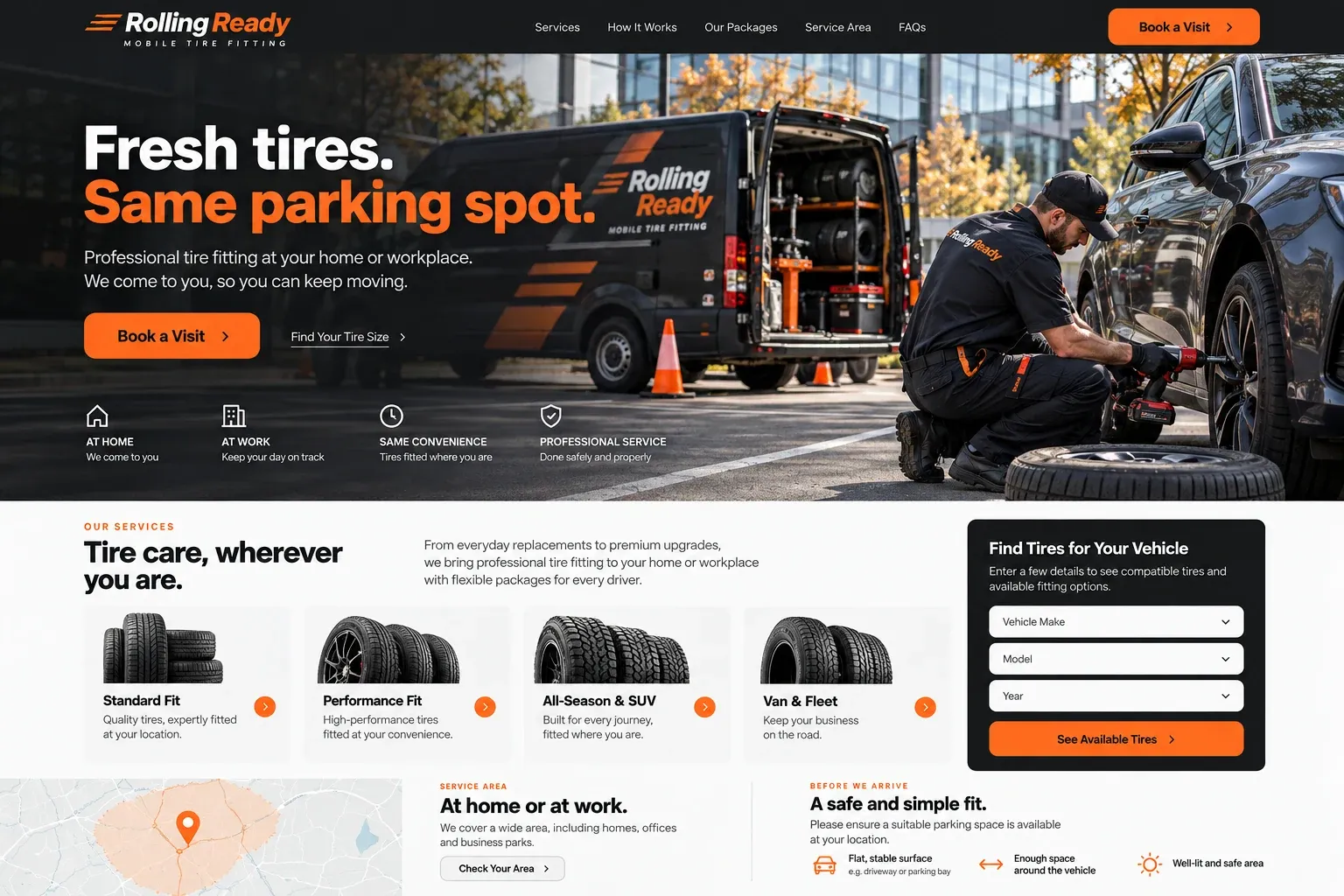
Coverage is the first filter. Put a map and a list of towns near the top of the home page, then give your main areas a short page each if you work them often. Say whether you charge for travel, whether some areas are served only on certain days, and whether you visit offices, apartment complexes, and business lots. A customer outside your area should learn that quickly and politely.
Be honest about on-site work
List the repairs you do where the car sits, such as batteries, alternators, starters, brakes, belts, sensors, and diagnostics, and give the common ones their own page. Then say plainly which jobs need a lift or a shop. That honesty saves both sides a frustrating visit, and it reads as experience rather than weakness to people who have been let down before.
Add a short checklist for the visit: the space you need, level ground, keys available, and a reminder that some apartment complexes and homeowner associations restrict vehicle repairs on the property. It sounds small, yet it heads off a common reason a booked visit fails, and it shows customers you have done this many times before.
Collect the right details up front
Your request form is your dispatch desk. Ask for the year, make, model, and engine if known, the address or cross streets, what the car is doing or not doing, and the best times to reach the owner. Let them attach a photo of a warning light or a leak. Arriving with the right part is how a mobile mechanic finishes in one trip, so the form should earn that.
Show the van, the tools, the reviews
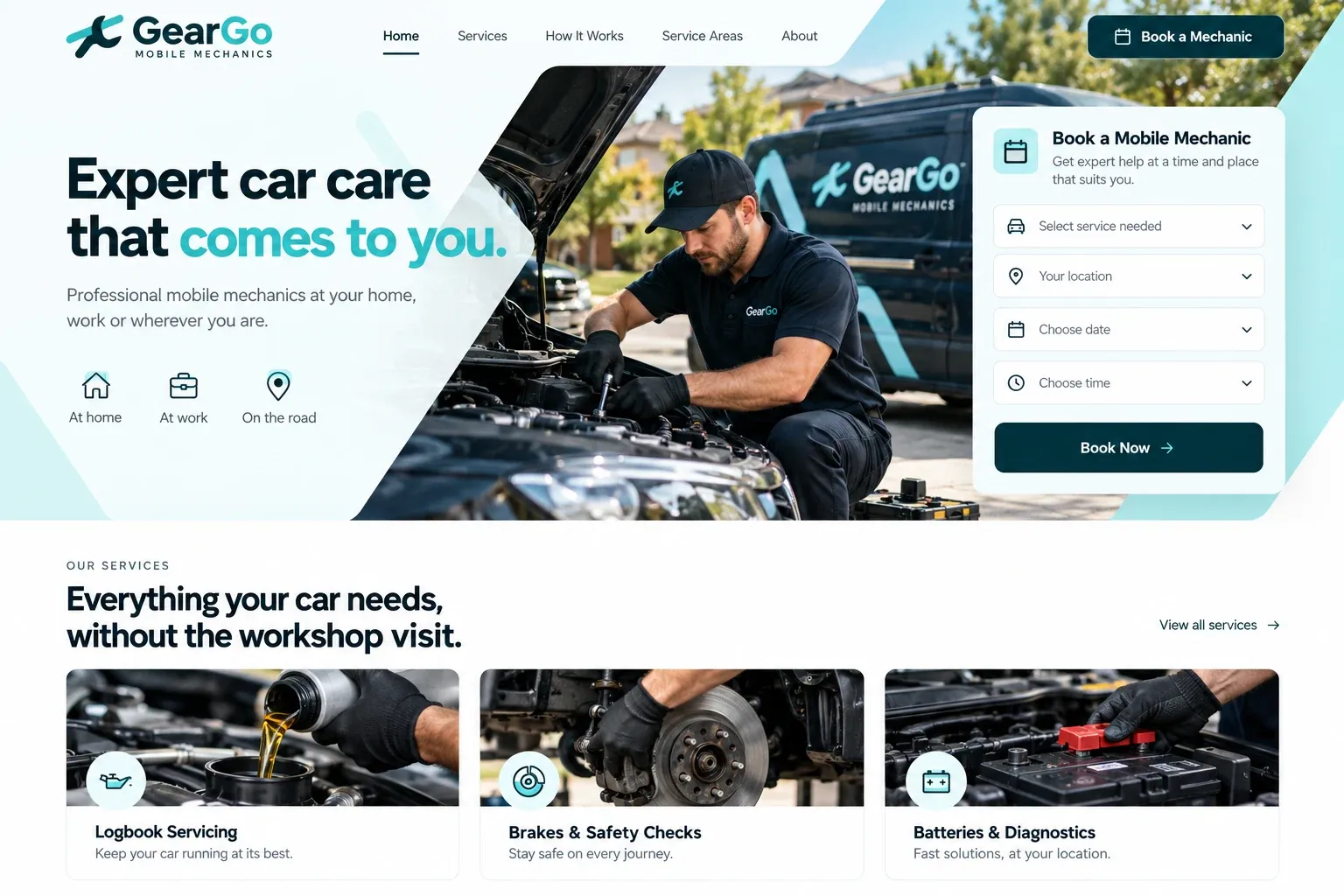
Customers are letting a stranger work outside their home, so show who that stranger is. A photo of you and your van, the equipment you carry, and a few jobs in progress make the service feel real. Link your Google Business Profile, set it up as a service-area business, and ask satisfied customers for reviews that mention their neighborhood. Over time this gives local searches something specific to match.