Planning guide
What should a towing company's website do?
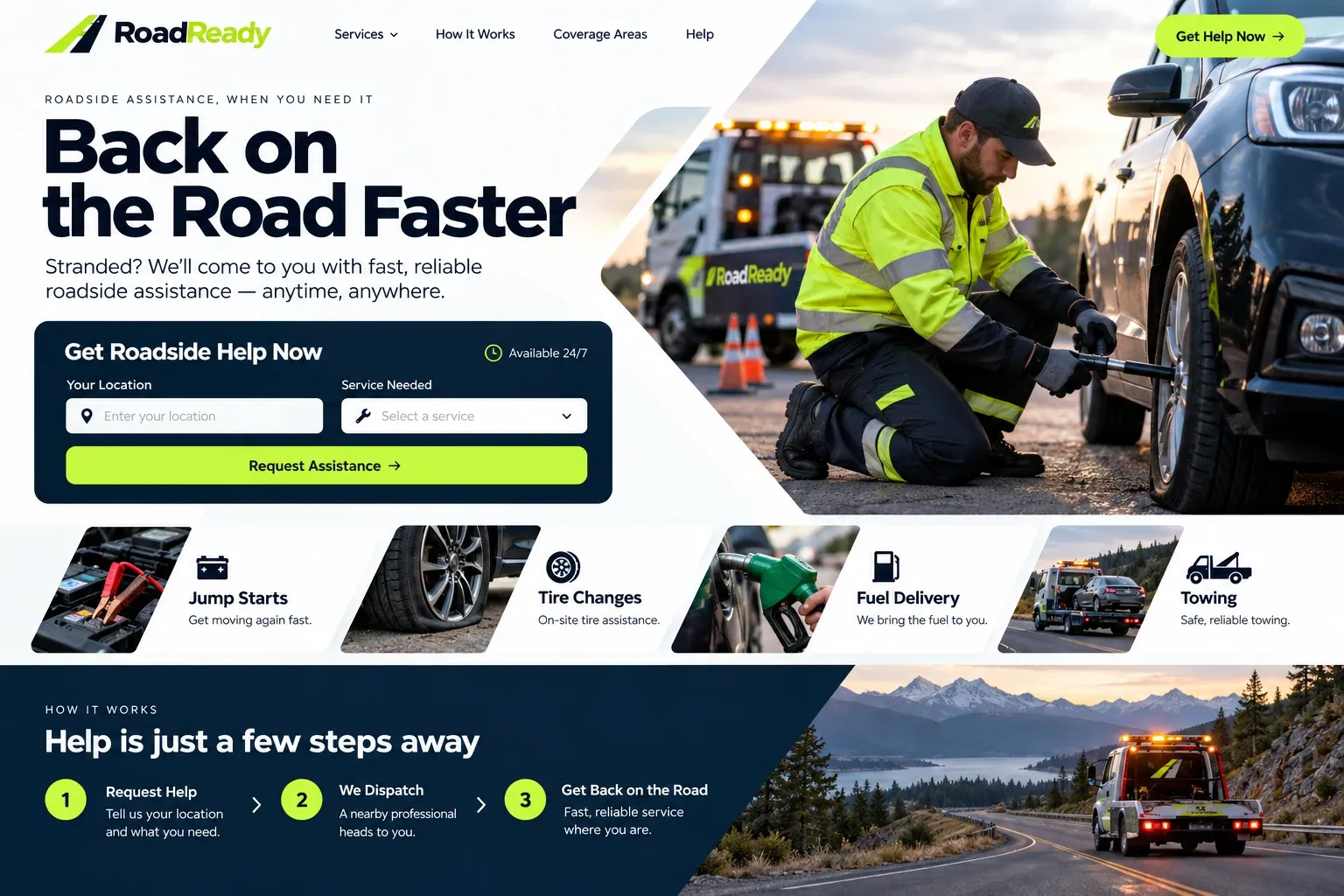
A towing website serves people in two very different states of mind. One is stranded and needs a phone number immediately. The other is planning a transport or trying to recover an impounded car. Here is how we build a towing site that serves both without slowing the emergency caller, how to present your fleet and rules, and how the site helps local drivers find you.
Put the phone number first
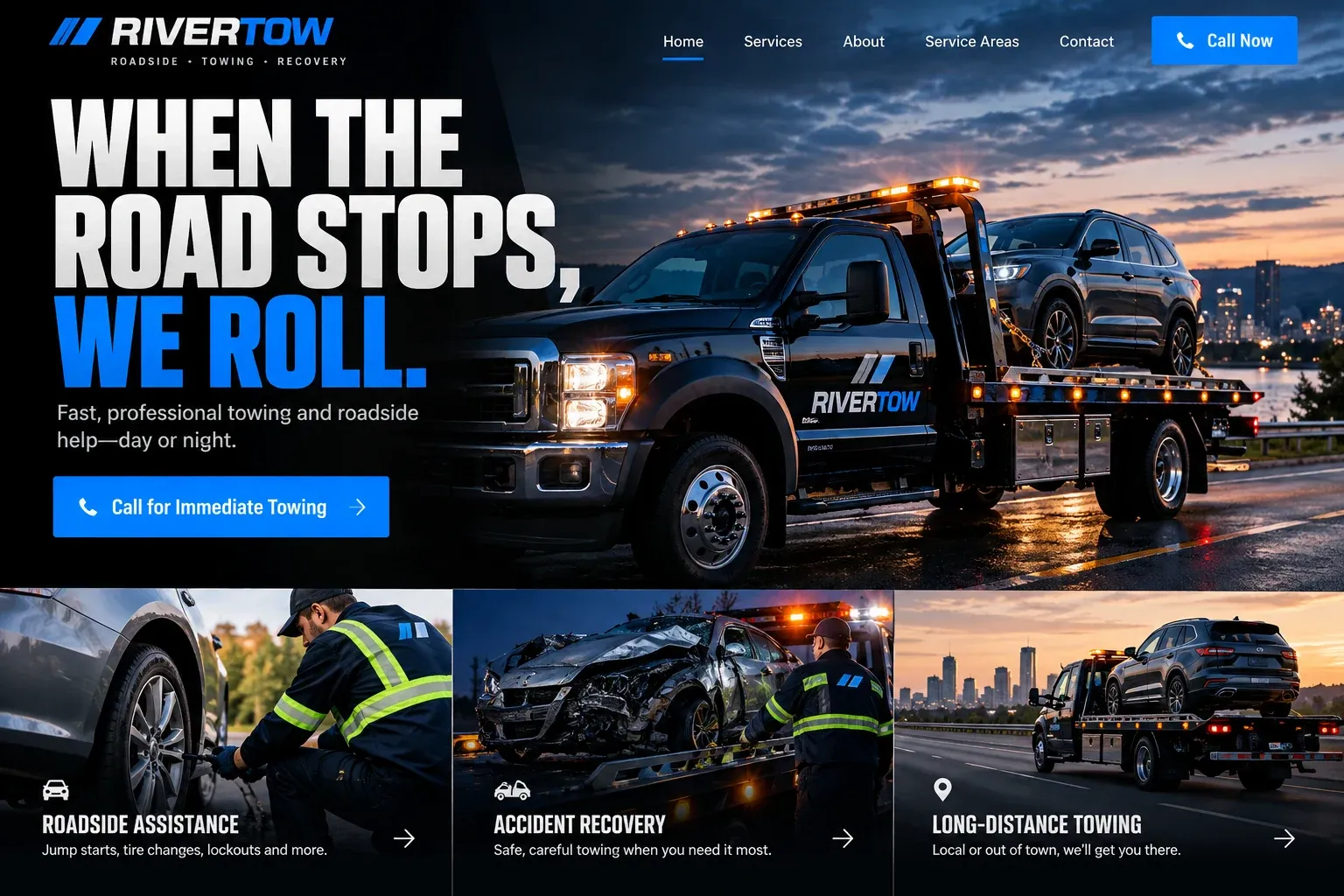
Everything on a towing site comes after the call button. It should sit at the top of every page and follow the visitor as they scroll, with the number written out for people who want to copy it. Skip heavy video and sliders that slow the first load, since many callers have weak signal or a low battery. A light, fast page is part of good service.
Under the button, state your real dispatch hours and the area you cover. If you run around the clock, say so. If nights are covered only on certain routes, say that too. Callers remember a company that set honest expectations, and dispatchers spend less time on calls they cannot accept.
Explain what your trucks can handle
Give each type of service its own page: light-duty towing, flatbed transport, heavy-duty towing and recovery, motorcycle towing, accident scenes, lockouts, and jump starts if you offer them. Say which vehicles each truck type suits, such as all-wheel-drive cars and low sports cars on flatbeds, and box trucks or buses with heavy wreckers. Real photos of your trucks and drivers show capacity better than any description.
Prepare the caller and the planned customer
A short checklist of what the dispatcher will ask helps a stressed driver: the exact location or nearest exit, the vehicle, whether it rolls and steers, whether keys are available, where it should go, and how many people need a ride. Planned work, such as dealer transfers, repair shop moves, or long-distance transport, gets a separate request form with pickup and delivery details.
If you handle private property or impound tows, a release page answers the questions owners ask on the phone all day: where the lot is, its hours, what identification and documents to bring, and which payment methods you take. Add a map with the lot entrance marked, since many lots sit behind other buildings, and a phone number for the release office if it differs from dispatch.
Help local searches lead to your trucks
Towing searches are local and urgent: "tow truck near me", "flatbed towing", "heavy duty towing". Service pages and a clear list of the cities and highways you cover give search engines specific matches. Set up your Google Business Profile as a service-area business with accurate hours, and ask satisfied customers and commercial accounts for reviews. Nobody can promise a top listing, but accurate coverage and hours help search engines show your number to drivers in your area.