Web design for septic companies

Websites that make septic service easy to understand.

Most people with a septic tank never think about it until a drain backs up, the yard smells, or a home sale calls for an inspection. Then they need someone who explains plainly and shows up.

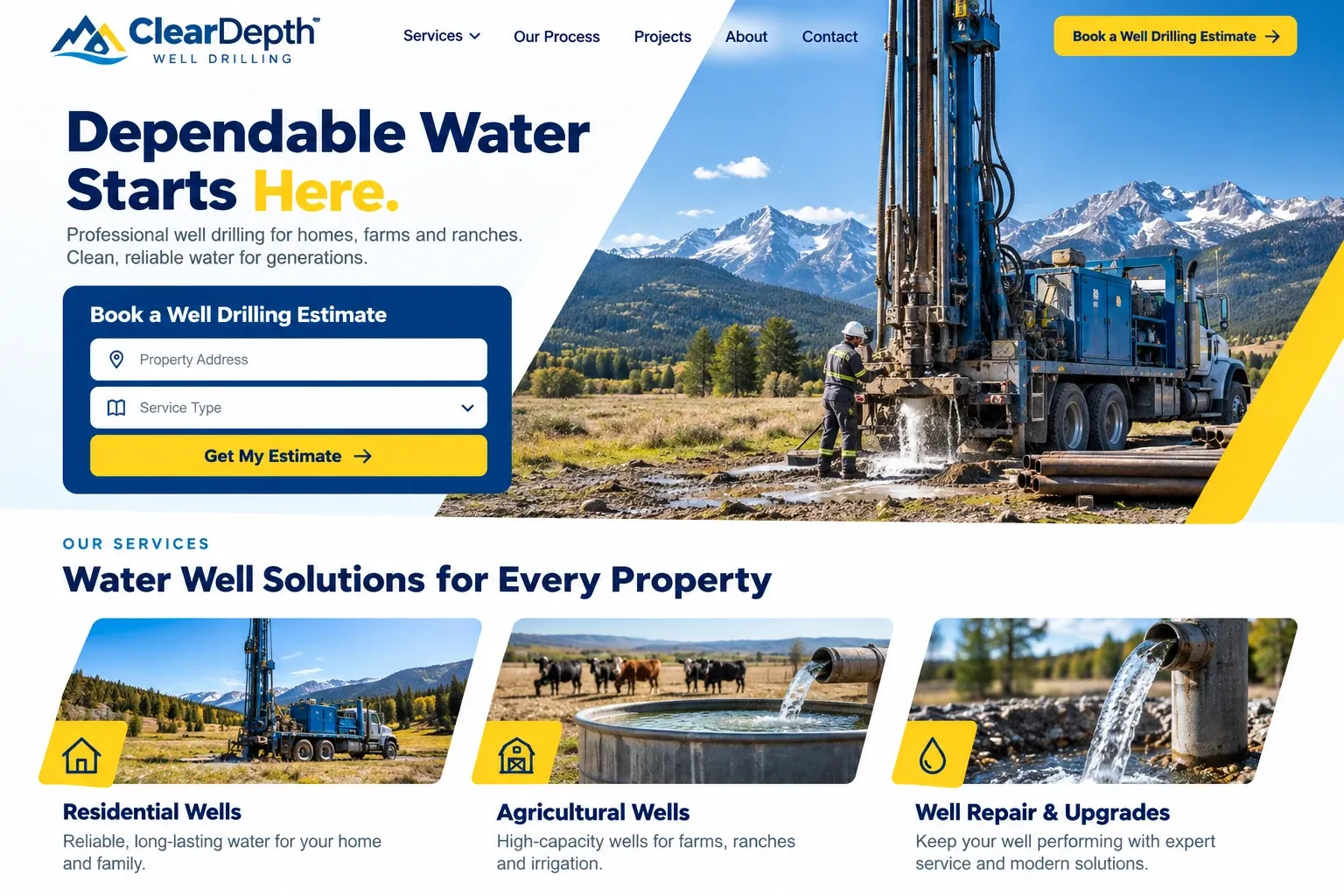
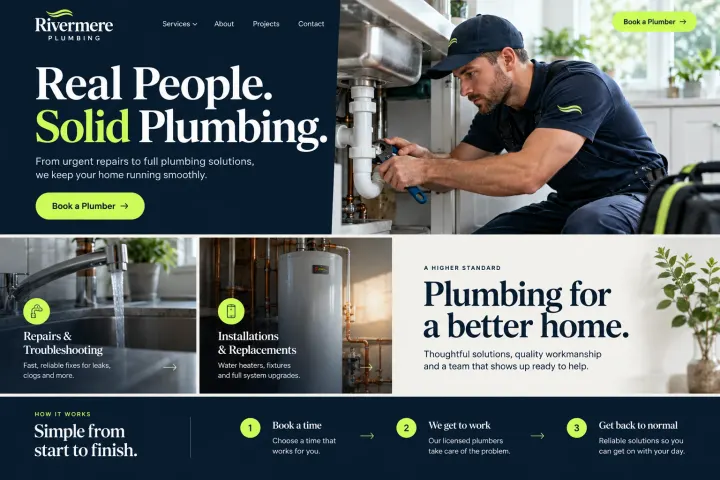
Fictional septic installation and service companies website homepage design concept
A design concept for a fictional brand. Your site is designed from scratch around yours.

Your customer's story

A wet patch in the side yard

Marisol bought a house on an acre in the western part of the county two years ago. She knows it has a septic tank because the listing said so, but nobody ever told her where it is or when it was last pumped. This week the downstairs shower drains slowly, the toilet gurgles when the washer runs, and there is a soft, wet patch in the side yard.

She searches "septic pumping near me" and then "septic smell in yard". The results mix scary forum posts with companies that list pumping, inspections, drainfields, and installs in one long paragraph. One company's site separates routine pumping from problem calls and new systems, explains in plain words what a drainfield does, and lists what to have ready: the address, any old paperwork, and a rough idea of where the lid might be.

She calls that one. The person on the phone asks about the wet patch and the gurgling, says a technician will locate the tank first, and mentions that the county may have a record of the system. A septic company's website should give an unfamiliar owner the right words, the right service, and a short list of what to gather before the truck arrives.

Why it matters

Why septic companies need a website.

Septic customers come in three kinds: owners due for routine pumping, owners with a problem such as a backup or a soggy yard, and builders or buyers who need a new system or an inspection. Each needs a different conversation. A directory listing gives them a phone number but no idea whether you install, repair, inspect, or only pump, or whether you cover their rural road.

We build septic websites with three clear routes: routine service, problem calls, and new installations or replacements. Each explains the work in plain language and leaves the diagnosis to your technicians. An appointment page lists what to have ready and how the crew needs to reach the tank. A service request form asks about the property, the symptoms, and access, and your coverage area is easy to check.

What your customers search for

  • septic tank pumping near me
  • septic service Miami
  • septic inspection for home sale
  • drainfield repair
  • septic tank installation
  • septic to sewer conversion

Your customers

What property owners ask a septic company

  • When was my tank last pumped?

    A page explaining how often systems are usually serviced, what affects that timing, and how you keep service records for each property.

  • Is this an emergency?

    A problem page that lists the signs owners describe, such as backups, odors, and wet ground, and a direct number for urgent calls.

  • What do I need before you come?

    An access checklist: tank location if known, lids uncovered or not, gates open, vehicles moved, pets inside, and any old permits or diagrams.

  • Can you install a system for our new build?

    An installation page covering site evaluation, design and permitting steps in general terms, installation, and final inspection, with photos of systems you have put in.

What we build

What a website for septic companies should include.

  • Three service routes

    Routine pumping, problem calls, and new systems each reached in one tap from the home page, with their own pages.

  • Plain-language system guide

    Tank, baffles, distribution box, and drainfield explained with a simple diagram, so owners understand what your crew is talking about.

  • Before-the-truck checklist

    What to do before the visit: find paperwork, clear the lid area, open gates, and keep cars off the yard.

  • Property service request

    Address, property type, symptoms, last pumping if known, and how to reach the tank, delivered to your inbox.

  • Inspections for home sales

    Buyers, sellers, and agents learn what a septic inspection covers, how to book one, and what written findings follow.

  • Septic-to-sewer conversions

    If you handle septic-to-sewer connections, a page explaining the steps in general terms and how owners request a quote.

Planning guide

What should a septic company's website tell property owners?

Septic service is essential and unfamiliar at the same time. Most owners do not know the vocabulary, the warning signs, or which service they need, and many only search when something smells wrong. A septic website should sort visitors quickly, explain the system simply, and prepare them for the visit. This is how we would plan it.

Sort visitors by what they need

Put three choices near the top of the home page: routine pumping and maintenance, a problem that needs attention, and new systems or replacements. Behind each, a page explains the service in plain words and how to book it. Inspections for home sales and septic-to-sewer connections, if you offer them, deserve their own pages too, because those visitors arrive with deadlines and specific questions.

Explain the system without inviting guesswork

A simple diagram of a tank and drainfield, with short labels, helps owners follow what your technician says. Describe common warning signs, such as slow drains, gurgling, odors, and wet or unusually green patches over the drainfield, and say plainly that these call for a visit rather than a guess. Avoid do-it-yourself advice and additive claims, and keep the tone calm and practical. Owners trust the company that tells them what it will check.

Prepare customers for the appointment

Septic visits go better when the owner knows what to expect. An appointment page should list what helps: the tank's location if known, any old permits or diagrams, clear access for the truck, open gates, pets indoors, and whether lids are buried. Say whether someone needs to be home and roughly how the yard will look afterward.

The service request form should ask for the address, the type of property, the symptoms if any, the date of the last pumping if known, and how a truck reaches the tank, including soft ground or a narrow gate. Keep a phone number at the top of every page for sewage backups that cannot wait for a form.

Cover the rural roads people search from

Septic customers often live outside town centers, so service area matters. List the counties, towns, and rural communities you cover, and make the list easy to scan. Pages for pumping, repairs, inspections, and installations give search engines specific matches. Keep your Google Business Profile accurate, with the same phone number as the site, and ask customers to mention the service in their reviews. A short page per county is worth it only where you do steady work.

In your market

Built for septic service in South Florida

Many South Florida homes still rely on septic tanks, especially in rural and older suburban areas, and a high water table and heavy summer rain put drainfields under strain. Some counties are moving neighborhoods from septic to sewer, which creates connection work and plenty of questions. Customers range from farms and nurseries on large western lots to investors and seasonal residents. Many prefer Spanish. We write pages for these customers and can add a Spanish version of the site.

Questions

Questions septic companies ask us.

Should a septic website explain how a septic system works?

Briefly, yes. A short page with a simple diagram of the tank and drainfield helps owners understand what your technician tells them and why a service is needed. We keep it general, avoid do-it-yourself advice, and you approve every line before it goes live.

Can the septic service form ask where the tank is?

Yes. The form can ask whether the owner knows the tank's location, whether lids are buried, and whether they have old permits or a site diagram, with an option to upload a photo. Those answers help you plan the visit and bring the right equipment.

How do we show septic installation work without unpleasant photos?

Focus on the stages: the excavation, the new tank being set, the drainfield going in, and the finished yard restored. Those photos show skill and care without anything unpleasant. A short caption for each stage explains the work, and we never show a customer's address.

Should our septic company list license and permit information?

Yes. Show your license numbers and insurance where owners can find them, and explain in general terms that installations and many repairs require permits and inspections, which you handle or coordinate. We avoid quoting specific rules, since they vary and change, and you approve the wording.

Let's talk

Ready for a website built for septic companies?

Tell us about your business and we will come back with a clear recommendation and a fixed quote. No pressure, no jargon.

Trades we design for

See all 226 trades

226 trades

  • Plumbers website design concept
CallFree quote