Planning guide
What should a water well drilling company's website explain?
Well drilling customers are often new to the whole idea of private water. They need to understand the stages, the permit, the equipment on their land, and what happens after the water flows. A clear website does that before the first call and stays useful for pump repairs and treatment later on. Here is how we would plan it.
Walk owners through the stages
A project page that follows a well from start to finish answers most first questions. Describe the site visit and what you look at, the permit and who applies, drilling, casing and grouting, the pump and pressure tank, disinfection and water testing, and the connection to the house or irrigation system. Note what depends on the ground, such as depth and drilling time, without inventing numbers.
Show the rigs and the finished work
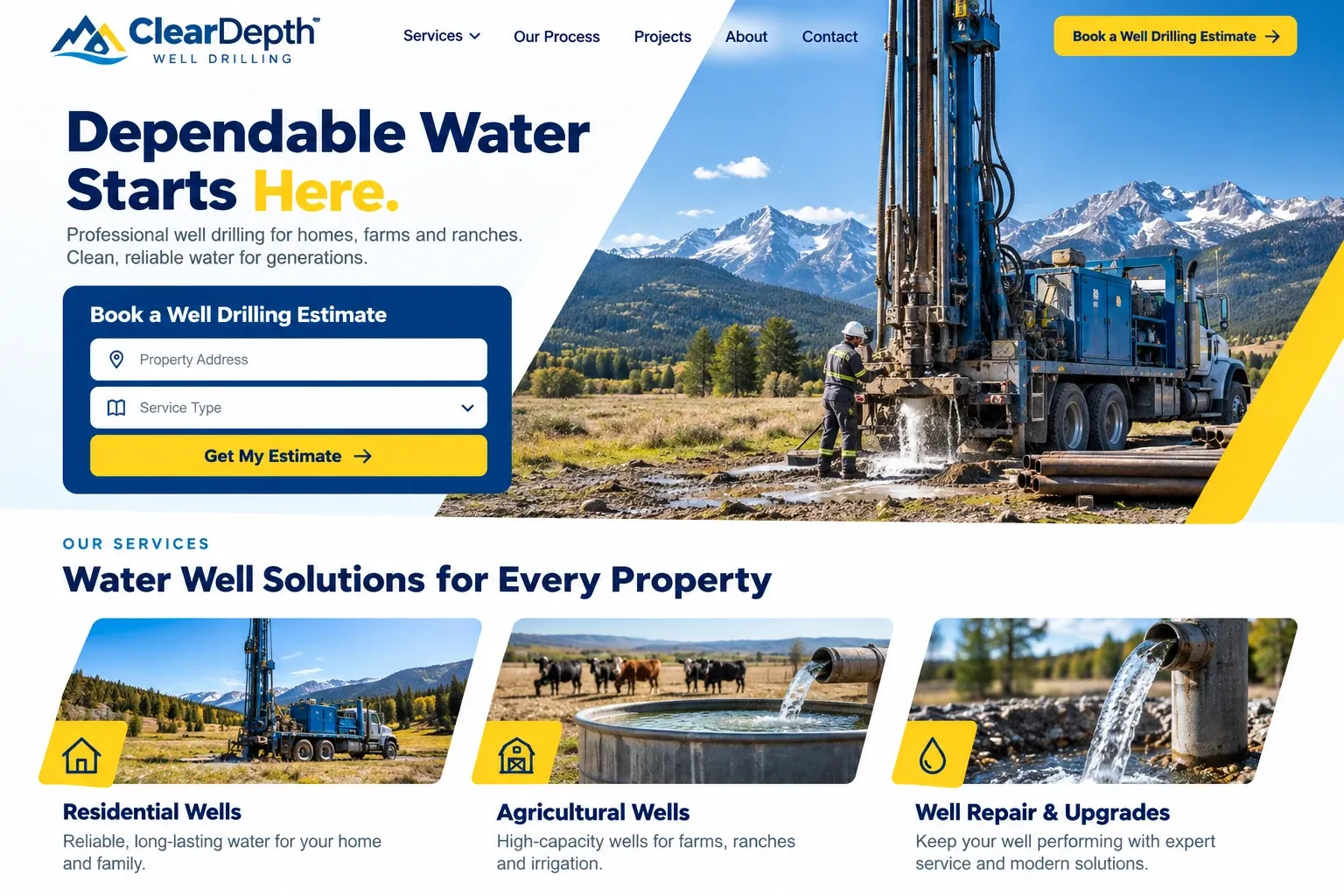
Owners want to know what is coming onto their land. Photograph your rigs and support trucks on real sites, with enough of the surroundings to show how much room they need. Add photos of finished wellheads, pump installations, and pressure tanks, neatly done. A short page on how you protect lawns, driveways, and septic areas during the work answers a worry many owners never voice. If you drill for irrigation as well as drinking water, show both.
Separate new wells from service calls
Someone planning a new well and someone with no water at the tap want different things from your site. Give new wells, irrigation wells, pump repair, and water treatment their own pages. The repair page needs a direct phone number near the top and your real hours. The new well page needs the consultation form and the stage guide.
The consultation form should ask for the address, the purpose of the well, the size of the property, whether there is an existing well or septic system nearby, and how equipment would reach the spot. Allow a map link or photos. Those answers let you plan the first visit and spot access problems early.
Be found across a wide service area
Well customers are spread out, so list every county and community you drill in, and consider a page for each area where you do steady work, with local projects. A page per service lets search engines match each query to the right answer. Your Google Business Profile should carry the same details and photos of rigs at work, and customers can be asked for a review once the water is flowing.