Web design for excavation contractors

Websites for the crew that goes in first.

Every build starts with the ground, and the people hiring an excavator are usually planning several trades at once. They want to know what you dig, what you need from them, and when the next crew can start.

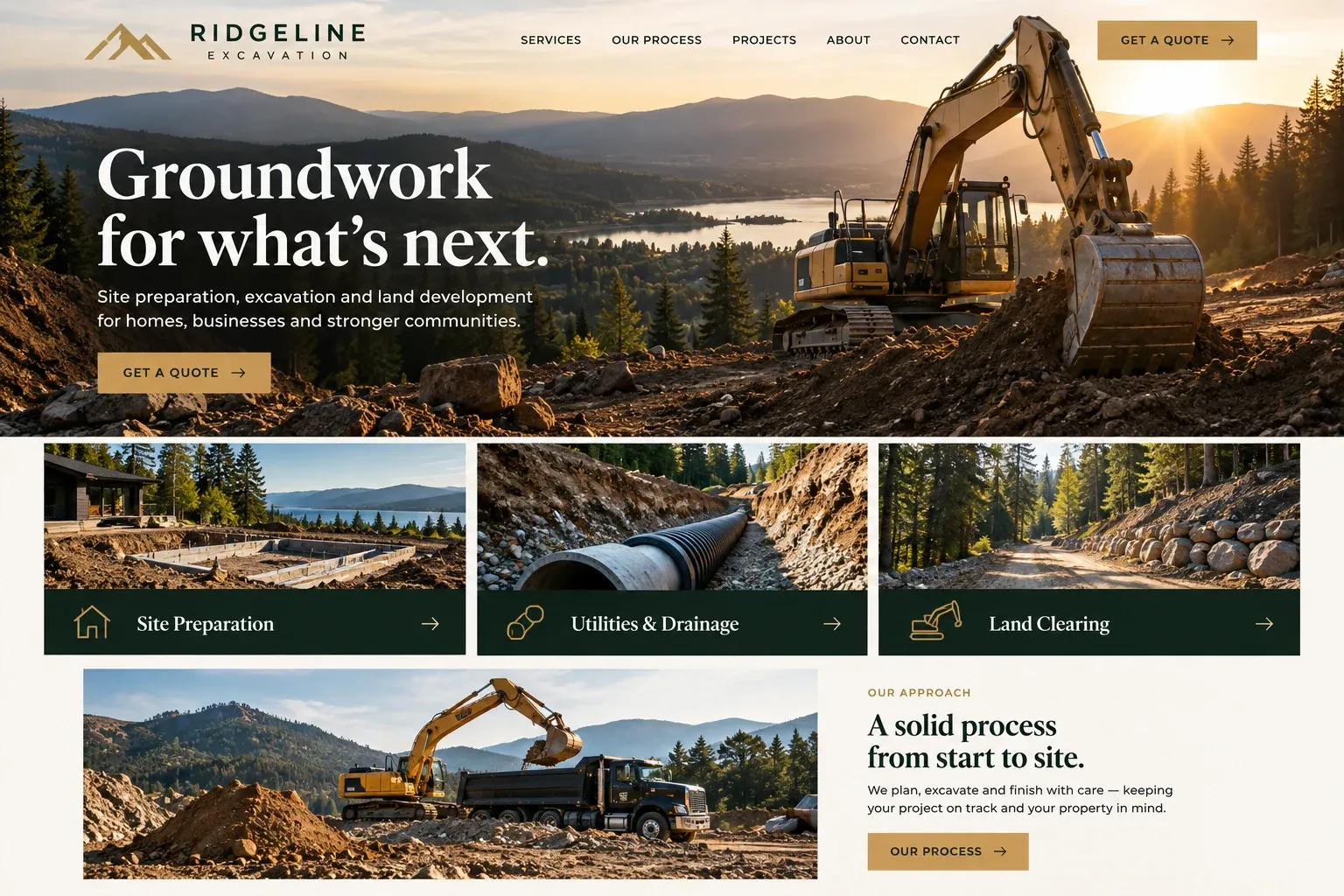
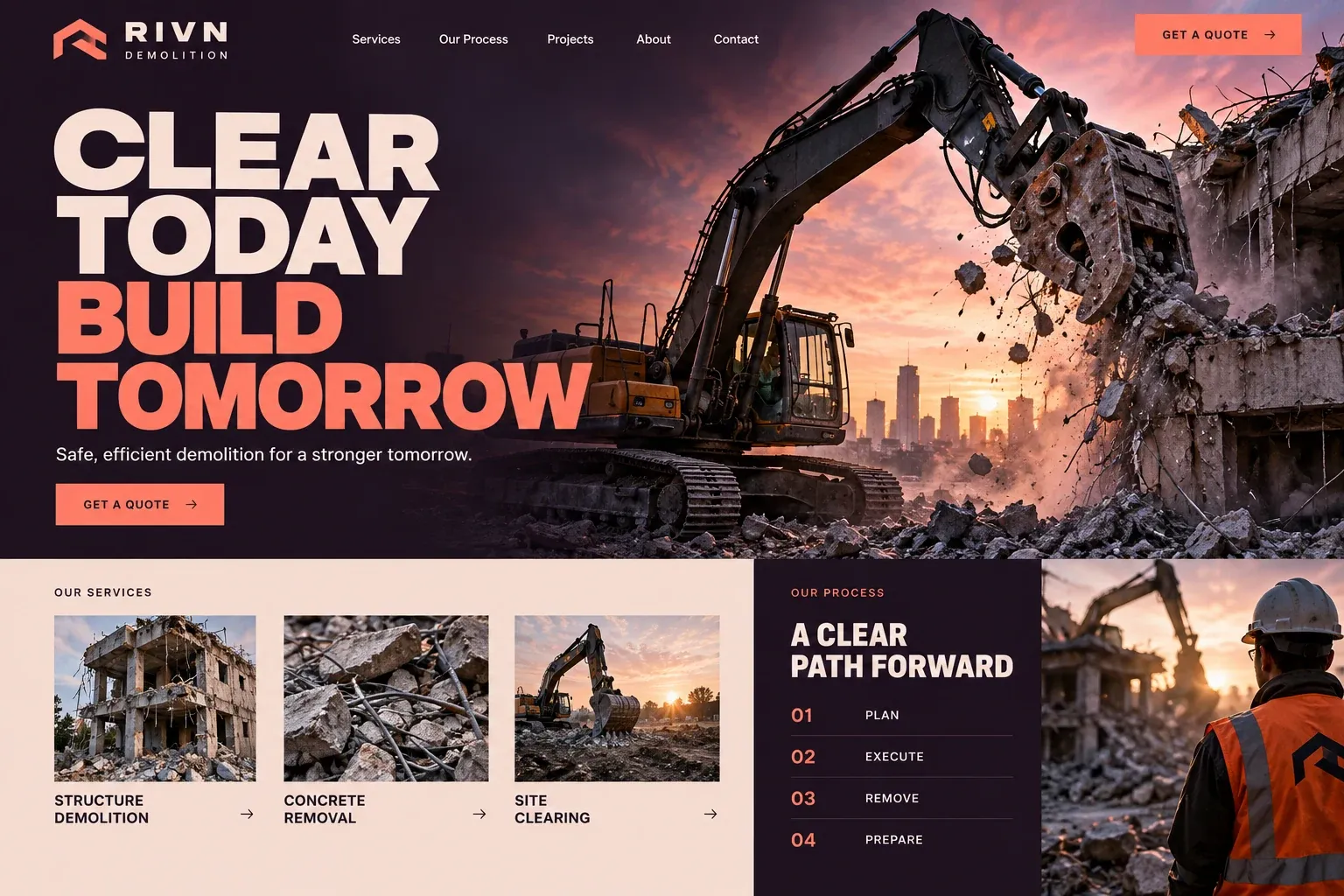
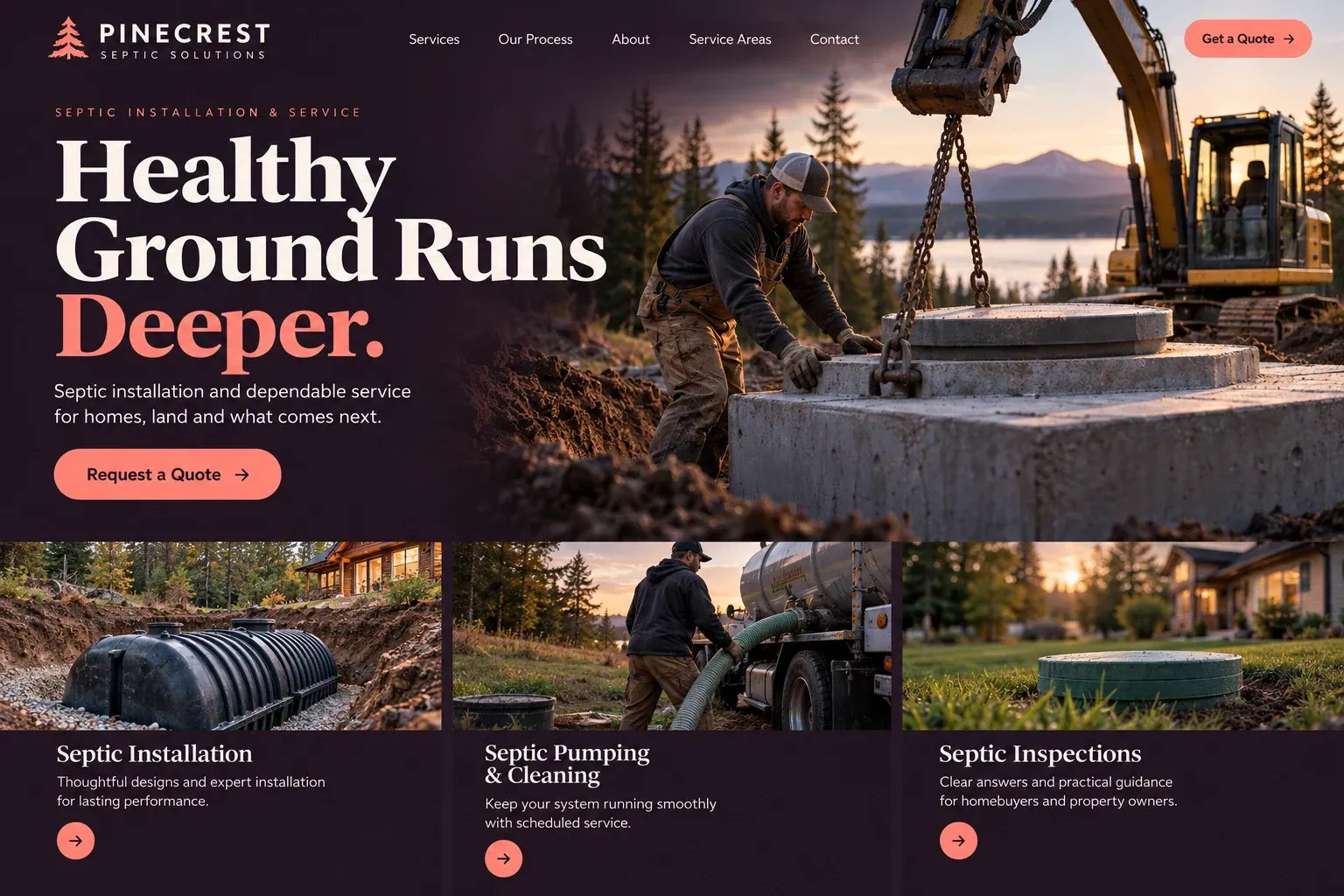
Fictional excavation contractors website homepage design concept
A design concept for a fictional brand. Your site is designed from scratch around yours.

Your customer's story

A narrow side gate and a guest house plan

Nadia has the permit drawings for a small guest house at the back of her lot, and her builder has one instruction before he can start: get the site ready. The plan calls for clearing an old shed and two stumps, digging footings, and running new water and sewer lines from the main house. The only way in is a side yard barely wider than a pickup truck.

She searches for excavation and site prep companies near her. Most sites show a large machine against a blue sky and a phone number. None says whether that machine fits through a side gate. One company gives each service its own page: clearing, trenching, grading, footings. Its equipment page includes compact excavators and skid steers, with a line about working in tight residential yards.

Its request form lets her upload the site plan, asks about access width, utilities already marked, and what has to be removed, and asks who the builder is so the two crews can talk. Nadia attaches the drawings and sends it. An excavation contractor's website should do the same for every owner: show the right machine for the site, and make the handoff to the next trade feel planned.

Why it matters

Why excavation contractors need a website.

Excavation is hired by people who are juggling a whole project: owners, builders, pool companies, and property developers. They need to know quickly whether you handle their kind of work, whether your equipment suits the site, and how you fit into the schedule. A directory listing gives a name and a phone number. It cannot show your machines, explain how you work from plans, or take a site drawing before the first call.

We build excavation websites that read like a clear scope of work. Each service gets its own page, from land clearing and grading to trenching, pool digs, and foundation excavation. An equipment page shows what you run and where it fits. A coordination page explains locates, plans, and how you hand the site to the next trade. The request form accepts site plans and surveys, so complex jobs start with the right paperwork.

What your customers search for

  • excavation contractor near me
  • site prep contractor Miami
  • land clearing near me
  • pool excavation contractor
  • trenching service for water line
  • lot grading and fill

Your customers

What builders and owners ask an excavation contractor

  • Will your equipment fit my site?

    An equipment page listing your machines by size, with notes on narrow access, soft ground, and the smallest gate each one can pass through.

  • Who deals with the underground utilities?

    A plain explanation of how locate requests work before digging, who calls them in, and how you protect marked lines during the job.

  • Can you work from our plans?

    A note on the drawings, surveys, and elevations you need, and an upload field so owners and builders can send them with the first request.

  • What happens to the dirt and debris?

    A clear statement of whether you haul away spoil, stumps, and old concrete, bring in fill, and leave the site graded for the next crew.

What we build

What a website for excavation contractors should include.

  • Service-specific pages

    Land clearing, grading, trenching, pool digs, foundation excavation, and drainage work, each described with its own photos and scope.

  • Equipment and access overview

    Your fleet listed by size and purpose, from compact machines for backyards to larger equipment for commercial sites.

  • Coordination page

    How you work with builders, pool companies, and utilities, including locates, inspections, and handing the site over ready.

  • Site-plan upload

    The request form accepts surveys, drawings, and photos, so you can review the job before anyone drives out to measure.

  • Project photo sequences

    Before, during, and after shots of real digs, showing clean trenches, level pads, and the site left ready for the next trade.

  • Builder and developer contact

    A direct route for contractors who need a reliable sub, separate from homeowner inquiries, with your insurance and licensing details.

Planning guide

What does an excavation company's website need to show?

An excavation contractor is often the first trade on site and the one everyone else waits for. The website should make your scope, equipment, and process clear enough that owners and builders can plan around you before the first call. These are the sections worth building, what to put in them, and how they help the business get found.

Describe each kind of dig separately

"Excavation" covers very different jobs, and customers search for the specific one: lot clearing, grading and fill, utility trenching, pool excavation, foundation digs, drainage and retention work, demolition cleanup. Every service you want to grow deserves a page that explains what it involves, the machines you bring, and what the customer needs to provide. Add a page for builders and developers, an equipment page, and a contact page with your service area.

Show the ground before, during, and after

Machines are impressive, but customers hire results: a level pad, a clean trench, a pool hole cut to the plan, a lot cleared with the trees they wanted to keep still standing. Photograph each stage and caption it with what was done and why. Include the access, too. A shot of a compact excavator passing through a narrow gate answers a question homeowners often forget to ask until the truck arrives.

Explain how you coordinate with other trades

Builders and owners want to know how you fit into the schedule. Describe what you need before you start, such as plans, a survey, permits, and utility locates, and how you hand the site over when you finish. If you work regularly alongside pool builders, foundation crews, or plumbers, say so. A clear coordination page makes you easier to slot into a project, which is often what wins the job.

Make the request form do real intake work. Ask for the address, the type of job, access width, what must be removed, and whether utilities have been marked, and let people upload plans and photos. Keep a direct phone number on every page for builders who need an answer while standing on the job.

Help local builders and owners find you

Excavation searches mix trade terms and plain words: "site prep contractor", "land clearing near me", "pool excavation", "trenching service". Service pages that use the language your customers use give search engines a fair match. List the counties and cities you work in, keep your Google Business Profile accurate with photos of real jobs, and ask builders you work with for reviews. These steps support local visibility, though no website controls where it ranks.
In your market

Built for excavation in South Florida

Digging in South Florida means hitting limestone close to the surface in many areas and finding water not far below it, so dewatering and rock work are common topics. Pools, utility trenches, drainage, and site prep for new homes are steady work, and older lots sometimes hide abandoned septic tanks or buried debris. Hurricane cleanup adds its own demand. We write pages that speak to these conditions, and can offer them in Spanish as well.

Questions

Questions excavation contractors ask us.

Should an excavation contractor list equipment on the website?

Yes, briefly. Owners and builders want to know whether your machines suit their site, especially in tight backyards or soft ground. A short equipment page with photos, sizes, and what each machine is good for answers that before the call. You can leave out models and keep it practical.

Can builders send us site plans through the excavation website?

Yes. The request form accepts drawings, surveys, and photos along with the address, job type, and access notes. It all lands in your inbox, so you can review the scope before driving out. A separate contractor contact path keeps those requests apart from homeowner inquiries.

How much should our excavation site say about utilities and locates?

Enough to show you take it seriously. A short paragraph on how locate requests work before digging, who arranges them on your jobs, and how you protect marked lines reassures owners and builders. We keep it general and accurate, and you confirm every detail before it is published.

Do pool digs and land clearing need separate pages?

They should have them. A pool company looking for a dig crew and a homeowner clearing an overgrown lot search with different words and need different answers. Separate pages with matching photos let each find you, and each page gives search engines its own topic to match.

Let's talk

Ready for a website built for excavation contractors?

Tell us about your business and we will come back with a clear recommendation and a fixed quote. No pressure, no jargon.

Trades we design for

See all 226 trades

226 trades

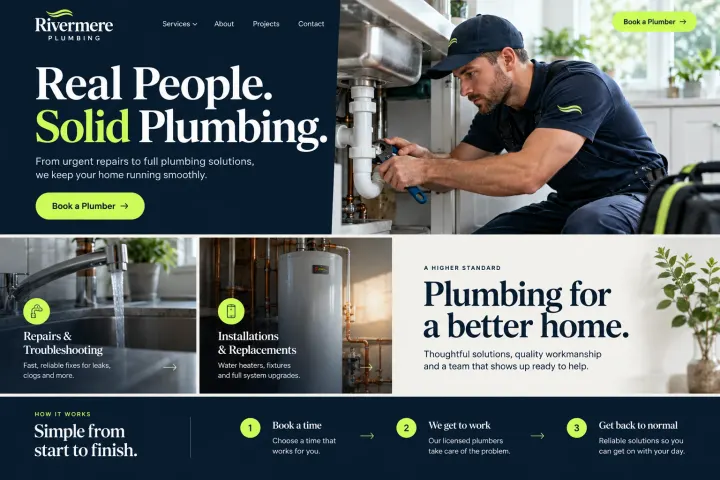
  • Plumbers website design concept
CallFree quote