Web design for vacation rental managers

Websites that show owners who handles what.

Owners hand a vacation rental manager their home, their reviews, and their calendar. Before they do, they want to see exactly who cleans, who answers guests at 2 a.m., and how the money is reported.

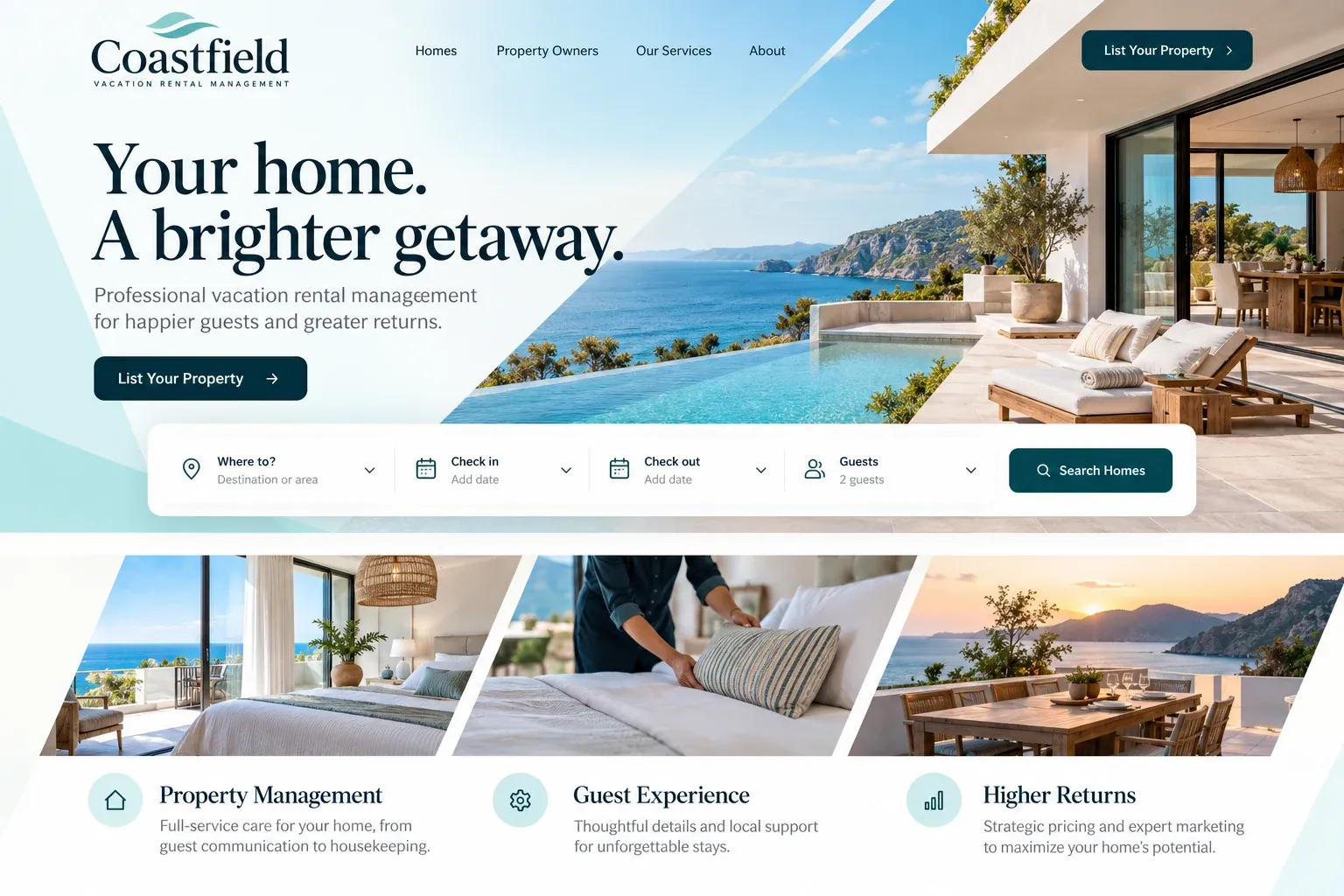
Fictional vacation rental management companies website homepage design concept
A design concept for a fictional brand. Your site is designed from scratch around yours.

Your customer's story

Hosting from Chicago stops being fun

Paul and Denise bought a pool home in Fort Lauderdale to use in the winter and rent out the rest of the year. The first few months of hosting have been fun. Then a guest checks in to a dirty kitchen because the cleaner had a flat tire, the pool heater fails during a family reunion, and Denise answers messages from her desk in Chicago at midnight.

She starts comparing vacation rental managers that weekend. Many sites are built for guests, with booking widgets and beach photos, and say almost nothing to owners. One company has an owner section that lists exactly what it handles: listings on the booking sites, guest messages, cleaning and inspections, maintenance, supplies, and the local paperwork. It also shows a sample monthly owner statement with the numbers blurred.

Denise fills in the property assessment form: the address, bedrooms, the pool, how many weeks they keep for themselves, and which platforms they list on now. A manager calls her back to talk through fit before talking about fees. Owners choose a vacation rental manager they can picture working with, and the website is where that picture forms.

Why it matters

Why vacation rental managers need a website.

Vacation rental management has two audiences who want different things. Owners compare managers carefully, often from another city, and want to know exactly what is handled, how guests are screened, and how money and maintenance are reported. Guests mostly book through the big platforms, but some come back directly. The platforms show your listings, not your company, and a social page cannot explain your management scope, your onboarding, or how you communicate with owners.

We build vacation rental management sites with the owner in mind first. Pages explain your services, separating day-to-day operations from optional marketing, pricing, and direct booking support. An onboarding page shows the steps from first call to first guest, and an owner communication page explains statements, approvals, and the owner portal if you use one. Guests get a clear link to your direct booking engine or listings, and owners get a property assessment form.

What your customers search for

  • vacation rental management near me
  • airbnb management company Miami
  • short-term rental property manager
  • vacation rental management Fort Lauderdale
  • vrbo property management
  • how to find a vacation rental manager

Your customers

What owners ask before signing with a rental manager

  • What exactly will you handle?

    A scope page naming every task: platform listings, guest messages, cleaning, linens, inspections, maintenance, and supplies, plus what remains the owner's job.

  • Will I see where the money goes?

    A page on owner statements, payout timing, repair approvals, and the owner portal, with a sample statement so nothing is a surprise.

  • Can I still use the place myself?

    A clear note on how owner stays are blocked on the calendar and how they fit around bookings during busy seasons.

  • Who protects my home from bad guests?

    Your general approach to guest screening, house rules, damage deposits or protection, and noise monitoring, described plainly without promising anything you cannot control.

What we build

What a website for vacation rental managers should include.

  • Service scope, task by task

    Operations, guest communication, cleaning, maintenance, and optional marketing support, each described so owners know what is included.

  • Onboarding steps

    From the first walkthrough to photos, listing setup, supplies, and the first guest, laid out so owners can plan ahead.

  • Owner communication page

    Statements, payout schedule, approval limits for repairs, and the owner portal from your property management software, explained in plain words.

  • Direct booking link

    Your booking engine or listings linked or embedded for returning guests, kept separate from the owner pages.

  • Property assessment form

    Address, property type, bedrooms, amenities, current platforms, owner use, and goals, so your first call can judge fit.

  • Portfolio of homes

    A gallery of the homes you manage, with owner permission, so prospective owners see properties like theirs in your care.

Planning guide

What should a vacation rental management website tell property owners?

Guests can find your rentals on the booking platforms. Owners mostly learn how you work from your own website and a first phone call. That makes the site a sales tool for management contracts, with a smaller job for guests who want to book direct. These notes cover the pages owners look for, the proof that reassures them, the inquiry, and local search.

Lead with owner services and scope

Put owners first in the menu. A services page should list each task you handle, from listings and guest messages to cleaning, linens, inspections, and maintenance, and separate it from optional work such as pricing strategy, interior refreshes, or direct booking marketing. Say what stays with the owner, such as major repairs or insurance. Clear scope heads off misunderstandings before a contract is ever signed.

Show how you report to owners

Owners worry most about what they cannot see. An owner communication page should explain how often statements arrive and what they show, how and when payouts happen, which repairs you approve on your own and which need a call, and how owners reach a real person. A sample statement with the figures blurred, and screenshots of the owner portal if you use one, make the process concrete.

Proof should be real. Show homes you manage with the owners' permission, guest reviews quoted from your listings, and photos of your own team at work: cleaners, inspectors, the maintenance van. Skip income projections on the site. Talk about money with each owner directly, where the figures can reflect the actual home.

Ask owners the right first questions

A property assessment form should collect the address, property type, bedrooms and bathrooms, amenities such as a pool or dock, how often the owners use it, and where it is listed now. Ask whether the home is already registered for short-term rentals, without suggesting what the rules require. A phone number and a video call option suit owners who live elsewhere and want to talk first.

Reach owners searching in your markets

Owners search for help by place: vacation rental management Fort Lauderdale, Airbnb management near me, short-term rental manager Miami. Pages for the cities and neighborhoods you serve, with the kinds of homes you manage there, give search engines clear matches. Keep your details consistent with your Google Business Profile and invite the owners you work with to review you. No one can promise a ranking, but this gives a well-run manager a fair chance to be found.

In your market

Built for vacation rentals in South Florida

South Florida draws visitors all year, with winter the busiest stretch in many areas and early fall often the slowest. Rules for short-term rentals differ from city to city and sometimes from one condo building to the next, and some areas do not allow them at all. Many owners live up north or abroad. We write pages that address these realities in general terms and can add a Spanish version for owners and guests.

Questions

Questions vacation rental managers ask us.

Can guests book directly on our vacation rental management website?

Yes, through the booking engine you already use. Many vacation rental software tools offer a direct booking page or widget, and we link or embed it so guests can check availability and pay there. We do not build reservation software ourselves, and the owner pages stay separate from the guest side.

Should we show owners sample earnings on the vacation rental site?

We advise against it. Earnings depend on the home, the season, the platforms, and local rules, and a figure on the website reads like a promise. Explain instead how you approach pricing and occupancy, show a sample statement with the numbers hidden, and talk real figures with each owner privately.

How do we explain short-term rental rules without giving legal advice?

Keep it general. Say that rules and registration differ by city, county, and building, and describe which parts of that paperwork you handle, if any. Suggest owners confirm the details with their own attorney or accountant. We avoid stating specific requirements on the site, since they change and vary by address.

Can we show the vacation homes we manage on the website?

With each owner's permission, yes. A gallery of homes you manage helps prospective owners picture their property in your care, and it can link to each home's booking page for guests. Leave out exact addresses and anything an owner prefers to keep private.

Let's talk

Ready for a website built for vacation rental managers?

Tell us about your business and we will come back with a clear recommendation and a fixed quote. No pressure, no jargon.

Trades we design for

See all 226 trades

226 trades

  • Plumbers website design concept
CallFree quote