Planning guide
What belongs on an auto repair shop's website?
An auto repair website should make a stranger comfortable leaving their car with you. That means saying what you work on, how diagnosis and approval happen, and how to book, all without making anyone dig. Below, we walk through the pages a general repair shop needs, what to show on them, and how the site helps nearby drivers find you.
Build pages around symptoms and services
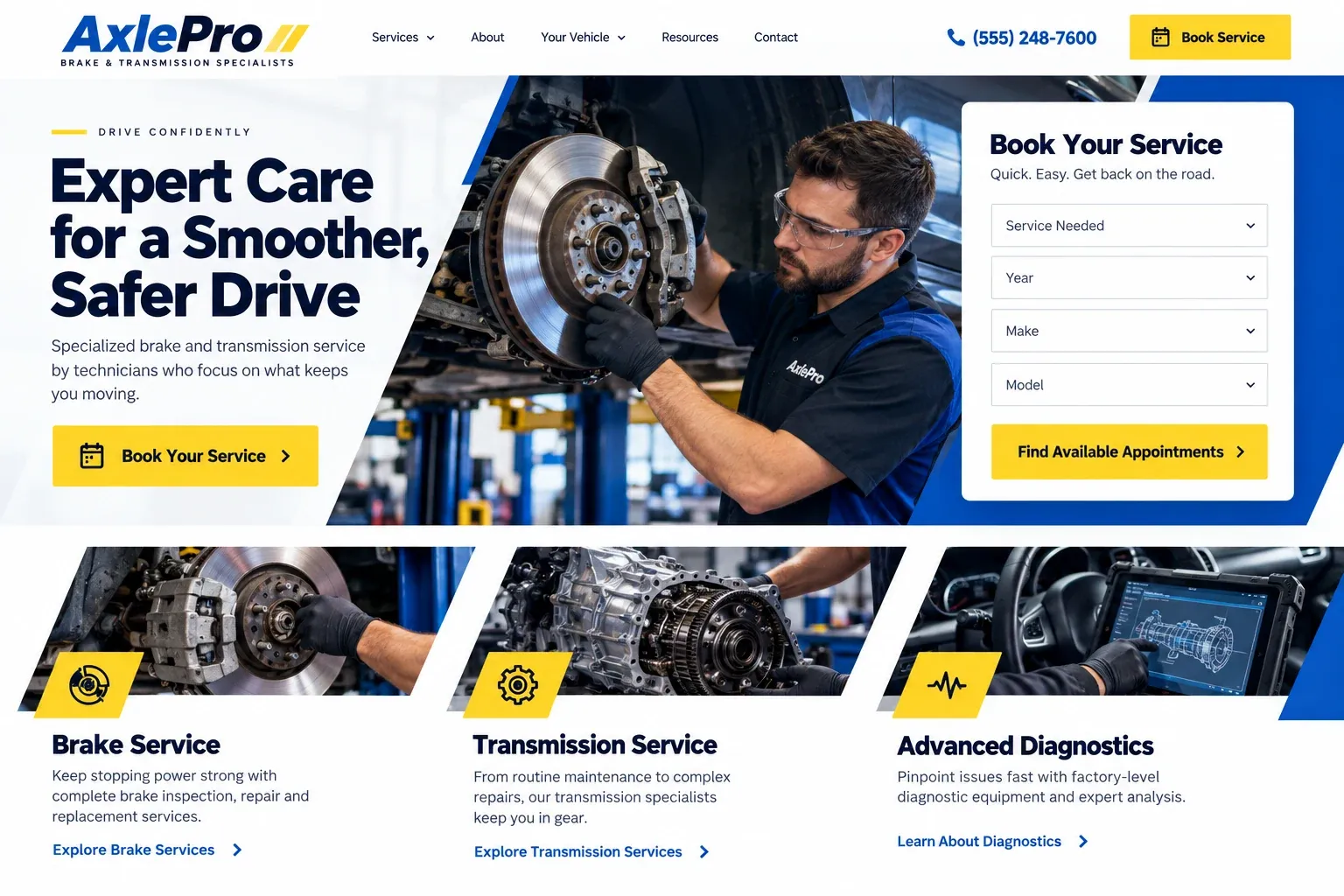
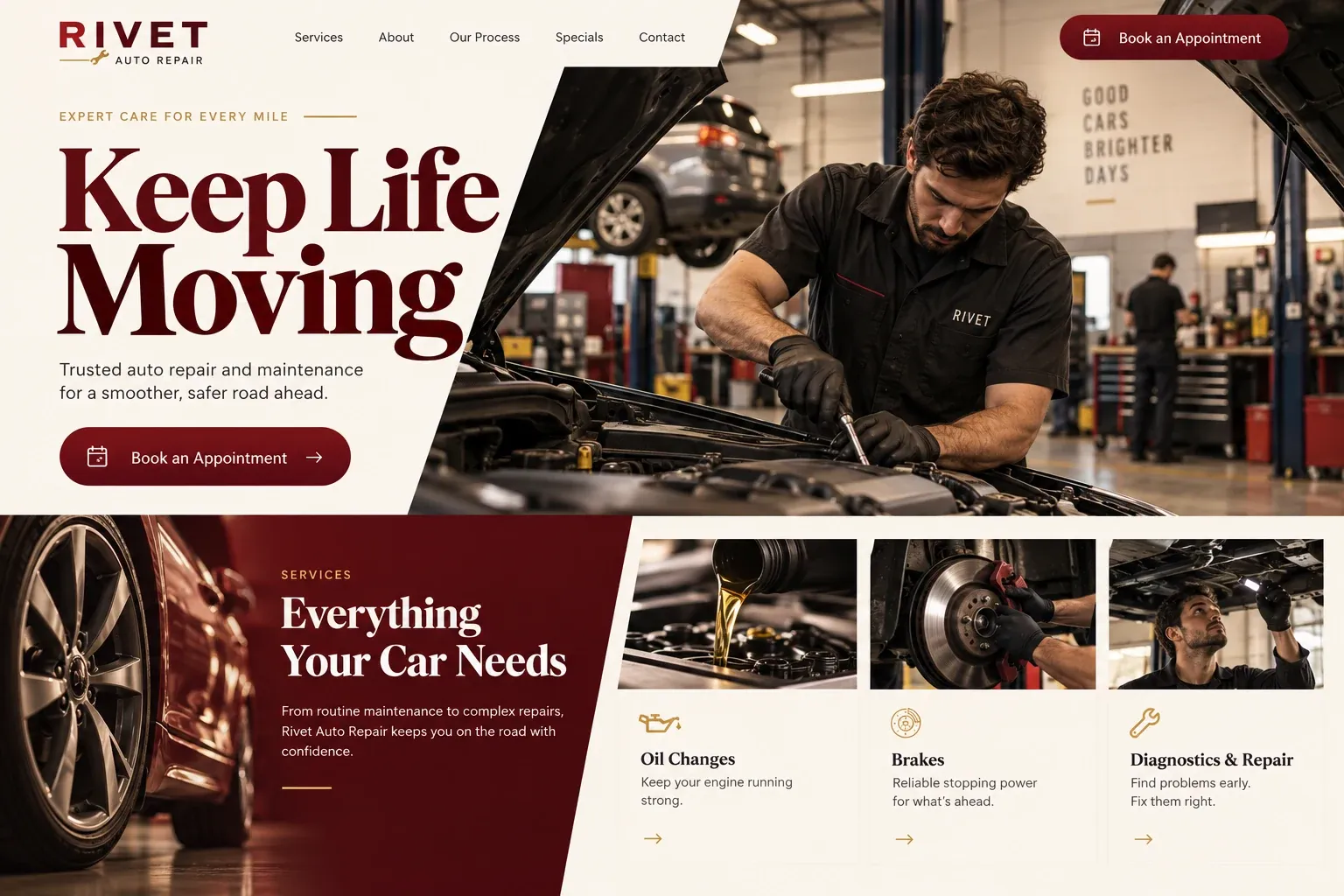
Drivers search in their own words: "car shaking when braking", "AC blowing hot air", "oil change near me". Give your main services their own pages and describe the symptoms that lead people to them. A home page, a page per major service, a makes-we-service page, a diagnostic and approval page, and a contact page with a map make a strong base for most independent shops.
Keep each service page practical. Say what the work usually involves, what the driver should mention when booking, and whether a diagnostic is the first step. Avoid quoting fixed repair figures unless you truly hold them for every vehicle. A short, honest explanation earns more calls than a long list of part names a customer has never heard.
Explain the estimate before the visit
The fear behind most repair searches is a surprise bill. A page that walks through your process removes much of it: the driver describes the problem, a technician inspects and tests, the service advisor shares the findings and a written estimate, and work begins only after approval. If your software sends inspection photos or videos by text, say so, because customers like seeing the worn part themselves.
Show the real shop and people
Stock photos of a spotless garage fool nobody. Clear pictures of your bays, lifts, diagnostic equipment, waiting room, and technicians tell a driver that the shop is real and organized. Add your certifications only where they are current, and display reviews from your Google Business Profile rather than quotes you typed yourself. A short note from the owner on how the shop treats customers also helps.
Help nearby drivers find the shop
Repair is a short-drive decision, so local signals matter. Keep the shop's name, address, and phone number identical on the website and your Google Business Profile, embed a map, and mention the neighborhoods and main roads you are close to. Service pages give search engines specific topics to match, and steady reviews add weight. None of this promises a ranking, but it gives a good shop a fair chance.