Planning guide
How should a brake and transmission shop explain its work online?
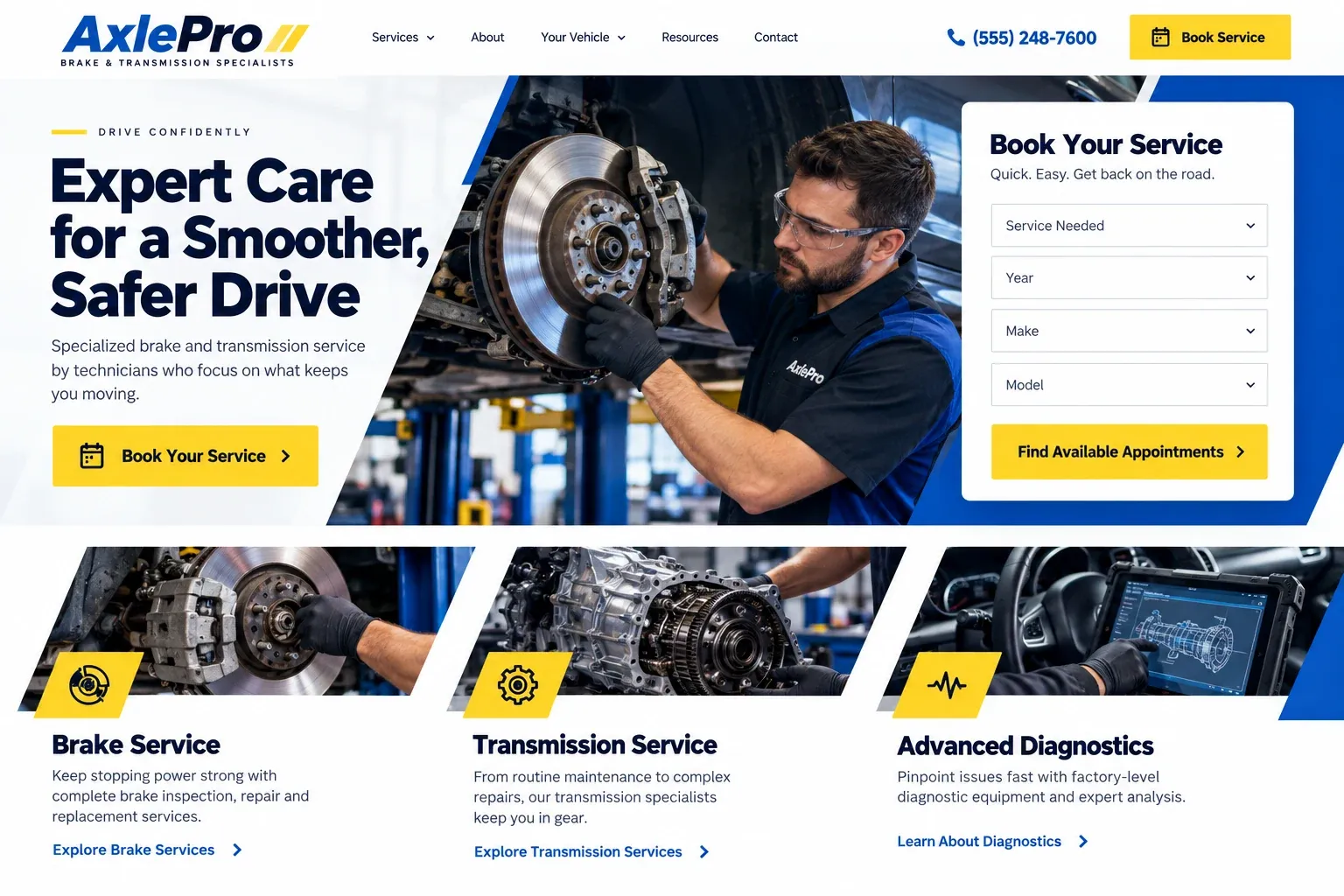
Specialist repair sells on trust. A brake and transmission site has to explain what you do, how you find the cause, and how you decide on a repair, all in words a worried driver understands. Here is how we organize a specialist site around the two systems, the proof that counts, the request form, and the local search basics that bring in nearby drivers.
Two systems, two clear paths
Brakes and transmissions bring different searches and different worries. Give each its own section, starting with the symptoms people describe: squealing, grinding, a soft or pulsing pedal for brakes; slipping, delayed engagement, hard shifts, or leaking fluid for transmissions. Under each, add pages for the services you offer, from pads and rotors to fluid service, clutch work, and rebuilds.
Write symptom pages carefully. Describe common signs and what they can point to, then make clear that only an inspection confirms the cause. That protects drivers from guessing, and it protects the shop from customers who arrive certain they need a particular part because a forum told them so. A line inviting them to bring the car in for a check works better than any list of causes.
Describe the assessment step by step
A short page on how you assess a vehicle removes much of the fear. Explain the road test, the computer scan, the fluid check, and any visual inspection, then how the findings reach the customer and what options they get. If you send photos or video of worn parts, say so. Make clear that larger work, such as a rebuild, is discussed and approved before it starts.
Invite a useful description
The request form should help a driver say what they notice without needing technical terms. Ask what they feel, hear, or see, when it happens, whether a warning light is on, and how long it has been going on, along with year, make, model, and mileage. Those answers help your service writer plan the check and the bay.
For brake complaints, add a plain line suggesting a call before driving further if stopping feels unsafe, and give the tow options you work with. Honest safety advice reads as care, and it is what a good specialist would say on the phone anyway. For transmissions, say whether a car that will not shift into gear should be towed rather than driven, and who to call.
Show up for symptom and service searches
Drivers search both for the symptom and the shop: "grinding noise when braking", "transmission slipping", "brake repair near me". Symptom pages and service pages give search engines exact matches for those phrases. Keep your Google Business Profile complete, with the right categories and photos of the shop, and ask for reviews after each job. No website controls where it ranks, though pages that mirror how drivers describe the problem are the right foundation.