Planning guide
What should a diesel repair shop put on its website?
A diesel shop's website is read by two kinds of buyer: the driver with one truck down and the fleet manager planning a year of maintenance. Both want to know quickly whether you can handle their equipment and how you communicate. Here is how we structure a diesel site, what proof to show, and how it helps commercial customers nearby find you.
Separate single repairs from fleet work
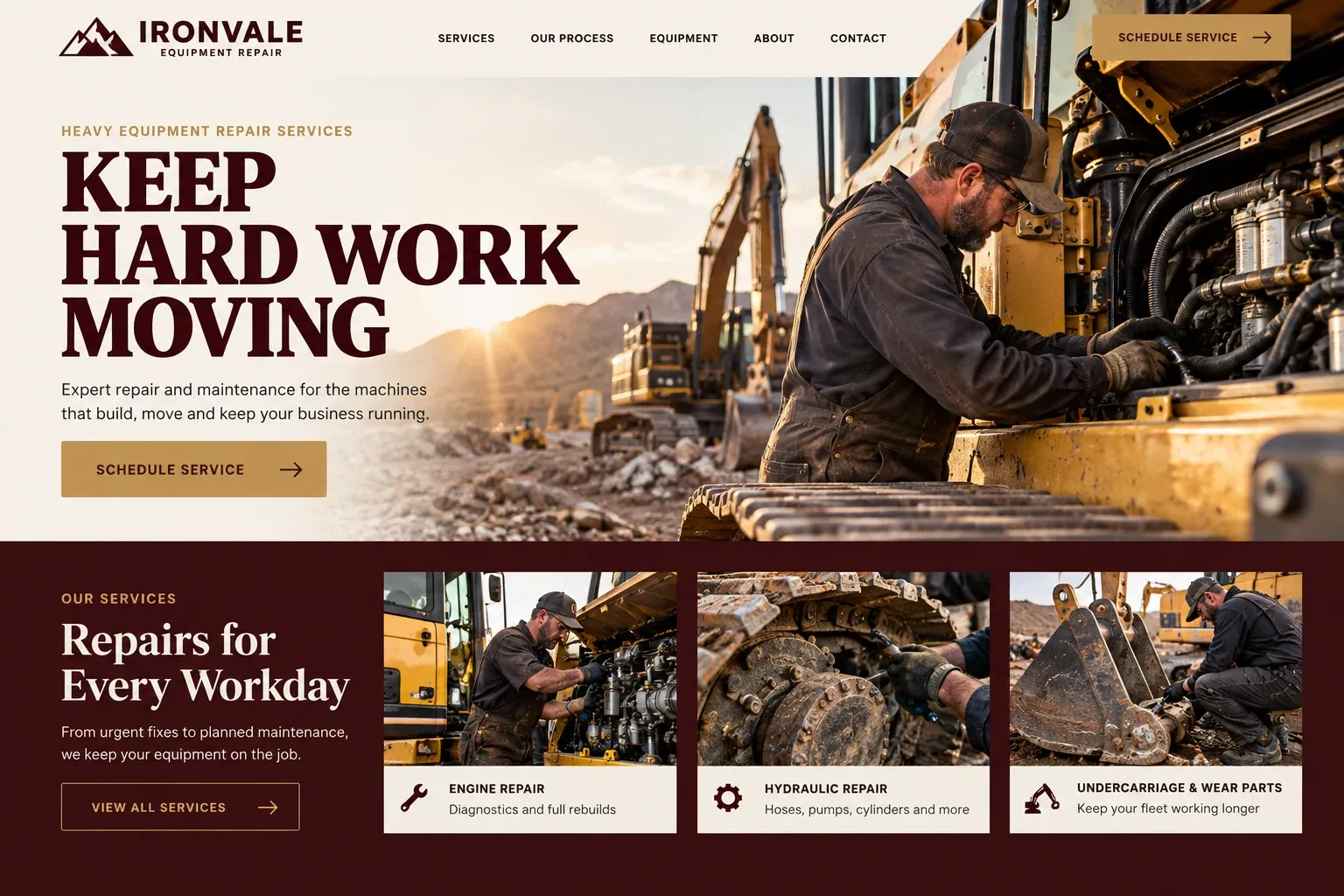
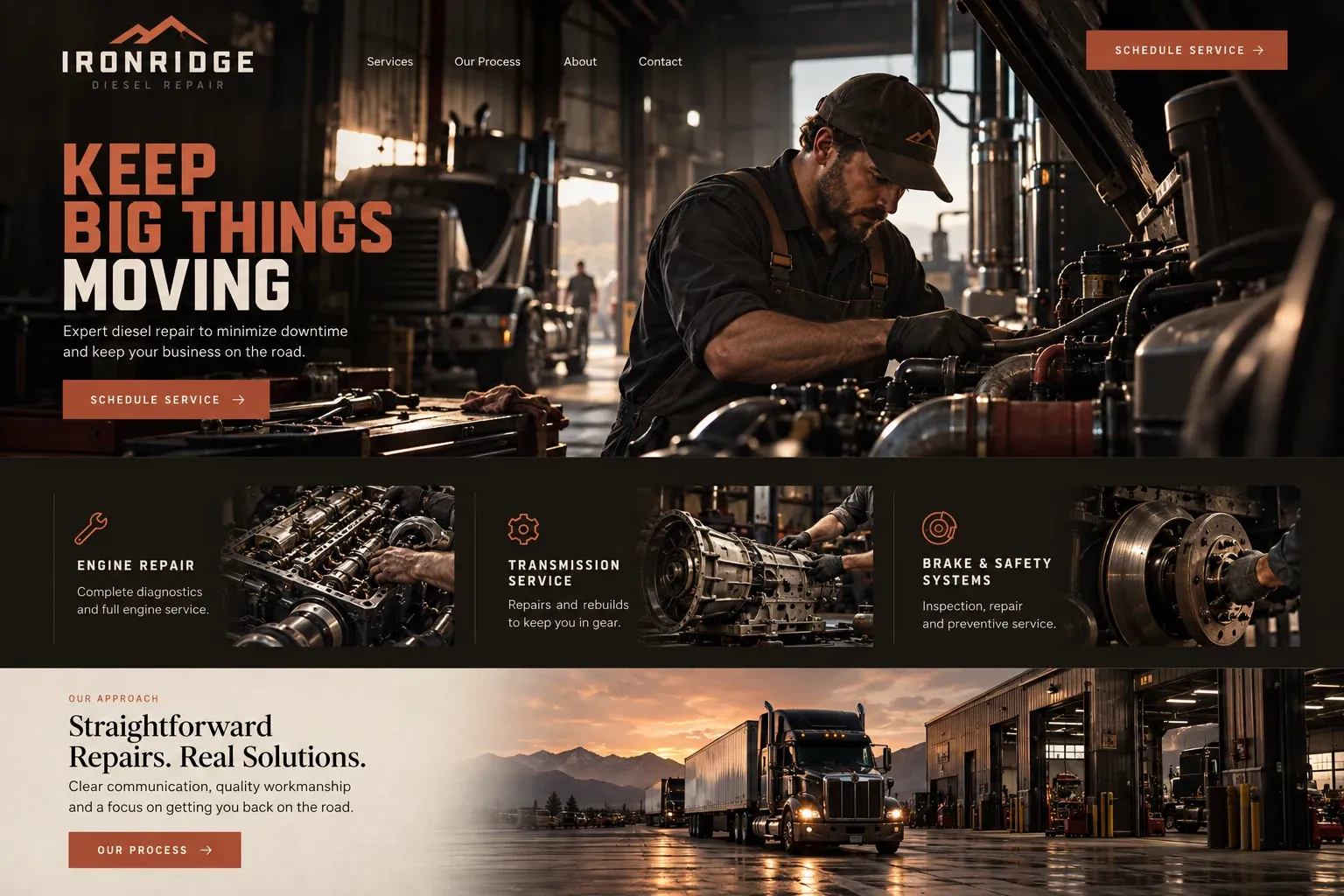
Give individual repair and fleet service their own paths from the home page. The repair side needs pages by system: engine diagnostics, aftertreatment and emissions components, cooling, brakes, suspension, and electrical. The fleet side needs a page on how accounts work, preventive maintenance, any inspections you perform, and how you handle approvals and invoicing. Mixing the two makes both audiences hunt for what they need.
Be precise about coverage. List the engine makes you work on, the truck classes your bays hold, and whether you service trailers, buses, or equipment. If there are jobs you refer out, say so. A fleet manager would rather cross you off early than discover a mismatch after the truck has been towed in.
Prove capacity with real photos
Commercial buyers judge a diesel shop by what they can see. Photograph your bays with trucks in them, your lifts, your parts room, your diagnostic laptops, and your technicians at work. Mention training or certifications only where they are current. Reviews on your Google Business Profile from drivers and fleet contacts carry weight, so link to them and ask long-term customers to leave one.
Make scheduling and updates clear
Describe what happens after a truck arrives: inspection, findings reported to the right contact, approval, repair, and a call or text when it is ready. Say how you handle after-hours drop-off and key return. For fleets, a request form with fields for unit numbers, VINs, mileage or engine hours, and preferred windows turns the first contact into a working plan.
Keep a phone button visible for breakdowns, and be honest about your hours. If you do not offer road service, say so and suggest how drivers should arrange a tow to your shop. Clear expectations protect your reputation with dispatchers, who tend to remember the shop that told them the truth at a bad moment.
Get found by commercial customers nearby
Diesel searches are local and specific: "diesel mechanic near me", "fleet maintenance", "DPF cleaning". Pages for each system and a fleet section give search engines topics to match, and a Google Business Profile with accurate hours and the right categories supports them. Mention the industrial areas and highways near your shop. No website can promise a position in search, but a clear structure gives a capable diesel shop a fair chance.