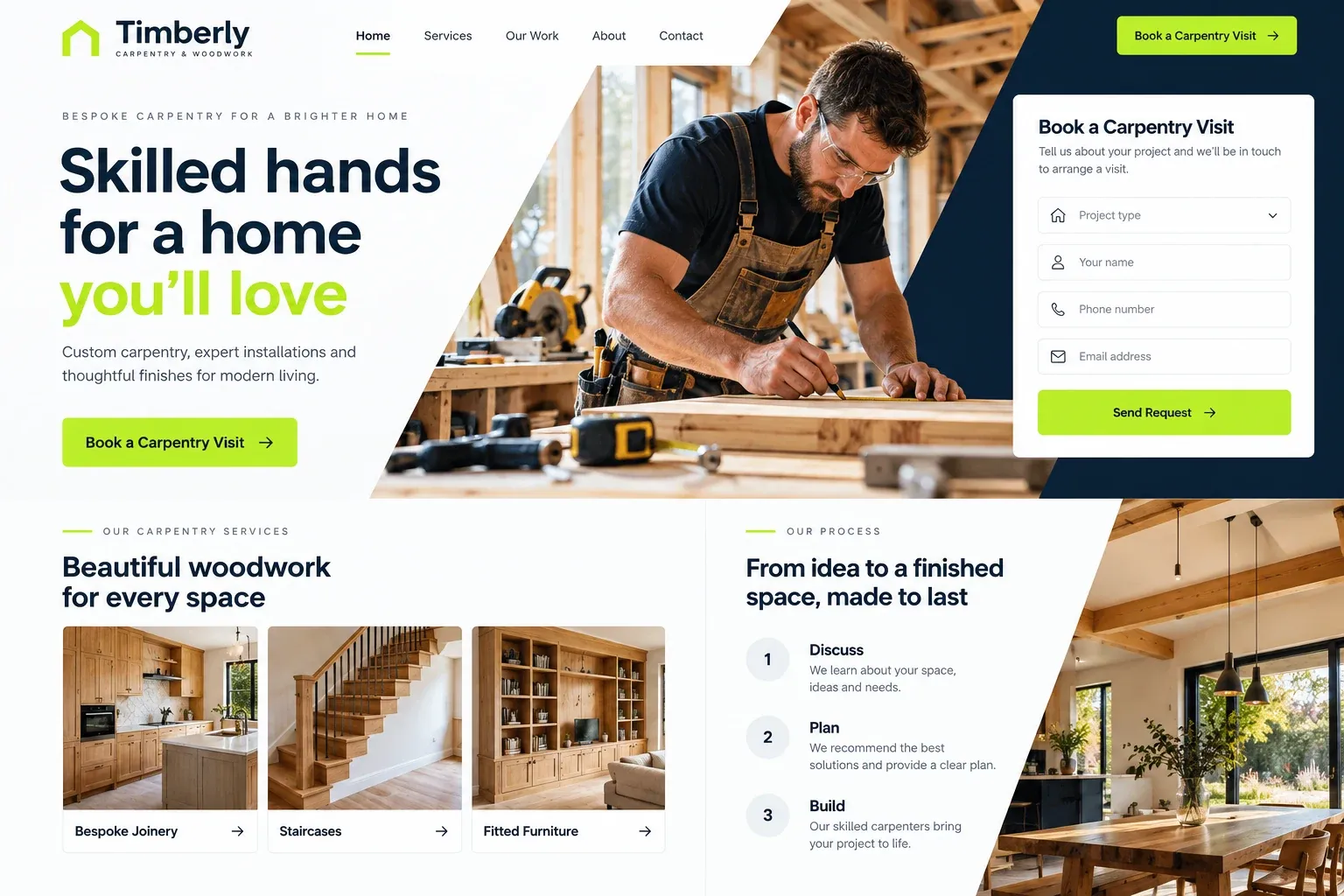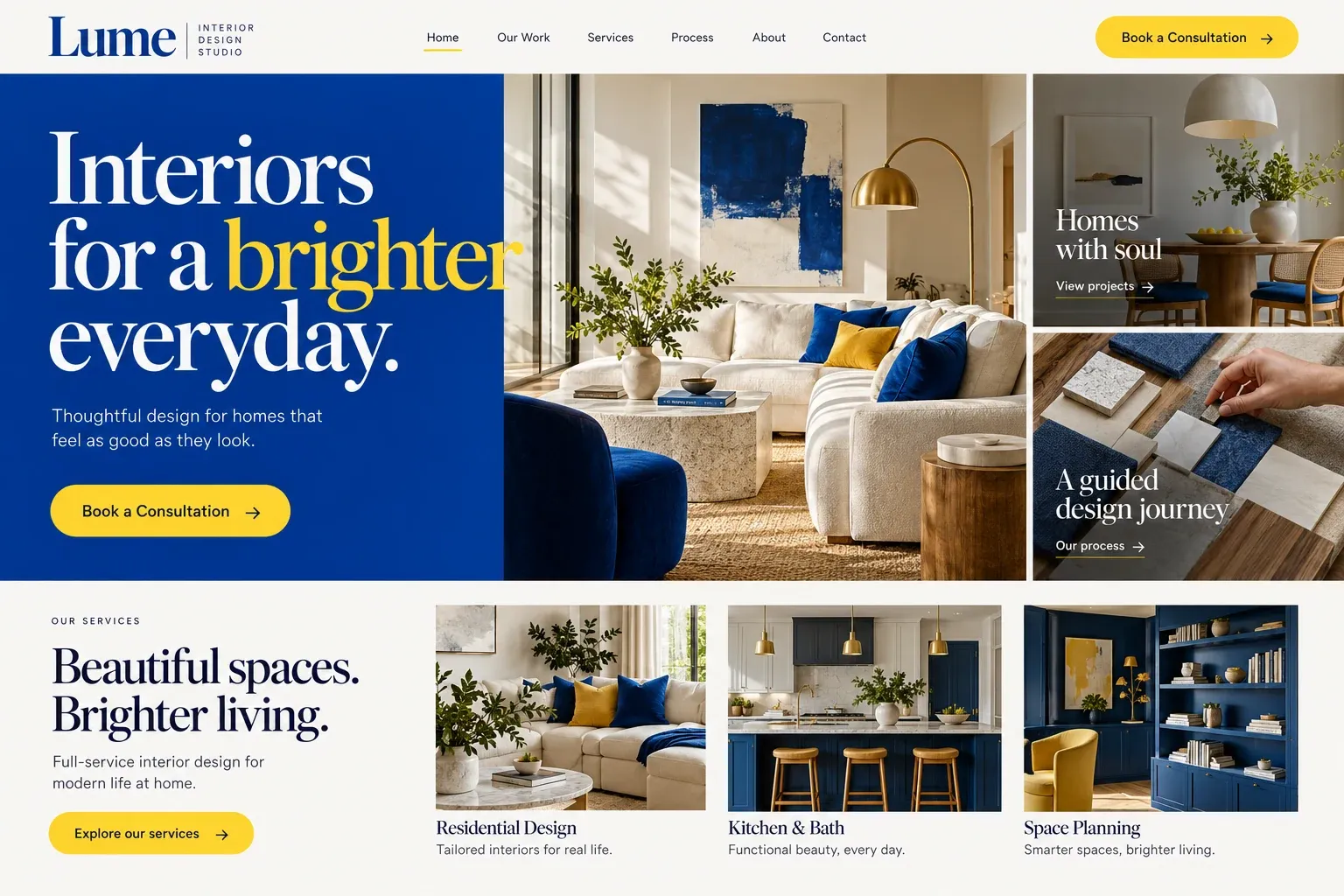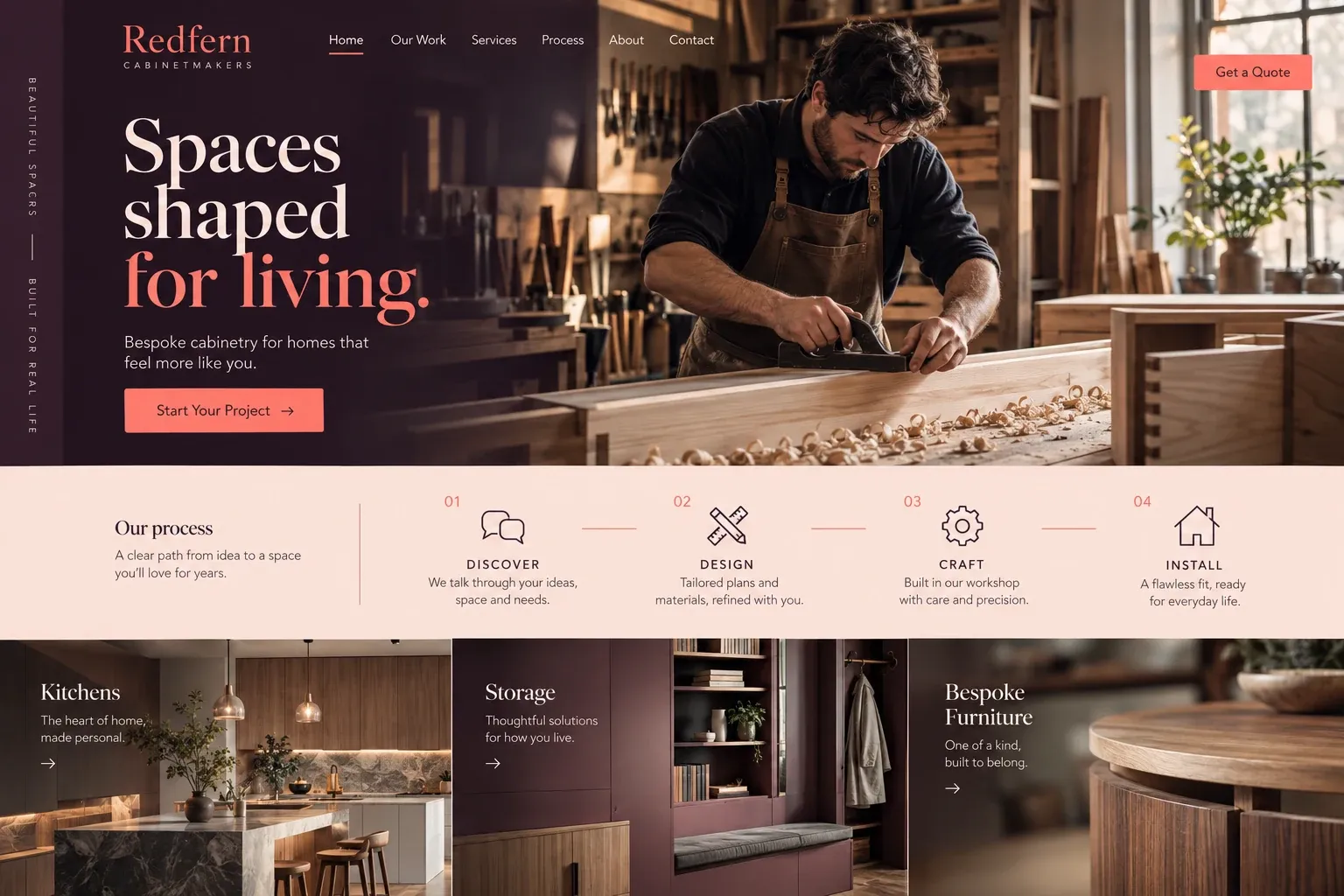
Web design for cabinetmakers

Websites that show the inside of your cabinetry.

People call a cabinetmaker after the big-box showroom fails them: the wall is crooked, the corner is odd, the closet is too shallow. They want proof that you build to the room, not to a catalog.

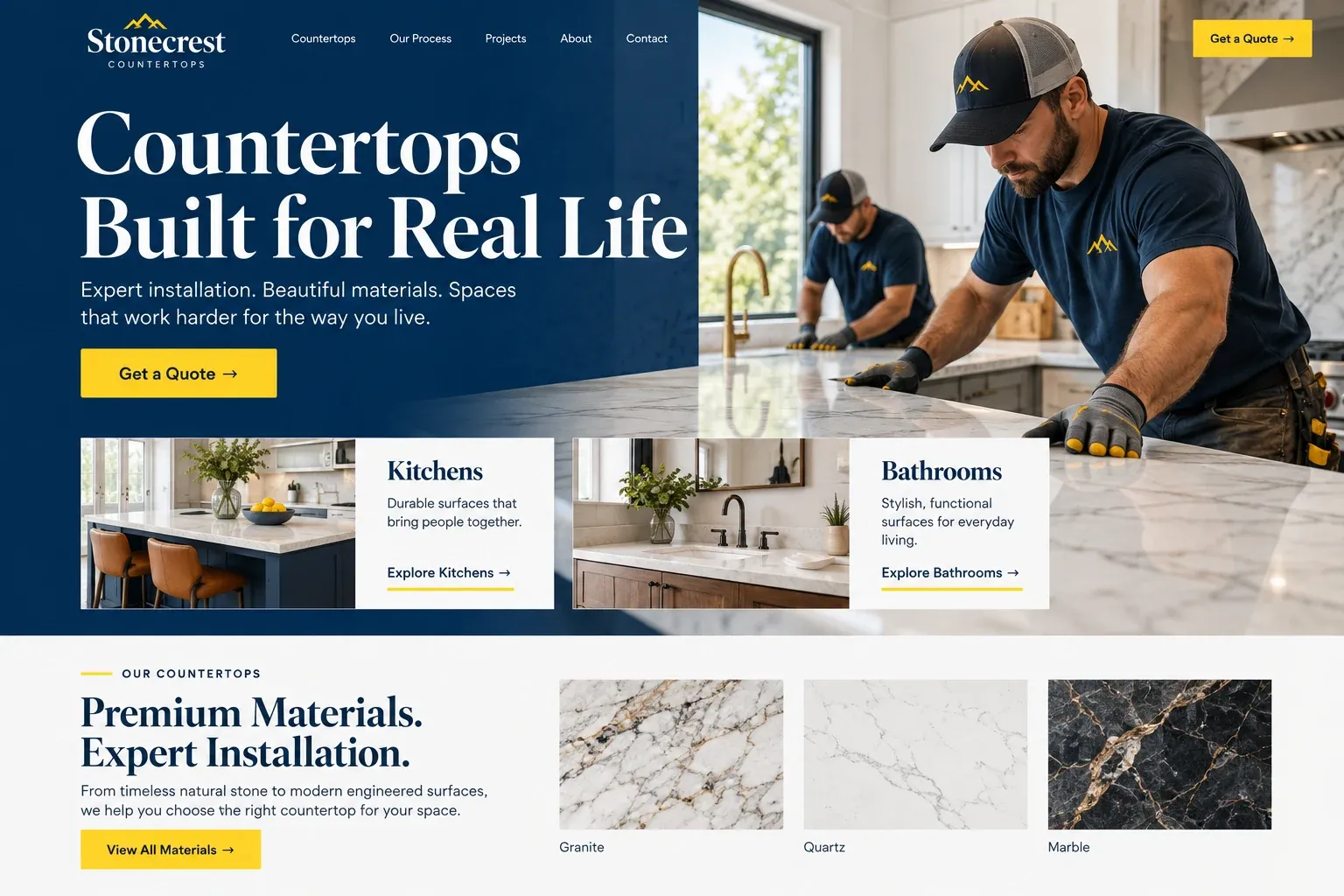
Fictional cabinetmakers website homepage design concept
A design concept for a fictional brand. Your site is designed from scratch around yours.

Your customer's story

The corner no catalog cabinet fits

Renata's 1950s kitchen has one corner that defeats every plan: the wall angles in around a structural column, leaving a narrow, deep gap that nothing standard fits. She has measured it four times. The home store's planning software fills it with a blank panel and calls it done. That evening she sits at the counter and searches "custom cabinet maker" on her phone.

Most shops she finds show the same thing: rows of shaker doors in white and gray, photographed head-on and closed. She cannot see what is behind any of them. Then one cabinetmaker's site opens the doors. A tall, slim pull-out holds spices beside a range, a pantry has drawers inside drawers, and a vanity is built around a pipe chase. Each project shows the drawing next to the finished piece.

Its inquiry form asks for rough dimensions, a photo of the wall, and what she wants to keep there: baking sheets, the stand mixer, the recycling bin. Filling it in, she realizes she has never been asked that before. A cabinetmaker's website should do exactly this, showing the storage inside the boxes and the drawing that came first, and inviting a conversation about the room.

Why it matters

Why cabinetmakers need a website.

Custom cabinetry competes with showrooms that have prices on every door and planning tools on every screen. A homeowner who chooses a cabinetmaker instead wants to see craftsmanship up close: joinery, drawer boxes, interior fittings, finishes that hold up. An Instagram grid shows the outside of finished kitchens, but it cannot explain your process, your materials, or why a built-to-fit piece is worth the wait.

We build cabinetmaker websites that open the doors. Projects are shown as rooms and as details, with interiors, hardware, and the drawing beside the result. A process page follows a piece from measuring to drawings, material choice, the shop, and installation. Pages for kitchens, closets, built-ins, and vanities give each search a home, and a project brief asks for dimensions and what the piece needs to hold.

What your customers search for

  • custom cabinet maker near me
  • custom kitchen cabinets Miami
  • built-in bookshelves
  • custom closet cabinets
  • custom floating bathroom vanity
  • cabinet refacing or replacement

Your customers

What clients ask before commissioning custom cabinets

  • Can you make this awkward space work?

    Projects built around columns, sloped ceilings, and odd corners, each with a short note on the problem and how the design solved it.

  • What wood and finish should we choose?

    A materials page covering solid woods, veneers, painted finishes, and the board you build boxes from, with notes on how each handles humidity.

  • Will I see a drawing first?

    A process page showing sample drawings or renderings and explaining when the client approves the design, before anything is cut in the shop.

  • What does the inside look like?

    Interior photos of drawers, pull-outs, dividers, and lighting, because useful storage is what clients live with every day after the doors close.

What we build

What a website for cabinetmakers should include.

  • Open-door project photos

    Every project shown with doors and drawers open, so clients see dividers, pull-outs, and joinery, not just painted fronts.

  • Drawing to installation

    A step-by-step page from site measure to drawings, material samples, shop build, finishing, and installation day.

  • Wood and finish library

    Photos of the species, veneers, paints, and hardware you offer, shown on finished pieces rather than as flat swatches.

  • Room-by-room pages

    Kitchens, closets, built-in bookcases, media walls, vanities, and home offices, each with its own photos and a short note on how you approach it.

  • Project brief with dimensions

    A form for measurements, a wall photo or plan, and a list of what the cabinetry must hold, sent straight to your inbox.

  • Trade partner page

    A page for interior designers, architects, and builders who send you work, with how you take drawings and coordinate on site.

Planning guide

What should a custom cabinetmaker show on a website?

A cabinetmaker sells something the client cannot hold until it is built. The website has to stand in for the showroom: it shows finished rooms, opens the drawers, explains how a design gets drawn and approved, and gives a homeowner or designer an easy way to describe the space. Here is how we would plan those pages.

Photograph the work open and closed

Shoot each project twice: once as a room, with the cabinetry closed and the light right, and once with doors and drawers open to show the interiors. Add close-ups of joinery, edge profiles, and hardware. Clients who are paying for craftsmanship look for these details. A short caption naming the wood, the finish, and what the piece was designed to store turns a photo into an argument.

Walk clients from sketch to installation

Custom work makes people nervous because they cannot see it before they pay for it. A process page settles that. Describe the site measure, the drawings or renderings, the point where the client signs off, material and finish samples, the shop build, and installation. Mention what can stretch the schedule, such as a change after approval or hardware on back order, so nobody is surprised.

If you build from plans that designers or architects provide, say so on a separate page for trade partners. Explain how you receive plans, who measures, and how you coordinate with the general contractor on installation day. Many cabinet shops get steady work through designers and builders, and a clear page makes you easier to recommend.

Let the inquiry form ask about contents

A tape measure tells you the size of the space, not what belongs in it. Ask what the cabinetry needs to hold, who uses the room, and what bothers them about the current setup. Let visitors attach a photo of the wall, a floor plan, or a designer's drawing. Ask about timing and whether the work is part of a larger renovation. The answers reach your inbox, and the first meeting starts with something concrete.

Match pages to what people search

Homeowners search by room and by problem: a custom closet, built-in bookshelves, a kitchen for a narrow space, a floating vanity. Give the work you want more of its own page with photos from your shop. List the cities and neighborhoods you install in, make sure your Google Business Profile shows the same name and phone as the site, and ask clients to post a review with a photo once the last handle is on.
In your market

Built for cabinetry in South Florida

Cabinetry here lives with humidity, salt air near the water, and air conditioning that runs most of the year, so clients ask which woods, boards, and finishes stay stable. A lot of the work happens in condos, where buildings set rules for deliveries, elevators, and work hours. Seasonal owners often follow a project from another state, and designers send plans by email. We write pages that answer these questions plainly, can add a Spanish version, and keep the site easy to share with the trade.

Questions

Questions cabinetmakers ask us.

How should a cabinetmaker photograph finished projects?

In good daylight, from the doorway first, then with doors and drawers open, then close in on joinery, edges, and hardware. Phone photos work if the light is even. Send the drawing or rendering too, and we show it beside the finished piece with a caption on wood and finish.

Can clients upload measurements and plans for their cabinets?

Yes. The project brief accepts photos, PDFs, and sketches, along with rough dimensions and a list of what the cabinetry should store. Everything is emailed to you in one message, so you can review it before calling and arrive at the first meeting with ideas.

Should our cabinet shop's website speak to designers as well as homeowners?

If designers and builders send you work, yes. A short trade page explaining how you take drawings, who handles site measurements, and how you schedule installation around other trades makes it easy for them to recommend you. Homeowners still get their own pages written in everyday words.

Can the website show the wood species and finishes we offer?

Yes. We build a materials page with your woods, veneers, paint colors, and hardware, photographed on finished pieces where possible. Each entry gets a plain note on look, durability, and care, written from your notes, so clients arrive at the showroom or shop with a shortlist.

Let's talk

Ready for a website built for cabinetmakers?

Tell us about your business and we will come back with a clear recommendation and a fixed quote. No pressure, no jargon.

Trades we design for

See all 226 trades

226 trades

  • Plumbers website design concept
CallFree quote