Web design for carpenters

Websites that let the joinery do the talking.

Customers hire a carpenter for something that does not exist yet: a bookcase for an odd alcove, a closet that finally fits, trim that makes a plain room feel finished. They need to see how carefully you work.

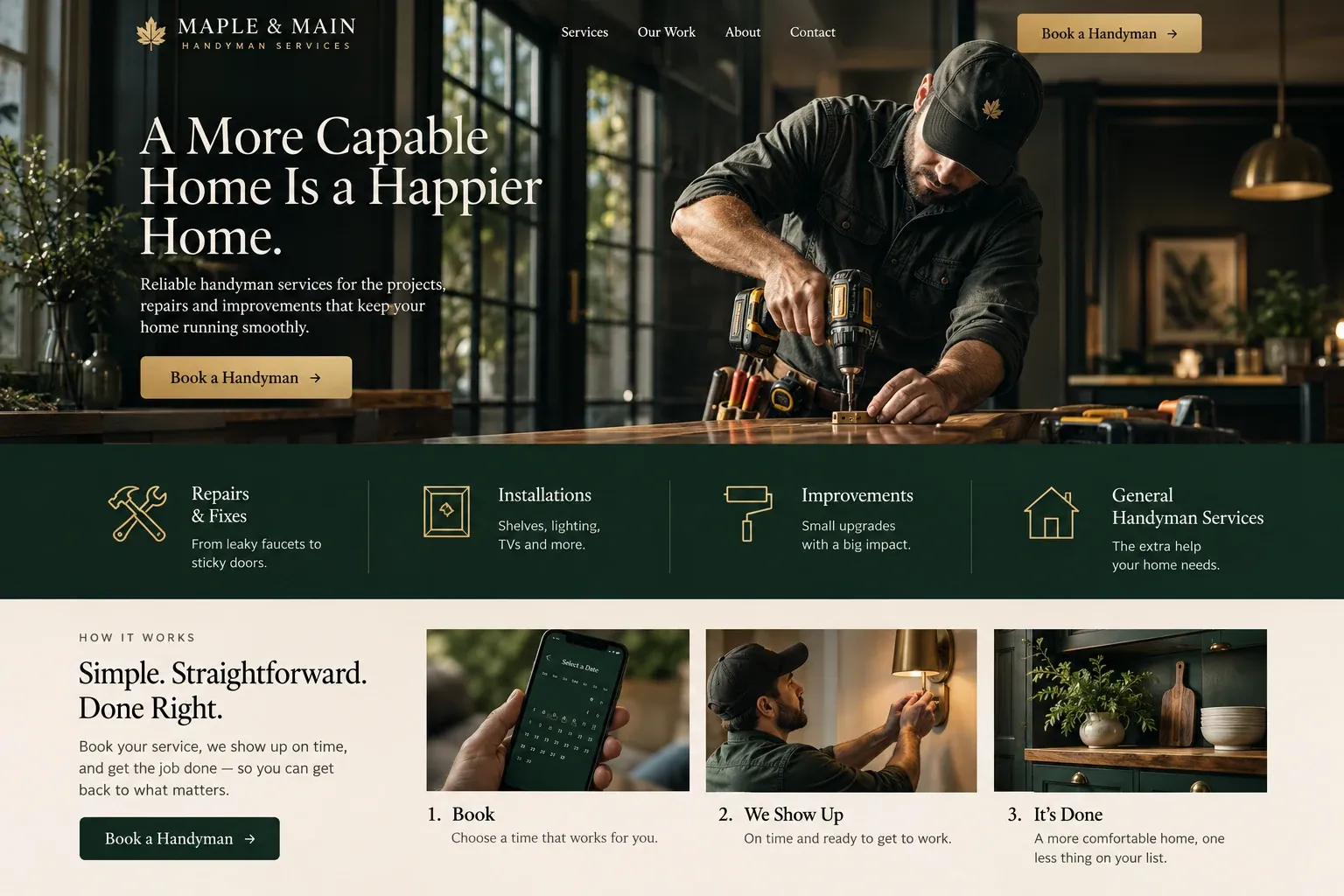
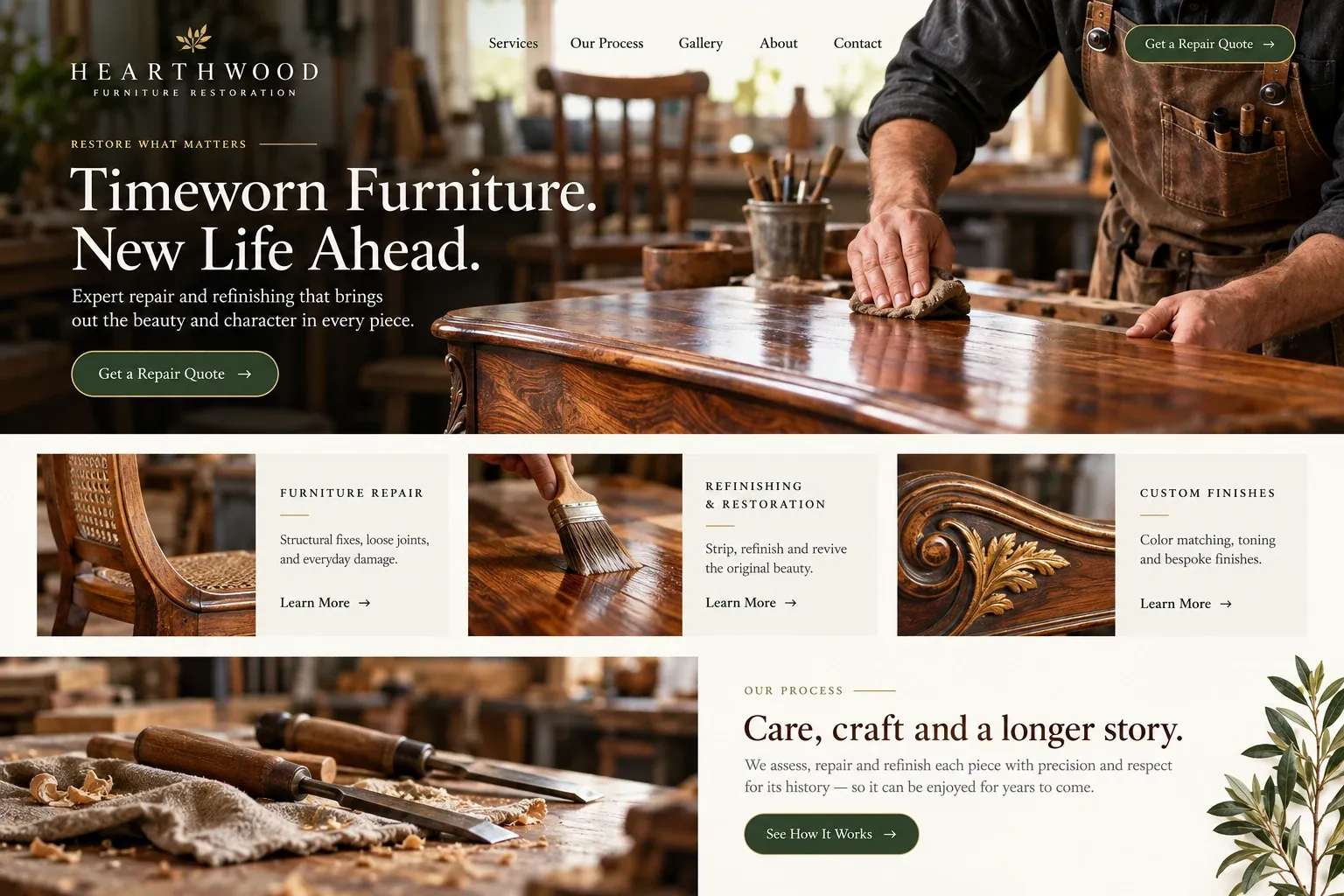
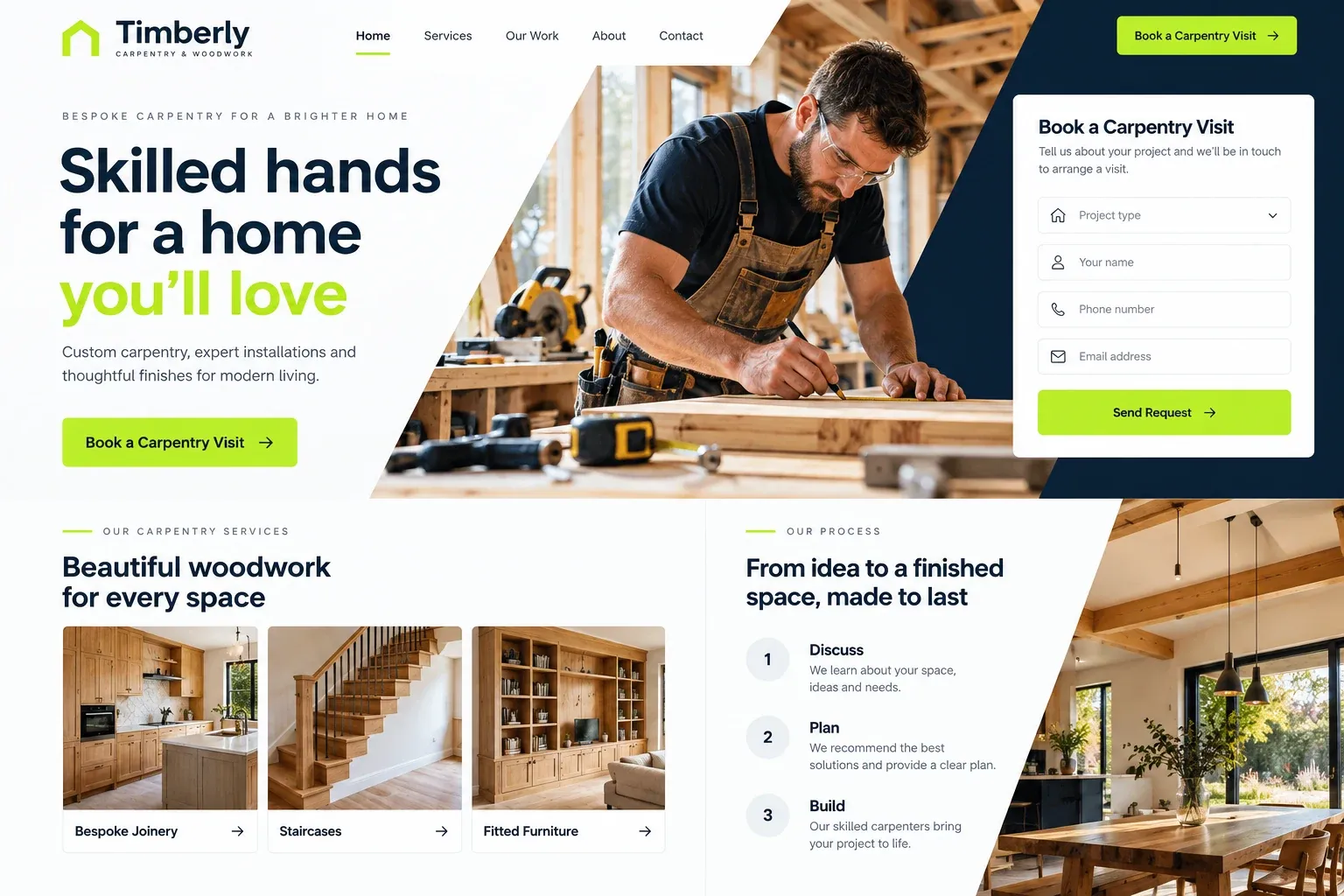
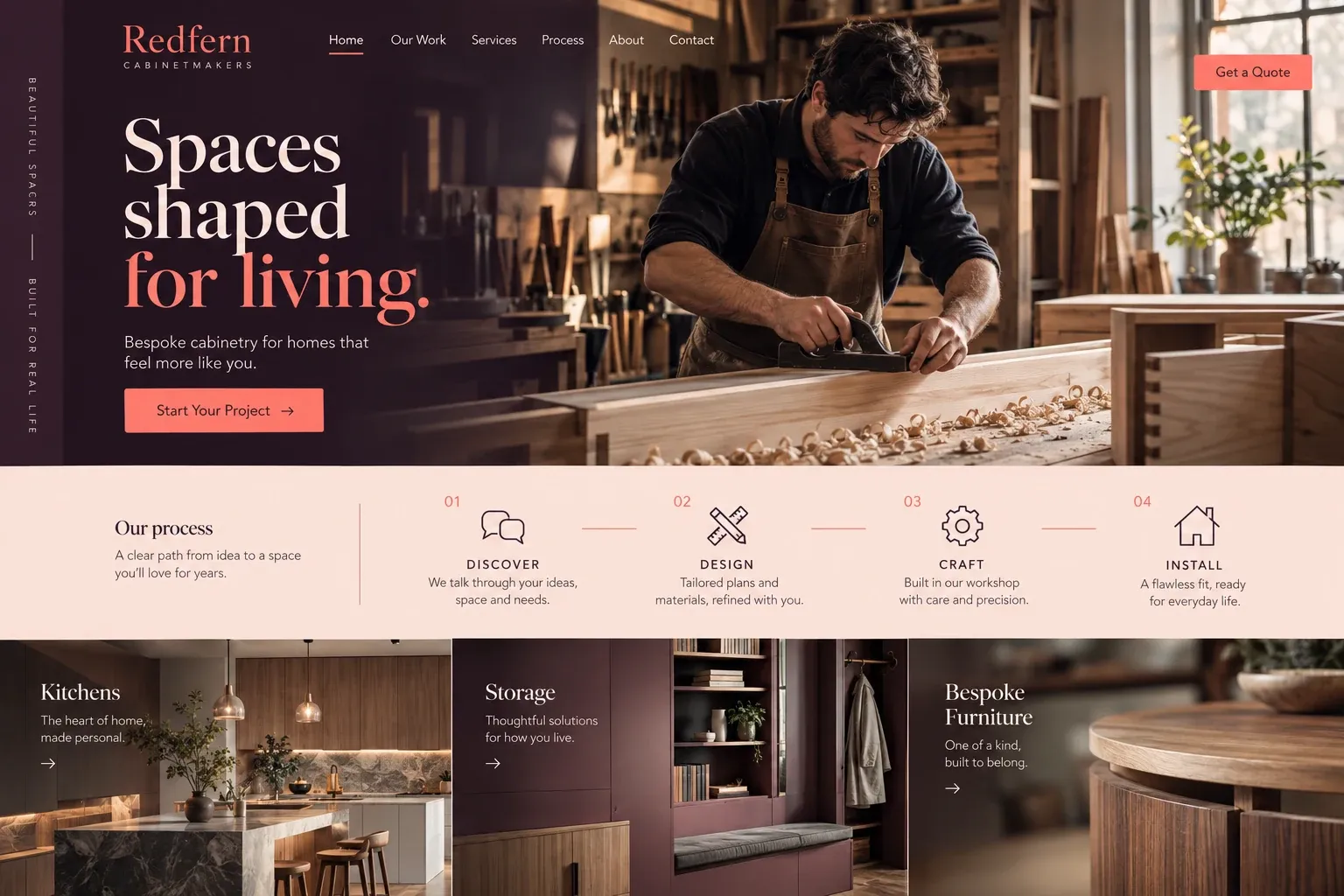
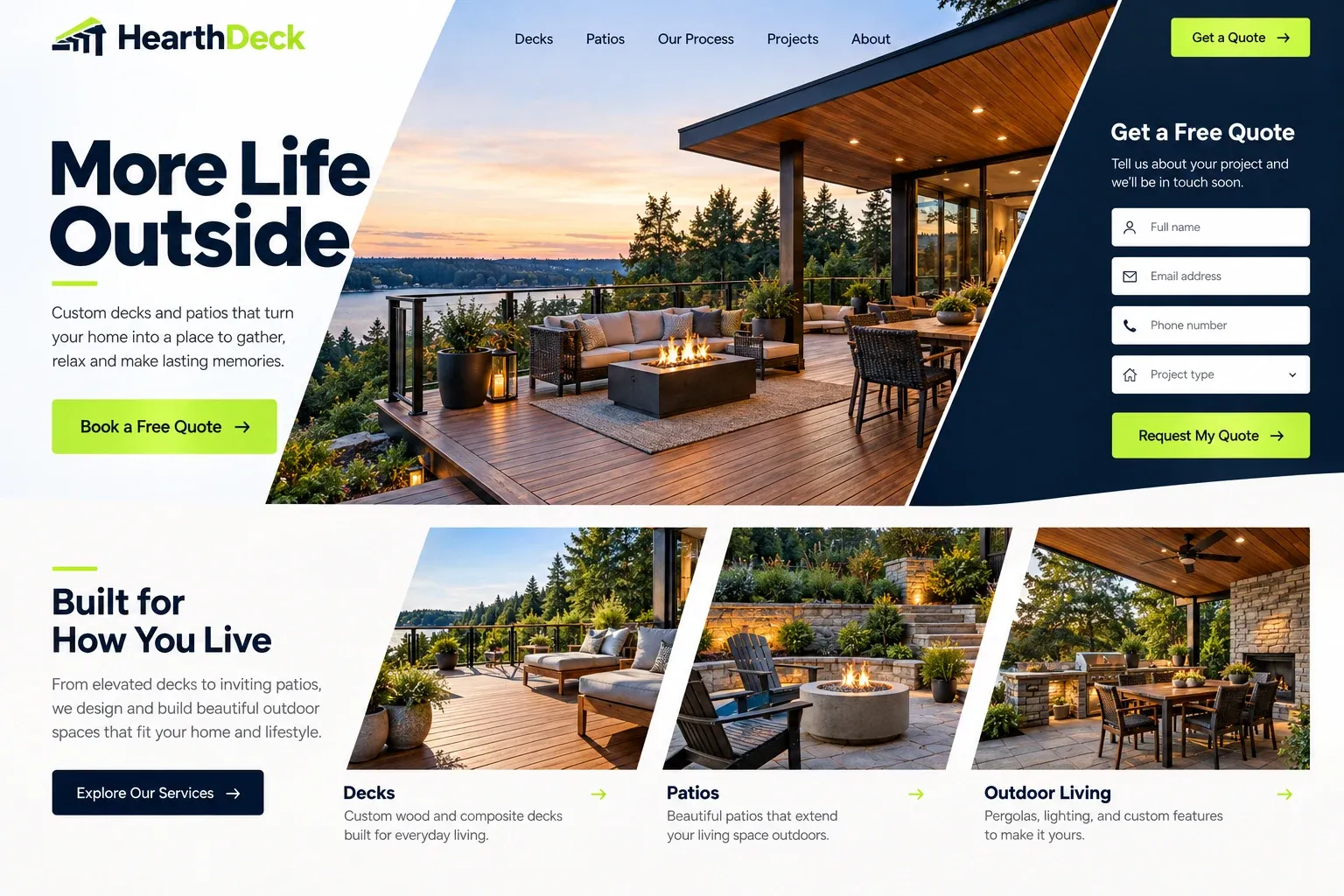
Fictional carpenters website homepage design concept
A design concept for a fictional brand. Your site is designed from scratch around yours.

Your customer's story

An awkward nook under the stairs

When Marisol and Dan moved into the townhouse, the space under the stairs became the place where things went to be forgotten: a vacuum, two folding chairs, a box of cables. Every time she walks past it, Marisol pictures something better, maybe a small desk with shelves, maybe drawers for shoes. She has a few saved photos, but she cannot quite describe what she wants.

She searches for "custom built-ins carpenter" and scrolls through sites on the couch. Most show a wide photo of a finished room where the carpentry is hard to even find. One carpenter's site is different. The gallery has close-ups: the scribe where a cabinet meets an uneven wall, a mitered corner on a window casing, a drawer front lined up with the stair rise. Each photo has a short caption.

The inquiry form asks for rough dimensions and lets her attach the photos she saved, plus a picture of the space itself. She measures with a tape from the junk drawer and sends it all. A carpenter's website should let people study the details, because the details are the whole point, and it should make sharing an idea as easy as taking a photo.

Why it matters

Why carpenters need a website.

Carpentry is judged up close. Customers want to see joints, reveals, and how a piece meets a crooked wall, and those details rarely survive a quick snapshot on a social feed. They also struggle to describe what they want, so they need examples close to their own space and an easy way to share measurements and pictures. Word of mouth brings many jobs, but even referrals look you up before they call.

We build carpenter websites around close, well-lit photography and short captions that name the work, the wood, and the finish. Built-ins, closets, trim, doors, and outdoor carpentry each get their own page. The inquiry form accepts dimensions and photos, so a homeowner can explain an idea without hunting for the right words. Insurance details, and any license your work requires, sit where people look, and the site loads quickly on a phone.

What your customers search for

  • carpenter near me
  • custom built ins Miami
  • custom closet carpenter
  • crown molding installation
  • finish carpenter Miami
  • built in bookshelves

Your customers

What homeowners want to see before hiring a carpenter

  • Can you build something to fit this odd space?

    Built-in projects shown in awkward spots, like stair nooks, sloped ceilings, and narrow alcoves, with captions on how each piece was fitted.

  • How good is the finish up close?

    Close-up photos of joints, edges, scribes, and paint or stain finishes, lit well enough that a careful eye can judge them.

  • What wood will hold up in this humidity?

    Material notes on solid wood, plywood, MDF, and moisture-resistant options, plus what you recommend for bathrooms, patios, and coastal homes.

  • How do I explain what I want?

    An inquiry form that accepts rough dimensions, photos of the space, and saved inspiration images, so ideas travel without a long phone call.

What we build

What a website for carpenters should include.

  • Close-up craftsmanship gallery

    Detail shots of joinery, trim, and finishes alongside wider photos of each finished piece in its room.

  • Built-in project pages

    Bookcases, window seats, closets, media walls, and under-stair storage, each with photos and a note on the brief.

  • Material notes

    Plain descriptions of the woods, sheet goods, and finishes you use, and how each behaves in a humid climate.

  • Trim and door work

    Crown molding, baseboards, casings, wainscoting, and door hanging, shown in finished rooms with close-ups of corners and joints.

  • Dimensions and image inquiry

    Fields for rough measurements and uploads for photos and sketches, delivered to your email with the client's notes.

  • Outdoor carpentry section

    Pergolas, gates, screens, and outdoor storage, with notes on the rot-resistant and termite-resistant materials you choose.

Planning guide

What should a carpenter's website show potential clients?

A carpentry website has an unusual job: it has to sell something custom that the client cannot fully picture. Good photographs, honest material notes, and an easy way to share an idea do most of the work. Here is how we plan a carpenter's site, from the gallery to the inquiry form to the details that help nearby clients find you.

Let the photos get close

Wide shots show a finished room, but carpentry is sold in the details. For each project, take one photo of the whole piece and several close-ups: an inside corner, the edge banding, a scribed end panel, the paint finish in raking light. Daylight and a steady hand on a phone are enough. Caption each photo with the room, the wood, and what was hard about the space.

Organize the gallery by type of work, such as built-ins, closets, trim, doors, and outdoor projects, so visitors can go straight to what they want. If you also take commercial work, such as millwork for shops or restaurants, give it its own section. Only show your own work, and leave out anything you subcontracted unless you say so.

Explain materials without a lecture

Clients ask what their project should be made of, and the answer matters in a humid climate. A short materials page that compares solid wood, plywood, MDF, and moisture-resistant options in plain terms helps them understand your recommendations. Note what you use for bathrooms, kitchens, and outdoor pieces, and why. Mention termite and rot resistance where it applies. Keep it practical, and invite questions on the inquiry form.

Make sharing an idea easy

Custom work begins with a fuzzy idea, so the inquiry form should do some of the thinking. Ask what they want built, the room, rough dimensions, and whether it will be painted or stained. Let them attach photos of the space and any inspiration images. Add a phone number for people who would rather talk it through. The more you see before the visit, the better your first sketch.

Get found by people planning projects

People search for the piece they want: custom closets, built-in bookshelves, crown molding installation, carpenter near me. A page for each kind of work, an area page with the neighborhoods you serve, and a Google Business Profile that matches the site give search engines specific signals. Ask satisfied clients for reviews that mention the project. A good site cannot promise rankings, but it helps the right searches lead to you.
In your market

Carpentry in South Florida's climate

In South Florida, wood lives with high humidity, salt air near the coast, and termites that are a concern all year. That shapes material choices for built-ins, doors, and especially outdoor work. Many homes are concrete block with plaster walls, which affects how shelves and cabinets are anchored, and condo buildings set their own rules for noise and work hours. We write pages that reflect these local conditions and can add a Spanish version for bilingual clients.

Questions

Questions carpenters ask us.

How should a carpenter photograph finished work for the website?

Shoot in daylight from a steady position, and take one wide photo plus three or four close-ups of joints, edges, and finish. A recent phone is fine. We crop and arrange the photos on project pages with captions about the wood, the finish, and the space it was built for.

Can clients upload sketches and measurements through a carpenter's website?

Yes. The inquiry form accepts photos, sketches, and inspiration images, and has fields for rough dimensions. Everything arrives in your email together, so you can think about the project, and maybe sketch a first idea, before the site visit. Larger files can go through a shared folder link.

Do carpenters need separate pages for trim work and built-ins?

If you do both, yes. People searching for crown molding installation are often different customers from those who want a custom closet, and each search deserves a page that matches it. Separate pages also let you show the right photos to each visitor instead of mixing everything together.

What if most of our carpentry work comes from contractors, not homeowners?

Then the site should speak to both. A trade section can show your finish and millwork capacity, the kinds of projects you take from builders and designers, and how to send drawings. Homeowners still look you up after a referral, so keep a clear residential gallery too.

Let's talk

Ready for a website built for carpenters?

Tell us about your business and we will come back with a clear recommendation and a fixed quote. No pressure, no jargon.

Trades we design for

See all 226 trades

226 trades

  • Plumbers website design concept
CallFree quote