Web design for countertop installers

Website design for countertop installers.

A countertop is chosen from a slab the size of a wall and judged by a few inches of edge and seam. Your customers need help picturing both before they walk the slab yard.

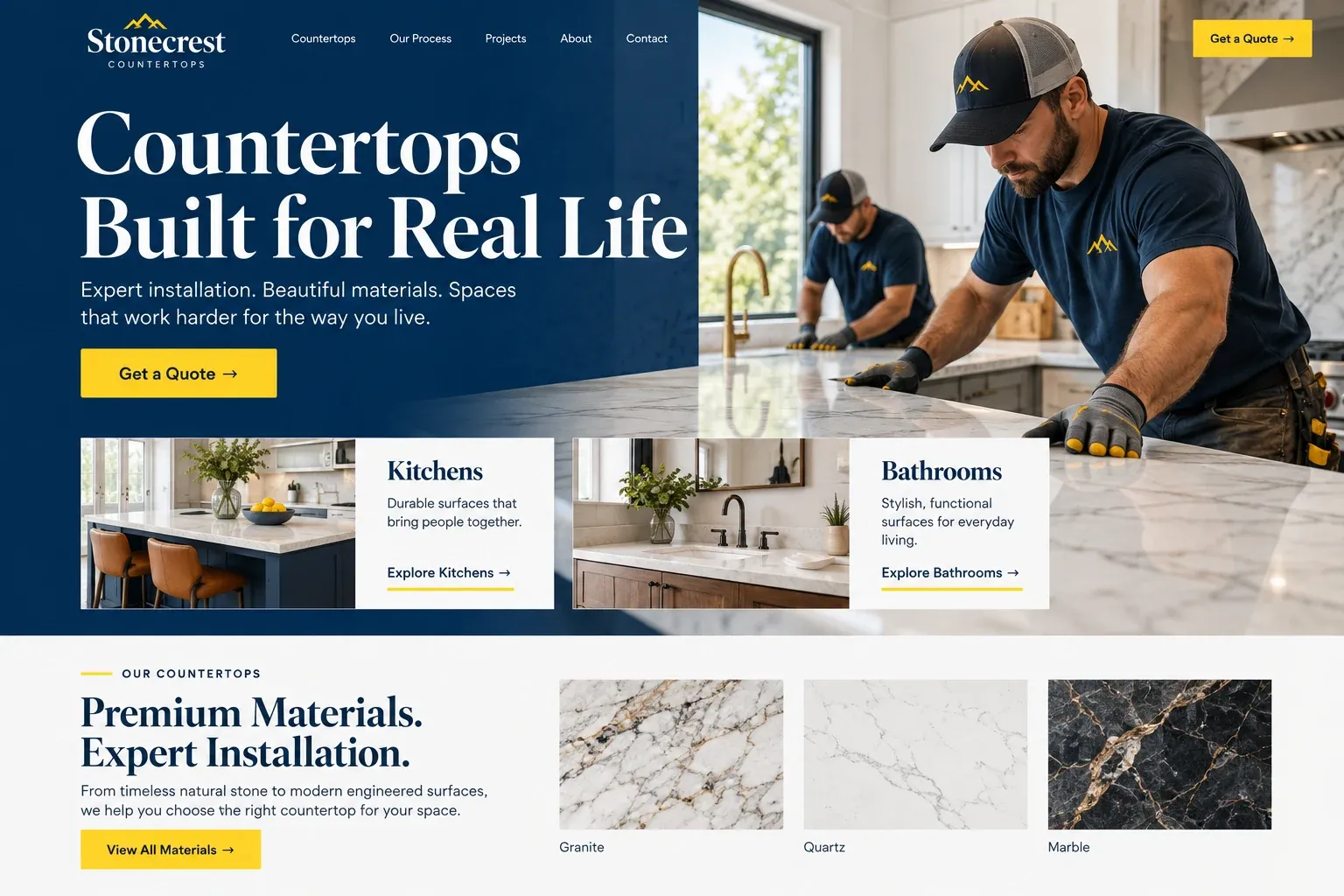
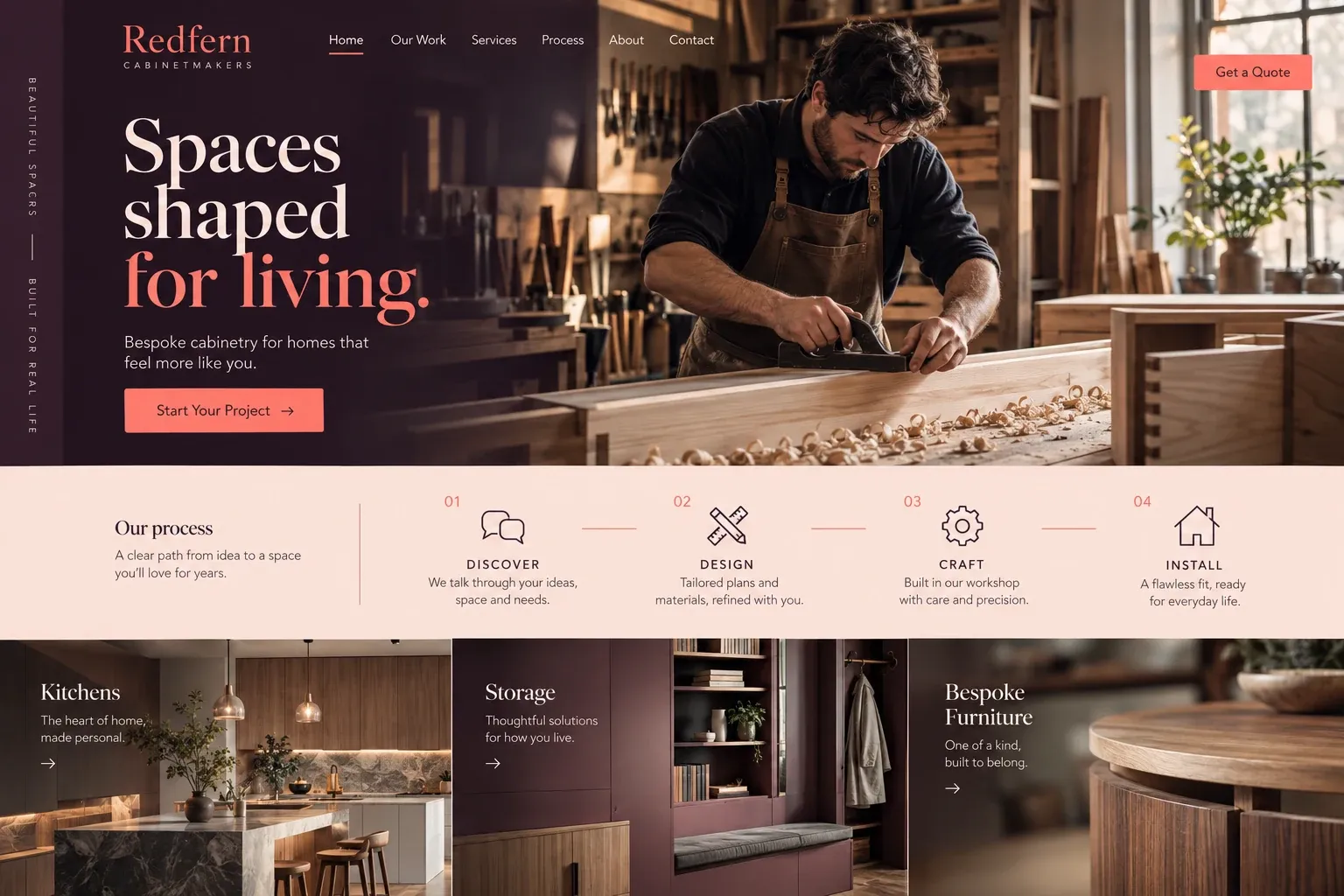
Fictional countertop installers website homepage design concept
A design concept for a fictional brand. Your site is designed from scratch around yours.

Your customer's story

Twelve samples on the kitchen table

Gloria has twelve small squares of stone and quartz lined up on her kitchen table, collected from two showrooms over two weekends. Her cabinets are going in next month, and the contractor needs to know what goes on top. She holds a white quartz sample against the cabinet door, then a gray granite one, and still cannot imagine either across a ten-foot island with a sink in the middle.

That night she searches "quartz countertop installation near me" and opens a dozen tabs. Nearly every one offers a grid of color names and thumbnail swatches. One fabricator's site is different. It shows whole kitchens with the material named under each photo, close-ups of a mitered edge and an undermount sink, and a plain explanation of where seams usually fall on a long island.

It also lays out the steps: choosing a slab, templating once the cabinets are set, fabrication, and installation, with what she needs to have ready at each one. The quote form lets her upload the cabinet drawing. She sends it before bed. A countertop website should help people see the surface in a real room and understand the job well enough to start.

Why it matters

Why countertop installers need a website.

Countertop buyers usually arrive mid-project, with cabinets ordered and a contractor waiting on a decision. They compare quartz, granite, quartzite, marble, and porcelain, then compare fabricators on price, slab selection, edge work, and how cleanly seams are placed. A directory listing or a supplier's color chart cannot show the quality of your fabrication or explain what happens between choosing a slab and the day the sink is reconnected.

We build countertop websites that put finished surfaces in finished rooms. Galleries name the material, color, edge profile, and sink style for each job. A process page explains templating, fabrication, and installation in order, with what the homeowner or contractor must have ready. Each material has a page that weighs it fairly, and a quote form takes plan uploads, so your estimate starts from real dimensions.

What your customers search for

  • countertop installers near me
  • quartz countertops Miami
  • granite countertop fabrication
  • outdoor kitchen countertops
  • quartzite kitchen island
  • bathroom vanity top replacement

Your customers

What homeowners check before choosing a countertop fabricator

  • How will it look in a whole kitchen?

    Installed-work galleries with the material, color, and edge named under each photo, so a small sample becomes a room they can picture.

  • Where will the seams go?

    A plain page on seam placement, overhangs, and supports for long islands, with close-up photos of seams you have finished.

  • Quartz or natural stone?

    Material pages comparing quartz, granite, quartzite, marble, and porcelain on heat, staining, sealing, and outdoor use, written from your experience.

  • What do I need ready for templating?

    A checklist covering cabinets installed and level, sink and faucet chosen, appliances on site, and old tops removed or scheduled for removal.

What we build

What a website for countertop installers should include.

  • Finished kitchen gallery

    Countertops shown in whole kitchens, baths, and bars, each labeled with material, color, edge, and sink type.

  • Edge and sink details

    Close-ups of eased, beveled, bullnose, and mitered edges, plus undermount and farmhouse sink cutouts from your own jobs.

  • Template to install timeline

    Slab selection, templating, fabrication, and installation laid out in order, with what the customer does before each visit.

  • Plan and photo upload

    A quote form that accepts cabinet drawings, rough sketches, and kitchen photos, so estimates start from the real layout.

  • Vanity and remnant page

    A page for bathroom vanities, laundry tops, and remnant pieces, which brings in smaller jobs between kitchen projects.

  • Trade customer page

    A page for builders and designers that explains how you receive drawings, schedule templating, and coordinate with other trades.

Planning guide

How should a countertop fabricator plan its website?

Countertop shoppers move fast once cabinets are on order, and they need to choose a material, a color, an edge, and a fabricator in a short window. A good website makes that decision easier. It shows finished rooms, explains the steps from slab to install, and makes it easy to send a plan. Here is how we would structure it.

Show surfaces in rooms, then up close

A slab photo shows pattern and color. A finished kitchen shows how that pattern reads across an island, how it meets the backsplash, and what it does next to the cabinet color. Your gallery needs both, plus close-ups of edges, seams, and sink cutouts. Label every project with the material, the color name, and the edge profile, so visitors can ask for the same look by name.

Explain templating and fabrication step by step

Many homeowners have never bought stone before and do not know why someone measures twice or why the old tops must come off first. Lay out the sequence: choosing a slab, templating once cabinets are level, cutting and finishing in the shop, and installation. For each step, say what the customer or contractor must have done, such as the sink and faucet chosen and on site.

This page saves your office many phone calls and prevents the wasted trip when templating day arrives and the cabinets are not ready. Add a line on what affects scheduling, such as slab availability or a change to the layout, without promising dates you cannot control. Contractors juggling several trades will read it too.

Make plan uploads part of the quote

Build the quote request around real information. The form should accept cabinet drawings, a hand sketch with measurements, or photos of the existing kitchen, along with the material the customer is considering, the edge they like, the sink type, and whether old tops need removing. A phone number and the best time to call round it out. The more you know first, the fewer estimates change later.

Get found for the stone people search

Countertop searches usually name a material, and often a room: quartz for a kitchen, granite for a vanity, a surface for an outdoor kitchen, a quartzite island. Pages for the materials and projects you want more of give search engines precise matches. List the cities you install in, connect the site to an up-to-date Google Business Profile with photos of recent installs, and ask happy customers for reviews that mention the material they chose.
In your market

Built for countertops in South Florida

Many kitchen remodels here happen in condos, where buildings limit work hours and finished pieces must fit in a service elevator, which can affect where seams fall. Outdoor kitchens are common, and not every surface handles strong sun and rain, so customers ask what belongs outside. Investors and seasonal owners often renovate from afar, and many clients prefer Spanish. We write pages that answer these questions plainly and can add a Spanish version of the site.

Questions

Questions countertop installers ask us.

Should our countertop website list every color we can get?

Usually not. Supplier color lines change often, and a long list of swatches is hard to choose from. A better approach is to show the colors you install most, in finished rooms, and link to the slab yards or suppliers where customers can see full slabs. We write that guidance with you.

Can customers send kitchen drawings with a countertop quote request?

Yes. The quote form accepts PDFs, photos, and sketches, plus questions about material, edge, sink type, and tear-out. Everything lands in your inbox together, so you can price the job with fewer back-and-forth calls and know before templating what the kitchen looks like.

How do we show edge profiles and seams on the site?

With close-up photos from your own installs, each labeled by profile name: eased, beveled, bullnose, ogee, mitered. A short page on seams explains where they usually fall and why, with a photo of a finished seam. Honest detail here builds trust with buyers who worry about seams.

Can the website bring in bathroom and remnant countertop jobs too?

Yes. A page for vanity tops, laundry rooms, and bar tops, showing remnant pieces you have on hand, gives homeowners with smaller projects a reason to call. It has its own quote form, and it can be updated whenever new remnants come in, which keeps the page current.

Let's talk

Ready for a website built for countertop installers?

Tell us about your business and we will come back with a clear recommendation and a fixed quote. No pressure, no jargon.

Trades we design for

See all 226 trades

226 trades

  • Plumbers website design concept
CallFree quote