Web design for furniture restorers

Websites for the people who bring furniture back.

People rarely look for furniture repair until something they love is damaged: a water ring on a dining table, a wobbly chair, a dresser scraped by movers. They want proof that you can fix it without erasing its character.

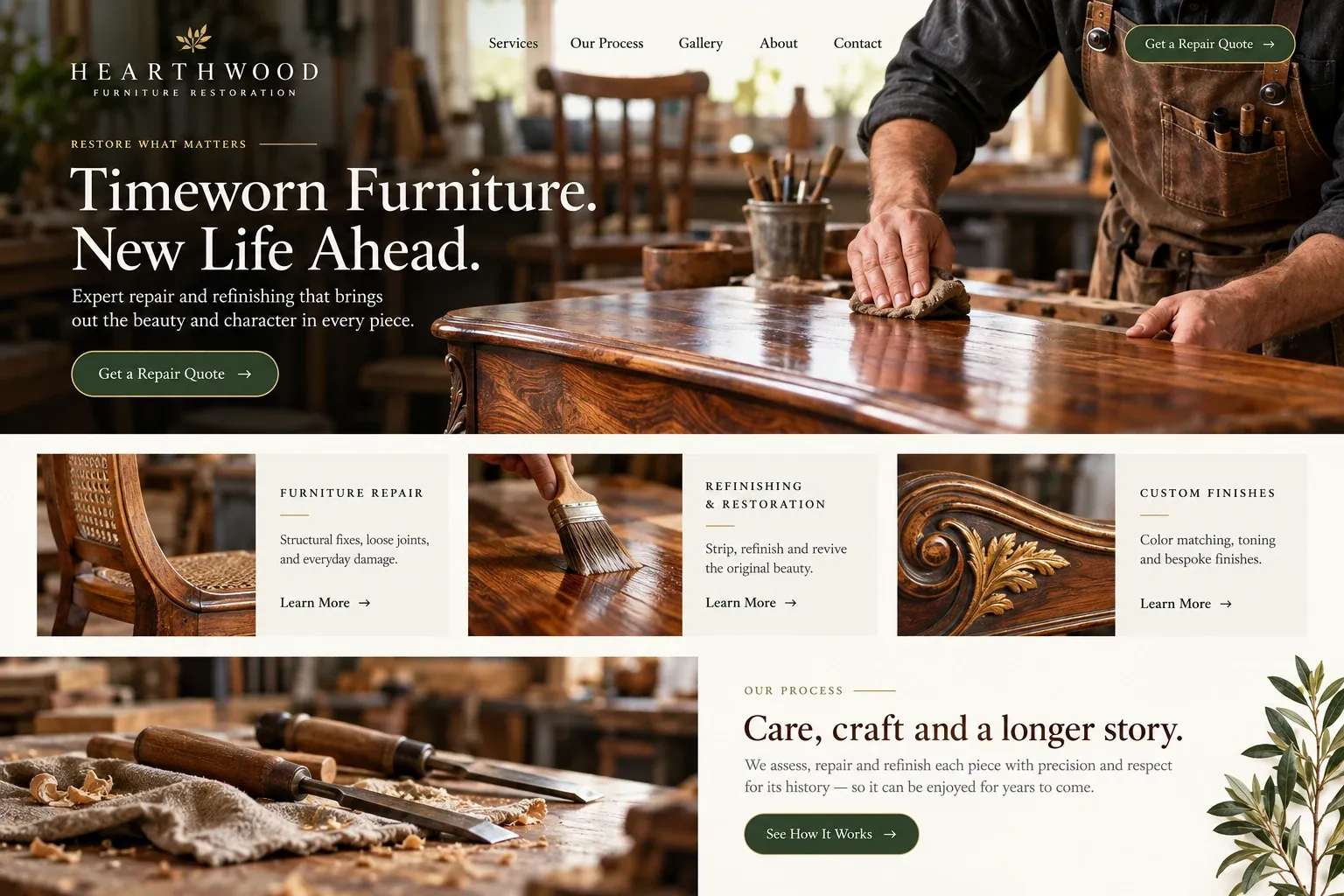
Fictional furniture repair and refinishing services website homepage design concept
A design concept for a fictional brand. Your site is designed from scratch around yours.

Your customer's story

A family table with a fresh gouge

The mahogany dining table belonged to Isabel's grandmother in Little Havana, and it has followed the family through three homes. This week it moves into Isabel's new condo in Brickell. When the movers pull off the blankets, there is a long gouge across one end of the top and a leg that rocks. The moving company tells her to get a written repair estimate for the claim.

That night she searches for furniture repair and refinishing. One site shows a showroom of new sofas. Another promises to make any piece look brand new, which is the last thing she wants. A third shows close-ups of repaired veneer and matched finishes beside photos of whole pieces, explains how it handles moving damage claims, and asks for photos of the damage and the size of the piece.

The restorer replies with questions about the finish and offers to visit, since the condo needs the service elevator booked anyway. Isabel never wanted the table to look new. She wants it to look like itself again, and the website that showed respect for old finishes and honest repairs is the one that makes her feel the table will be in careful hands.

Why it matters

Why furniture restorers need a website.

Furniture repair customers are deciding whether to trust a stranger with something that cannot be replaced, or at least not easily. They compare restorers by looking closely at past work: how a repair blends, whether an old finish was kept or stripped, how a joint was rebuilt. Movers and insurance adjusters also send people searching with a claim to settle. A marketplace listing with one photo and a star rating does not show the care they are looking for.

We build furniture restoration websites around close, honest proof. Each service, from structural repair and veneer work to refinishing, touch-ups, and moving damage, gets its own page with before and after photos at full and detail scale. A page explains how you assess condition and when you recommend a lighter touch. The inquiry form asks for photos, dimensions, and the history of the piece where the owner knows it.

What your customers search for

  • furniture repair near me
  • furniture refinishing Miami
  • antique furniture restoration
  • water ring on wood table
  • veneer repair
  • moving damage furniture repair

Your customers

What owners ask before handing over a piece of furniture

  • Will it still look like my piece?

    Restoration stories that explain what was kept, what was repaired, and why, so owners see you respect original finishes and character.

  • Can you match this finish?

    Close-up photos of touch-ups, color matching, and refinished surfaces beside the whole piece, so the quality is visible at the scale it matters.

  • Do you handle moving damage claims?

    A page explaining how you inspect damage for movers and insurers, what documents you provide, and whether you repair on site or in the shop.

  • How do I get a large piece to you?

    Pickup, delivery, and in-home repair options explained, including condo service elevators, the insurance certificates buildings request, and what fits in your van.

What we build

What a website for furniture restorers should include.

  • Restoration stories

    Project pages that follow one piece from damage to finished repair, with notes on the decisions made along the way.

  • Finish detail gallery

    Close-ups of veneer patches, color matches, and refinished tops next to full photos of each piece.

  • Condition assessment page

    How you judge whether a piece needs a touch-up, a repair, or a full refinish, and when you suggest leaving it alone.

  • Furniture photo inquiry

    Fields for the type of piece, dimensions, the damage, and any history, with uploads for several photos.

  • Moving claim repairs

    A dedicated page for movers, insurers, and owners settling a claim, explaining inspections and written repair estimates.

  • In-home and pickup options

    On-site touch-ups, pickup for shop work, and access notes for condo towers and gated communities.

Planning guide

What should a furniture repair and refinishing website show?

A furniture restorer's website has to earn trust with pictures and plain explanations. Owners want to see how you handle damage, finishes, and history before they let a cherished piece leave the house. We cover the pages a restoration business needs, the photos that convince, how owners should send a piece for review, and how the site helps local customers find you.

Give each kind of repair its own page

Owners search for the problem they see: water ring removal, wobbly chair repair, veneer repair, antique furniture refinishing, moving damage repair. A page for each lets you explain the work, show examples, and say what you do not take on. Add a page on how assessment works, an about page with your workshop and experience, and a contact page built around a photo inquiry.

Photograph the whole piece and the detail

A dresser photographed from across the room hides the work. Pair each full view with close-ups of the repaired corner, the matched grain, or the new finish catching the light. Short notes on what was decided, such as keeping an old patina or replacing a split rail, show your judgment. Use only your own work, and never retouch photos in a way that hides what the repair looks like in person.

Let photos start the conversation

Most furniture inquiries can begin with pictures. Ask for the type of piece, approximate dimensions, what happened, and several photos: the whole piece, the damage up close, and any maker's marks. Ask whether the repair is part of a moving or insurance claim, and whether the piece is in a house or a building with access rules. The request lands in your email ready for a reply.

Explain plainly what happens next: an estimate from photos when possible, a visit when not, and how pickup and delivery work. Owners relax when they know how the piece will be wrapped, moved, and stored while it sits in your workshop, and whom to call if they have a question along the way.

Reach owners, movers, and designers nearby

Restoration searches are local, and some of your best customers are not owners at all: moving companies, interior designers, and property managers. A page for each of these partners explains how you work with them. Keep your Google Business Profile accurate, add workshop photos, and ask happy clients for reviews that describe the piece. No site can promise rankings, yet clear service pages make you easier to match.
In your market

Furniture restoration in South Florida

Humidity is the quiet enemy of wood furniture here. It loosens joints, lifts veneer, and clouds finishes, while sun through big windows fades tops and arms. Condo moves are constant, with service elevators to book and buildings that ask vendors for insurance certificates. Mid-century pieces and family heirlooms from Cuba, Latin America, and up north turn up in many homes. Many owners prefer Spanish. We write pages that speak to these realities and can add a Spanish version of the site.

Questions

Questions furniture restorers ask us.

Should a furniture restorer show before and after photos?

Yes, and in pairs that include close-ups. A full before and after shows the transformation, while detail shots show the craft. Add a sentence about what was decided and why. Use only photos of your own work, and ask owners before showing anything that identifies their home.

Can people get a furniture repair estimate from photos?

Often, for simple damage. The inquiry form asks for photos of the whole piece and the damage, dimensions, and what happened, so you can reply with a rough idea or a request to see it. The site can say clearly which repairs you can estimate remotely and which need a visit.

Is it worth a separate page for moving damage furniture repairs?

If you take that work, yes. People searching after a move have a claim to settle and want a written estimate, photos, and a repair that satisfies the mover or insurer. A page that explains your inspection, paperwork, and on-site touch-ups speaks directly to them and to the moving companies who refer them.

How do we talk about antique furniture without overpromising?

Explain your approach rather than promising results. Say when you conserve an original finish, when you refinish, and that you will discuss how a repair might affect value. If you do not appraise furniture, say so and suggest the owner consult an appraiser. Honest limits read as expertise.

Let's talk

Ready for a website built for furniture restorers?

Tell us about your business and we will come back with a clear recommendation and a fixed quote. No pressure, no jargon.

Trades we design for

See all 226 trades

226 trades

  • Plumbers website design concept
CallFree quote