Web design for cybersecurity consultants

Cybersecurity consulting websites, clear without the alarm.

Most business owners know they should look at their security but have no idea what an assessment involves. The consultant who explains scope, method, and deliverables calmly is easier to invite to a first meeting.

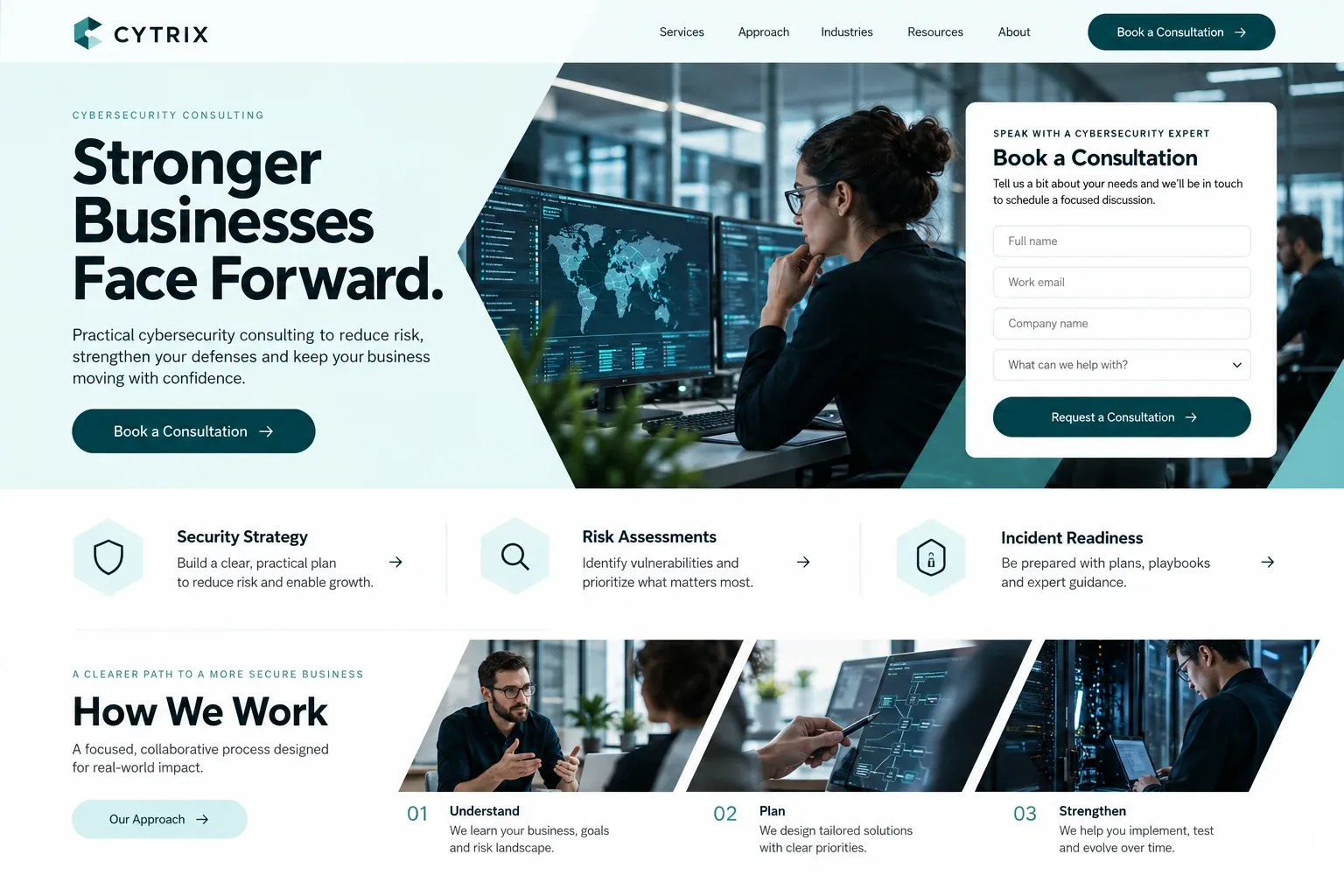
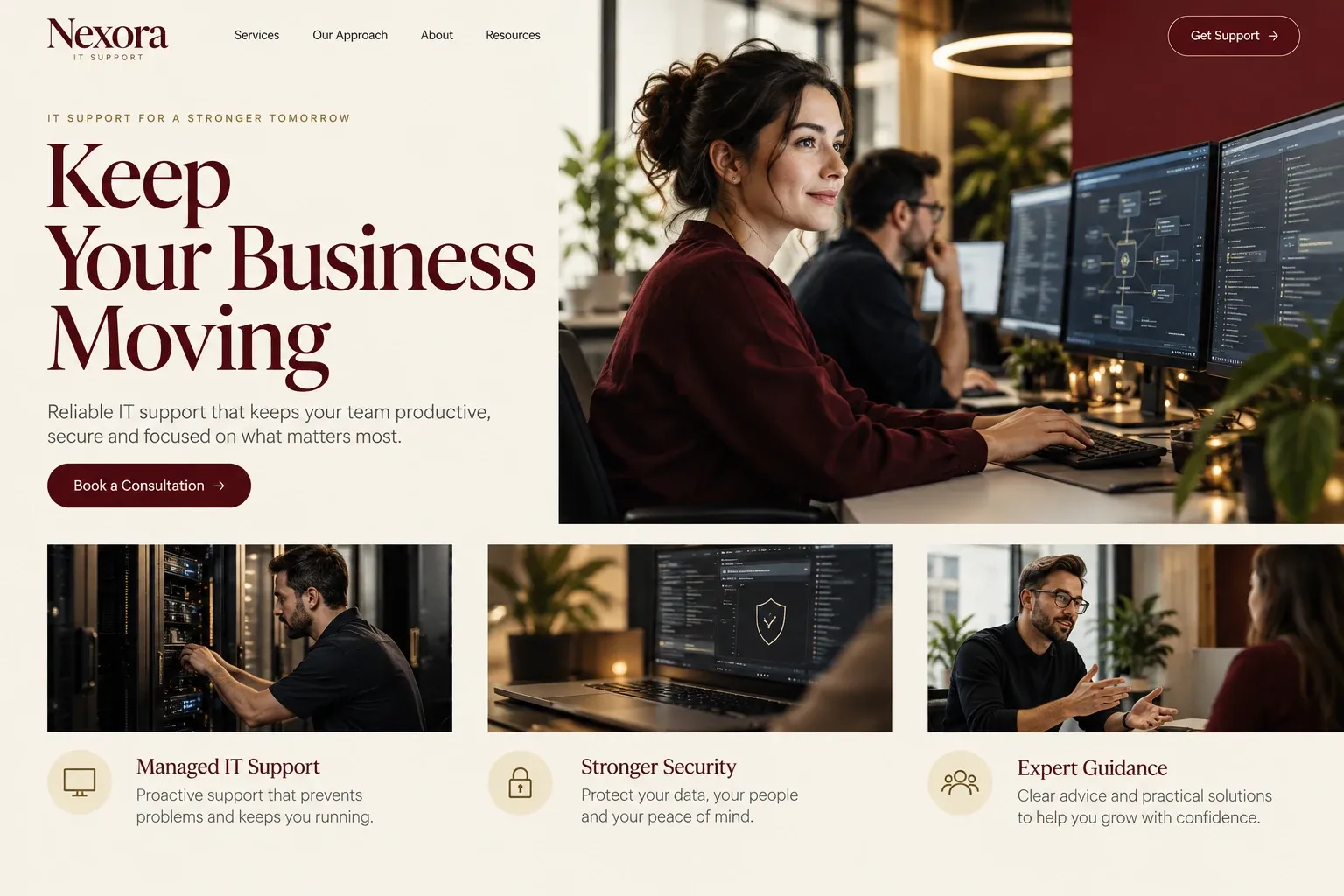
Fictional cybersecurity consultants website homepage design concept
A design concept for a fictional brand. Your site is designed from scratch around yours.

Your customer's story

A cyber insurance renewal asks hard questions

Helen owns an accounting firm with twelve staff, and this year the renewal form for her cyber insurance runs to six pages. It asks about multi-factor authentication, backups, phishing training, and whether anyone has tested her network. She can answer some of it. For the rest, her IT provider suggests getting an independent assessment, and Helen realizes she does not know what that means or what it involves.

The first consultant's site opens with a hooded figure and a counter of attacks per second. The second is a list of acronyms. Helen closes both. The third begins with a plain question, what are you trying to find out, and describes three kinds of engagement: a risk assessment, a vulnerability scan, and a penetration test, each with what is examined and what the client receives.

There is a sample report outline, the consultant's certifications with links to verify them, and a short form that asks about company size and goals, never about passwords or known weaknesses. Helen books a call for Thursday. A cybersecurity consultant's website should feel like that third site: specific, calm, and honest about what an engagement can and cannot tell a business.

Why it matters

Why cybersecurity consultants need a website.

Security consulting is bought on trust, often by people who cannot judge the technical work directly. They arrive from a referral, an insurer's requirement, a client's vendor questionnaire, or a scare, and they look for signs that you are both competent and level-headed. A LinkedIn profile lists credentials but cannot explain an engagement. Fear-driven marketing pushes careful buyers away. A clear website gives them the vocabulary to ask for the right service.

We build cybersecurity consulting sites with a measured tone and a clear structure. Each service gets its own page describing scope, method, timeline factors, and deliverables. Your background is presented with credentials visitors can verify. A sample report outline shows what the client walks away with. The consultation form asks about the organization and its goals, and it never invites anyone to describe vulnerabilities or share credentials over the open web.

What your customers search for

  • cybersecurity consultant for businesses
  • penetration testing services
  • cybersecurity risk assessment
  • vCISO services
  • security assessment for cyber insurance
  • phishing awareness training

Your customers

What clients need to know before hiring a cybersecurity consultant

  • Which assessment do we actually need?

    A plain comparison of risk assessments, vulnerability scans, penetration tests, and policy reviews, with the question each one answers for a business.

  • Are you qualified?

    Your certifications, such as CISSP or OSCP where held, with verification links, plus the kinds of environments you have worked in, described without naming clients.

  • What will we receive at the end?

    A sample report outline showing the executive summary, findings ranked by severity, and recommended next steps, so buyers know what they are paying for.

  • Will this disrupt our business?

    Notes on how testing is scheduled, which systems are in scope, how access is agreed in writing, and how you avoid interrupting daily work.

What we build

What a website for cybersecurity consultants should include.

  • Assessment scope pages

    One page per engagement type, describing what is examined, what is excluded, and what the client needs to provide.

  • Verifiable credentials

    Certifications and memberships listed with links to the issuing body where it offers public verification.

  • Sample report outline

    A redacted or mock table of contents showing how findings, severity, and recommendations are presented to leadership.

  • Engagement stages

    Scoping call, written authorization, testing window, report, and debrief, shown in order so buyers can plan around them.

  • Careful consultation form

    Company size, industry, goals, and deadlines only, with a note asking visitors not to send sensitive details through it.

  • Plain-language resources

    Short explainers on common topics, such as phishing or backups, that show your expertise without fear tactics.

Planning guide

What should a cybersecurity consultant's website say, and leave out?

A security consultant's site has an unusual job: build confidence in your skill without frightening people or hinting at promises nobody can keep. Buyers want specifics, delivered calmly. The four parts below cover how to define your services, how to present credentials and reports, how to handle first contact safely, and how organizations that need you can find you.

Define each engagement in plain terms

Many buyers use "pen test", "audit", and "assessment" interchangeably. Give each service its own page and start with the question it answers: where are we exposed, can someone get in, are our policies sound, are we ready for an incident. Then describe scope, method at a high level, what the client must provide, and what is delivered. Note what affects timing rather than promising dates.

Let credentials and sample reports speak

Security buyers check backgrounds. List certifications you hold with links to verify them, describe the environments you have worked in, and mention speaking, published research, or community work if it is real. Client names are often confidential, so describe engagements by industry and size instead. Never imply affiliations or endorsements you do not have; this audience notices.

A sample report outline is one of the most useful things you can publish. Show the structure: an executive summary written for owners, findings with severity ratings, evidence, and practical remediation steps. Use a mock company or heavy redaction. It answers the buyer's silent question, what am I paying for, and it sets you apart from consultants who only list services.

Keep first contact simple and safe

The consultation form should ask about the organization, its size and industry, what prompted the inquiry, and any deadline, such as an insurance renewal or a client audit. Add a visible note asking visitors not to submit passwords, network details, or descriptions of an active incident. For incidents in progress, give a phone number and say plainly whether you offer incident response at all.

Be found by the people who need you

Buyers search for the service or the trigger: "penetration testing for businesses", "cybersecurity assessment for insurance", "vCISO services". Service pages named that way give search engines clear topics. Short articles answering real client questions help too, as long as they are accurate and calm. Since much of this work can be done remotely, your site can serve clients across the country. Keep a Google Business Profile as well, because some buyers still prefer someone nearby.
In your market

Built for security consultants who work nationwide

Cybersecurity consulting rarely depends on geography. Assessments, policy work, and many tests can be run remotely, so a consultant in one city may serve clients in several states or countries. Buyers compare you with firms everywhere, which makes clarity and credibility on your own site matter more than location. We are based in Miami, and we work with security consultants in any city by video call, phone, and email. A Spanish version is available for firms with clients in Latin America.

Questions

Questions cybersecurity consultants ask us.

How much technical detail should a cybersecurity consultant's website include?

Enough to show competence, not so much that owners get lost. We lead each page with the business question, then describe method and deliverables in plain terms, with a short technical section for IT staff who want it. That way the owner and the IT lead can both read the same page and agree.

Can we show past security engagements without breaking confidentiality?

Yes, by describing them generally: the industry, the size of the organization, the type of engagement, and the kind of outcome, such as a prioritized remediation plan, without names or specific findings. Use only what your agreements allow. Many consultants also publish a mock report so buyers see the format without any client data.

Should a security consultant's contact form be different from a normal one?

A little. It should ask only for contact details and general context, and it should say clearly that visitors must not send passwords, network diagrams, or incident details through it. The form emails you a short summary. Anything sensitive moves to a channel you choose after the first call.

How do we write about cyber threats without using scare tactics?

Describe risks the way you would to a client across the table: what tends to happen, how it is usually prevented, and what a reasonable next step looks like. Skip attack counters, dramatic imagery, and promises of total protection. A calm, specific site reads as more expert, and you approve every sentence before launch.

Let's talk

Ready for a website built for cybersecurity consultants?

Tell us about your business and we will come back with a clear recommendation and a fixed quote. No pressure, no jargon.

Trades we design for

See all 226 trades

226 trades

  • Plumbers website design concept
CallFree quote