Web design for land surveyors

Websites that help clients order the right survey.

Nobody plans to need a land surveyor. The request comes from a title company, a lender, a building department, or an insurer, usually with a deadline, and the client rarely knows which survey to ask for.

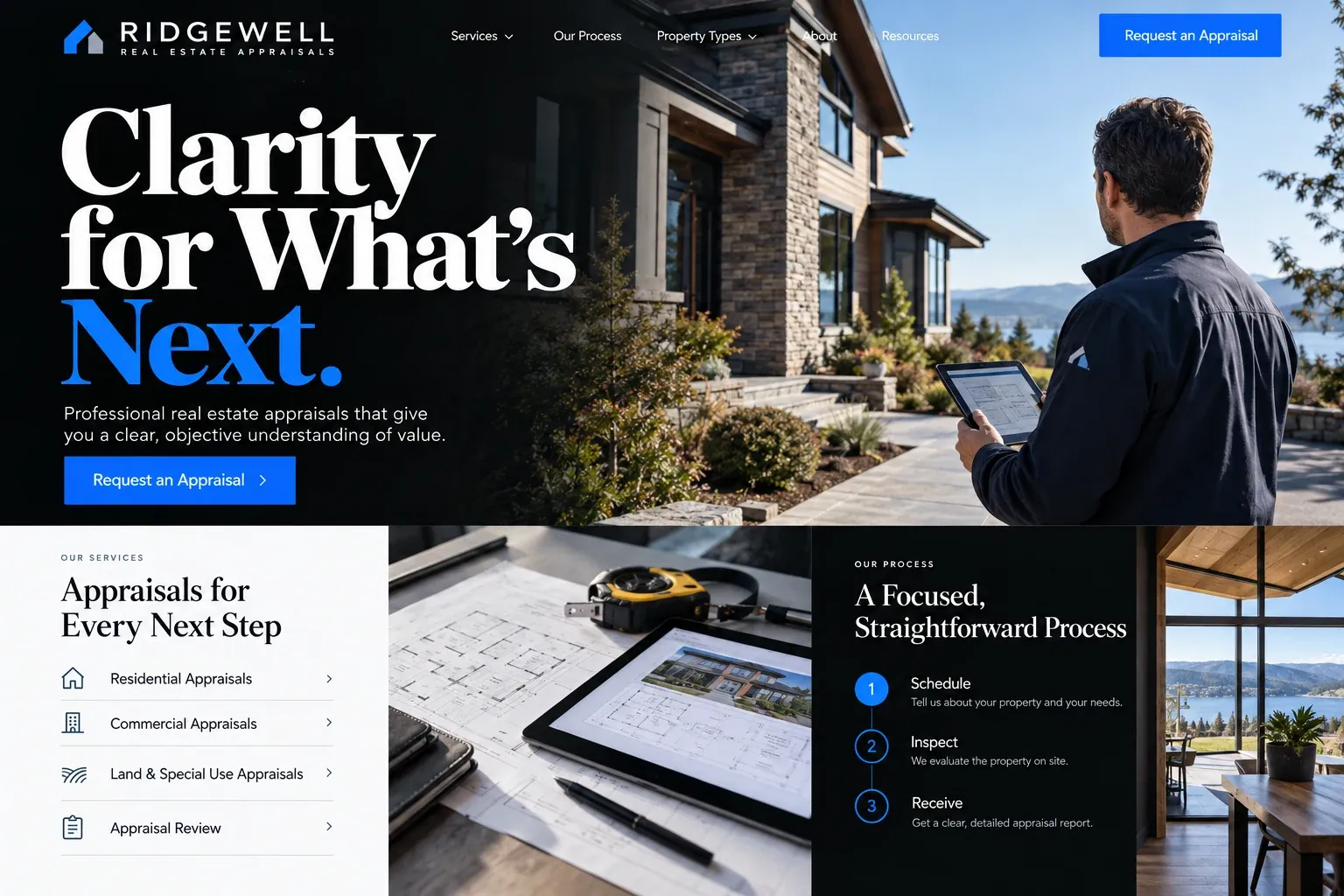
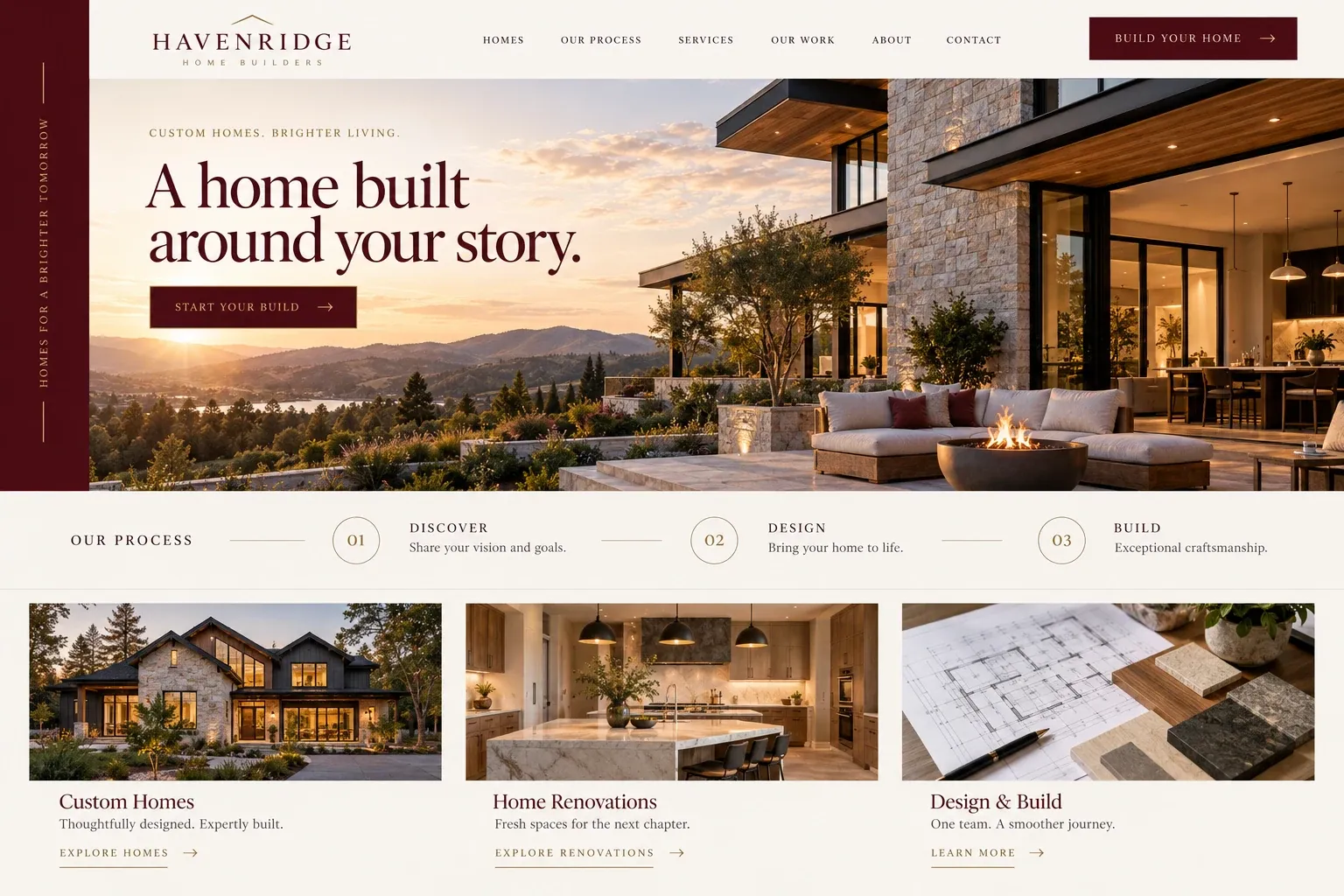
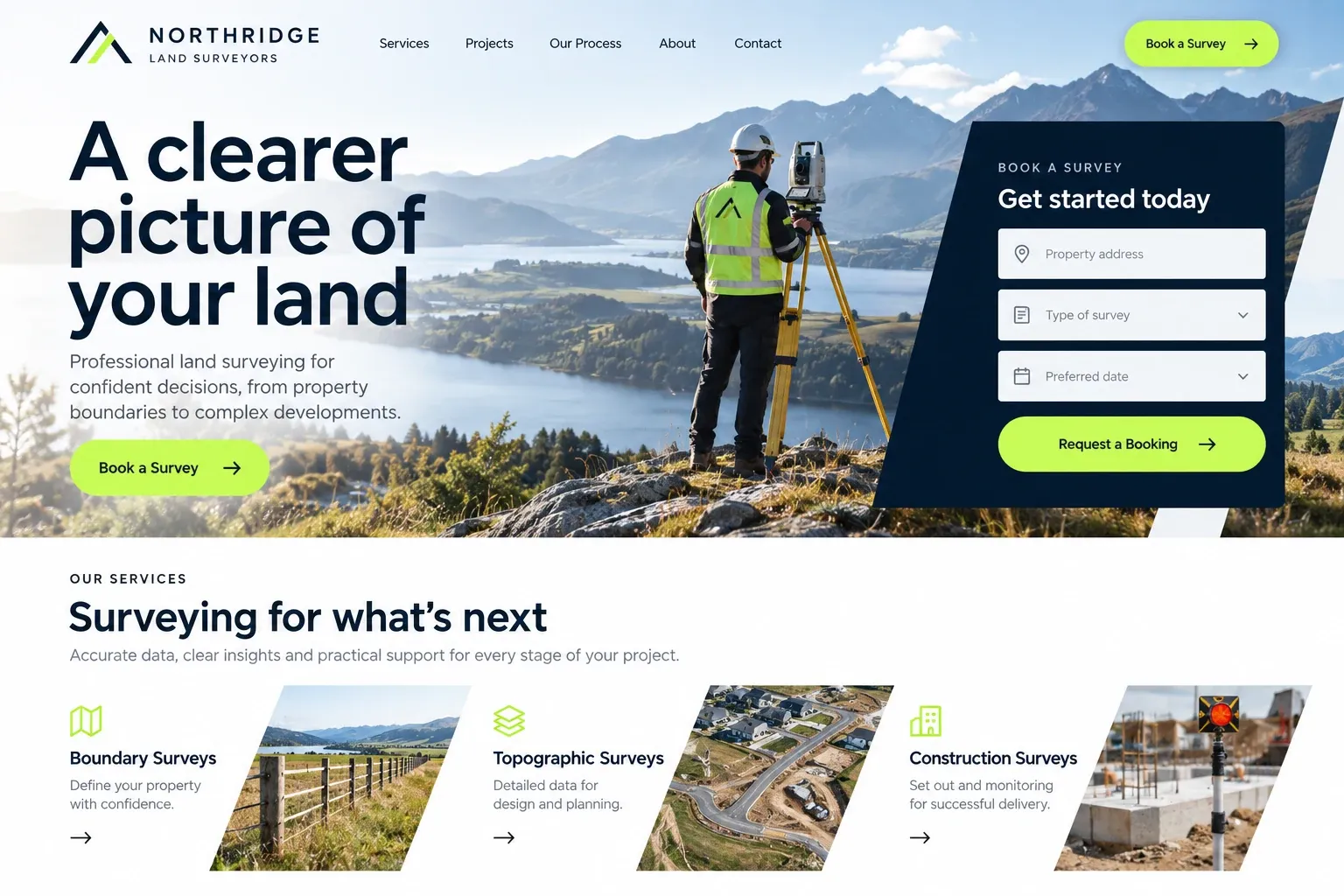
Fictional land surveyors website homepage design concept
A design concept for a fictional brand. Your site is designed from scratch around yours.

Your customer's story

Closing soon and asked for two surveys

Andre and Keisha are buying their first house, a 1950s ranch in Miami Shores, and the closing date is close. Their insurance agent emails to say an elevation certificate could change the flood quote. The same afternoon the title company asks whether they want a new boundary survey. Keisha writes both terms on a sticky note and searches them on her phone in the parking lot at work.

The first surveying sites she finds list services in single words with no explanation. One asks her to call during business hours, which she cannot do from her desk. Then she lands on a surveyor whose site has a page for each survey, written for people buying a home. It explains what each one shows, who usually asks for it, and what to send.

Its request form asks for the address, the purpose, the closing date, and the title company's contact, and lets her attach the old survey from the seller. She sends it before her break ends. A surveyor's website helps most when it turns a confusing instruction from a third party into a clear request, so the field crew arrives knowing exactly what the job is.

Why it matters

Why land surveyors need a website.

Survey work is triggered by someone else's requirement: a closing, a permit, a flood policy, a fence dispute, a construction schedule. The person searching often has the name of a document and little else. Contractors and engineers know what they need, but homeowners and small developers often do not. A directory listing cannot explain the difference between a boundary survey and an elevation certificate, and it cannot collect the details your office needs to quote.

We build surveying sites around the survey types you offer, each explained in plain language with who usually requests it and what it does and does not show. Your professional licenses and the counties you cover appear on every page. Professional clients get a direct way to send plans and drawings, while homeowners get a request form that asks for the site, the purpose, and the deadline.

What your customers search for

  • land surveyor near me
  • elevation certificate Miami
  • boundary survey cost
  • survey for closing on a house
  • topographic survey Miami-Dade
  • as-built survey

Your customers

What owners and builders ask a surveyor first

  • Which survey do I actually need?

    Plain pages for boundary, elevation certificate, topographic, as-built, and construction layout work, each saying who usually asks for it and why.

  • Can you meet my closing date?

    An honest note on how you schedule field work and what affects it, with a place on the form to state the deadline.

  • Are you licensed for this?

    Your surveyor licenses, the firm's details, and the counties you work in, shown in the footer and on the about page.

  • What should I send you?

    A short list on each survey page: the legal description, a prior survey, the title commitment, or the plans, depending on the job.

What we build

What a website for land surveyors should include.

  • Survey type pages

    Boundary, ALTA/NSPS, elevation certificates, topographic, tree, and as-built surveys, each explained for the person who has to order it.

  • Site-and-purpose request

    A form that asks for the address or folio number, the reason for the survey, the deadline, and who requested it.

  • Document upload

    Room to attach an old survey, a title commitment, or site plans, so the office can research before the crew goes out.

  • Project settings

    Separate pages for residential closings, construction and development, and commercial sites, since each client brings different questions and documents.

  • Licenses and coverage

    License numbers, insurance, and the counties you serve, visible on every page for title companies and contractors checking a new vendor.

  • Professional client page

    A page for engineers, architects, builders, and title agents with how to send files, typical deliverables, and a direct office contact.

Planning guide

How should a land surveying firm structure its website?

A surveying website serves two very different visitors: professionals who know exactly what they want and homeowners holding a request they do not understand. Good structure serves both without slowing either one down. These are the pages, proof, request routes, and local search basics we plan for a surveying firm.

Explain each survey in plain terms

Give each survey type its own page. Say what it shows, who usually requires it, and what it does not do: an elevation certificate does not mark a property line, and a boundary survey is not a topographic map. Add a short list of documents that help. Keep the language careful, since website copy describes your services and never defines a boundary on its own.

Prove the firm is licensed and local

Title companies, lenders, and contractors check a surveyor before they rely on the work. Show the license numbers of your surveyors, the firm's details, your insurance, and the counties you cover. Photos of your crews and equipment in the field are better proof than stock images of a tripod at sunset. If you can show sample deliverables with client details removed, a redacted survey drawing shows the quality of your drafting.

Build the request form around the purpose

The best surveying forms ask why before what. Start with the purpose: a closing, a permit, a flood policy, a design, a dispute. Then ask for the address or parcel number, the deadline, who requested the survey, and whether a prior survey exists. Let clients attach files. These answers let your office research records and quote accurately before anyone drives to the site.

Professional clients need a quicker lane. A page for engineers, architects, builders, and title agents can explain how to send plans and title work, what formats you deliver, and who to call in the office. Repeat clients should never have to fill in the homeowner form to reorder a familiar, routine service.

Show up for the survey people search

People search for the exact document they were told to get: elevation certificate Miami, boundary survey near me, survey for a fence permit. Pages built around those services, plus the counties and cities you work in, give search engines clear matches. Keep your business details consistent with your Google Business Profile and invite title agents and homeowners to leave reviews. Rankings are never certain, but this structure gives a qualified surveyor a fair chance to be found.

In your market

Built for surveying in South Florida

Surveying here is shaped by water. Much of the region sits in flood zones, so elevation certificates come up in insurance quotes, permits, and sales. Low ground, canals, seawalls, and coastal setbacks all matter, and older neighborhoods may have plats and records that need careful research. Tree surveys can be part of the permit process as well. Many clients prefer to communicate in Spanish. We write pages that explain these services clearly and can add a Spanish version.

Questions

Questions land surveyors ask us.

Should a surveying website explain the difference between survey types?

Yes, because many clients do not know it. A homeowner told to get an elevation certificate may ask for a boundary survey instead. Short pages for each service, saying what it shows and who usually requires it, help people request the right one and save your office a round of clarifying calls.

Can clients send us old surveys and title documents through the site?

Yes. The request form can accept attachments such as a prior survey, a title commitment, or site plans, and sends them with the request to your email. Very large plan sets are better shared by a file link, and the professional client page can explain how to send them.

Should our survey drawings appear on the website?

Selected samples can help, especially for engineers and developers judging your drafting. Remove client names, addresses, and anything else identifying, and choose drawings you are comfortable showing publicly. Field photos of your crews at work are also useful and need no redaction beyond keeping homes and license plates out of focus.

Do we need a page for elevation certificates specifically?

In South Florida many people search for this service by name, so a dedicated page makes sense. Explain who asks for one, such as insurers, lenders, or building departments, what the certificate records, and what the homeowner should have ready. Link it to your request form with the purpose already selected.

Let's talk

Ready for a website built for land surveyors?

Tell us about your business and we will come back with a clear recommendation and a fixed quote. No pressure, no jargon.

Trades we design for

See all 226 trades

226 trades

  • Plumbers website design concept
CallFree quote