Web design for fence contractors

Fence websites that show the yard, not just the panels.

Nobody buys a fence for its own sake. A family wants privacy without feeling boxed in, a pool owner needs a barrier, a warehouse needs a secure perimeter, and each wants to see the gate they will use every day.

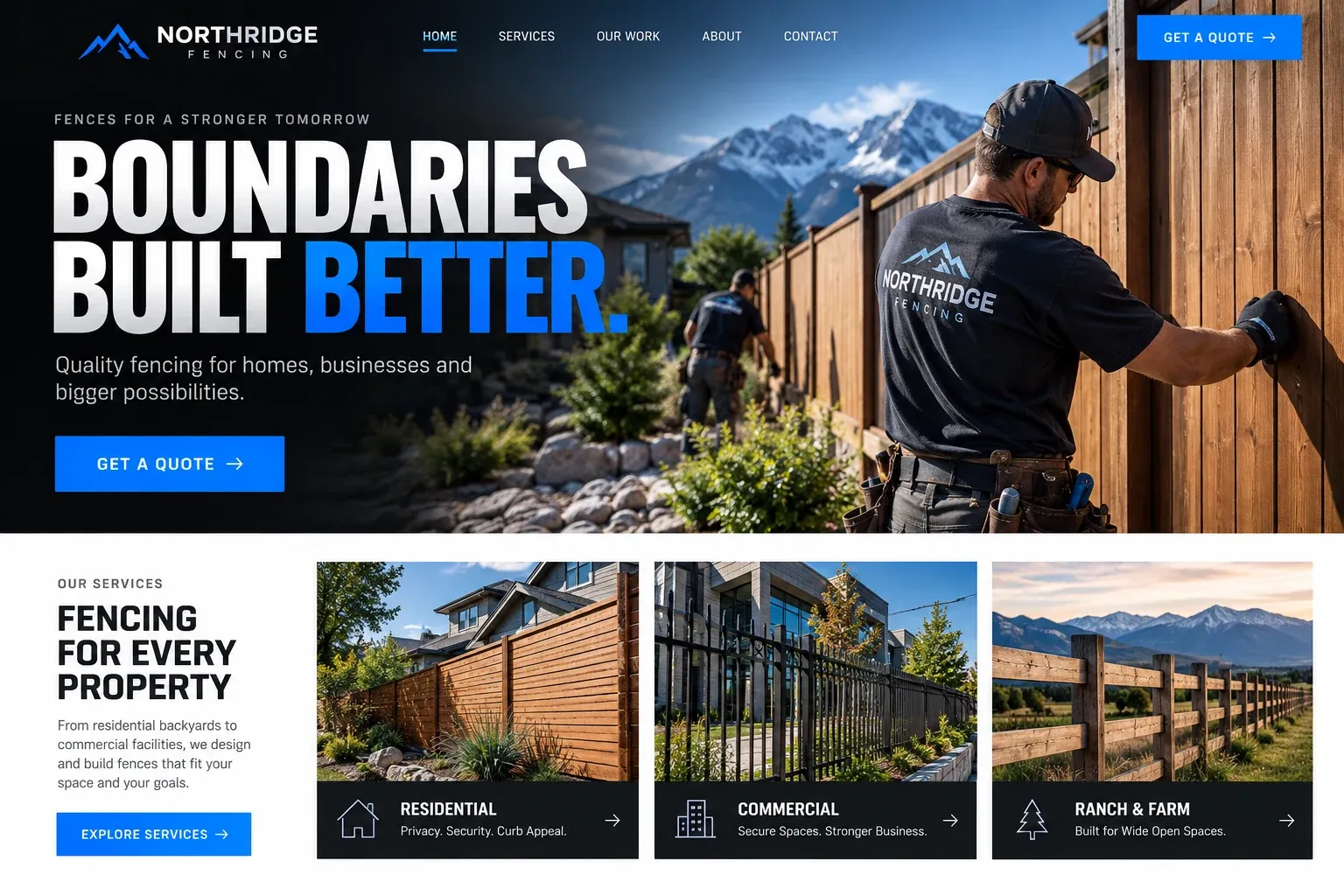
Fictional fence contractors website homepage design concept
A design concept for a fictional brand. Your site is designed from scratch around yours.

Your customer's story

When the hedge next door comes down

For years Elena's backyard felt private, thanks to a thick hedge along the property line. Then the new neighbors tear it out, and suddenly their patio looks straight into hers, where the kids swim and her husband grills. She wants a fence, tall enough to matter, but she also wants the yard to feel open, not boxed in. And the boat trailer still has to get through.

She searches "privacy fence installation near me" and scrolls. Most fence sites show long, straight runs of identical panels photographed from the end, which tell her nothing about how a fence feels from a patio chair. One contractor sorts its work by purpose: privacy, decorative, pool, and commercial. Its photos show whole yards, horizontal slat designs that let the breeze through, and wide double gates.

Its estimate form asks the approximate length, whether the ground is level, how many gates and how wide, what the fence is for, and whether a homeowners association must approve it. Elena answers between soccer practice and dinner. A fence contractor's website wins families like hers by showing how a boundary changes the life inside it, gate and all.

Why it matters

Why fence contractors need a website.

Fence buyers start with a purpose, not a product: privacy from new neighbors, a barrier around a pool, a place for the dog to run, security for a lot full of equipment. They compare materials, heights, and styles, and they worry about property lines, permits, and association rules. A directory listing shows a phone number and a star rating. It cannot show gates, corners, or how a fence sits in a real yard.

We build fence contractor websites organized by purpose. Privacy, decorative, pool, pet, and commercial fencing each get a page with photos of whole yards and properties, not just panels. A materials page compares wood, vinyl, aluminum, and chain link in plain words. Gate close-ups get their own gallery. The estimate form asks length, terrain, gates, and intended use, so your quote starts from the actual property.

What your customers search for

  • fence company near me
  • privacy fence installation Miami
  • aluminum pool fence
  • vinyl fence installation
  • chain link fence for business
  • wood shadowbox fence

Your customers

What property owners ask before hiring a fence contractor

  • Which fence fits what we need?

    Pages organized by purpose, from privacy and pool barriers to pets and security, each showing materials and heights that suit it in real yards.

  • Where exactly is my property line?

    A plain note on how you work from surveys, why the owner should confirm boundaries, and how you handle fences shared with neighbors.

  • Will the gate be wide enough?

    A gallery of gates you have built, with widths, hardware, and latches noted, so owners can plan for mowers, boats, and vehicles.

  • Do we need a permit or association approval?

    A short page stating what you handle, such as permit applications, and what owners usually arrange, such as association approval and a recent survey.

What we build

What a website for fence contractors should include.

  • Purpose-based fence options

    Privacy, decorative, pool, pet, and commercial fencing on separate pages, each with photos of complete yards and properties.

  • Gate detail gallery

    Single, double, and sliding gates shown up close, with hinges, latches, and the transitions where fence meets house or wall.

  • Terrain considerations

    How you handle slopes, roots, rock, and drainage along a fence line, explained with photos from real installs.

  • Boundary estimate form

    Owners give approximate length, terrain, number and width of gates, intended use, and any association rules, with photos attached.

  • Materials compared

    Wood, vinyl, aluminum, and chain link described by look, upkeep, and how each stands up to your local weather.

  • Commercial and security fencing

    A separate section for businesses, with perimeter fencing, access gates, and photos of lots, yards, and storage areas.

Planning guide

What should fence contractors put on their website?

A fence changes how a property is used every day, and buyers know it. A fence contractor's website should help them match a fence to a purpose, see gates and details up close, and send the facts you need for an estimate. Here is how to plan the pages, the photos, the form, and the local search basics.

Organize fences by what they are for

Owners rarely start with "aluminum picket" or "board on board". They start with privacy, a pool, a dog, or security. Build your main pages around those purposes, and within each, show the materials and heights you recommend. Add a materials comparison, a gate gallery, a commercial section if you serve businesses, and a contact page with the areas you install in. Each purpose page should end with its own estimate button.

Photograph gates, corners, and whole yards

Long straight runs all look alike. The details that sell a fence are the gate, the corner, the post set beside a tree root, the transition to the house or a neighbor's wall. Photograph those up close, then step back and shoot the whole yard from where the family sits. That second photo shows privacy and openness better than any description.

For commercial jobs, show the perimeter and the access points: rolling gates, pedestrian gates, and how the fence handles a slope or a drainage swale. Caption each project with the material, height, and purpose, and use only your own work. A few honest photos beat a large gallery of stock fences.

Ask about the boundary before the visit

A useful fence estimate starts with a few facts: the approximate length, how level the ground is, how many gates and how wide, what the fence is for, and whether a survey, permit, or association approval is involved. Put those questions on the estimate form, let owners upload a survey or a sketch, and make your phone number easy to tap for owners who prefer a conversation.

Help local owners find the right fence

Fence searches mix purpose, material, and place: "privacy fence installation", "aluminum pool fence", "chain link fence for business", "fence company near me". Purpose and material pages give Google specific topics to match. Name the cities you serve, keep your Google Business Profile in line with the site, and ask customers for reviews with a photo of the finished fence. None of it promises a ranking, but it gives good work room to be found.

In your market

Built for fencing in South Florida

Fences here face sun, salt air, termites, and hurricane winds, so customers ask hard questions about aluminum, vinyl, and treated wood. Pools are everywhere, and pool barriers come with their own safety requirements and local rules. Many neighborhoods have homeowners associations that approve height, style, and color, and permits are common. Limestone close to the surface in many areas turns post holes into a job of their own. We build pages that answer these questions plainly, in Spanish too.

Questions

Questions fence contractors ask us.

Should a fence company organize its website by material or by purpose?

By purpose first, because that is how many owners think: privacy, pool, pets, decoration, security. Within each purpose page, show the materials and heights you recommend. A separate materials page then compares wood, vinyl, aluminum, and chain link for visitors who already know what they want.

How should our fence website handle property lines and surveys?

Carefully and generally. A short page can explain that you work from the owner's survey, that boundaries should be confirmed before installation, and how you handle shared fences with neighbors. We avoid legal statements, and you approve the wording so it matches how your company actually works.

Can customers upload a survey or sketch with a fence estimate request?

Yes. The estimate form accepts surveys, sketches, and yard photos, along with approximate length, terrain, gates, intended use, and any association rules. It arrives in your inbox complete, so you can rough out the job before the site visit and arrive with a layout in mind.

Do pool fences need their own page on a fence contractor's site?

If you build them, yes. Pool owners search for them specifically and want to see self-closing gates, latch heights, and how the fence meets the house and screen enclosure. We describe your work accurately and avoid quoting code, since requirements vary by location and the owner should confirm them.

Let's talk

Ready for a website built for fence contractors?

Tell us about your business and we will come back with a clear recommendation and a fixed quote. No pressure, no jargon.

Trades we design for

See all 226 trades

226 trades

  • Plumbers website design concept
CallFree quote