Web design for accounting and CPA firms

Websites for accountants and CPA firms.

Business owners rarely switch accountants on a whim. Something changes first: a bigger tax bill, a new partner, a loan application, a move to Florida. Then they look for a firm that clearly works with businesses at their stage.

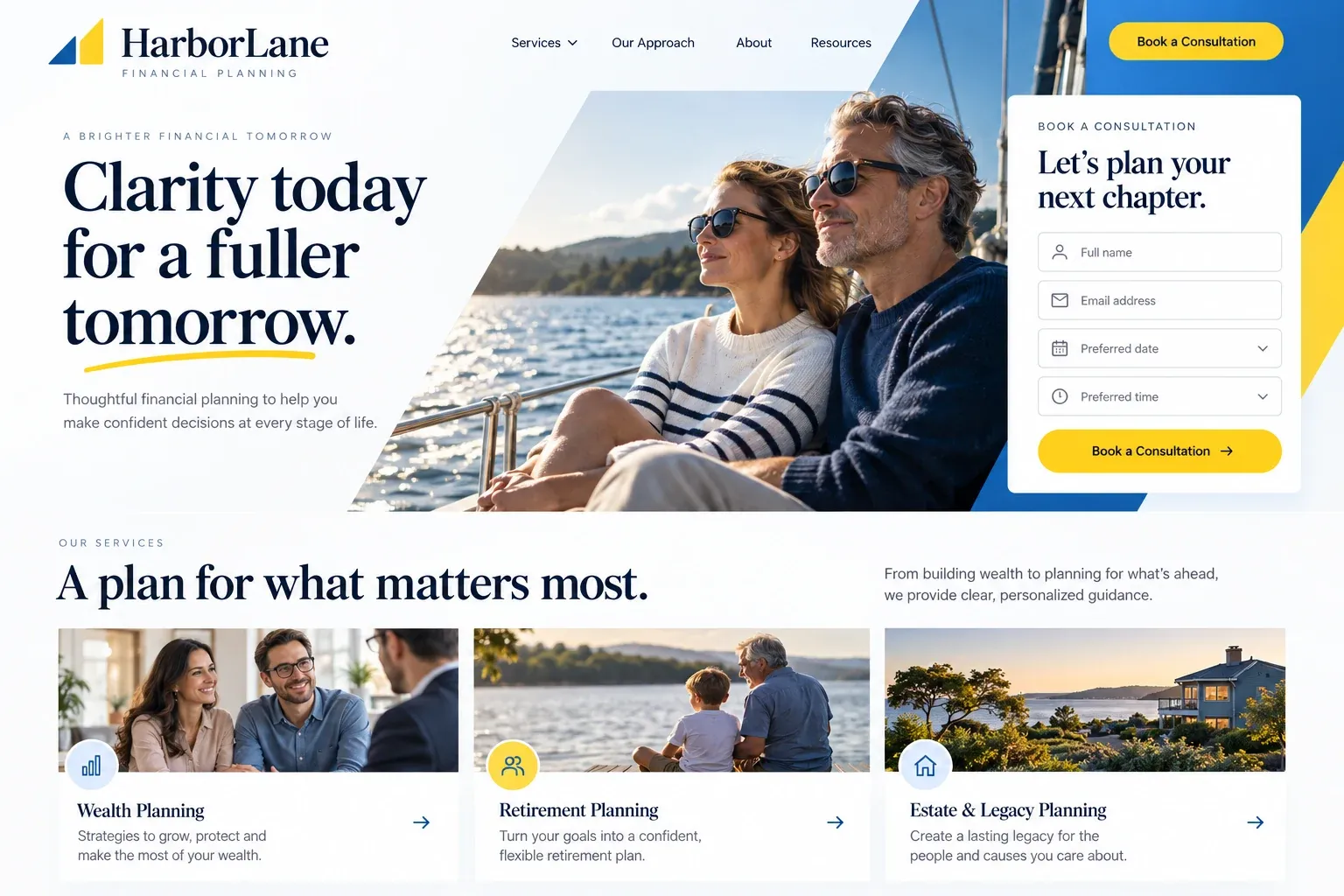
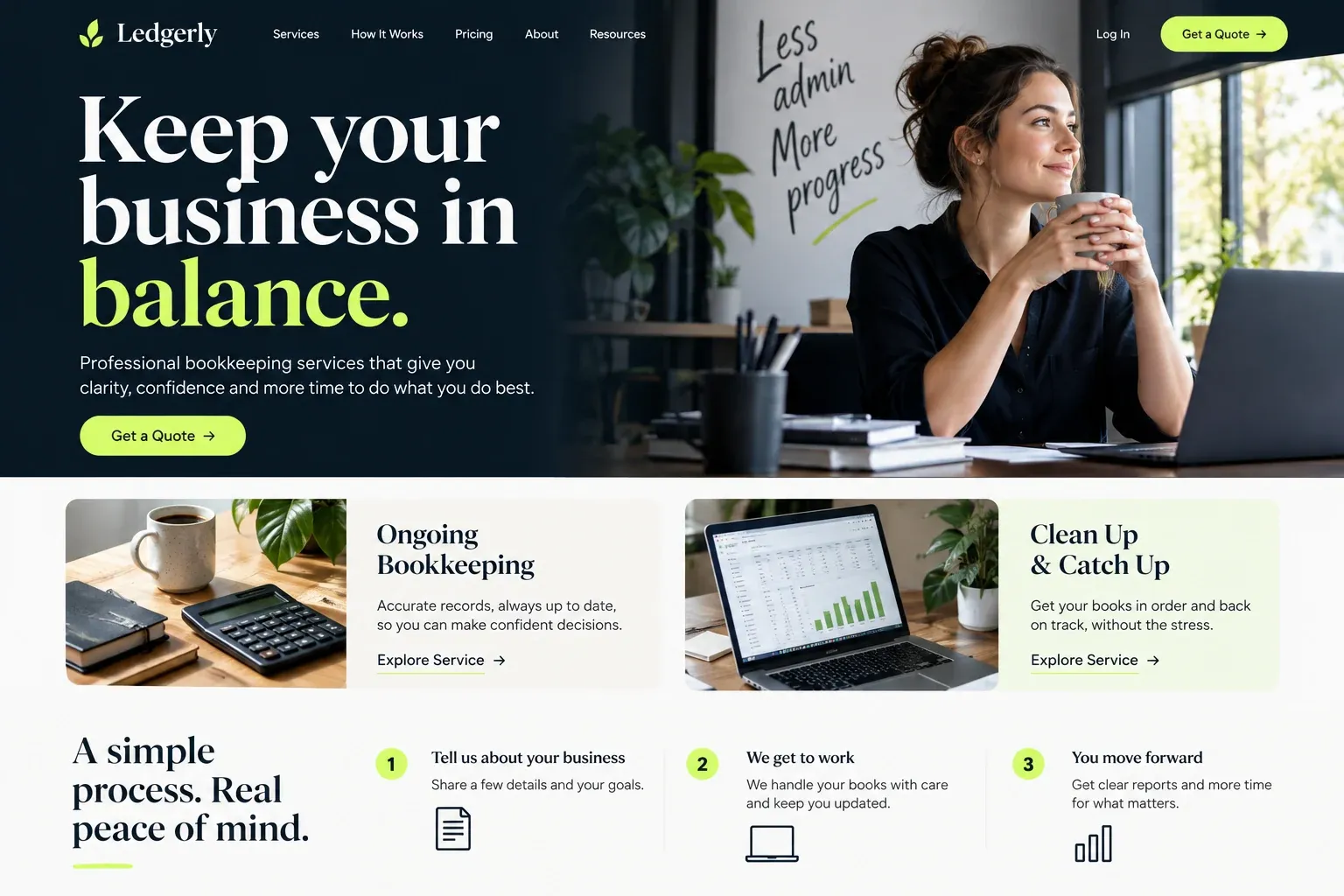
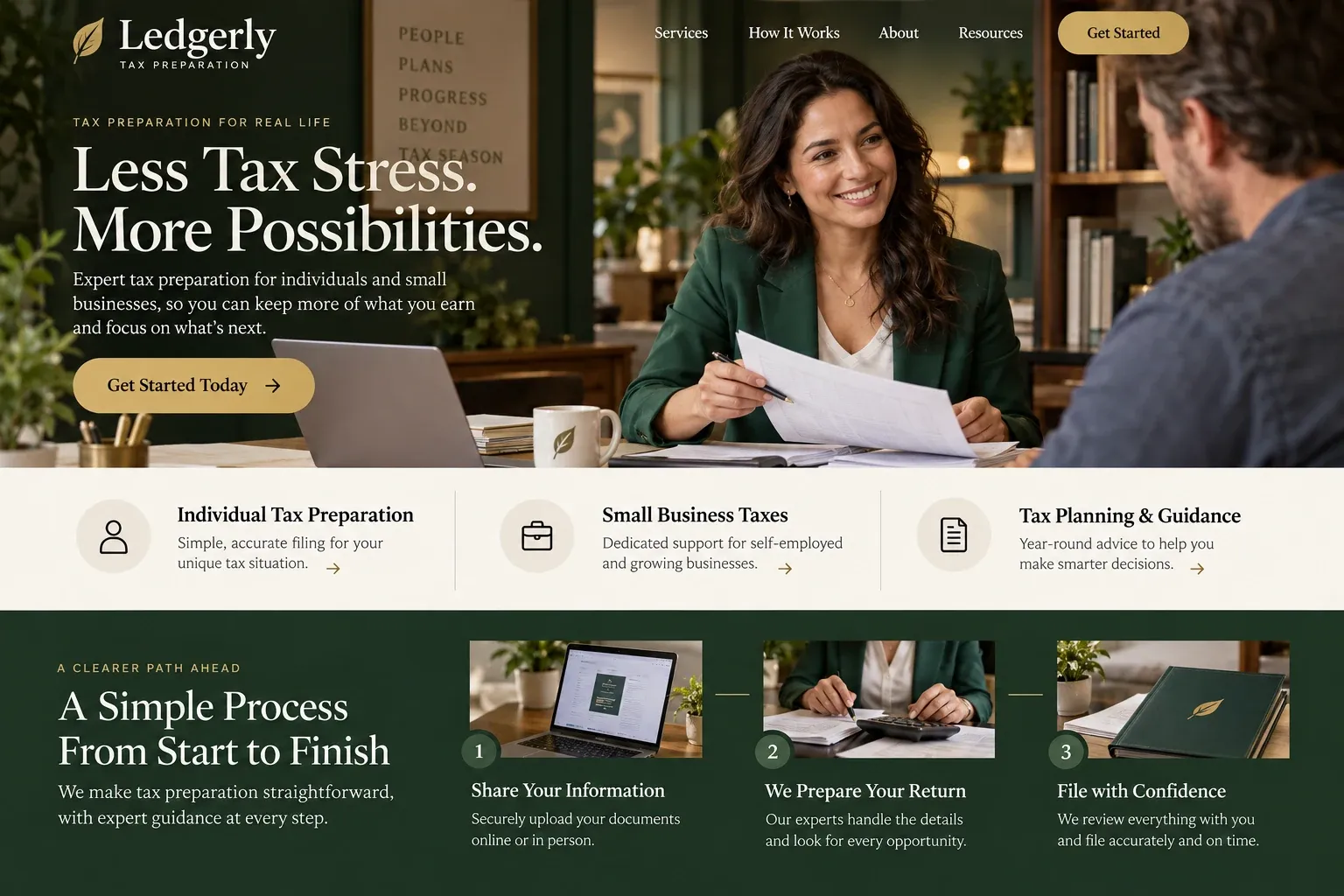
Fictional accountants and cpa firms website homepage design concept
A design concept for a fictional brand. Your site is designed from scratch around yours.

Your customer's story

When the old accountant stops returning calls

Rafael's flooring company has doubled its crews in two years. He still sends everything to the same preparer who did his first return, a friendly man who now takes three weeks to answer an email. This spring the bank asks for reviewed financial statements before it will extend a line of credit, and Rafael realizes he does not know what that means or who produces them.

He searches "CPA for construction companies Miami" on his lunch break. Most firm websites show a handshake photo and a list of services that reads like a course catalog: audit, attest, tax, advisory. One firm sorts its site by who the client is. Under contractors, it explains year-round bookkeeping support, tax planning, and financial statements for lenders and bonding, and names the partner who leads that work.

There is also a page on how a new engagement starts: an introductory call, a review of last year's returns, a signed engagement letter, and a secure portal for documents. Rafael books the call that evening. An accounting firm's website wins clients like him by showing which businesses it serves, who they will work with, and what the first month of the relationship looks like.

Why it matters

Why accounting and CPA firms need a website.

People choose an accountant for years, not for one job, so they compare carefully. A restaurant owner wants someone who knows tips and sales tax; a physician wants help with a practice and personal returns; a family that just moved from New York wants help with the year of the move. They look for a firm that names their situation and the person they will deal with. A directory listing shows credentials and a phone number, not the working relationship.

We build accounting websites around client types and the way your engagements actually run. Each kind of client you serve gets a page that describes their usual needs and the services that fit. Partners and staff get profiles with credentials and specialties. A clear onboarding page explains engagement letters, document exchange through your portal, and how you communicate, and the inquiry form asks about the business, never for tax or account details.

What your customers search for

  • cpa near me
  • accountant for business owners Miami
  • cpa firm Miami
  • tax planning for business owners
  • accountant for contractors
  • reviewed financial statements for bank loan

Your customers

What business owners weigh before hiring an accounting firm

  • Do you work with businesses like mine?

    Client-type pages for the industries and situations you know, such as contractors, medical practices, restaurants, or new Florida residents, each listing the services that usually fit.

  • Will I get a person or a queue?

    Profiles of the partners and managers, with their credentials and specialties, plus a plain note on who a client's day-to-day contact will be.

  • Do I need ongoing help or one project?

    Separate descriptions for year-round work, such as monthly accounting and planning, and single projects like a return, a financial statement, or a business sale.

  • How do I send you my documents?

    An onboarding page that links your secure client portal for files and explains that the website form is for contact details only.

What we build

What a website for accounting and CPA firms should include.

  • Client-type pages

    Pages for each kind of client you serve, describing their usual questions and the services you provide them.

  • Partner and staff profiles

    Photos, CPA licenses and other credentials, industry focus, and languages spoken for the people clients will actually work with.

  • Onboarding walkthrough

    The steps from first call to engagement letter to first deliverable, so a prospect knows what the start of the relationship involves.

  • Client portal link

    A clear button to the secure portal you already use for file exchange, signatures, and invoices, placed in the menu.

  • Engagement inquiry form

    Business type, size, current accounting setup, and what prompted the search, with no field for tax IDs or financial figures.

  • Busy-season notices

    A notice for busy-season hours, the date you stop taking new returns, and holiday closures, easy to update each year.

Planning guide

What pages does an accounting firm website need?

An accounting firm's website is less about catching a quick call and more about earning a long relationship. Prospects read carefully, often more than once, and usually after a referral. The site should show who you serve, who does the work, and how an engagement begins. Here is a practical plan for building one.

Sort services by who the client is

A list of services such as tax, audit, and advisory means more to accountants than to clients. Most prospects think about themselves first: a contractor, a dental practice, a family office, a startup, a retiree moving south. Give each client type you want more of its own page, describe the questions those clients usually bring, and then name the services that answer them. Keep a plain services page as well for visitors who already know the term they want.

Introduce the people and the process

Clients hire people, not letterhead. Profile the partners and the managers clients will deal with: photo, credentials, industries they know, languages, and a sentence on how they like to work. Then explain how an engagement starts, from the first call and a look at prior returns or statements to the engagement letter, portal setup, and first deliverable. A prospect who can picture the first month has fewer reasons to wait.

Keep sensitive files off the contact form

The website should start conversations, not collect records. Ask for a name, email, phone, business type, rough size, and what prompted the search, and stop there. Never ask for Social Security numbers, tax IDs, account numbers, or copies of returns on a general form. Point existing clients to the secure portal you already use, with a clear button in the menu, and say in plain words that files belong there and nowhere else on the site.

Be findable by the clients you want

Accounting searches mix the general and the specific: "CPA near me" alongside "accountant for restaurants" or "tax help after moving to Florida". Client-type pages give search engines those specific matches. Keep the firm's details identical on the site and your Google Business Profile, list each office, and invite satisfied clients to review you there. Short, useful articles on questions clients ask every season can help too, provided a credentialed person at the firm reviews each one.

None of this buys a position in the results. It does give the firm an accurate presence for people already looking, including referred prospects who check you before they call. Update the site whenever partners join, services change, or the office moves, so search engines and clients always see the same facts.
In your market

Accounting for South Florida clients

Florida has no personal state income tax, and many new residents arrive from states that do, with questions about the year they moved. South Florida firms also serve family businesses, real estate investors, international owners, and seasonal residents who split the year between homes. Many clients want to work in Spanish. Your site can name those client groups directly, show which team members speak Spanish or Portuguese, and run in both English and Spanish.

Questions

Questions accounting and CPA firms ask us.

Should a CPA firm's website be organized by industry or by service?

Usually both, with client types leading. Prospects recognize themselves faster than they recognize service names, so pages for contractors, medical practices, or new residents come first in the menu. A services page then lists tax, accounting, and advisory work for visitors who already know the term. We plan the structure around the clients you want more of.

Can the accounting website link to our client portal?

Yes. We add a clear portal button to the menu and footer that opens the secure portal you already use for file exchange, e-signatures, and invoices. The website itself never collects returns or financial documents, and the contact form asks only for contact and business details, so sensitive files stay in the portal.

How do we show our CPA credentials without sounding like everyone else?

List licenses and designations plainly on each profile, then add what clients care about more: the industries each person knows, the languages they speak, and how they prefer to work. A sentence in the person's own voice goes further than a wall of acronyms. Every profile is approved by the person it describes.

Can the CPA firm's site handle tax season and slower months differently?

Yes. A notice near the top can announce busy-season hours, the date you stop accepting new returns, or that the firm is now booking planning meetings for the off season. We change it when you ask, and the rest of the site stays focused on year-round work such as monthly accounting and advisory.

Let's talk

Ready for a website built for accounting and CPA firms?

Tell us about your business and we will come back with a clear recommendation and a fixed quote. No pressure, no jargon.

Trades we design for

See all 226 trades

226 trades

  • Plumbers website design concept
CallFree quote