Web design for flooring installers

Website design for flooring installers.

People fall for a floor in a photo, then start worrying about the dog, the kids, the humidity, and the noise of tearing out old tile. The installer who answers those worries online gets the measurement visit.

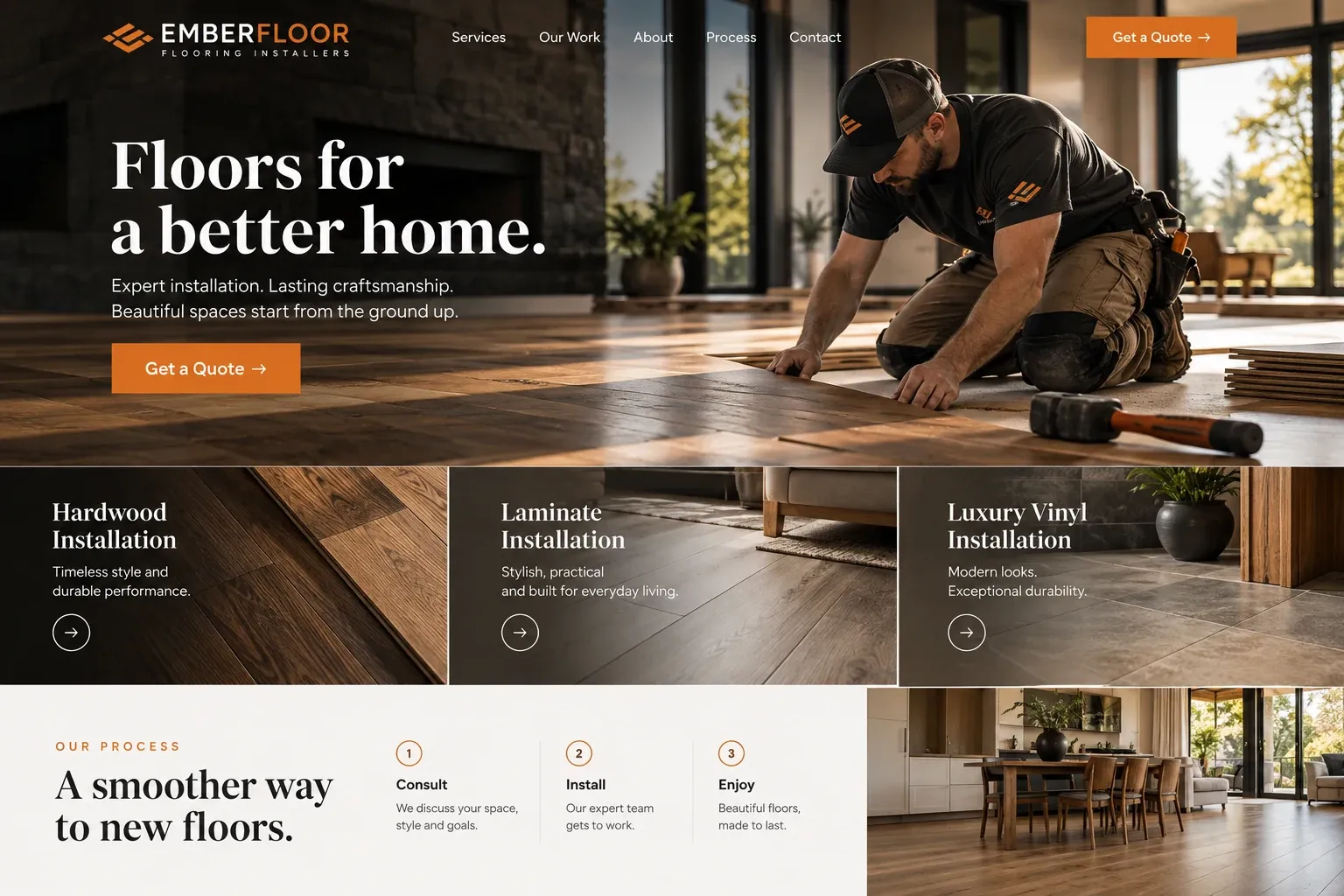
Fictional flooring installers website homepage design concept
A design concept for a fictional brand. Your site is designed from scratch around yours.

Your customer's story

A pale oak floor and a muddy dog

Valeria has kept a photo of a pale oak floor on her phone for months. It is calm, light, and nothing like the cracked beige tile in her living room. Then Pepper, her shepherd mix, trots in from a rainy yard and leaves a trail of paw prints across the hall. Valeria looks at the prints, then at the photo, and wonders if the floor she loves would survive a single week.

She searches "best flooring for dogs" and then "flooring installers near me". Store sites push sales on products she has never heard of. One installer's site has a gallery where every room is labeled with its material: porcelain plank, luxury vinyl, engineered oak. There is a page comparing how each handles water, scratches, and humidity, and another explaining how old tile comes up and the slab gets leveled.

Valeria realizes she can get the look of oak in a porcelain plank that Pepper will not ruin. The measurement request form asks which rooms, the current floor, pets, and whether furniture needs moving. She sends it with a photo of the paw prints. A flooring installer's site should connect the look people love to the life their floor will actually live.

Why it matters

Why flooring installers need a website.

Flooring is a decision about looks, durability, and disruption all at once. Customers research materials for weeks, collect samples, and compare installers, but they rarely understand the preparation that decides whether a floor lasts: removing old tile, leveling the slab, handling moisture, choosing underlayment. A showroom's product page or a directory listing shows none of that. A website can, and it can answer the household questions about pets, kids, and noise.

We build flooring websites that label every finished room by material, so visitors can build a shortlist from real installs. Separate pages cover tile, porcelain plank, luxury vinyl, engineered wood, and floor removal. A preparation page explains slab work and moisture in plain terms. The measurement request asks about rooms, current flooring, pets, and furniture, with photos, so your estimate visit begins with the facts that matter most.

What your customers search for

  • flooring installers near me
  • tile installation Miami
  • luxury vinyl plank installation
  • best flooring for dogs
  • porcelain wood look tile
  • condo flooring soundproof underlayment

Your customers

What households ask before choosing a flooring installer

  • Which floor will survive my dog and kids?

    A material comparison page covering scratches, water, and wear for each floor you install, written plainly, without steering anyone toward the priciest option.

  • What happens to my old tile?

    A removal and preparation page explaining how old floors come up, how dust is controlled, and how the slab is leveled before anything new goes down.

  • How long will the house be torn up?

    A guide to the stages of an installation, what affects timing, and how furniture moving and room-by-room scheduling work in occupied homes.

  • Will the condo association approve this floor?

    A condo page on sound-reducing underlayment, approval paperwork, and work hours, with examples from apartments you have finished.

What we build

What a website for flooring installers should include.

  • Material-labeled gallery

    Every finished room tagged with the product type and finish, so visitors can browse porcelain, vinyl, wood, or stone by look.

  • Slab preparation overview

    How you remove old flooring, grind or level the slab, check moisture, and choose underlayment before installation starts.

  • Installation stages guide

    Moving furniture, removal, preparation, installation, baseboards, and cleanup, in order, with what the household should plan for at each step.

  • Measurement request form

    Rooms, square footage if known, current floor, pets, stairs, and furniture, with photos, so you arrive ready to measure and advise.

  • Condo flooring section

    Sound-reducing underlayment, association approvals, elevator bookings, and quiet hours explained for apartment owners and their managers.

  • Stairs and transitions

    Close-up photos of stair nosings, thresholds, and transitions between rooms, the details that show careful installation.

Planning guide

What should a flooring installer's website include?

A flooring installer's website has to bridge two worlds: the look a customer fell for and the practical questions that follow. It should help visitors compare materials honestly, understand preparation, and request a measurement with useful details. Here is how we plan a flooring site's pages, photos, forms, and local search groundwork, section by section.

Label every room by material

Customers browse floors by look, then by material, so your gallery should support both. Tag each finished room with the product type, color family, and finish, and let visitors filter by porcelain, luxury vinyl, engineered wood, natural stone, or terrazzo restoration if you do it. Add a few close-ups of grout lines, plank joints, stair nosings, and transitions, because those small details are where careful installers separate themselves from hurried ones.

Explain what happens under the floor

Preparation decides whether a floor lasts, and most customers have never seen it. A page that walks through removal, dust control, slab grinding or leveling, moisture checks, and underlayment helps them understand why estimates differ and why skipping steps is risky. Photos of a freshly leveled slab, a moisture test in progress, or underlayment rolled out across a room are far more persuasive than any description.

Write a fair material comparison as well. For each floor you install, describe how it handles water, scratches, pets, and humidity, and where it works best. Customers use this to narrow their shortlist before the visit, and an honest comparison makes your advice more credible when you finally meet them in person.

Gather details before the measurement visit

A measurement request form saves both sides time. Ask which rooms, an approximate size if they know it, the current flooring, whether there are stairs, pets, or heavy furniture, and their timing. Let them attach photos of each room and of the existing floor. For condos, ask whether the association has an underlayment requirement. The answers reach your inbox and shape what you bring to the visit, from samples to a moisture meter.

Show up when nearby homeowners search

Flooring searches combine a material and a place: tile installation, vinyl plank installers near me, wood floor refinishing in a city. Give each material and service its own page, list the areas you work in, and keep your details matching your Google Business Profile. Reviews that mention a specific floor reassure the next household. A well-built site cannot promise rankings, but it gives search engines a clear picture of your work.


In your market

Floors for South Florida homes

Homes here sit on concrete slabs, so leveling and moisture checks come before almost every install. Tile and porcelain remain common for their tolerance of heat, humidity, and sandy feet, while vinyl plank and engineered wood suit owners who want a warmer look. Condo associations often require sound-reducing underlayment and written approval. Some older homes hide terrazzo under carpet or tile, which owners may want restored. Clients are frequently bilingual. We write pages around these local conditions and can add a Spanish version.

Questions

Questions flooring installers ask us.

Should a flooring website show the brands we install?

If customers ask for them, yes. A short list of the brands you work with, and any installer certifications you genuinely hold, helps visitors who arrive with a sample in hand. We keep the focus on your installs, though, because customers are hiring your crew, not the factory.

How do we show flooring preparation work that nobody sees afterward?

Photograph it as you go: old tile coming up, the bare slab, grinding, leveling compound, moisture tests, underlayment. We build a preparation page from those shots with short captions. Customers who see this understand why careful installers quote differently, and they ask better questions at the visit.

Can customers send room measurements through our flooring site?

Yes. The measurement request form has fields for rooms, approximate size, current floor, stairs, and pets, and it accepts photos. It arrives in your email ready for scheduling. Most customers will not have exact measurements, so the form treats size as optional and your visit confirms it.

Do we need a separate page for condo flooring?

If you install in condos, it helps a lot. Condo owners worry about association approval, soundproofing underlayment, noise hours, and getting materials up the elevator. A page that addresses those points, with photos from apartments you have finished, speaks directly to them and matches the searches they make.

Let's talk

Ready for a website built for flooring installers?

Tell us about your business and we will come back with a clear recommendation and a fixed quote. No pressure, no jargon.

Trades we design for

See all 226 trades

226 trades

  • Plumbers website design concept
CallFree quote