Web design for home builders

Websites where a new home starts to feel real.

Building a house takes longer than buying one, and families know it. Before they trust a builder with their lot, their budget, and a long stretch of their lives, they study how that builder works.

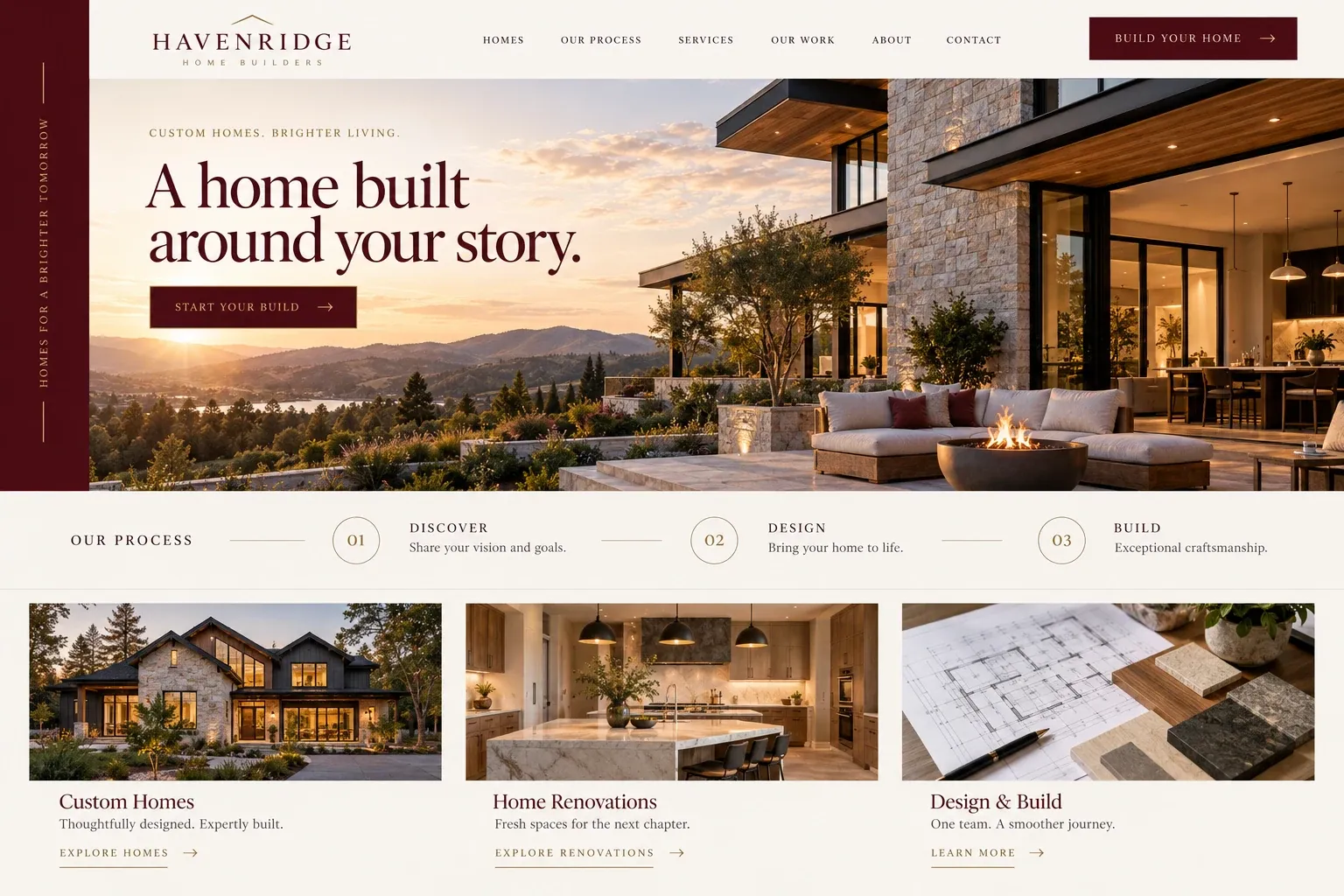
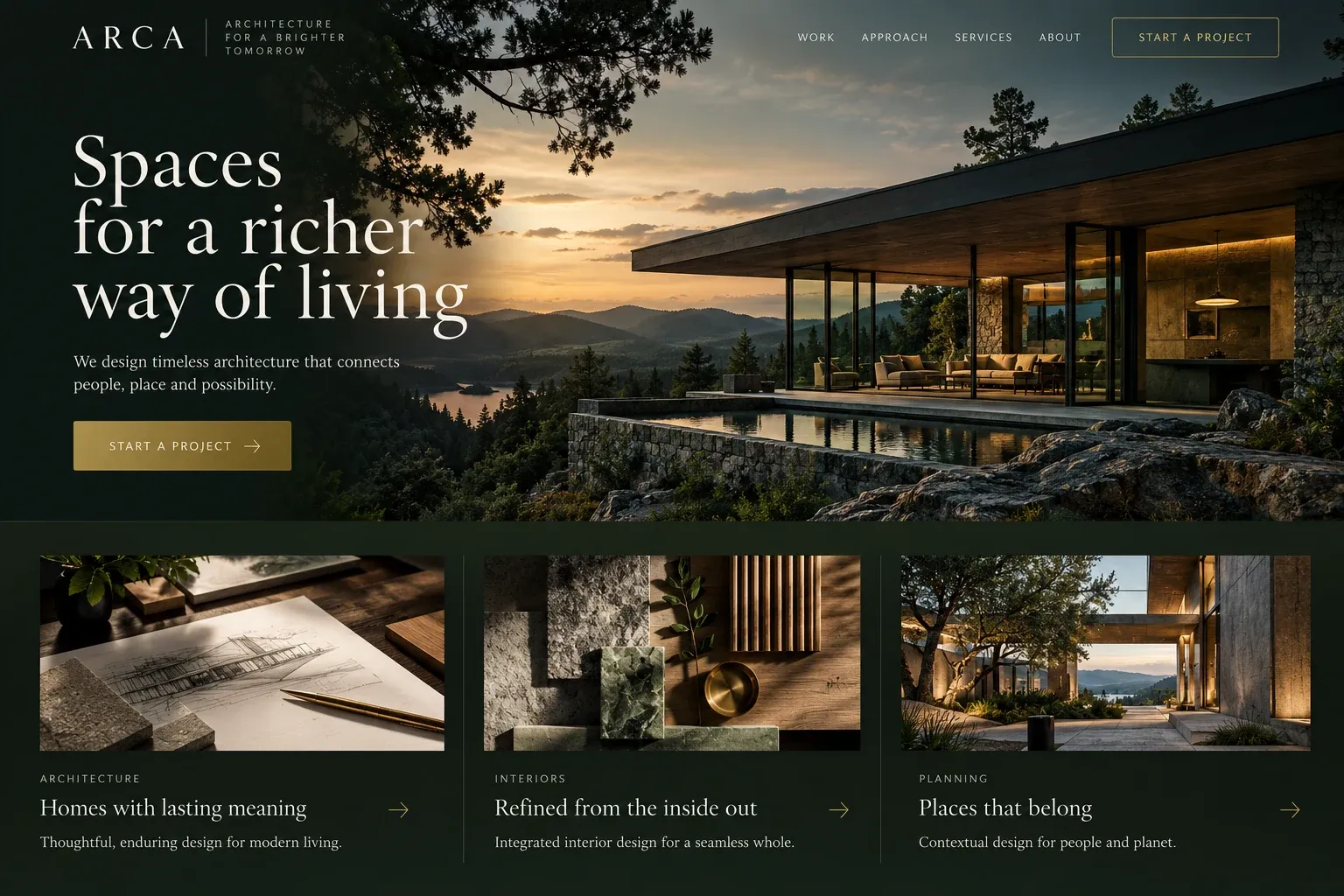
Fictional home builders website homepage design concept
A design concept for a fictional brand. Your site is designed from scratch around yours.

Your customer's story

Standing on an empty lot at sunset

The lot is a rectangle of sand and weeds behind a chain-link fence, two blocks from the school their daughter will start next fall. Isabel and Marco walk it on a Sunday evening, pacing out where the kitchen might go. She wants morning light over the table. He wants a covered terrace that faces west. They have sold their condo and closed on the land. Now they need someone to build.

Back home, they search for custom home builders near them and start a spreadsheet. Some builders' sites are a slideshow of finished houses with no words at all. Others list floor plans but nothing about how the work happens. One builder lays out the whole path: design meetings, permits, foundation, framing, the dates when selections for tile, cabinets, and fixtures are due, and how clients get updates during construction.

That site also shows three finished homes with a few lines on what each family asked for and how the plan answered it. Isabel recognizes their own wish list in one of them. The consultation form asks whether they own the lot, the size of home they picture, and their timing. A builder's website should help a family see how their hopes become decisions, one stage at a time.

Why it matters

Why home builders need a website.

Families choosing a builder are making one of the largest purchases of their lives, and they take their time. They compare portfolios, read reviews, drive past homes under construction, and try to picture working with a team for many months. Social media shows pretty finished rooms. It cannot show how selections are scheduled, how changes are handled, or what a client hears from the builder during framing, and that is what buyers are trying to judge.

We build home builder websites that answer those questions in order. Finished homes appear with floor plans, room counts, and a note on each family's brief. A process page explains every stage, from lot review and design to permits, construction, selections, and the final walkthrough. A consultation form asks about the lot and the family's plans. If you sell homes in your own communities, each community gets a page with available lots and plans.

What your customers search for

  • custom home builders near me
  • custom home builder Miami
  • build on your lot
  • new construction homes
  • how long to build a house
  • home builder reviews

Your customers

What families weigh before choosing a home builder

  • Can you build on the lot we already own?

    A page explaining how you review a lot, including setbacks, soil, flood zone, and utilities, and what a family should gather before the first meeting.

  • When do we choose finishes?

    A selections timeline showing when tile, cabinets, flooring, fixtures, and colors are decided, so families can plan showroom visits and budgets around it.

  • How will we know what is happening on site?

    A description of your updates during construction, whether weekly calls, photo reports, a client portal, or scheduled walks through the house.

  • Do your homes match our style?

    Galleries of finished homes grouped by style and size, each with a floor plan and a short note on what the owners wanted.

What we build

What a website for home builders should include.

  • Finished home galleries

    Exteriors, kitchens, living spaces, and outdoor areas for each home, with a floor plan and a few lines about the brief.

  • Build process guide

    Stages from lot review and design through permits, construction, inspections, and closing, with what the family does at each step.

  • Selection milestones

    A clear schedule of when finish choices are due, with links to the showrooms or design center you work with.

  • Community and lot pages

    For builders with their own developments, a page per community with its location, available lots, plans, and a map.

  • New-home consultation form

    Asks whether they own land, where it is, the size of home they picture, and timing, so the first meeting has substance.

  • Construction updates section

    Recent progress photos from homes underway, shared with the owners' permission, which shows buyers the care behind the walls.

Planning guide

What should a home builder's website show buyers?

A home builder's website supports a long sales cycle. Families visit many times over weeks or months, first for inspiration, then for process, then to decide who to meet. The site should serve each of those visits. These are the pages we plan for a builder, what belongs on them, and how the site helps nearby buyers and landowners find the company.

Organize finished homes like a catalog

Families want to browse homes the way they browse listings. Give each finished home its own page with exterior and interior photos, the floor plan, bedrooms and bathrooms, and a short story of the brief. Group them by style, size, or neighborhood. If you offer a set of plans that clients can adapt, give each plan its own page too, with renderings clearly labeled as renderings rather than photos.

Spell out the build, stage by stage

Uncertainty is what slows a family down. A process page that walks through lot evaluation, design, engineering, permits, foundation, framing, rough trades, inspections, finishes, and the final walkthrough answers questions before anyone calls. Explain what the client decides at each stage and what can affect the schedule, such as permit reviews, inspections, weather, and late selections.

Selections deserve their own page. List when each category is due, where clients make their choices, and how changes after a deadline are handled. Families appreciate seeing the calendar early, and your project managers spend less time chasing decisions. If you use a client portal for selections and updates, link to it so owners can always find it.

Start conversations with the right details

A good consultation form asks whether the family owns a lot, where it is, the size and style of home they picture, their timing, and a budget range. Let them attach a survey or a sketch. Offer a phone number and office address as well, because many buyers want a conversation before anything else. If you meet clients at a model home or design studio, give its hours and directions.

Be findable where families are looking

Buyers search by place and type: custom home builder plus a city, new construction homes near me, build on your lot. A page for each area you build in, community pages if you have them, and a Google Business Profile that matches the website give search engines clear signals. Reviews from homeowners who have moved in carry weight. None of it promises a ranking, but it gives an established builder a fair hearing.
In your market

Building new homes in South Florida

New homes here are usually built in concrete block, with impact-rated windows and doors and roofs designed for hurricane winds. Many lots sit in flood zones that set a minimum floor elevation, and older neighborhoods see small houses replaced by new ones. Buyers include local families, seasonal residents, and people relocating from other states or countries who follow the build from a distance. We write pages that address these realities, link to virtual tours, and can add a Spanish version.

Questions

Questions home builders ask us.

Should a home builder's site show floor plans?

If you have plans clients can adapt, yes. Floor plans help families picture daily life in the house and compare options before meeting you. We give each plan a page with renderings, room counts, and notes on what can change, and label renderings so nobody mistakes them for photos of finished homes.

Can our home building site show houses still under construction?

With the owner's permission, yes, and they are worth showing. Foundation, framing, and rough-in photos show buyers how carefully you build the parts they will never see again. We can add a construction updates section that you feed with a few phone photos and a line of text each month.

How should a builder's website handle families relocating from out of state?

Make it easy to start remotely. The site can offer video consultations, explain how you share progress during the build, and link to virtual tours of finished homes. A page for relocating families, covering finding a lot and what you handle while they are away, answers their particular worries.

Do we need a page for each community we build in?

If you build in several communities or cities, yes. Each page can show the location, nearby amenities in general terms, available lots or homes, and the plans offered there. Families search by place, and a specific page for each area gives them, and search engines, something exact to find.

Let's talk

Ready for a website built for home builders?

Tell us about your business and we will come back with a clear recommendation and a fixed quote. No pressure, no jargon.

Trades we design for

See all 226 trades

226 trades

  • Plumbers website design concept
CallFree quote