Web design for language schools

Websites that meet learners at their level.

People sign up for language classes with a specific reason: a promotion that needs English, a trip to Brazil, a grandmother who only speaks Spanish. They pick the school that shows them where they fit.

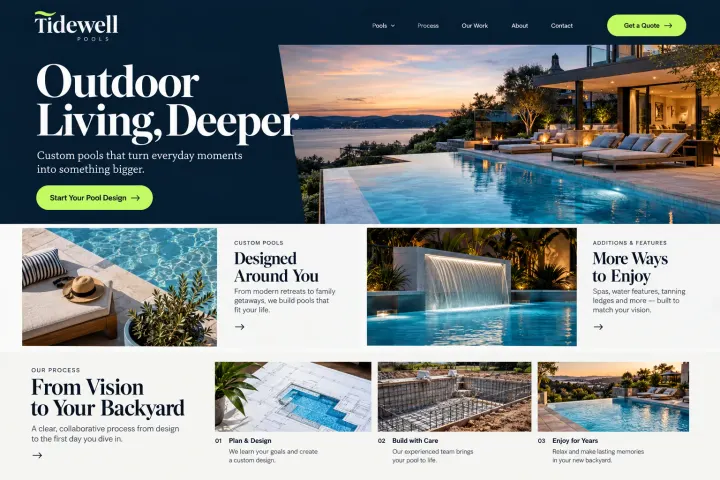
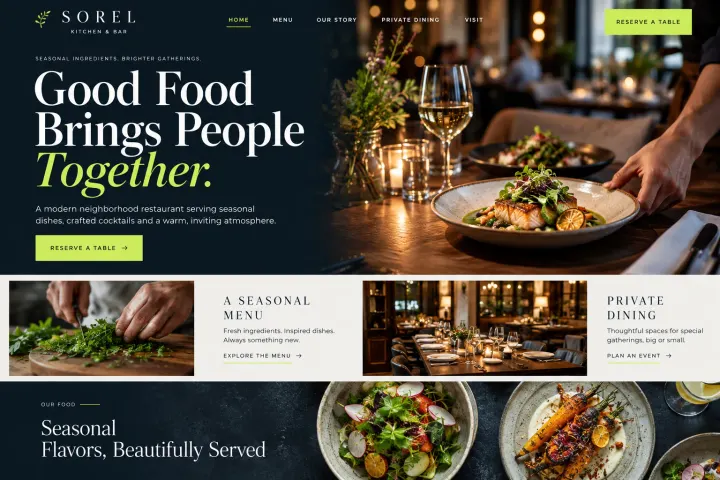
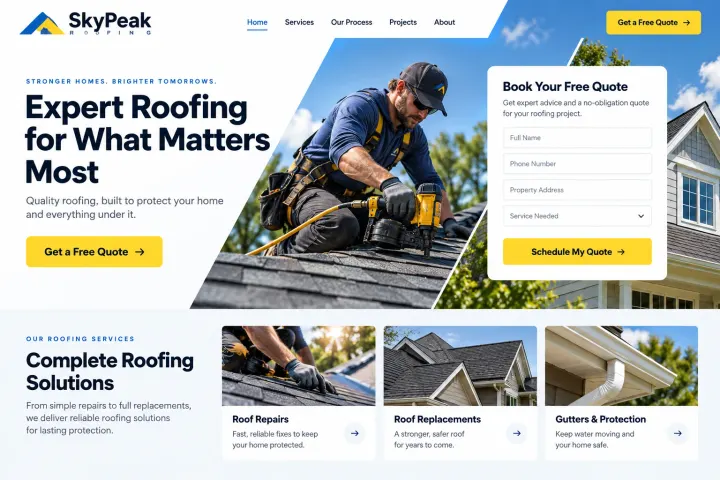
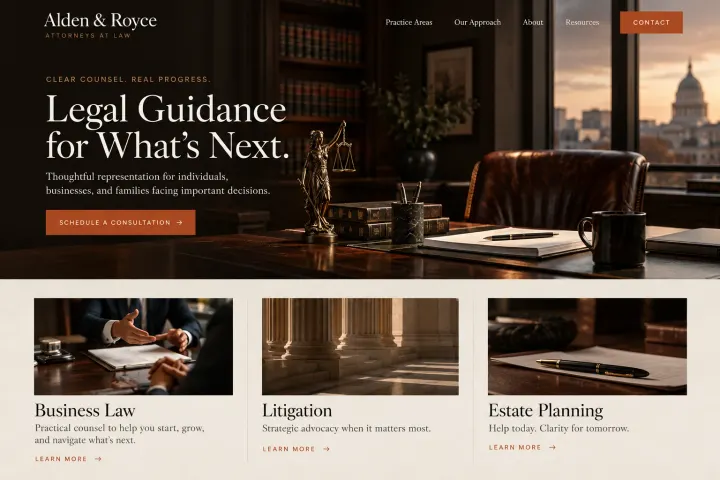
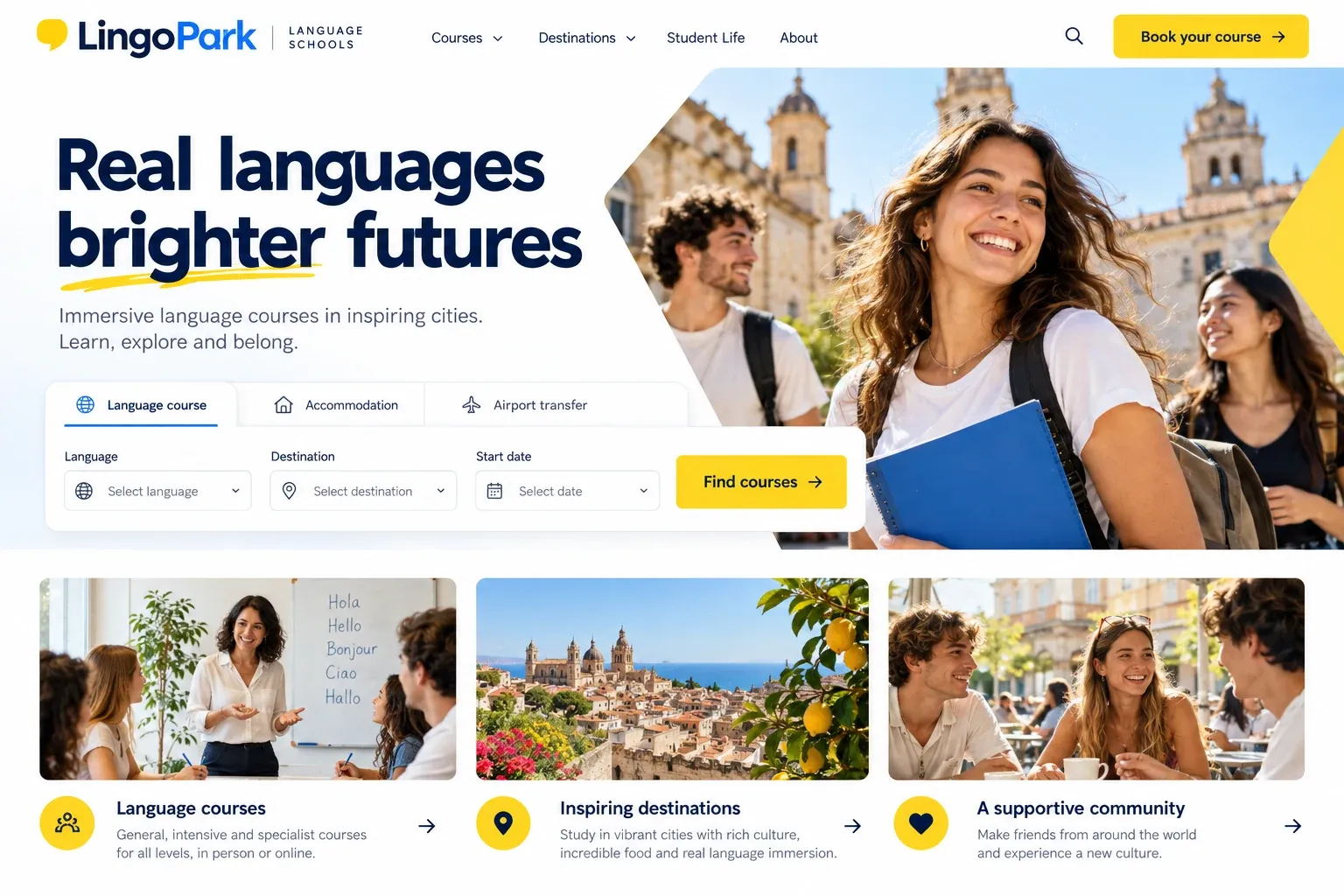
Fictional language schools website homepage design concept
A design concept for a fictional brand. Your site is designed from scratch around yours.

Your customer's story

Nodding along in meetings held in Spanish

Diane moved to Miami from Ohio for a job at a construction firm, and within a month she noticed the problem. Half the site meetings drift into Spanish, the subcontractors joke in it, and she smiles without following. Her high school Spanish is a few verbs and a song. One Friday, after another meeting where she missed the punch line and a schedule change, she searches "Spanish classes for adults Miami".

She has no idea whether she is a beginner or something above it. One school lists course codes she cannot decode. Another shows a beach and the word immersion. Then she finds a school with a short page called Find your level, a free placement test she can take online, and courses sorted by purpose: everyday conversation, Spanish for work, and travel. Evening classes meet near her office.

She takes the test on her couch that night and lands in a lower intermediate group, which surprises her. The enrollment form asks for her level, her goal, and the evenings she can attend. A language school's website should turn a vague wish to speak better into a specific class: the right level, the right purpose, a schedule that fits, and a clear way to begin.

Why it matters

Why language schools need a website.

Language learners search with a goal in mind: English for a job interview, Spanish for the in-laws, Portuguese before a move, citizenship test practice. They are usually unsure of their level and nervous about being placed wrong. A social media page shows lively classes, and a directory shows an address, but neither explains how placement works, what each level can do, or which schedule suits someone who works all day.

We build language school sites that sort everything by language, level, and purpose. Each course page says who it is for, what learners practice, how classes are taught, and when they meet. A placement page explains your test or interview in plain words. Teacher profiles show native languages and teaching background, and the enrollment inquiry asks for goals and availability, so your staff can suggest the right group.

What your customers search for

  • English classes near me
  • Spanish classes for adults Miami
  • business English course
  • learn Portuguese Miami
  • ESL classes near me
  • online Spanish lessons

Your customers

What learners want to know before enrolling

  • What level am I?

    A placement page that explains your online test or speaking interview, what each level means in everyday terms, and how long placement takes.

  • Is there a class for my reason?

    Courses grouped by purpose, such as conversation, business English, travel, exam preparation, or heritage speakers, each with its own short page.

  • Group, private, or online?

    Each format compared plainly: class size, how lessons run, which video platform online students use, and who each format suits best.

  • Who teaches the class?

    Teacher profiles with the languages they speak natively, their teaching background, and the levels they usually lead, in their own words.

What we build

What a website for language schools should include.

  • Language and level pages

    Every language you teach, broken into levels with a plain description of what learners can do at each one.

  • Placement explained

    How your placement test or interview works, with a link to take it online if you offer one.

  • Course purpose pages

    Business English, conversation, travel, and exam preparation each described for the learner who needs it.

  • Class schedule

    Upcoming sessions by level and time of day, with start dates, kept current as new groups open.

  • Teacher profiles

    Photos, native languages, and teaching experience for each teacher, so learners know who will lead the room.

  • Enrollment inquiry

    A form for language, level, goal, and availability, plus an option to request a call in the learner's language.

Planning guide

What should a language school website include for new learners?

A language school's website often speaks to people who are still learning the language it is written in, so clarity is the whole job. Learners should find their language, their likely level, a class for their purpose, and a time that fits, without decoding jargon. Here is a practical plan for the pages, the proof, enrollment, and local visibility.

Organize by language, level, and purpose

Learners think in three questions: which language, how good am I, and why am I learning. Structure the site the same way. Give each language its own page, list the levels with a plain description of what a learner can do at each, and add pages for purposes such as business English, conversation, travel, or exam preparation. Use everyday words first, and add level codes such as A2 or B1 only as a second label.

Make placement feel safe

Fear of the wrong class stops many adults from enrolling. Explain how placement works, whether by an online test, a short speaking interview, or both, and what happens if a learner lands in the wrong group after the first week. If the test is online, link it from every course page. A calm, specific explanation does more than a promise of fluency, which no school should make.

Show teachers, classrooms, and real schedules

Learners want to see the room and the person at the front of it. Photograph your actual classrooms and teachers, mention each teacher's native language and teaching background, and show a short clip of a class if students agree. Keep the schedule on one page, sorted by level and time of day, and remove past sessions promptly so nobody tries to join a closed group.

Be careful with claims. If your school holds an accreditation or is authorized to enroll international students, state it exactly as the authorizing body words it, and only if it is current. Otherwise, describe your teaching methods and class sizes honestly. Learners compare schools closely, and one overstated line can cost more trust than it gains.

Turn interest into enrollment and visibility

An enrollment inquiry should ask for the language, a guessed level, the goal, and available times, and let learners choose the language of your reply. Link your online registration or payment system if you have one. For search, give each language and purpose its own page, keep your details identical on the Google Business Profile, list nearby neighborhoods, and ask students for reviews when a course ends. No site can promise a ranking, yet each specific page is one more search you can be found for.
In your market

Built for language schools in South Florida

Few places mix languages the way Miami does, and language schools here teach in both directions. English classes serve newcomers from across Latin America, Haiti, Brazil, and Europe, while Spanish classes draw professionals, new residents, and heritage speakers who want to read and write what they already speak. Seasonal residents and visitors look for short courses. We write course pages for both kinds of learner and can publish the site in English and Spanish.

Questions

Questions language schools ask us.

Should our language school publish the site in several languages?

Publish it in the languages your learners read most comfortably. For an English school, that usually means a Spanish version at least. We can build a full Spanish version of the site, and for other languages, a short welcome page written by your own teachers often works well.

How do we explain language levels without confusing people?

Describe each level by what a learner can do: order at a restaurant, handle a phone call at work, follow the news. Add standard level codes as a second label for learners who know them. A short placement test or interview then confirms the right group.

Can students register for language courses online?

Yes. New learners can send an enrollment inquiry with their goal and availability, and if you use an online registration or payment system, we link it from each course page. Placement tests hosted on another platform can be linked or embedded the same way.

We teach language classes to corporate groups too. Should that have its own page?

Yes. Companies searching for workplace English or Spanish training want different details: on-site or online delivery, group sizes, scheduling around shifts, and how progress is reported to the employer. A separate page with its own inquiry form keeps those requests apart from individual enrollments.

Let's talk

Ready for a website built for language schools?

Tell us about your business and we will come back with a clear recommendation and a fixed quote. No pressure, no jargon.

Trades we design for

See all 226 trades

226 trades

  • Plumbers website design concept
CallFree quote