Planning guide
What should a tutoring business put on its website?
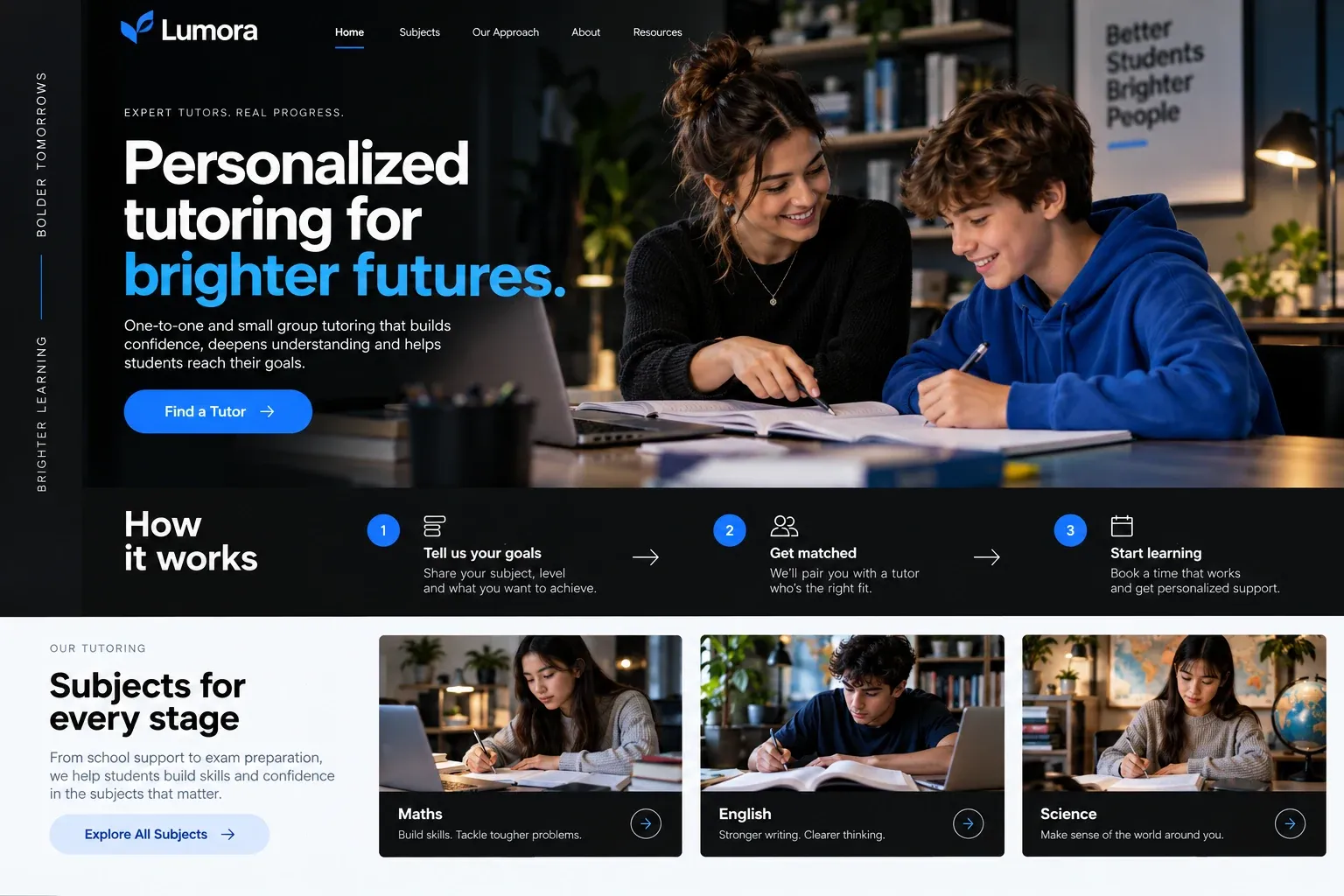
A tutoring website is read by two people: the parent who pays and the student who has to show up. It should make the subjects, the tutors, and the first step obvious to both. Below is how we plan the pages for a tutoring business, what belongs on them, and how the site helps families nearby find you.
Build pages around subjects and tests
Parents search for the thing that worries them: geometry, essay writing, reading comprehension, the SAT. Give each subject or exam you teach its own page with the grades it covers, what a session usually works on, and who teaches it. A home page, a handful of subject pages, a tutors page, a page on formats, and a contact page give a small tutoring business a solid start.
Introduce tutors the way parents would
Parents want to know who will be sitting next to their child. A real photo, the tutor's education, the subjects they teach, and a few sentences in their own voice do more than any slogan. If tutors hold teaching certificates, say so accurately; if they are strong college students, say that too. Mention results only where a family has agreed to share them, and describe the work rather than promise a grade.
Make the first message easy to send
A good inquiry form asks for the student's grade, the subject, the school if the parent wants to share it, any test dates coming up, and the times that work. Those answers let you reply with a real suggestion instead of a round of questions. Show a phone number and a text option as well, because many parents would rather talk for two minutes than type.
Spell out how the first session works and what happens after it: how often students usually meet, how you share progress with parents, and your policy on cancellations. Clear terms up front prevent awkward conversations in the middle of a semester. If returning families book through a scheduling app, link it from every page so rebooking takes one tap.
Get found by families in your area
Tutoring searches are local even when lessons happen online, because parents trust someone who knows their schools. Name the neighborhoods you cover and the schools your students come from, keep your details identical on the site and your Google Business Profile, and ask satisfied families for reviews. Subject pages give search engines precise topics to match. No website can promise a top spot, but this groundwork gives a good tutor a fair chance to be seen.