Planning guide
What should a merchant services provider's website include?
A merchant services website has to earn trust in a field known for fine print. Owners arrive frustrated with their current processor or opening a new business, and they want clear explanations, not slogans. Here is how we plan a provider's site, what to show on each page, and how it helps business owners find and choose you.
Organize pages by how businesses get paid
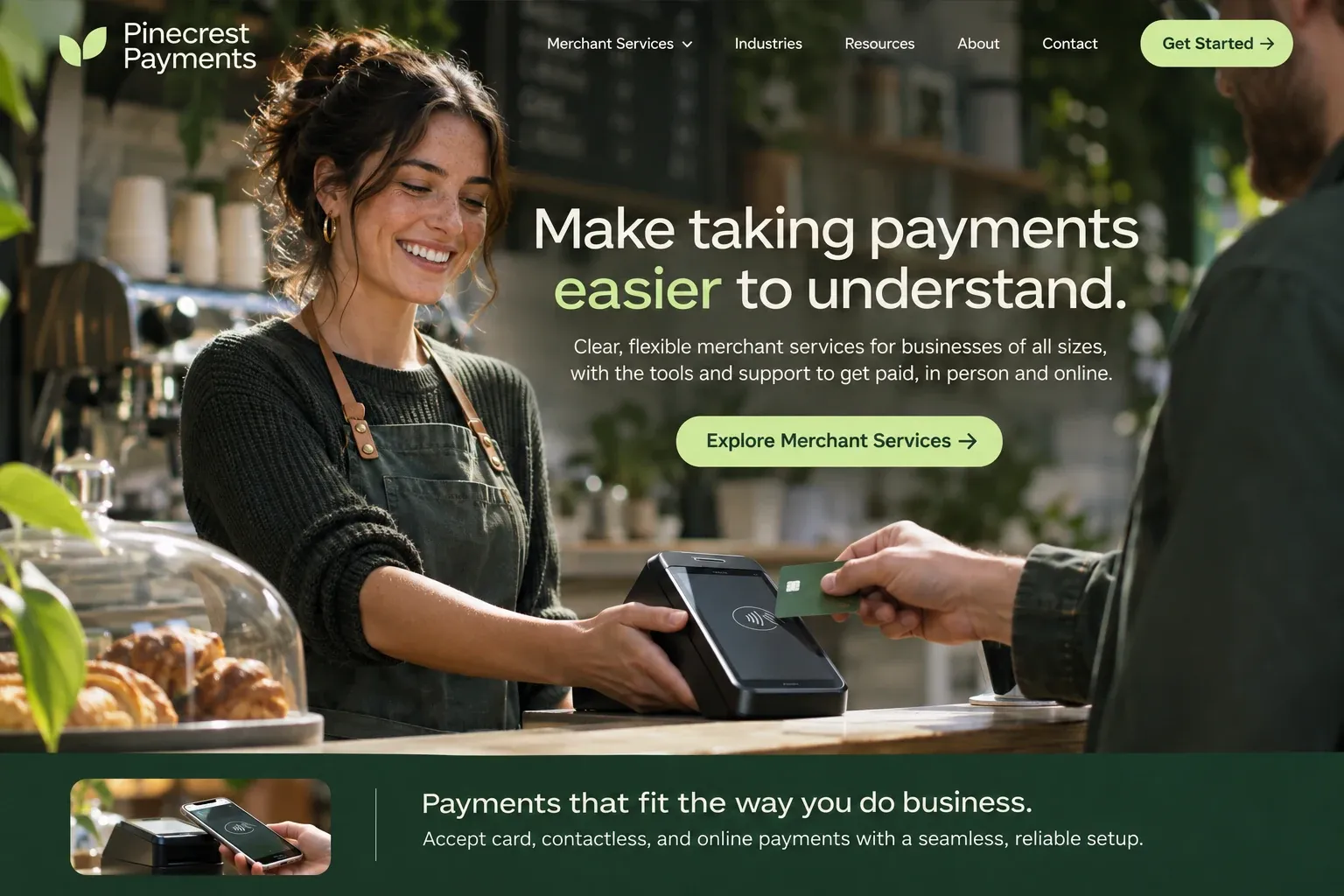
Owners think in situations: a counter, a table, a truck, a website, a monthly invoice. Give each payment channel its own page with the equipment or tools involved and the kinds of business that use it. Add pages by business type, such as restaurants, retail, service trades, and professional offices, so an owner sees a setup that resembles their own.
Explain the details others hide
Clarity is the strongest selling point in this field. Explain how processing works in plain words, what an application involves, how underwriting decides approvals, and what happens during setup. If you have a policy on contracts or early termination, state it the way you want it stated. Avoid promising savings, because every business's results depend on its own card mix and volume.
List the point of sale systems, online store platforms, and accounting tools you integrate with. Owners who already depend on a system will leave quickly if they cannot confirm it works with yours. Keep the list accurate and remove anything you no longer support. Note any setup help you give with the switch, such as configuring terminals or testing the first transactions.
Protect financial details from the start
Never ask owners to email statements or bank details through an ordinary contact form. The consultation request should collect a name, a phone or email, the business type, and a good time to call. For statement reviews and applications, link to the secure portal or upload tool you already use. Saying this on the page builds trust before the first call.
Help owners find you where they search
Owners search by business type and need, such as restaurant credit card processing or mobile payments for contractors. Business type and channel pages give search engines those matches, and a short guide section answers questions owners ask, like how to read a processing statement. If you serve a local market, keep your Google Business Profile consistent. No site can promise rankings, but useful pages give you a fair chance.