Planning guide
What should a personal stylist's website include?
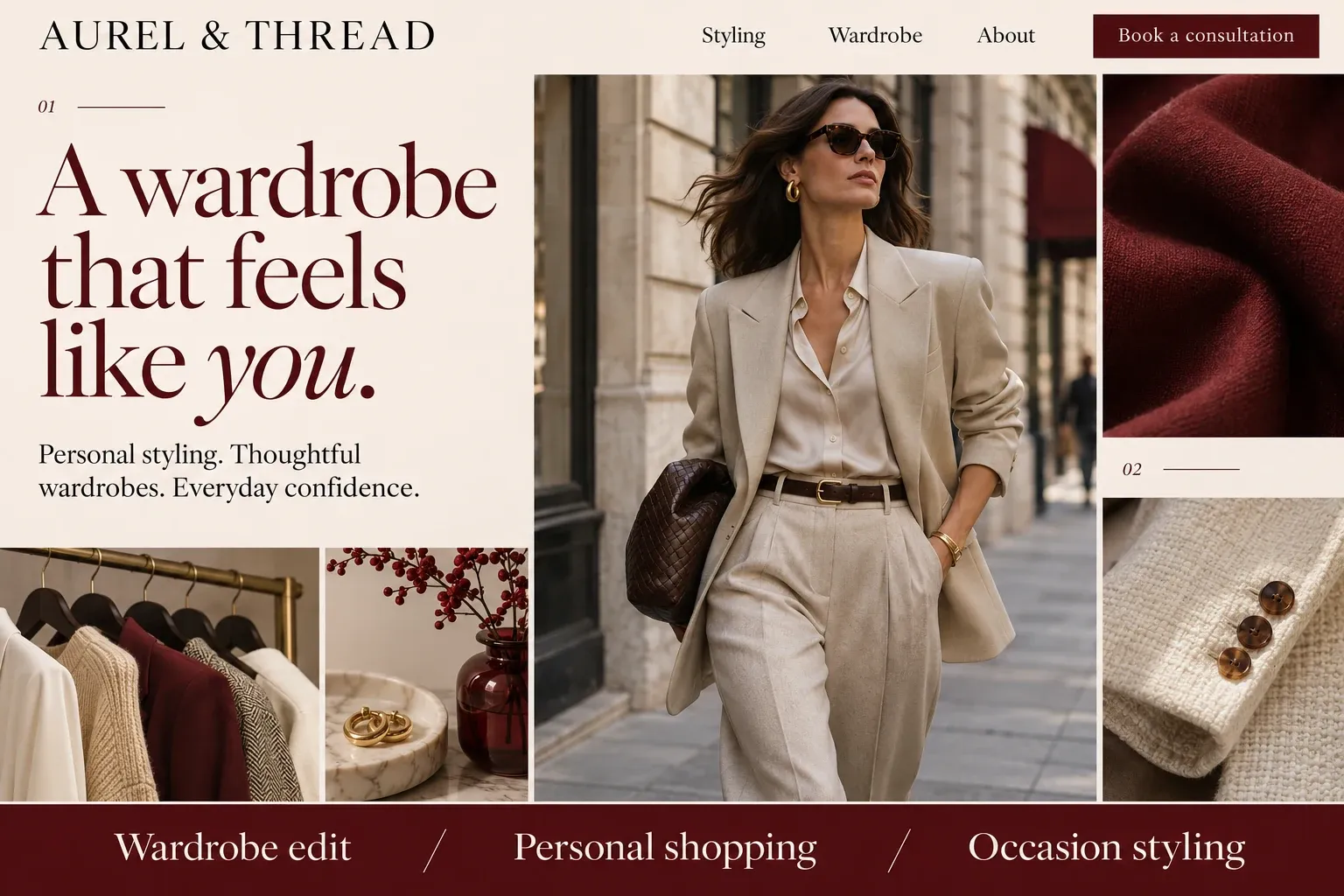
A personal stylist's website has to show your eye and make clients feel at ease. Visitors want to see your work on real people, understand each service, and picture what working with you is like. Here is how we plan a stylist's pages, what to show in the portfolio, how clients should get in touch, and how the site helps local clients find you.
Show your eye on real people
Editorial shoots look impressive, but most clients want to see what you do for someone like them. Build the portfolio from real clients who agree to share their looks, grouped by need: workwear, weekend, travel, events, or a full wardrobe refresh. Short captions about the goal behind each look help. If you are just starting, styled flat lays and your own looks are honest ways to show taste.
Explain every service step by step
Closet edits, personal shopping, capsule wardrobes, and event styling are different services, and clients need to understand each one. Give each its own page: what happens, how long it takes, what the client prepares, and what they receive afterward, such as outfit photos or a shopping list. Explain how purchases, returns, and tailoring are handled.
If you work by video, say so and explain how a virtual session runs. Many clients travel or live part of the year elsewhere, and a remote option can be a reason to choose you. Mention where you meet clients, at home, in stores, or at your studio, so nobody has to ask.
Make the first contact comfortable
A consultation request should ask for a name, contact details, the main goal, the occasion or deadline if there is one, and where the client would like to meet. Let them attach a photo of a look they like if they want to. Avoid asking for sizes or body details on the form. Say when you reply and what the first conversation covers, so it feels like a friendly chat.
Help local clients find you
Clients search for a personal stylist in their city, a wardrobe consultant near me, or a stylist for a wedding guest outfit. Service pages give Google specific topics to match, and an area line lists where you work. Keep your details consistent with your Google Business Profile, add portfolio photos there, and ask happy clients for reviews. No site can promise a ranking, but this structure gives a talented stylist a fair chance.