Planning guide
What should a preschool website show to families?
A preschool's website is often the first time a family sees its approach, and they arrive with a vocabulary problem: every school uses similar words. The way through is concrete detail. This guide covers how to explain your approach, show your classrooms honestly, lay out enrollment, and help families nearby find the school.
Explain your approach through examples
Whatever your method, describe it the way a teacher would to a parent at pickup. Instead of "child-led learning", say that children choose between the art table, the block corner, and the reading nook each morning, and teachers follow their questions. Two or three such examples per age group do more than a page of educational terms, and parents remember them.
Be careful with readiness claims. You can describe the skills your classrooms work on, such as following routines, early letters and numbers, and taking turns, but avoid promising that every child will read by a certain age. Mention affiliations or credentials only in the exact words you can document and your director approves.
Photograph the room, not a catalog
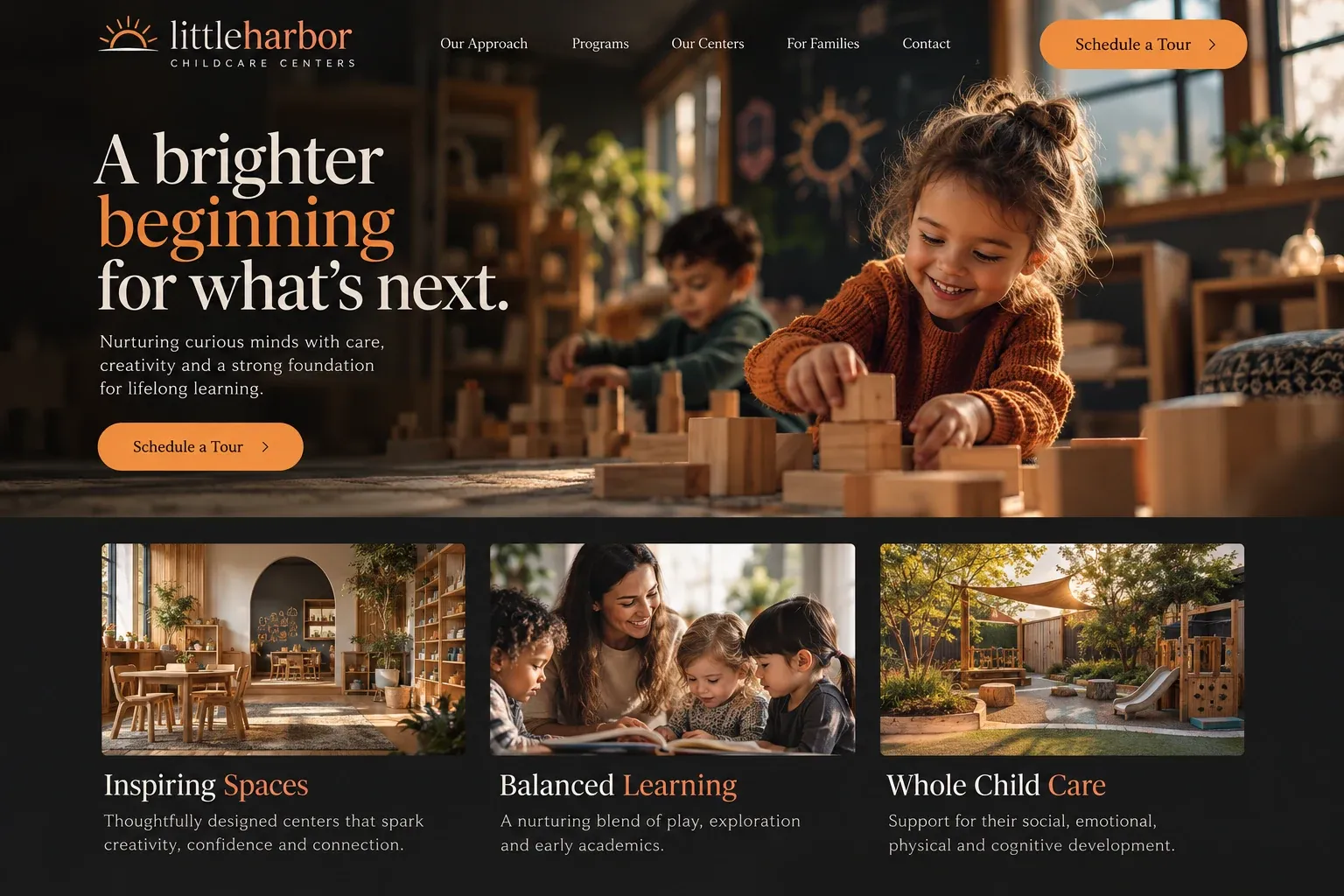
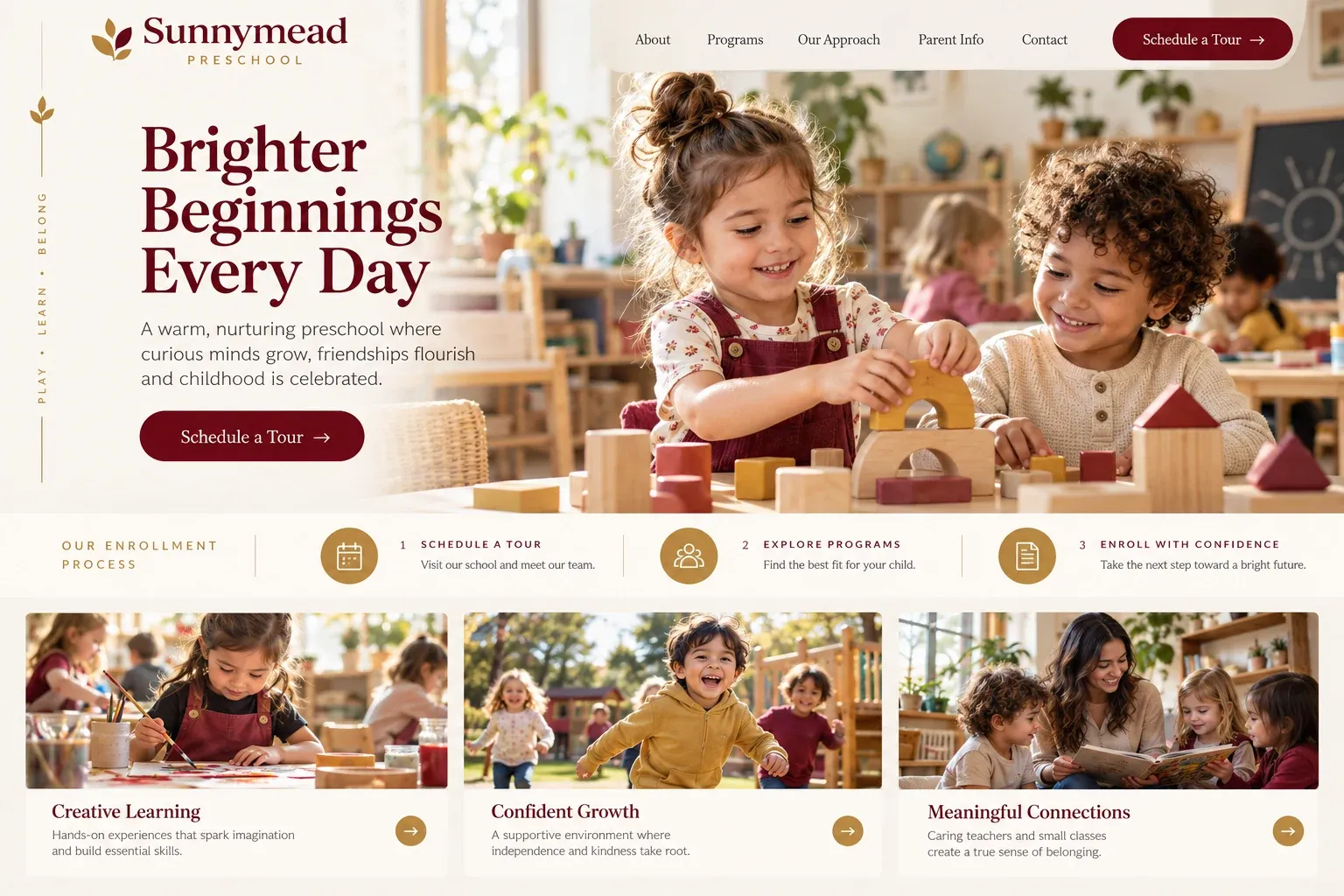
Families want to see the actual classrooms: the cubbies, the low shelves, the reading rug, the playground shade. Photograph them in daylight during a real morning, with children shown only when parents have given written permission. Group photos by age so a parent of a two-year-old sees the twos room first. A short video walk-through, without faces, can help a family decide whether to visit.
Lay out enrollment as a calendar
Preschool enrollment runs on the school year, and families who miss the window feel it. Put the steps in order, from open house to application to start date, with the months each one happens. Compare half-day, full-day, and extended care options in a simple table. If you take part in Florida's VPK program, explain how it works at your school and link to the official sign-up information.
The visit request is the main call to action. Ask for the parent's name, phone, email, the child's age, and the program of interest, and offer a few visit times. Leave allergies, medical needs, and developmental history for private enrollment paperwork, never an ordinary web form. Reply within a day if you can, because families often book visits at several schools in the same week.
Help nearby families find the school
Most families want a preschool close to home or on the way to work. Keep your address, phone, and hours consistent on the website and your Google Business Profile, name the neighborhoods you draw from, and ask parents to leave a review after the first months. Program pages for each age give search engines something specific, which helps a good school compete with larger chains nearby.