Web design for small engine repair shops

Websites that bring stalled mowers through your door.

Nobody thinks about a mower, a trimmer, or a generator until it refuses to start. Then the owner wants to know, from a phone, whether you fix that machine, how drop-off works, and whether the repair is worth it.

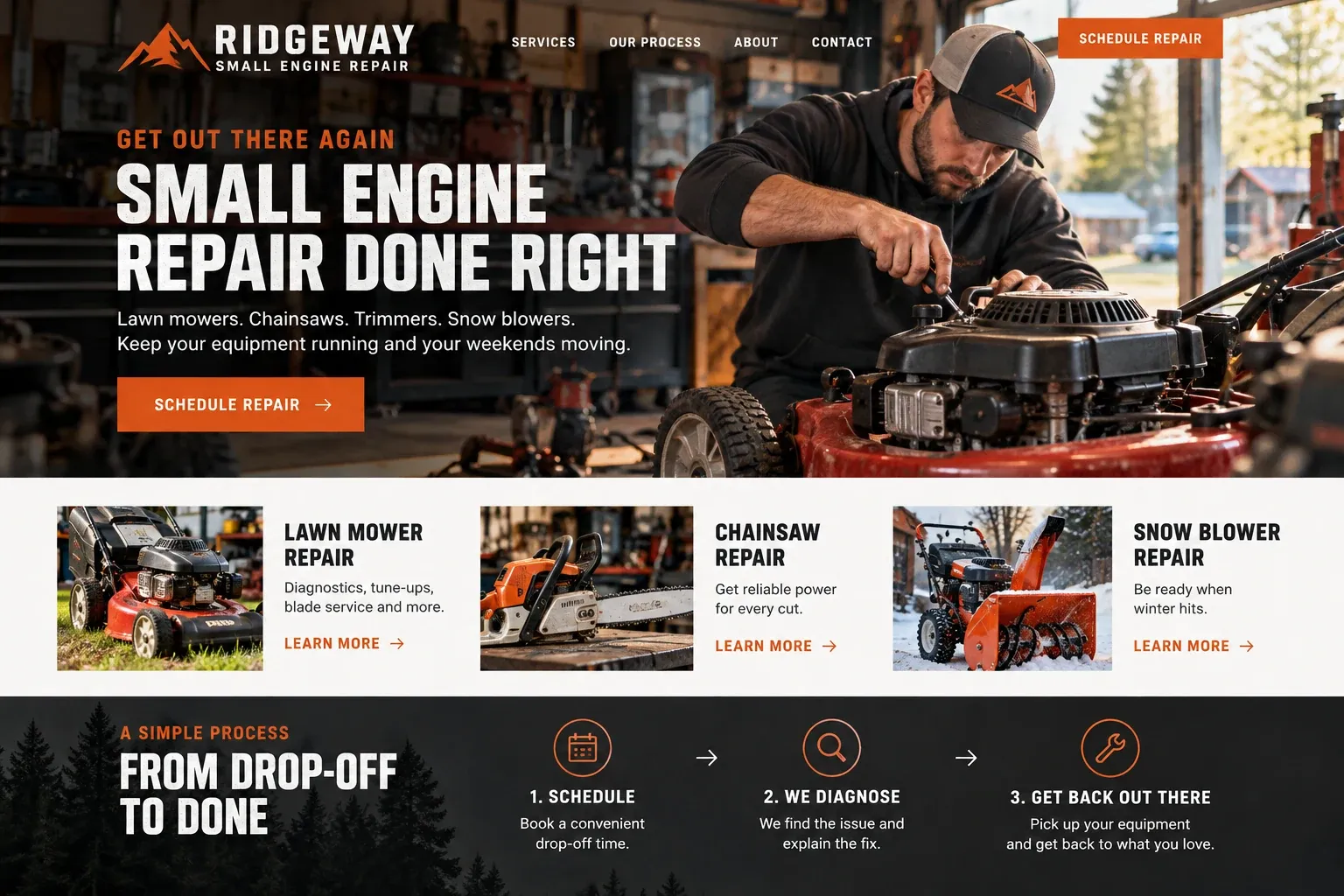
Fictional small engine repair shops website homepage design concept
A design concept for a fictional brand. Your site is designed from scratch around yours.

Your customer's story

The generator that sat all year

A tropical storm watch goes up on a Tuesday in August, and Luis finally does what he promised himself he would do in June. He rolls the portable generator out of the garage, checks the oil, and pulls the cord. It coughs once and dies. He pulls again and again until his shoulder aches. The fuel in the tank has been sitting there since last October.

He searches for generator repair and gets a page of results. One shop's site shows a lawn tractor and nothing else. Another has hours that end at noon and no word on generators at all. A third has a page just for portable generators, explains that old fuel is a common culprit, lists the brands it works on, and says plainly how drop-off works during storm season.

Luis loads the generator into his trunk and drives over before lunch. He would have gone to whichever shop answered his questions first: do you take this machine, when can I bring it, and what happens after I leave it. A small engine shop's website does not need to be fancy. It needs to say those things where a worried customer will see them.

Why it matters

Why small engine repair shops need a website.

Small engine customers come in two kinds. Homeowners show up with one mower or one pressure washer, often in a hurry and unsure whether the repair is worth it. Landscapers and property crews bring several machines and need them back so they can work. Both search for the machine by name, and both want drop-off rules, hours, and the brands you service before they load anything into a truck. A social media page buries that under old posts.

We build small engine repair sites that answer those questions first. Each type of equipment gets a page: mowers and riding tractors, trimmers and blowers, chainsaws, pressure washers, and generators. Drop-off, pickup, and how you handle estimates are explained in plain words. A short form asks for the machine, the brand and model, and the problem, so your counter has the details before the machine arrives.

What your customers search for

  • small engine repair near me
  • lawn mower repair Miami
  • generator repair before hurricane
  • chainsaw repair shop
  • pressure washer won't start
  • zero turn mower repair

Your customers

What customers ask before they haul a machine to the shop

  • Do you fix this kind of machine?

    Pages for each equipment type with the brands you service, so the owner of a zero-turn mower or a chainsaw knows before loading it up.

  • Is it worth repairing?

    A plain page on how you look at a machine, how you share an estimate, and when you will honestly suggest replacing it instead.

  • How does drop-off work?

    Hours, where to unload, whether to drain the fuel, how machines are tagged, and how customers hear back once you have looked.

  • Can you handle my whole crew's equipment?

    A page for landscapers and property managers explaining commercial accounts, fleet servicing, and how you prioritize machines that keep a crew working.

What we build

What a website for small engine repair shops should include.

  • Equipment type pages

    Mowers, riding tractors, trimmers, blowers, chainsaws, pressure washers, and generators, each with the brands you service and common repairs.

  • Drop-off instructions

    Where to unload, the hours you accept machines, and what to do about fuel and batteries before bringing them in.

  • Estimate and assessment terms

    How you check a machine, whether there is a fee to look at it, and how customers approve the work.

  • Machine repair request

    Brand, model, engine type, and a short description of the problem, with a photo of the model tag if they have one.

  • Storm season service page

    Generator and chainsaw checks before hurricane season, explained so customers book routine work before the rush begins.

  • Commercial crew accounts

    A page for landscapers and property crews that explains fleet service, pickup if you offer it, and how invoices work.

Planning guide

What should a small engine repair shop's website show?

A small engine shop's website is mostly a sign on the door that people read from home. It tells them whether to bring the machine, when, and what to expect once it is on your bench. Below we cover the pages worth building, the photos and terms to show, how customers should get in touch, and how nearby owners find you.

One page for each kind of machine

Customers search by the machine in front of them: lawn mower repair, chainsaw repair, generator repair, pressure washer not starting. A page for each type lets you name the brands you service, the repairs you do most, and anything you do not take, such as certain commercial engines. Add a home page, a drop-off page, a page for commercial customers, and a contact page.

Explain what happens on the bench

Many customers hesitate because they fear the repair will cost more than the machine is worth. A short page on your assessment process helps: how you check the machine, how you share an estimate, whether there is a charge to look, and when you will suggest replacing rather than repairing. Real photos of your bench, parts shelves, and repaired machines show a working shop, not a stock image.

Make drop-off and pickup painless

Put your hours, address, and a map near the top, along with where to park and unload. Say whether customers should drain fuel or remove batteries, how you tag each machine, and how you contact them once it is ready. A short request form for the brand, model, and problem lets the counter prepare before the customer arrives.

Landscaping crews need their own path. Explain whether you offer pickup, how you handle several machines at once, whether you stock common parts for the brands crews run most, and how billing works for regular accounts. A crew owner can then see quickly whether your shop fits the way their business runs.

Help nearby owners find the shop

Small engine repair is a short-drive search. Keep your name, address, phone, and hours the same on the site and your Google Business Profile, add photos of the shop front so people recognize it, and list the neighborhoods you serve. Ask regular customers to leave reviews that mention the machine. Equipment pages give search engines precise topics to match, which helps over time, although nobody can promise a ranking.


In your market

Small engine work in South Florida

Grass here grows nearly all year, so mowers, trimmers, and blowers work hard in every season, and landscaping crews depend on quick repairs. Hurricane season sends homeowners to their generators and chainsaws, often after months of old fuel sitting in the tank. Humid air and salt near the coast corrode carburetors, cables, and fasteners. Many customers prefer Spanish. We write pages around these local patterns, put your hours and drop-off details up front, and can add a Spanish version of the site.

Questions

Questions small engine repair shops ask us.

Should a small engine shop list every brand it services?

List the brands you work on regularly and are happy to see. Customers search for brand and machine together, and a clear list saves calls from people with equipment you do not take. If you are an authorized dealer or warranty center for a brand, say so only where it is true and current.

How do we explain a fee to look at a mower or generator?

Say it plainly and explain what it covers: the time to find the fault, a written estimate, and whether it counts toward the repair. Customers object to surprises more than to fees. We write it in a calm tone and place it on the drop-off page, where people look before loading the machine.

Can customers request generator service before storm season online?

Yes. A simple form can collect the generator's brand, model, and problem, plus whether they want a full service or just a check. It arrives in your email. Many shops add a short page in late spring explaining pre-storm service, which gives the request form something timely to point to.

Do photos of our small engine shop and bench really help?

They do. A customer about to leave a mower or chainsaw with you wants to see a real place, real machines, and the people behind the counter. Phone photos of the shop front, the bench, and machines waiting for pickup are fine. We use them across the site and on your Google profile.

Let's talk

Ready for a website built for small engine repair shops?

Tell us about your business and we will come back with a clear recommendation and a fixed quote. No pressure, no jargon.

Trades we design for

See all 226 trades

226 trades

  • Plumbers website design concept
CallFree quote